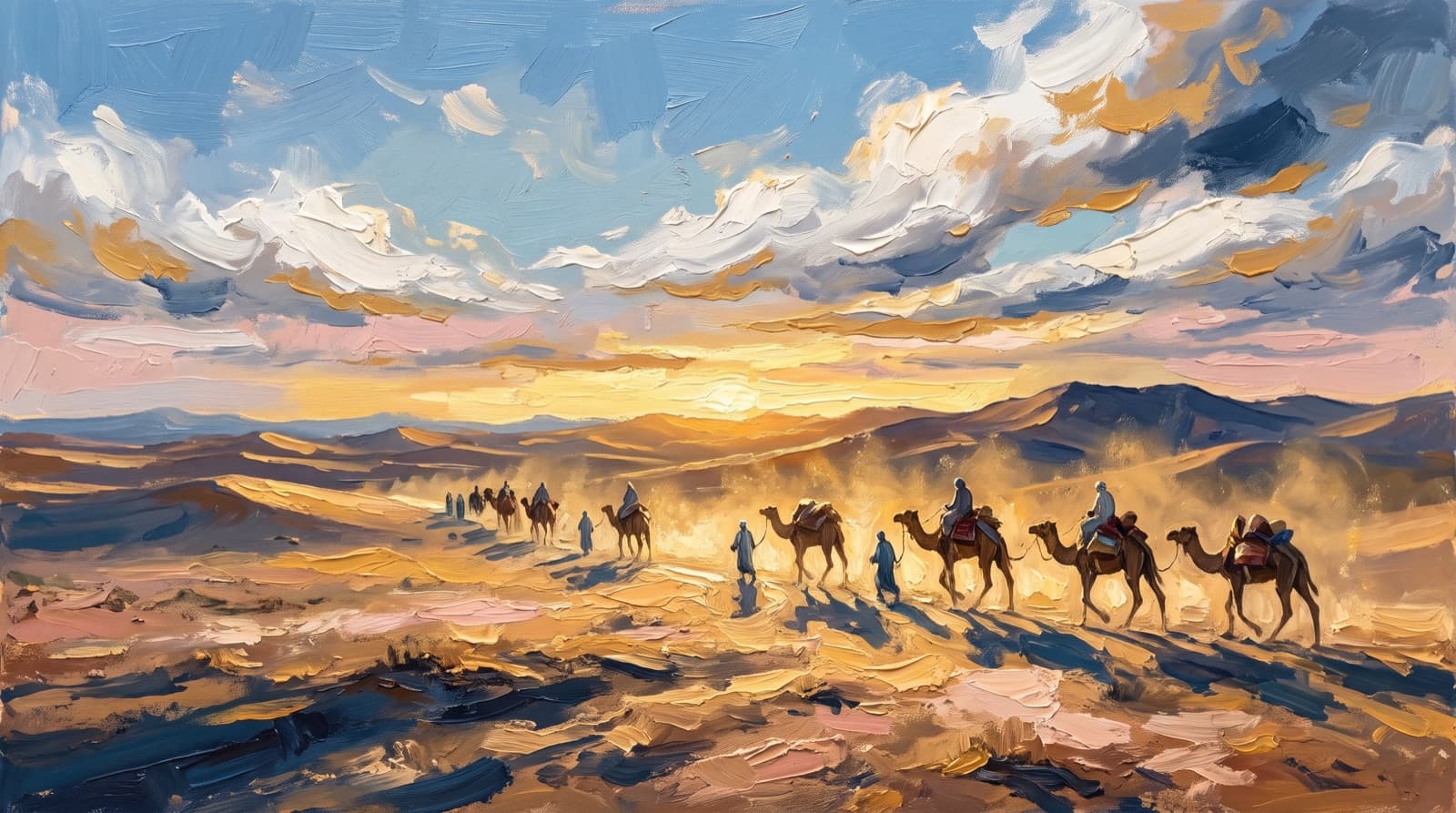
House of David is a dramatized TV series about David's early life that premiered on Amazon Prime Video in 2025, and like any adaptation it takes creative liberties. The real story is in 1 Samuel 16 through 1 Kings 2, and it is longer, harder and more honest than most screen versions: a shepherd anointed in secret, a giant brought down with a sling, years on the run from a jealous king, a friendship with that king's son, a devastating sin, a rebellion led by David's own son and a deathbed charge to Solomon. Here is that story in order, and how to tell the text apart from the drama.
Where the name "House of David" comes from
The phrase is biblical. In 2 Samuel 7, after David becomes king and wants to build a temple, God answers through the prophet Nathan with a promise: "The Lord himself will establish a house for you" (2 Samuel 7:11, NIV). The "house" is a dynasty, not a building. "Your house and your kingdom will endure forever before me" (2 Samuel 7:16, NIV). That promise runs through the rest of Scripture and into the New Testament, where Gabriel tells Mary that her son will receive "the throne of his father David" (Luke 1:32, NIV). So the story of David is not only about a hero. It is the start of a line that leads to Jesus.
The real story of King David, in order
| Event | Where to read it |
|---|---|
| Samuel anoints David in Bethlehem | 1 Samuel 16:1-13 |
| David plays the lyre for King Saul | 1 Samuel 16:14-23 |
| David defeats Goliath | 1 Samuel 17 |
| Covenant friendship with Jonathan | 1 Samuel 18:1-4; 20 |
| Saul's jealousy and the spear | 1 Samuel 18-19 |
| David spares Saul's life twice | 1 Samuel 24; 26 |
| Saul and Jonathan die in battle | 1 Samuel 31; 2 Samuel 1 |
| King in Hebron, then in Jerusalem | 2 Samuel 2-5 |
| The ark comes to Jerusalem; God's promise | 2 Samuel 6-7 |
| Bathsheba, Uriah and Nathan | 2 Samuel 11-12 |
| Absalom's rebellion | 2 Samuel 15-18 |
| Solomon crowned; David dies | 1 Kings 1-2 |
Anointed in secret
When Samuel goes to Jesse's house to anoint Israel's next king, David isn't even in the room. He is the youngest son, out with the sheep. Samuel is impressed by the eldest brother, and God corrects him: "People look at the outward appearance, but the Lord looks at the heart" (1 Samuel 16:7, NIV). David is anointed and then, strikingly, goes back to the sheep. Years pass before the throne is his. For a fuller portrait of the man, see our guide to who David was in the Bible.
The giant
First Samuel 17 is the scene everyone knows. David arrives at the front with food for his brothers, hears Goliath's challenge and steps forward with a sling and five stones. His words to the giant are the point of the story: "the battle is the Lord's" (1 Samuel 17:47, NIV).
The text itself raises a question a screenwriter has to settle. In chapter 16, David already serves Saul as a musician and armor-bearer; in chapter 17, Saul asks whose son the young man is. Readers have proposed different explanations for centuries. A TV series has to pick one version and film it. The Bible lets both accounts stand side by side.
Saul and Jonathan
Victory makes David famous, and fame makes Saul afraid. The women sing, "Saul has slain his thousands, and David his tens of thousands" (1 Samuel 18:7, NIV), and from then on the king watches him with suspicion. More than once Saul hurls a spear at him (we walk through that scene in David and Saul's spear). Meanwhile Saul's son Jonathan, the heir to the throne, "loved him as himself" (1 Samuel 18:1, NIV) and gives David his robe, sword and bow.
David spends years as a fugitive. Twice he has Saul at his mercy, once in a cave near En Gedi and once in Saul's sleeping camp, and twice he refuses to kill him: "I will not lay my hand on my lord, because he is the Lord's anointed" (1 Samuel 24:10, NIV). When Saul and Jonathan die on Mount Gilboa, David does not celebrate. He writes a lament with the line "How the mighty have fallen!" (2 Samuel 1:19, NIV).
King, and his worst chapter
David is made king of Judah in Hebron, then of all Israel. He takes Jerusalem, brings the ark there and dances before the Lord. Then comes 2 Samuel 11, which begins with a quiet warning: "In the spring, at the time when kings go off to war... David remained in Jerusalem" (2 Samuel 11:1, NIV). He takes Bathsheba, the wife of one of his soldiers, and when she becomes pregnant he arranges for her husband Uriah to die in battle.
The Bible does not soften any of it. The prophet Nathan tells David a story about a rich man who steals a poor man's only lamb, and when David is outraged, Nathan says, "You are the man!" (2 Samuel 12:7, NIV). David confesses. Psalm 51 is traditionally linked to this moment; its prayer for a clean heart is unpacked in the meaning of Psalm 51:10.
Absalom
The consequences reach David's family. His son Absalom kills his half-brother Amnon, goes into exile, returns and slowly wins the people's loyalty, then launches a revolt. David flees Jerusalem weeping. When Absalom is killed in battle, the king's grief is one of the rawest moments in Scripture: "O my son Absalom! My son, my son Absalom! If only I had died instead of you" (2 Samuel 18:33, NIV).
The end of David's life
In 1 Kings 1 and 2, David is old and frail, another son tries to seize the throne, and Nathan and Bathsheba make sure Solomon is crowned. David charges Solomon to walk in God's ways, and then "David rested with his ancestors and was buried in the City of David" (1 Kings 2:10, NIV).

Watch “David” in Sacred
“David” is a cinematic series in short episodes, based on the Bible, in Sacred.
4.8on the App Store
 Scan with your phone
How a dramatization differs from the text
Any screen version of David, House of David included, has to make choices the Bible doesn't make. Knowing the usual ones helps you enjoy the show and still know your Bible.
- It fills the silences. Scripture rarely tells us what people felt. A series has to invent inner lives, conversations and motives.
- It names the unnamed. The Bible never names David's mother. Later Jewish tradition calls her Nitzevet, and dramatizations often build storylines around details like that.
- It compresses time. David's life covers decades; he was thirty when he became king (2 Samuel 5:4). A series has to fold years into a few episodes.
- It picks one version. Where the text holds tension, like the two introductions of David to Saul, a script chooses.
- It adds romance, rivals and subplots to keep a season moving.
None of that is wrong for a drama. It just means the episode is a retelling, not the text. A good habit: after each episode, read the chapter it draws on and ask what was added and what was left out. If you enjoy talking it over afterward, our list of Bible series to watch after The Chosen has more ideas for a watch-and-read rhythm.
Watching and reading David's story in Sacred
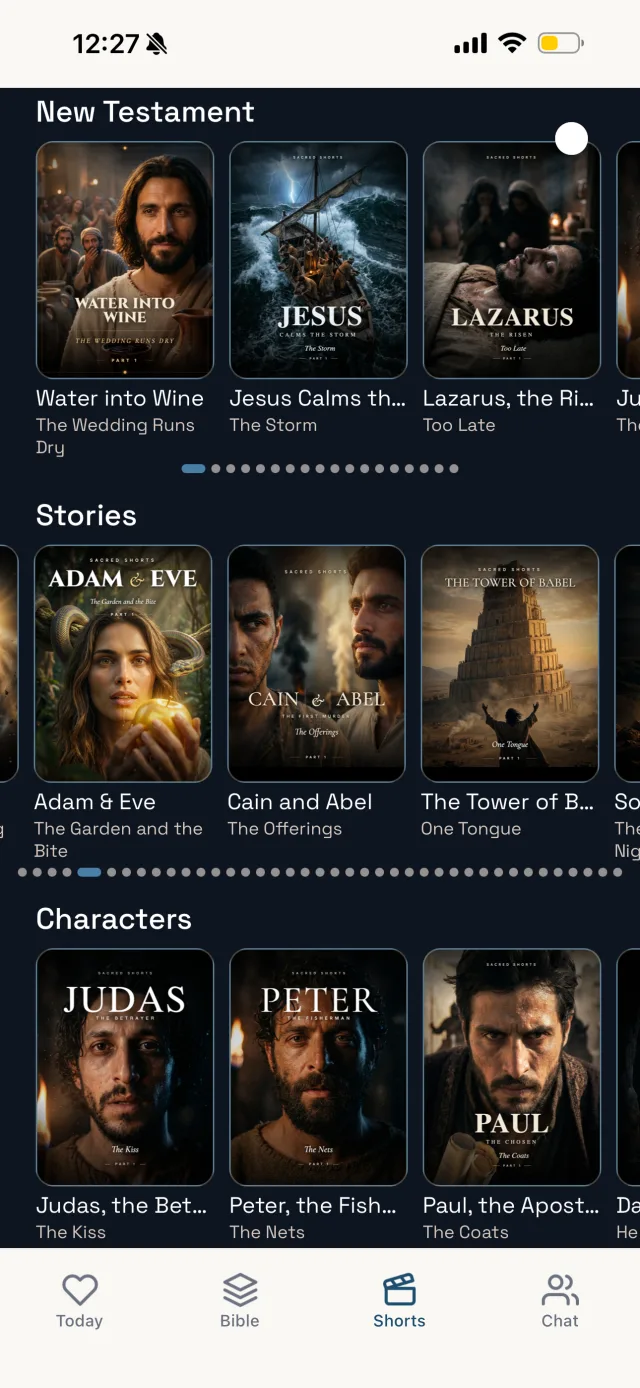
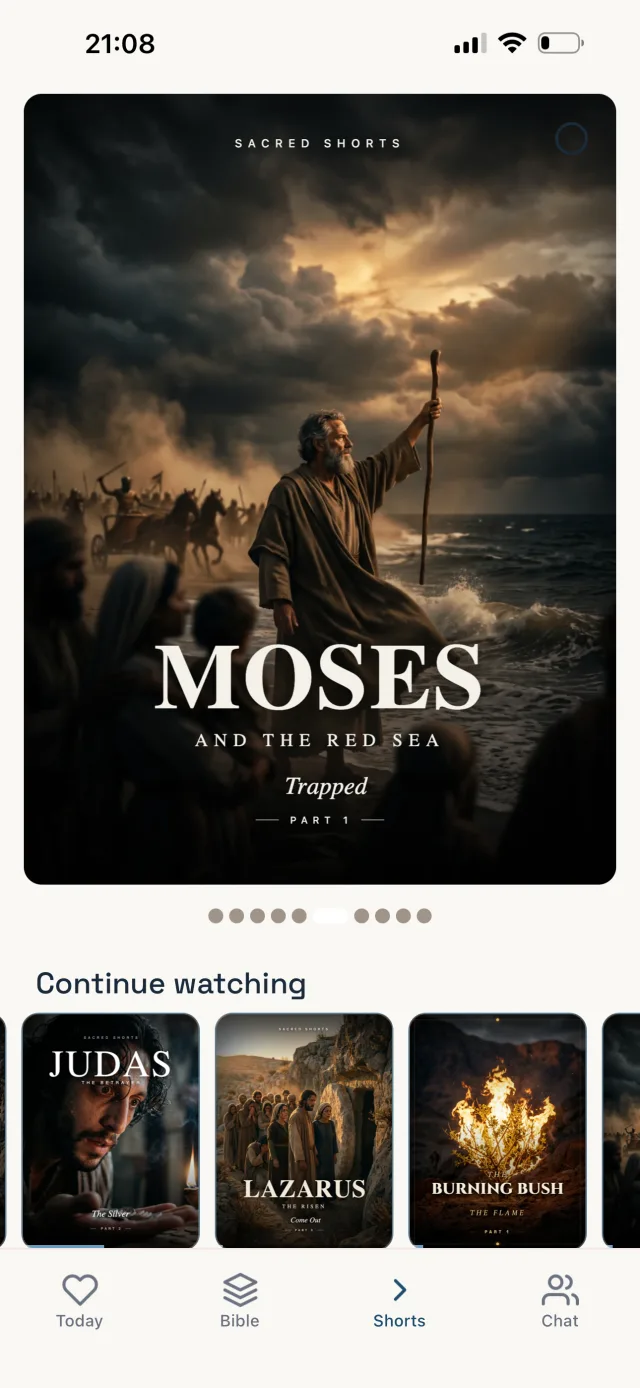
Sacred, a Bible app, has a series called "David": a cinematic Bible series told in short episodes, based on the biblical account. It works well as a way to revisit the story in a few minutes, and it can sit next to whatever longer drama you are watching.
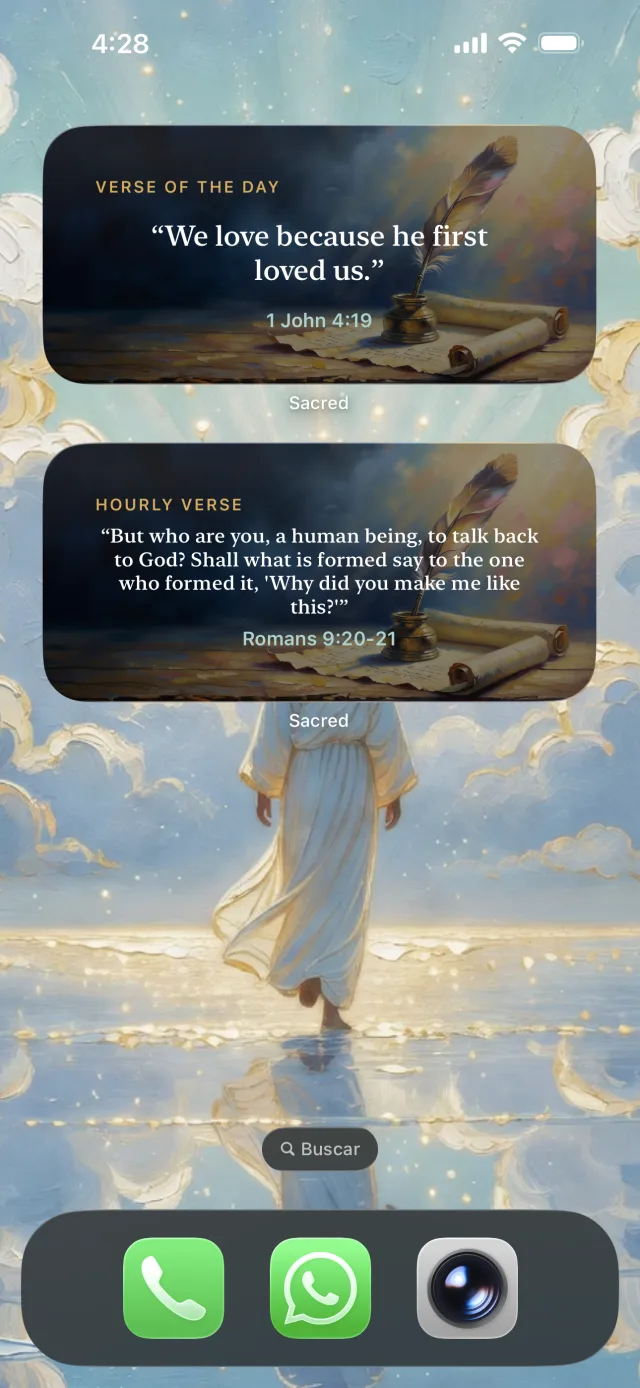
After an episode, you can open 1 Samuel in the app and read it in the Berean Standard Bible or the King James Version, or listen to it narrated chapter by chapter with each verse highlighted as it is read. If something puzzles you, like why Saul turned on David or what happened to Jonathan's son Mephibosheth, you can ask in the AI Bible chat, and save the verses you want to come back to as favorites.
Read the whole story once
If House of David has caught your attention, give yourself a week with the source. Read 1 Samuel 16 to 31 over a few evenings, then 2 Samuel. You will meet a David who is braver, more broken and more dependent on God's mercy than any actor can fully show, and you will see why God's promise to his house still matters at Christmas.
 Sacred Shorts
David, in short episodes
Watch it in Sacred, then read and listen to 1 and 2 Samuel in the narrated Bible.
 Scan with your phone
Frequently asked questions
House of David is a dramatization. It follows the outline of David's early life in 1 Samuel, but like any adaptation it adds dialogue, backstories and scenes that are not in the Bible. Reading 1 Samuel 16 to 20 alongside it is the simplest way to see what comes from the text and what was imagined.
David's life runs from 1 Samuel 16, where Samuel anoints him, to 1 Kings 2, where he dies. 1 Chronicles 11 to 29 retells his reign, and many psalms are attributed to him.
Second Samuel 5:4 says David was thirty years old when he became king and that he reigned forty years: seven and a half years over Judah in Hebron and thirty-three years over all Israel in Jerusalem.
The phrase comes from 1 Samuel 13:14 and is repeated in Acts 13:22. It does not mean David was without sin. The Bible records his adultery and the murder he arranged. It points to a man who trusted God, repented honestly when confronted and kept returning to him.