
The story of David and Saul’s spear is one of the most cinematic moments in the life of David, but it is not mainly an action scene. It is a test of mercy. Saul is hunting David through the wilderness. David has already been anointed as Israel’s future king, yet he is living like a fugitive. Then, in the darkness, the hunted man finds the hunter asleep. A spear is stuck in the ground near Saul’s head. David’s companion sees providence and says, in effect, “Let me finish this.” David refuses.
That refusal is the heart of the story. A Bible video can make the scene feel close: the breathing of sleeping soldiers, the cold air of the camp, the nearness of the spear, the quiet urgency in Abishai’s voice. Visual storytelling helps us imagine and enter the biblical story, but it does not replace Scripture. The passage must be read, weighed, and received from the Bible itself. The healthiest rhythm is simple: watch → read → reflect → pray.
The biblical setting: a promised king who will not grab the crown
David’s conflict with Saul does not begin with the spear. It begins with a calling. Samuel anoints David in 1 Samuel 16, and the Spirit of the Lord comes powerfully upon him. David then defeats Goliath, serves in Saul’s court, and becomes loved by the people. Saul’s jealousy grows as David’s reputation rises. By the time we reach the wilderness stories, David is not trying to build a rebellion; he is trying to stay alive.
That background matters because David’s restraint is not weakness. He has already proved courage in battle. He has loyal men around him. He has the promise of kingship over his life. If the story were only about political strategy, killing Saul might seem efficient. But David sees a deeper question: will he receive the kingdom from God, or will he take it by blood before God gives it?
The first major mercy scene happens in 1 Samuel 24. Saul enters a cave where David and his men are hiding. David cuts off a corner of Saul’s robe but then is conscience-stricken. He tells his men that he will not put out his hand against “the Lord’s anointed.” Later, he calls to Saul from a distance and shows the piece of robe as proof that he could have harmed him and did not.
The spear scene in 1 Samuel 26 repeats and intensifies the test. This time David and Abishai enter Saul’s camp at night. Saul is sleeping inside the circle of soldiers, with his spear stuck in the ground by his head. Abishai says, “Today God has delivered your enemy into your hands.” David answers that no one can strike the Lord’s anointed and be guiltless. He takes the spear and water jar instead, then calls from the hill and exposes the failure of Saul’s guard.
Why this scene works so powerfully on screen
David and Saul’s spear works on screen because the drama is physical and spiritual at the same time. The spear is visible. The choice is invisible. The audience can see the weapon, but the real battle is inside David’s heart.
A faithful video adaptation should let the silence breathe. This is not a scene that needs constant dialogue. The tension is in the restraint: David kneeling near the man who wants him dead, Abishai ready to strike, Saul unaware, the camp asleep. The camera can show the weight of the moment without pretending to know every thought David had. Good Bible storytelling respects the gaps in the text instead of filling them with careless certainty.
The scene also resists the usual revenge arc. Modern stories often train us to cheer when the hero finally gets the chance to destroy the villain. First Samuel asks a different question: what if righteousness means not taking the shot? What if the open door is not permission, but a test? David’s refusal does not excuse Saul’s violence. It does not mean injustice is harmless. It means David will not become king by becoming the kind of man Saul fears.
That distinction is important for pastoral wisdom. This passage should not be used to pressure victims to stay in danger or to ignore real abuse. David keeps distance from Saul. He names Saul’s pursuit as wrong. He asks why Saul is hunting him. Mercy here is not denial. It is entrusting judgment to God while refusing personal vengeance.

The Bible has never felt like this
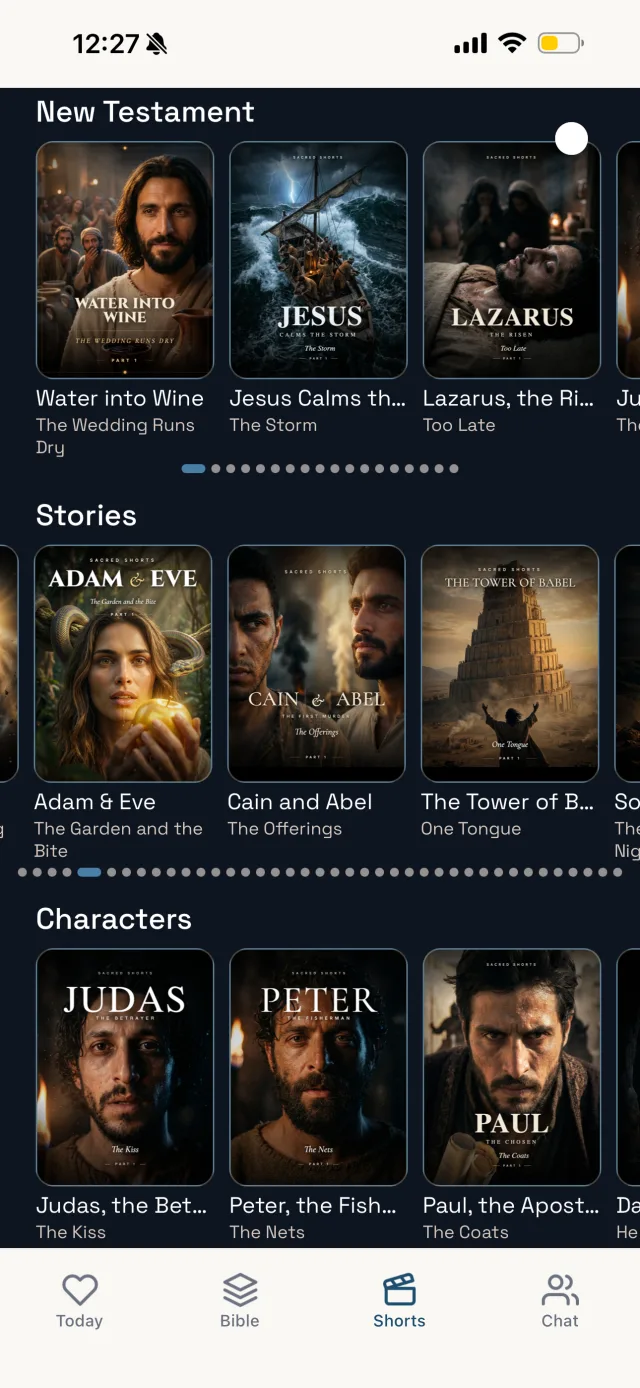
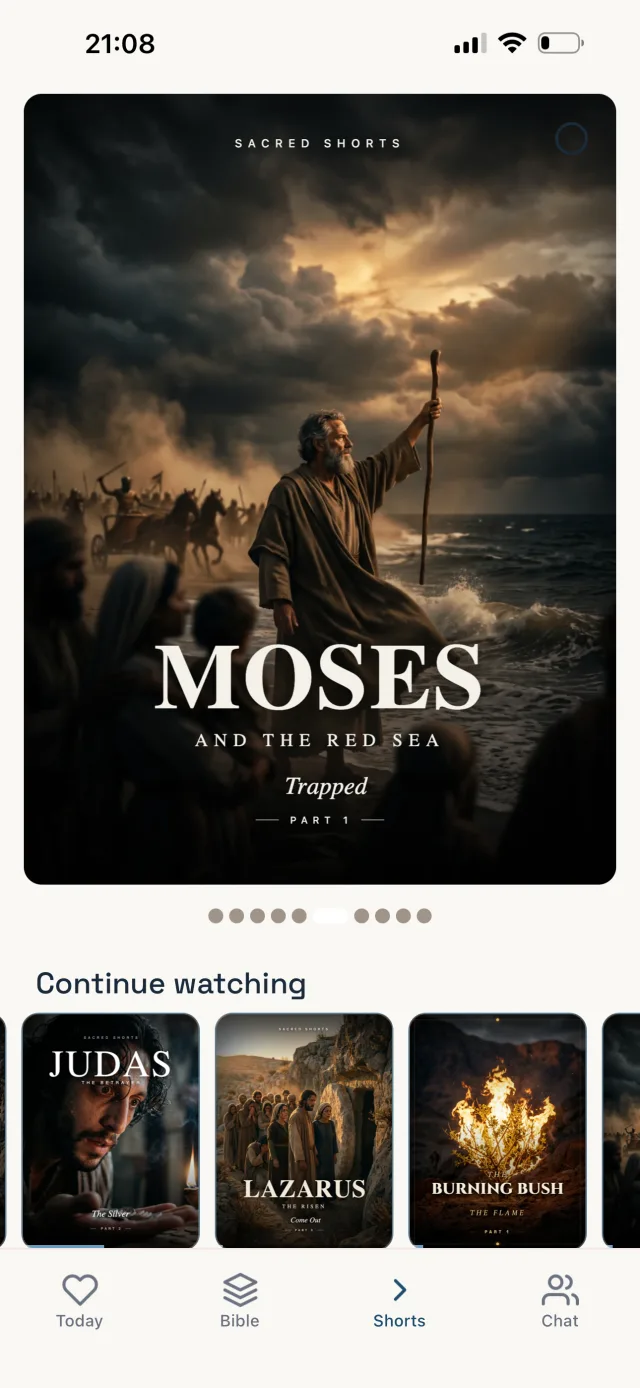
Watch this story come to life as a cinematic series in Sacred.
4.8on the App Store
The spiritual meaning: mercy without passivity
David’s mercy is active. He takes the spear and water jar, climbs to a safe distance, and speaks publicly. He does not pretend nothing happened. He confronts Saul with evidence: he had the chance to kill him and chose not to. His words are both humble and bold. He asks the Lord to judge between them, and he refuses to place ultimate justice in his own hands.
Christians often read David as a complex figure. He is not a perfect man, and later chapters make that painfully clear. Different Christian traditions may emphasize typology, moral example, covenant kingship, or the formation of conscience in this passage. But across those approaches, one theme is plain: David’s future is in God’s hands, and therefore David does not need to secure it through revenge.
That theme reaches beyond David. Jesus teaches his disciples to love enemies, pray for persecutors, and refuse retaliation as the governing law of the heart. The New Testament also affirms that judgment belongs to God. David’s choice by Saul’s spear is not the fullness of the gospel, but it points toward a kingdom where power is not proven by domination.
How to watch, read, reflect, and pray
If you watch this scene in a Bible video, begin with attention. Notice what the video helps you feel: fear, opportunity, anger, pressure from friends, or the strange strength of restraint. Then open 1 Samuel 24 and 1 Samuel 26. Read slowly. Ask what details are in the text, what the adaptation emphasized, and what it left unstated.
Reflect with concrete questions. Where am I tempted to call revenge “justice” because the opportunity is in front of me? Where do I need boundaries rather than denial? Where do I need to trust God’s timing instead of forcing an outcome? Where does mercy require courage, not sentiment?
Then pray. You might pray for wisdom to distinguish mercy from enabling harm, courage to refuse vengeance, and faith to wait for God without becoming passive. Sacred can support this rhythm gently: Sacred Shorts can help you watch cinematic Bible stories, the Study Bible can bring you back to the passage, AI Bible Chat can help with context questions, and Guided Prayer can help you respond. Reading Scripture is always free in Sacred; the point is to let video lead you back to the Word.
FAQ
Where is David and Saul’s spear in the Bible?
The spear scene is in 1 Samuel 26. A related earlier scene, where David spares Saul in the cave and cuts his robe, is in 1 Samuel 24.
What does the spear symbolize in the story?
The spear represents Saul’s power and the violent path David refuses to take. David holds the evidence that he could have killed Saul, but he chooses mercy and trust instead of revenge.
Does David forgiving Saul mean people should stay near dangerous people?
No. David repeatedly keeps distance from Saul and seeks safety. The story teaches refusal of personal vengeance, not denial of danger or the removal of wise boundaries.
 Sacred Shorts
Watch the Bible like never before
Cinematic Bible stories, a complete Study Bible, daily devotionals, and guided prayer. New episodes every week.
Frequently asked questions
The main scenes are in 1 Samuel 24, where David spares Saul in the cave, and 1 Samuel 26, where David enters Saul’s camp and takes the spear and water jar.
David refused to seize the throne through revenge because Saul was still the Lord’s anointed king. He trusted God to judge and to fulfill the promise in God’s time.
No. Video can help you imagine the fear, darkness, and tension of the scene, but Scripture remains the source and authority for understanding the story.