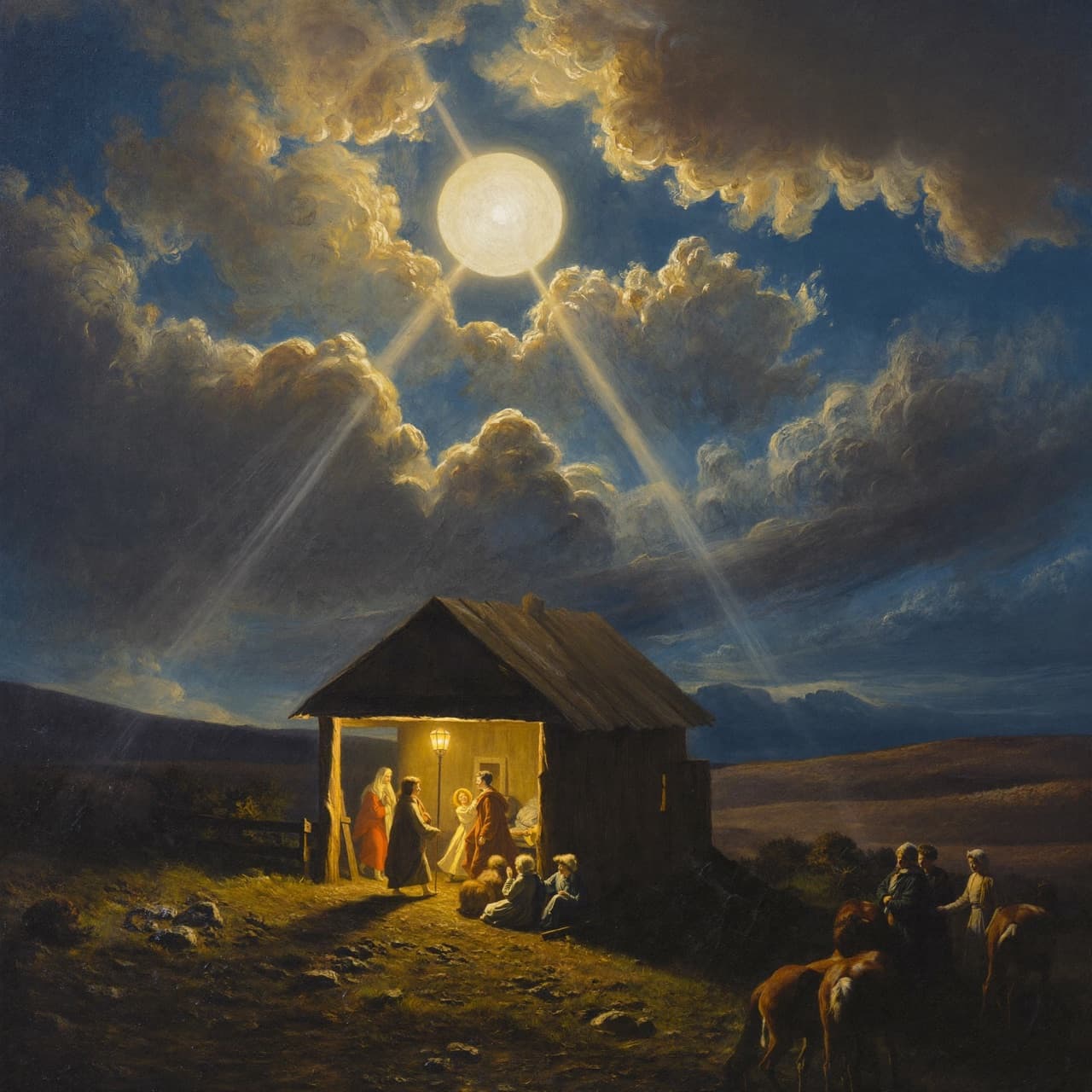
Some of the best Bible stories for anxiety are Jesus calming the storm, Elijah resting under the broom tree, Daniel in the lions' den, Jonah praying from inside the fish, the twelve spies, Esther before the king, and Peter sinking on the water. Each one shows a real person who was afraid, and a God who met them in the middle of it without shaming the fear. When your mind is racing, a story can be easier to take in than a list of verses, and many of these can be watched or listened to in a few minutes.
Why stories help when you are anxious
When you are anxious, a verse like "do not be anxious about anything" (Philippians 4:6, NIV) can land like an instruction you are already failing. Stories work differently. They do not start by telling you what to feel. They show you someone else in the boat, under the tree, in the den, and let you watch what God does there. If you are looking for the key verses on this topic, they are collected in what the Bible says about anxiety.
One honest note before the list: Scripture can comfort and steady you, but it is not a replacement for care. If your anxiety is persistent, keeps you from sleeping or working, or comes with panic attacks, please talk with a doctor, a licensed counselor or someone you trust. Seeking help is not a lack of faith.
7 Bible stories for when you are afraid
1. Jesus calms the storm (Mark 4:35–41)
A sudden storm hits the lake at night, and experienced fishermen think they are going to die. Jesus is asleep on a cushion in the stern. They wake him with the most anxious question in the Gospels: "Teacher, don't you care if we drown?" (Mark 4:38, NIV). He gets up, speaks to the wind, and the lake goes completely calm.
What it offers: the disciples' fear is not hidden or edited out, and Jesus does not leave the boat. Their question is in the Bible, which means yours can be prayed out loud too.
2. Elijah under the broom tree (1 Kings 19:1–18)
Right after a dramatic victory on Mount Carmel, Elijah receives one threatening message and runs for his life. He sits under a bush in the desert and says, "I have had enough, Lord" (1 Kings 19:4, NIV). Then he falls asleep. An angel wakes him, gives him bread and water, and lets him sleep again. Only later, at Mount Horeb, does God speak, and not in the wind, the earthquake or the fire, but in "a gentle whisper" (1 Kings 19:12, NIV). God also reminds him he is not alone and gives him a companion, Elisha.
What it offers: God's first response to an exhausted, frightened prophet is rest and food, not correction. If you have ever felt the way Elijah did, wishing you were not alive, please reach out today to someone near you or to a crisis line; in the US you can call or text 988.
3. Daniel in the lions' den (Daniel 6)
Daniel's rivals get the king to pass a law against praying to anyone but him. Daniel knows exactly what will happen, and he still goes home and prays as he always has, three times a day, with the windows open. He spends the night in the den and walks out unharmed: "My God sent his angel, and he shut the mouths of the lions" (Daniel 6:22, NIV).
What it offers: Daniel does not stop being afraid by thinking positively. He keeps a steady habit of prayer, and the habit holds him when the pressure comes. For more on this story on screen, see Daniel in the lions' den in video.
4. Jonah prays from the depths (Jonah 2)
Jonah is running from God when he is thrown into the sea and swallowed by a great fish. Chapter 2 is his prayer from inside it, and it sounds like someone describing panic: water closing in, seaweed around his head, the sense of going under. And still: "In my distress I called to the Lord, and he answered me" (Jonah 2:2, NIV).
What it offers: Jonah prays before he is rescued, not after. You do not have to be on dry ground, or even have your life in order, to call out to God.
5. The twelve spies (Numbers 13–14)
Twelve men scout the promised land. Ten come back overwhelmed: "We seemed like grasshoppers in our own eyes" (Numbers 13:33, NIV). The fear spreads through the whole camp overnight. Caleb and Joshua saw the same giants, but they also remembered who had brought them out of Egypt.
What it offers: this is a story about how anxiety grows when it is repeated and shared. It invites you to put what you fear next to what God has already done for you.
6. Esther before the king (Esther 4–5)
Esther's people face a death decree, and the only way to stop it is to enter the king's court uninvited, which could cost her life. She does not pretend to be brave. She asks her community to fast with her for three days, and then she goes, saying, "if I perish, I perish" (Esther 4:16, NIV).
What it offers: courage here looks like asking others to carry the weight with you and then taking one step. Fear and obedience sit side by side.
7. Peter walks on the water (Matthew 14:22–33)
Peter steps out of the boat toward Jesus and actually walks on the water, until he notices the wind. He starts to sink and manages three words: "Lord, save me!" The next line is the comfort: "Immediately Jesus reached out his hand and caught him" (Matthew 14:30–31, NIV).
What it offers: Peter's prayer is short enough for a panic attack, and Jesus does not wait for him to calm down first. This scene is explored further in Jesus walks on water in video.

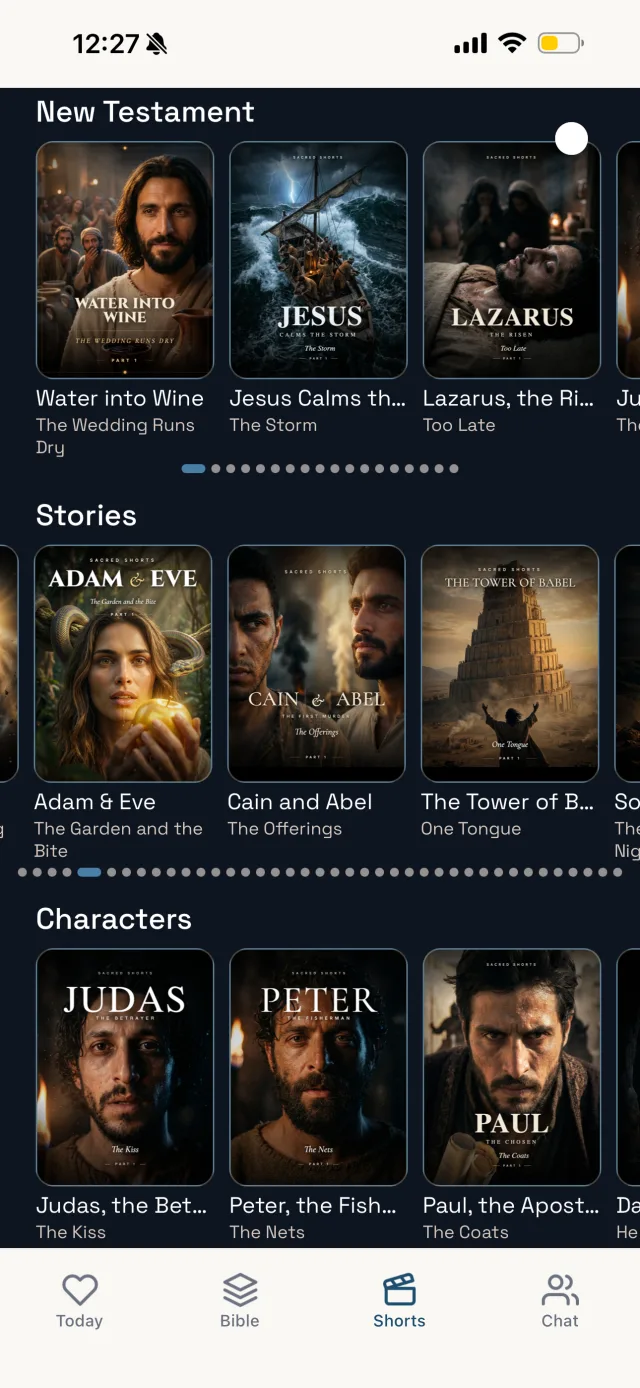
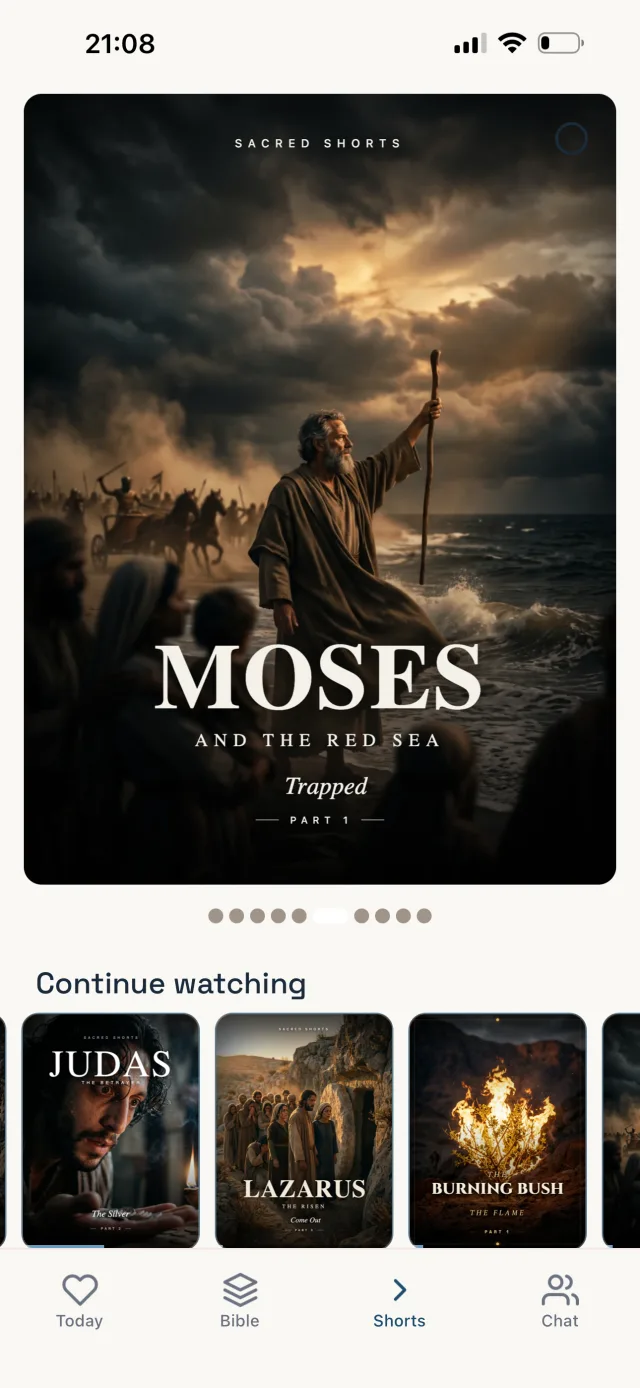
Watch “Jesus Calms the Storm”
A cinematic series in short episodes about the night the disciples thought they would drown.
4.8on the App Store
 Scan with your phone
A gentle way to use these stories on an anxious night
- Choose one story, not seven. One is enough.
- Listen instead of reading if your focus keeps slipping. Slow the narration down if it helps.
- Borrow one line to pray. "Don't you care?" "I have had enough." "Lord, save me." The Bible gives you permission to be this honest.
- Breathe and stop when you have had enough. You do not need to finish a chapter for it to count.
If you want words for a longer prayer, this prayer for when you are anxious can help.
How Sacred can help
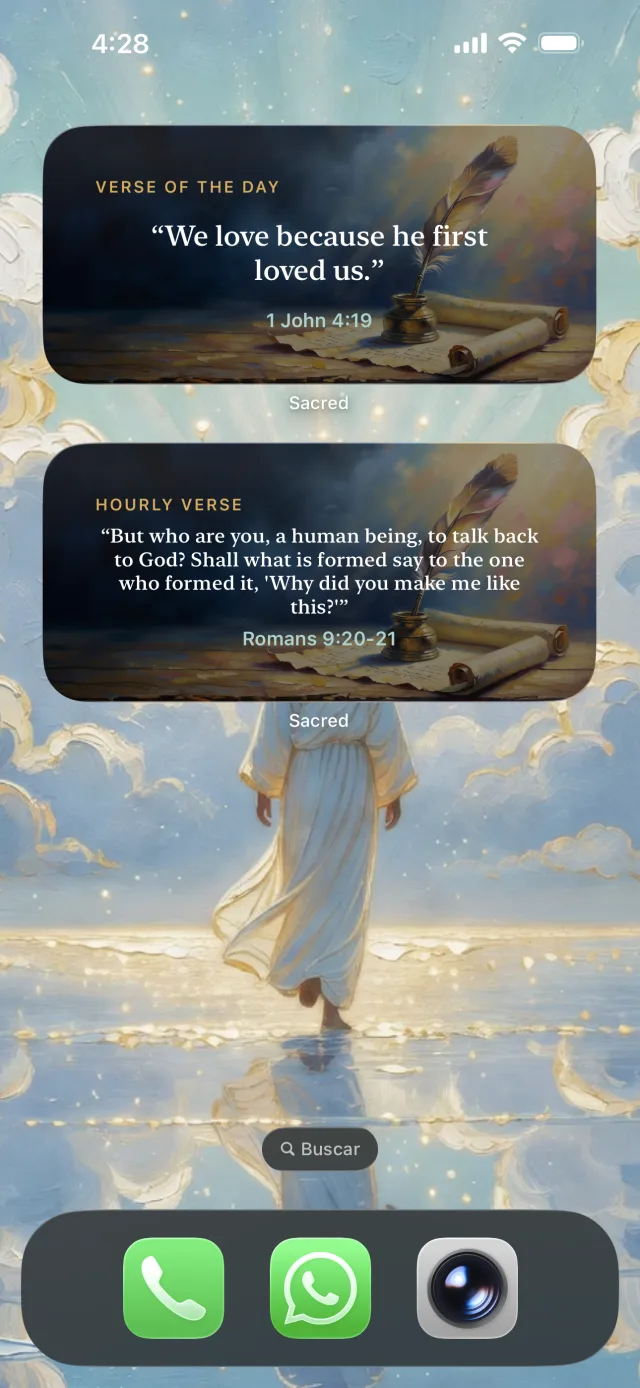
Sacred tells most of these stories as cinematic series in short episodes: "Jesus Calms the Storm," "Daniel in the Lions' Den," "Jonah," "The Twelve Spies" and "Esther," and it has a series on Peter, "Peter, the Fisherman." For Elijah, and for every passage above, the full Bible is narrated chapter by chapter, with the verse highlighted as it plays, speed control, and audio that keeps going with the screen locked, so you can listen in the dark without a bright screen in your face. There is also a daily devotional with a short reflection and a narrated prayer, and the app has no ads to interrupt a quiet moment.
One last word
The Bible never asks you to stop being human. It shows you people who were terrified, and a God who stayed in the boat, fed the tired prophet, and reached for the one who was sinking. As the psalm puts it, "When I am afraid, I put my trust in you" (Psalm 56:3, NIV). Start there tonight.
 Sacred Shorts
When fear gets loud, start here
Watch the story in Sacred, then listen to Mark 4 narrated, even with the screen locked.
 Scan with your phone
Frequently asked questions
Jesus calming the storm in Mark 4 is the one many people return to, because the disciples are terrified and Jesus is with them in the boat. Elijah under the broom tree in 1 Kings 19 is especially gentle for exhaustion, and Peter sinking in Matthew 14 shows Jesus catching someone mid-panic.
Feeling afraid is part of being human, and the Bible is full of faithful people who were afraid, including David, Elijah and Peter. Jesus himself was deeply distressed in Gethsemane. Scripture invites us to bring our fear to God, not to pretend it is not there.
No. Scripture can comfort and steady you, but persistent anxiety, panic attacks or anxiety that affects sleep, work or relationships deserve real care. Talking with a doctor, a licensed counselor or a trusted pastor is a wise and faithful step.
Many people find listening easier when their thoughts are racing, because they do not have to hold their focus on a page. Choose one short story, play it at a gentle pace, and let it be enough for the moment.