
The Psalms are not only poems to study from a distance. They are words given for worship, lament, confession, gratitude, longing, trust, repentance, and praise. They teach God's people how to speak honestly before the Lord without pretending life is simple. A Psalm can begin with fear and end in trust. It can begin with praise and move into memory. It can cry, "How long?" and still cling to the steadfast love of God.
That is why the Psalms can be powerful in video. A cinematic Bible short can help us slow down with the images already present in the text: a shepherd leading sheep beside still waters, a tree planted by streams, a deer longing for water, a heart made clean, a refuge under the shadow of wings, dawn breaking after a long night. Visual storytelling can make the language feel less abstract and more prayerful. But video does not replace Scripture. It is a doorway back to the words God has preserved. The best rhythm is watch → read → reflect → pray. Watch to give your attention. Read the Psalm carefully. Reflect on what it reveals about God and the human heart. Pray the Psalm back to the Lord.
The biblical shape of the Psalms
The book of Psalms is a collection of 150 songs and prayers. Some are associated with David, some with Asaph, the sons of Korah, Solomon, Moses, and other voices in Israel's worship. Together they give a vocabulary for faith across many seasons. Psalm 1 opens with the blessed person who delights in the law of the Lord. Psalm 2 looks toward the Lord's anointed king. Psalm 23 confesses the Lord as shepherd. Psalm 51 gives words for repentance. Psalm 103 calls the soul to bless the Lord and remember his mercy. Psalm 139 marvels that God knows us completely.
The Psalms also teach us that prayer is not only polished language. The faithful pray in joy, but they also pray in grief, confusion, guilt, danger, and waiting. Some Psalms are laments. Some are songs of thanksgiving. Some are royal Psalms. Some are wisdom Psalms. Some look directly at creation. Some remember the history of God's people. Christians read the Psalms within the whole story of Scripture, seeing how Jesus prayed them, fulfilled them, and invites his people into honest communion with the Father.
Because the Psalms are poetry, they use images that can open the imagination. They speak of rock, fortress, shield, green pastures, deep waters, enemies, tears, morning, night, temple, wilderness, and refuge. Video can serve those images when it helps the viewer pay attention to the text instead of adding noise over it.
Why Psalms are different from narrative scenes
Many Bible videos retell events: creation, the exodus, David and Goliath, the birth of Christ, the road to Damascus. The Psalms are different. They often place us inside prayer rather than in a single plot. A video based on Psalm 23, for example, may show a shepherd and sheep, but the heart of the Psalm is trust: "The Lord is my shepherd; I shall not want." A visual meditation on Psalm 42 may show thirst, distance, memory, and tears, but the heart is a soul learning to hope in God.
That difference matters. A Psalm video should not pretend to show exactly what the original singer saw in every detail. It should invite reflection. It can use light, sound, landscape, pacing, and human expression to help the words breathe. It can show silence before a line of prayer. It can let the viewer feel the move from distress to trust. Yet it should remain humble, because poetry often holds more than one faithful image at once.
Different Christian traditions may use the Psalms differently in worship. Some chant them. Some sing metrical Psalms. Some pray them daily through liturgy. Some read them devotionally in private. Those practices differ, but they share a deep conviction: the Psalms form prayer by giving us biblical words.

The Bible has never felt like this
Watch this story come to life as a cinematic series in Sacred.
4.8on the App Store
Video helps us imagine, but Scripture remains first
A good Psalm video can restore attention in a distracted day. It can help someone who is tired pause long enough to hear, "The Lord is my shepherd." It can help someone who feels spiritually dry notice the cry of Psalm 42. It can help someone who needs confession sit with Psalm 51 rather than rushing past repentance. It can help someone who feels unseen hear Psalm 139 with fresh wonder.
But no cinematic adaptation carries the full authority, structure, and depth of the Psalm itself. The camera can suggest a valley; the Scripture names the Lord who is present there. The music can create quiet; the Psalm teaches the soul what to say. The image can show tears; the text gives those tears a place before God. Video should serve Scripture the way a window serves light: it may help you see, but it is not the sun.
That is why the order matters. Do not stop at the emotional feeling of a scene. Return to the Psalm. Notice repeated words. Ask what God is called. Ask what the speaker fears, remembers, confesses, or praises. Ask where the Psalm turns. Ask how Christ, who prayed the Psalms and fulfills Scripture, reshapes your reading.
A Scripture-first rhythm: watch → read → reflect → pray
First, watch with quiet attention. If the video is based on Psalm 23, notice shepherd, path, table, valley, and house. If it is based on Psalm 51, notice confession and mercy. If it is based on Psalm 139, notice being known by God not as a threat but as a summons to honest surrender.
Second, read the Psalm aloud. Poetry was meant to be heard. Read slowly enough for the parallel lines to land. Look for movement: from fear to trust, from confession to cleansing, from memory to praise, from lament to hope. If a line is difficult, do not skip it too quickly. Let the Bible shape the prayer rather than forcing the Psalm into your mood.
Third, reflect. What does this Psalm teach about God's character? What does it reveal about human need? What phrase names something you have struggled to say honestly? What promise or command calls for response?
Finally, pray. You might pray, "Lord, teach me to pray with the honesty of the Psalms. Let what I watch lead me back to your Word. Form my fears, gratitude, repentance, and hope according to Scripture." This keeps video in its proper place: helpful, beautiful, and secondary to the Word.
Where Sacred fits naturally
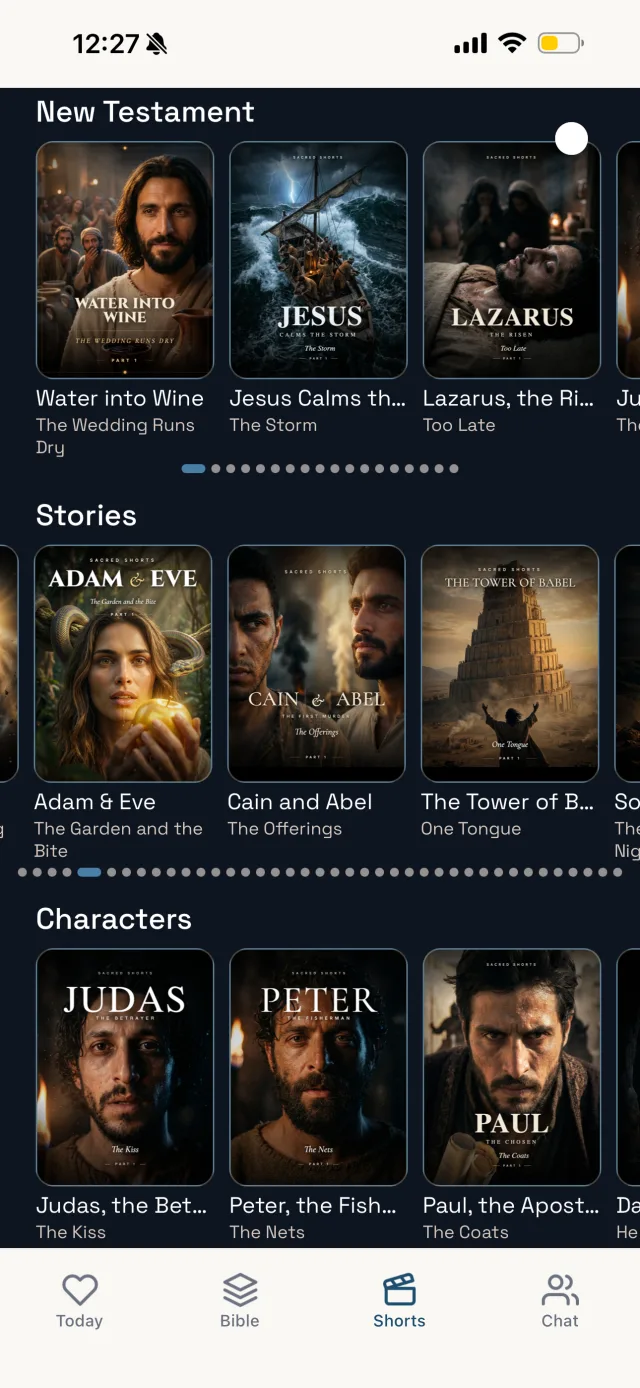
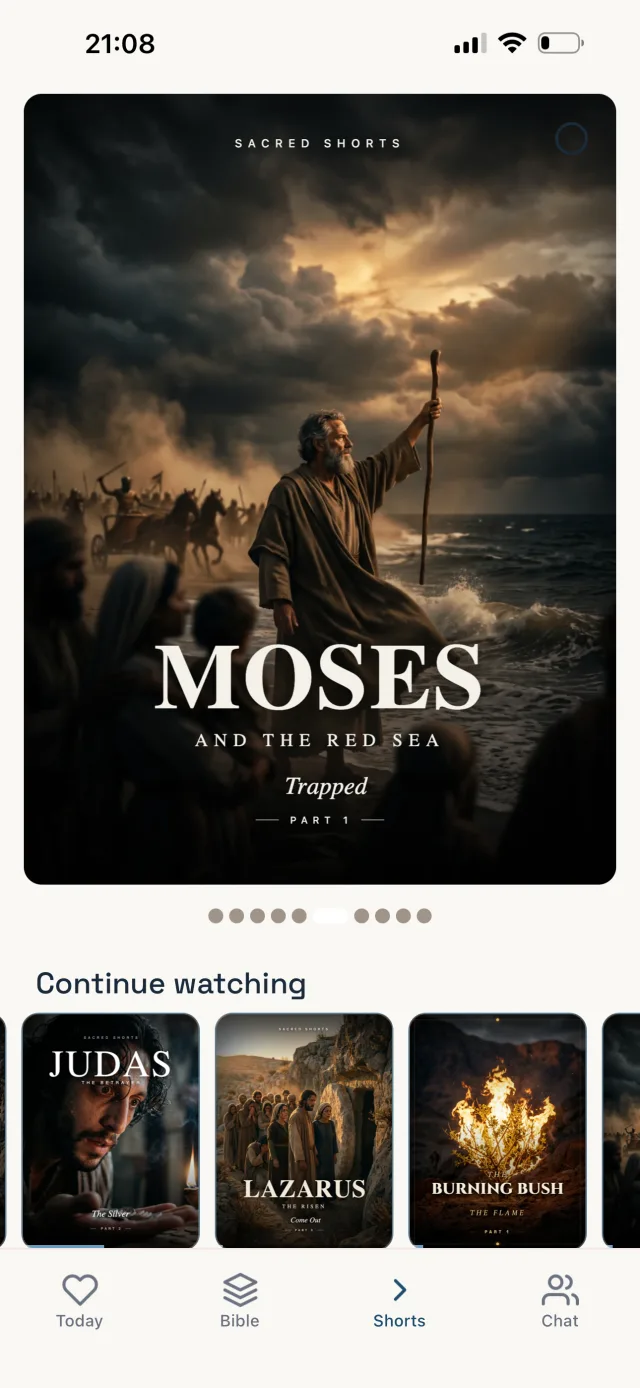
Sacred is built for people who want Scripture to feel close without making the screen the final authority. Sacred Shorts can help you imagine the prayerful world of the Psalms with reverence. The Study Bible keeps the text in front of you. Daily devotionals can help you carry one verse into ordinary life. Guided Prayer gives space to respond. AI Bible Chat can help you ask careful questions about imagery, context, or how Christians have read a Psalm across traditions.
Reading Scripture is always free in Sacred because the Bible remains central. A Psalm video may help you pause. The Psalm itself teaches you to pray.
FAQ
What is the best way to use a Psalm video?
Use it as a beginning, not an ending. Watch to slow your attention, read the Psalm in full, reflect on its movement and images, then pray in response.
Which Psalms should I start with for prayer?
Psalm 1, Psalm 23, Psalm 27, Psalm 42, Psalm 51, Psalm 91, Psalm 103, and Psalm 139 are accessible starting points because they speak clearly about trust, desire, repentance, refuge, praise, and being known by God.
Do Psalm videos replace reading the Bible?
No. A video can help you imagine and enter the prayerful atmosphere of a Psalm, but Scripture gives the words, meaning, and authority for Christian prayer and reflection.
 Sacred Shorts
Watch the Bible like never before
Cinematic Bible stories, a complete Study Bible, daily devotionals, and guided prayer. New episodes every week.
Frequently asked questions
Yes. A visual meditation can help you slow down with the imagery, emotion, and worship language of the Psalms, as long as it leads you back to the biblical text.
Psalm 1, Psalm 23, Psalm 27, Psalm 42, Psalm 51, Psalm 91, Psalm 103, and Psalm 139 are strong places to begin.
No. Video can help you imagine and attend to the Psalm, but Scripture gives the words, shape, and truth for prayer.