
An AI Bible app lets you type a question about Scripture in plain words and get an explanation in seconds: where a verse is, what was happening when it was written, which other passages connect to it. Used well, it is a fast study companion. It is not Scripture, it is not a pastor, and it can be wrong. So the rule that matters most is simple: every answer should send you back to the text, and you should read that text before you trust the answer.
What an AI Bible chat is actually good for
AI tools are strongest at the tasks that used to take a concordance, a Bible dictionary and an hour of searching:
- Finding a passage you half remember. "Somewhere Jesus says his yoke is easy" is enough to get you to Matthew 11:28-30.
- Background and context. Who the Samaritans were, why Corinth mattered, what a denarius was worth, how a wedding worked in Jesus' day.
- Cross references. Ask which other passages speak about the same promise or person, then read them side by side.
- Word meanings. The different Greek words for love in John 21, or everything the Hebrew word "shalom" covers.
- Orientation before you read. A short overview of a book before you start it, so chapter 1 doesn't feel like walking into a movie halfway through.
- Preparing questions. Sorting out your thoughts before a small group, a sermon series or a conversation with your pastor.
Notice what these have in common. They are all questions about the text, and they all have answers you can check.
Where AI falls short
The same tools have real limits, and it helps to know them by name.
It can be confidently wrong. AI writes fluent sentences whether or not the content is accurate. It can misquote a verse, blend two passages into one, or give a reference that doesn't say what it claims. The tone sounds just as sure either way.
It flattens disagreement. On baptism, communion, the end times or spiritual gifts, sincere Christians read the same passages differently. An AI may present one view as the obvious one, or blur them into something no church actually teaches.
It doesn't know you. It can't see your church, your history, your marriage or the grief you are carrying. Advice about your life needs people who know your life.
It is not a pastor or a counselor. It can't pray with you or notice when you are not okay. If you are in crisis, talk to a person today.
It is not Scripture. This one matters most. The answer on your screen is a summary written by a machine. The Bible is the word you are actually trying to hear.
The early church already had a good model for this. When Paul preached in Berea, the listeners didn't simply take his word for it:
"They received the message with great eagerness and examined the Scriptures every day to see if what Paul said was true." (Acts 17:11, NIV)
If the apostle Paul was checked against Scripture, a chatbot certainly should be.
A simple habit: ask, open, read, compare
You don't need a complicated method. Four steps keep AI in its place:
- Ask a specific question. "What does the Bible say about worry?" gets a generic list. "Where does Jesus talk about worry, and what is the setting?" gets you somewhere.
- Open every verse it mentions. Don't read the quote in the chat. Read it in the Bible.
- Read the whole chapter. A verse means what it means in its context, and five extra minutes of reading prevent most misunderstandings.
- Compare a second translation, and bring big questions to a person. If a passage seems to say something surprising, see how another translation renders it, then talk with your pastor or a mature believer.
If you are building a personal study routine, our guide on how to study the Bible on your own pairs well with this habit.

Ask your Bible questions in Sacred
Sacred's AI Bible chat helps you find passages and context, with the full Bible right there to check.
4.8on the App Store
 Scan with your phone
Prompts that actually help
Good prompts are specific, ask for references and invite the AI to show its work. A few worth copying:
- "Where does the Bible say 'Be still, and know that I am God'? Give me the reference and explain what is happening in that psalm."
- "What was going on in the church in Corinth when Paul wrote 1 Corinthians 13?"
- "Give me four cross references for Isaiah 40:31 and explain in one sentence how each one connects."
- "I'm about to read Ruth for the first time. What should I know about the time of the judges before chapter 1?"
- "How do different Christian traditions understand James 2:24? Summarize each view fairly and list the passages each one relies on."
- "Turn Psalm 23 into a short prayer I can pray before work, staying close to the words of the psalm."
After the Isaiah prompt, compare the answer with our explanation of the meaning of Isaiah 40:31. For the Ruth prompt, read our profile of who Ruth was in the Bible next to the AI's overview and see where they agree.
Some prompts are better rewritten. "Tell me what God wants me to do about this job offer" asks a machine to speak for God. A better version: "What passages talk about making decisions with wisdom, and what questions do they suggest I ask myself?" The first hands over your discernment. The second helps you practice it.
The same goes for doubt. AI can help you find what the Bible says about hard questions, but it can't walk with you through the struggle. Our article on how to deal with doubt as a Christian has more on that.
What to look for in a Christian AI app
Before you settle on one, ask a few honest questions:
- Is the Bible inside the app? If checking an answer means leaving the app to search somewhere else, you will check less often.
- Does it point you to verses? Answers with references you can open are far more useful than answers without them.
- Is it clear that you are talking to AI? A good tool doesn't pretend to be a pastor or a person.
- Does it respect different traditions? On contested topics it should explain the views, not declare a winner.
- Is it free of ads? A question about grief or prayer shouldn't be interrupted by a commercial.
How Sacred uses AI
Sacred includes an AI Bible chat where you can ask questions about a verse, a character or a whole book. It lives in the same app as the complete Bible, so when an answer mentions a passage you can go and read it. You can read in the BSB or the KJV, or listen to every chapter narrated in the BSB with each verse highlighted as it is read, which is an easy way to hear the full context instead of a single line.
Around the chat, Sacred has a daily devotional with a verse, a short reflection and a narrated prayer, and cinematic series that retell hundreds of stories from Scripture in short episodes. There are no ads. The chat is meant to be one piece of that: a place to ask questions on the way back to the text, not a replacement for it.
The short version
Use AI for what it does well: finding, explaining and connecting. Be wary of it where it is weak: authority, certainty and your personal life. Open every verse, read every chapter, and let the Bible have the last word.
 Sacred Shorts
Ask a question, then read the passage
An AI Bible chat, the complete Bible to read or listen to, and a daily devotional. No ads.
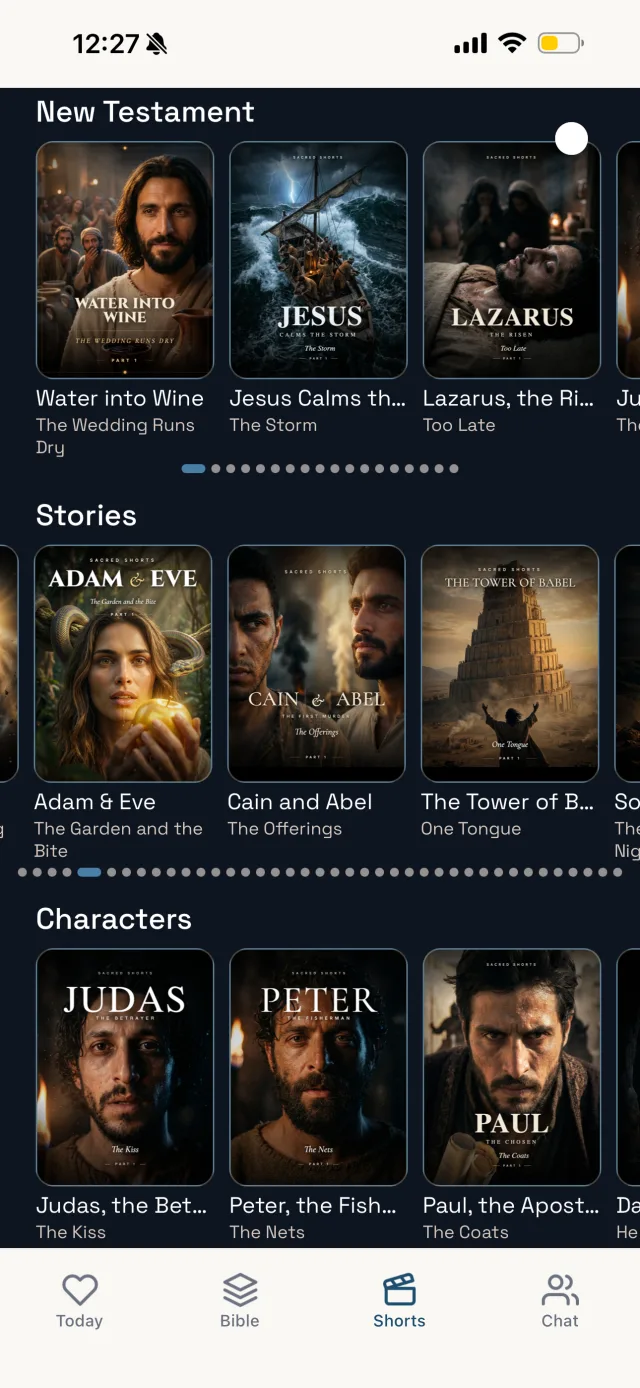
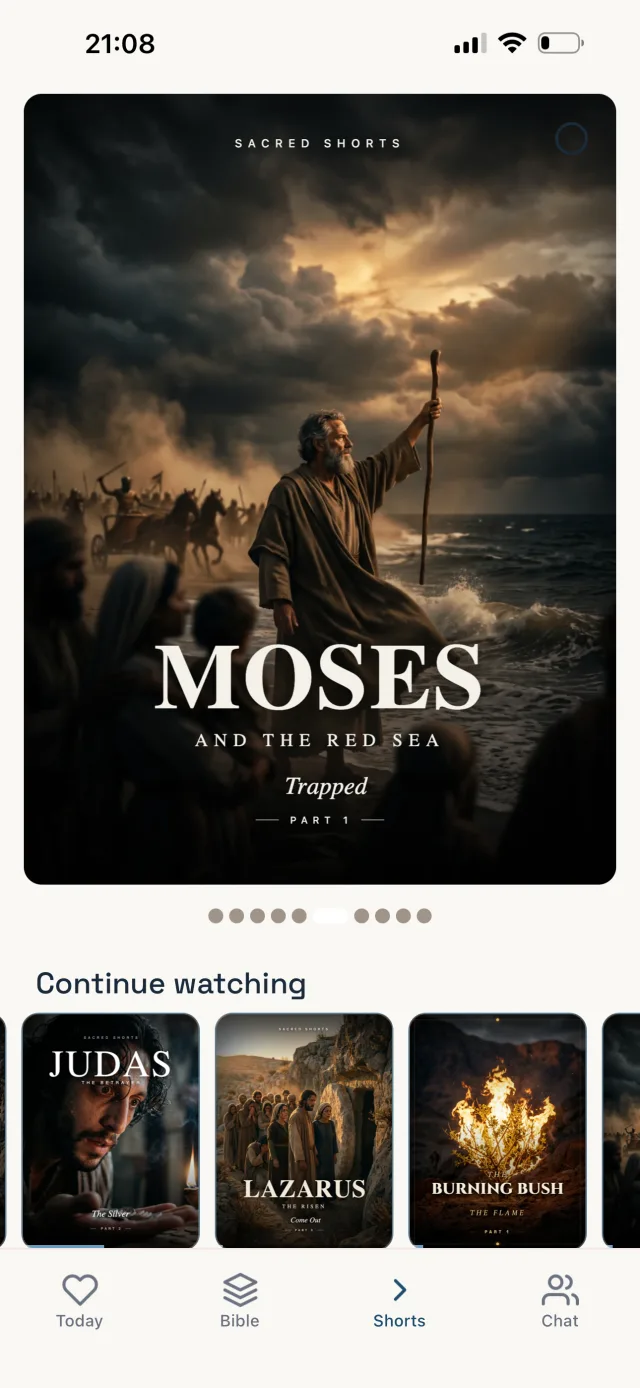
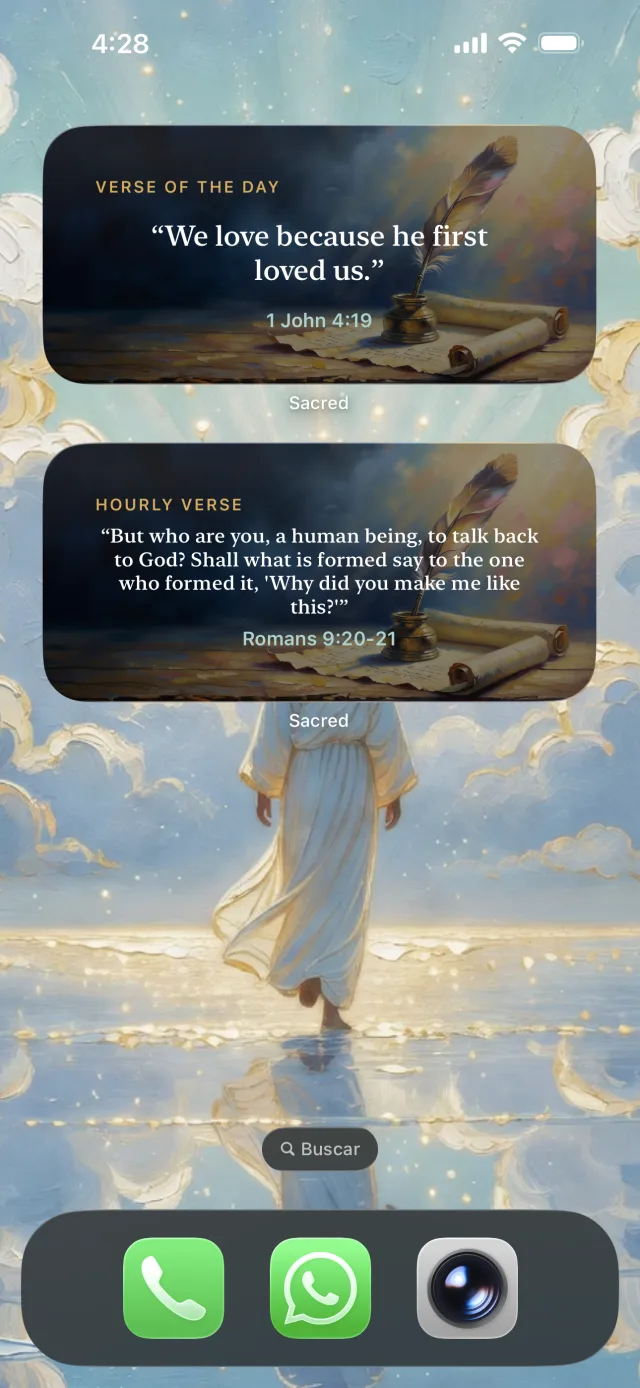 Scan with your phone
Frequently asked questions
Yes, as long as you treat it as a study helper and not as an authority. AI is useful for finding passages, explaining historical background and suggesting cross references. Every answer should send you back to the text itself, and big questions about faith and life belong with Scripture, prayer and people who know you.
Yes. AI can misquote a verse, attach a quote to the wrong reference, or present one interpretation as if it were the only one. The best habit is to open the passage it mentions, read the surrounding chapter and compare a second translation.
Specific ones work best: where a phrase appears in the Bible, what was happening when a book was written, what a Greek or Hebrew word means, or which other passages connect to a verse. Asking it to explain fairly how different Christian traditions read a passage is also helpful.
No. AI does not know you, your church or your situation, and it cannot pray with you or walk with you through a hard season. Use it to prepare questions and understand context, then bring what you learn to your pastor, a mentor or your small group.