Advent 2026 begins on Sunday, November 29, and runs to Christmas Day, Friday, December 25. This devotional gives you one theme for each week (hope, peace, joy and love, as many churches mark them), a short Bible reading for every day, a question to sit with and a prayer for each week. Most readings take five to ten minutes, so you can follow the plan alone, as a couple or around the dinner table.
Advent 2026 at a glance
| Week | Begins | Theme in many churches | Readings from |
|---|---|---|---|
| 1 | Sunday, November 29 | Hope | Isaiah |
| 2 | Sunday, December 6 | Peace | Isaiah, Micah 5, Luke 1 |
| 3 | Sunday, December 13 | Joy | Luke 1, Matthew 1, Isaiah |
| 4 | Sunday, December 20 | Love | John 1, Matthew 2, Luke 2 |
| Christmas | Friday, December 25 | Luke 2 |
The fourth week is short this year. Because Christmas falls on a Friday, week four runs only from Sunday the 20th to Christmas Eve on Thursday the 24th.
The word Advent comes from the Latin for "coming." For centuries Christians have used these weeks to remember how Israel waited for the Messiah and to prepare their own hearts for Christ. Many families light an Advent wreath, adding one candle each Sunday; in many churches the third candle is rose-colored for the Sunday of joy. You don't need a wreath for this plan. A Bible, a few quiet minutes and the same time each day are enough. If daily habits tend to slip for you, our guide on building a daily devotional habit has practical help.
How to use this devotional
- Read the day's passage once, slowly. If you have time, read it again out loud.
- Ask one question: what does this passage show me about the God who comes?
- Write a single sentence in response. Not a journal entry, just one line.
- On Sundays, pray the prayer for the week, and light a candle if you have one.
If you miss a day, skip it and read today's passage. The season is about waiting well, not keeping score.
Week 1: Hope (November 29 to December 5)
Advent starts in the dark on purpose. Isaiah wrote to people who had watched their kingdom shrink under foreign armies, and his promises are spoken into that darkness: "The people walking in darkness have seen a great light" (Isaiah 9:2, NIV). Biblical hope is not optimism about how things will turn out. It is confidence in a God who keeps his word, even when the fulfillment is centuries away.
- Sunday, November 29: Isaiah 9:2-7
- Monday, November 30: Isaiah 7:10-14
- Tuesday, December 1: Isaiah 11:1-10
- Wednesday, December 2: Isaiah 40:1-11
- Thursday, December 3: Isaiah 40:28-31
- Friday, December 4: Isaiah 42:1-9
- Saturday, December 5: Isaiah 35:1-10
Question for the week: Where in your life are you still waiting in the dark? For more passages to carry with you, see these Bible verses about hope.
Prayer: God of every promise, you spoke light into the darkness long before anyone could see it. Teach me to wait for you with hope instead of worry. Keep my eyes on the light that is coming. Amen.
Week 2: Peace (December 6 to 12)
The prophet Micah names an unlikely town, Bethlehem, "small among the clans of Judah," and says the ruler who comes from it "will be our peace" (Micah 5:5, NIV). Then Luke's Gospel opens with Zechariah, an old priest who is told his prayers have been heard and cannot believe it. He spends months unable to speak. When his voice returns at his son's birth, he sings of a God who will "guide our feet into the path of peace" (Luke 1:79, NIV).
- Sunday, December 6: Isaiah 52:7-10
- Monday, December 7: Micah 5:2-5
- Tuesday, December 8: Isaiah 26:1-4
- Wednesday, December 9: Luke 1:5-17
- Thursday, December 10: Luke 1:18-25
- Friday, December 11: Luke 1:57-66
- Saturday, December 12: Luke 1:67-80
Question for the week: Peace in the Bible means wholeness, not just quiet. What would it look like to stop arguing with God's timing, the way Zechariah finally did?
Prayer: Prince of Peace, you chose a small town and an old priest to begin your story. Quiet the noise in me this week. Where I am anxious, give me your peace; where I am in conflict, make me a peacemaker. Amen.

Listen to Luke 1 and 2 before Christmas
Sacred narrates the whole Bible chapter by chapter, with each verse highlighted as it is read.
4.8on the App Store
 Scan with your phone
Week 3: Joy (December 13 to 19)
This is the week of Mary. The angel Gabriel tells a young woman from Nazareth that she will bear the Son of God, and her answer is simple trust. When she visits her relative Elizabeth, the child in Elizabeth's womb "leaped for joy" (Luke 1:44, NIV), and Mary responds with the song known as the Magnificat: "My soul glorifies the Lord and my spirit rejoices in God my Savior" (Luke 1:46-47, NIV). Matthew tells the same season from Joseph's side, a good man ready to end his engagement quietly until an angel tells him not to be afraid.
- Sunday, December 13: Luke 1:26-38
- Monday, December 14: Luke 1:39-45
- Tuesday, December 15: Luke 1:46-56
- Wednesday, December 16: Matthew 1:1-17
- Thursday, December 17: Matthew 1:18-25
- Friday, December 18: Isaiah 61:1-3
- Saturday, December 19: Isaiah 12:1-6
Question for the week: Joy in these chapters arrives in the middle of uncertainty, not after it. Where could you choose joy before everything is settled? Gabriel's line to Mary, "no word from God will ever fail," is worth reading slowly; we unpack it in the meaning of Luke 1:37.
Prayer: Lord, Mary said yes before she understood, and her soul still rejoiced. Give me that kind of joy this week, the kind that does not wait for perfect circumstances. Let my life magnify you. Amen.
Week 4: Love (December 20 to 24)
John's Gospel starts before Bethlehem, before creation itself, and then says the most astonishing thing: "The Word became flesh and made his dwelling among us" (John 1:14, NIV). That is what love does in this story. It comes close. Matthew shows foreign Magi traveling a long way to worship, and Luke brings us to the manger and the shepherds' field.
- Sunday, December 20: John 1:1-5
- Monday, December 21: John 1:9-14
- Tuesday, December 22: Matthew 2:1-12
- Wednesday, December 23: Luke 2:1-7
- Thursday, December 24 (Christmas Eve): Luke 2:8-20
Question for the week: God came near in a body, in a family, in a real town. Who could you come near to this week?
Prayer: Father, you loved the world enough to send your Son as a child. As Christmas comes, make room in me for him. Let your love reach through me to the people around my table and to those who will spend this season alone. Amen.
Christmas Day: Friday, December 25
Read Luke 2:1-20 from beginning to end, out loud if others are with you, and then read John 1:14 one more time. The angel's message to the shepherds was "good news that will cause great joy for all the people" (Luke 2:10, NIV), and the shepherds went home "glorifying and praising God." If you'd like words for the day itself, here is a prayer for Christmas you can pray with your family.
How Sacred can help you keep Advent
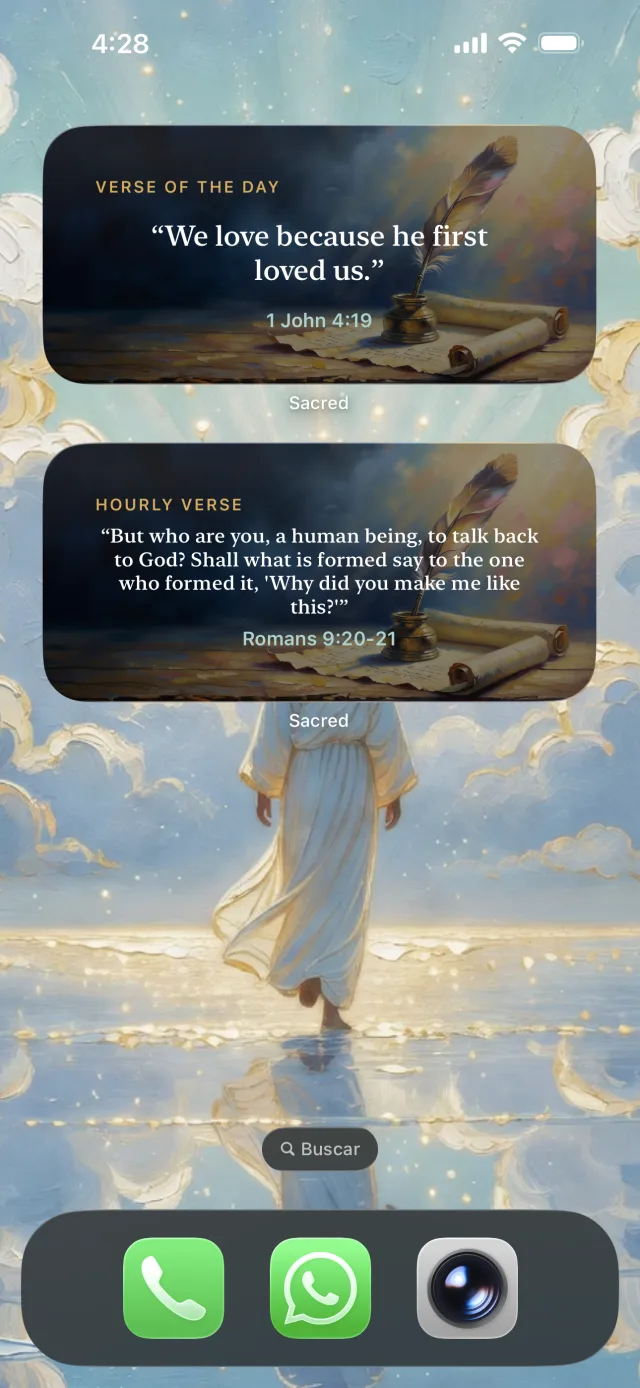
Sacred is a Bible app, and a few parts of it fit this season well. The daily devotional gives you a verse, a short reflection and a narrated prayer each day, and you can set a prayer reminder for the time of day that works for you, which helps on the busy days of December. A streak shows how many days in a row you've kept your time with God.
Sacred doesn't have a Christmas video series, so for Advent the part to use is the narrated Bible. The complete Bible is narrated chapter by chapter (in English, the Berean Standard Bible), with each verse highlighted as it is read, adjustable speed and audio that keeps playing with your screen locked. Luke 1 and Luke 2 are a natural place to start: put them on while you wrap gifts, drive to a family gathering or sit with the lights low on Christmas Eve. You can save the verses that stay with you as favorites, and if a question comes up along the way, like why Joseph had to travel to Bethlehem, you can ask it in the AI Bible chat.
A quiet way to finish
You won't do Advent perfectly, and you don't need to. Four weeks of short readings are enough to walk the road from Isaiah's promises to the manger. Light the candle, read the passage, say the prayer, and let the waiting do its work.
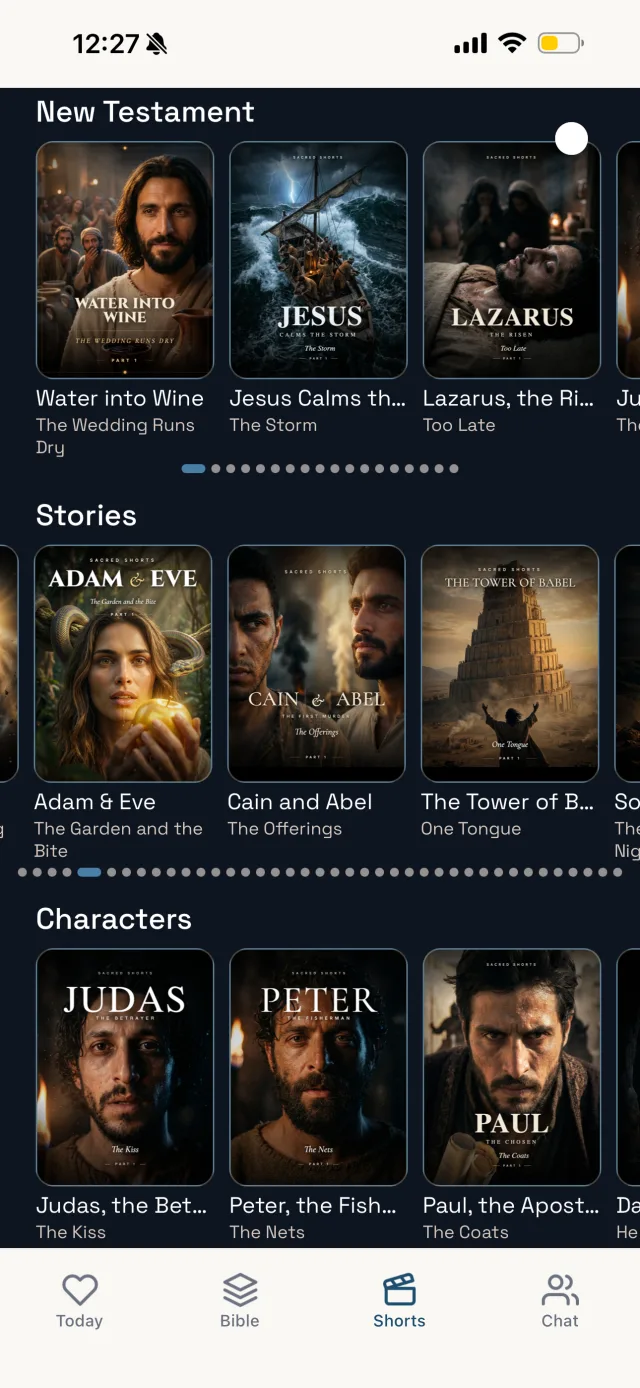
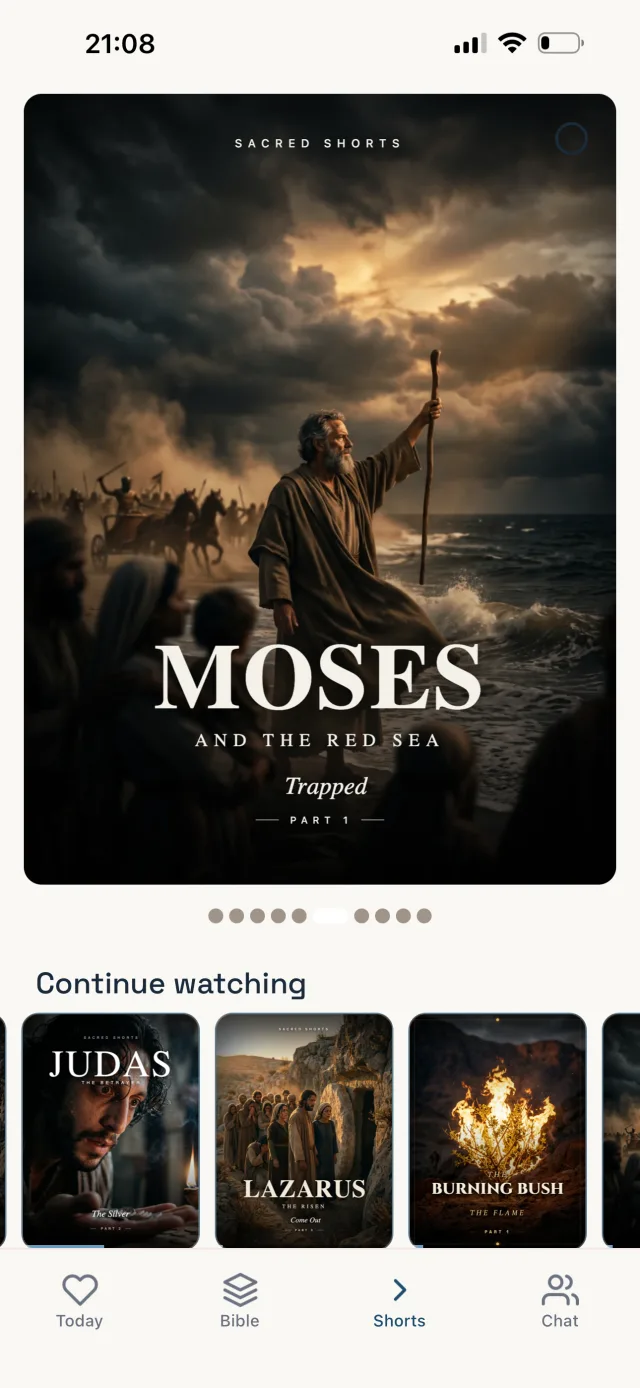
 Sacred Shorts
Your Advent devotional, every day
Start each day with a verse, a short reflection and a narrated prayer, and listen to the Christmas story in the narrated Bible.
 Scan with your phone
Frequently asked questions
Advent 2026 begins on Sunday, November 29. The four Sundays of Advent are November 29, December 6, December 13 and December 20, and Christmas Day falls on Friday, December 25, 2026.
In many churches the four Sundays are given to hope, peace, joy and love, in that order. Other traditions name the candles differently, for example the prophets' candle, the Bethlehem candle, the shepherds' candle and the angels' candle. The Scripture behind them is the same.
The classic Advent readings are the promises in Isaiah (chapters 7, 9, 11 and 40), Micah 5 about Bethlehem, the birth stories in Luke 1 and 2 and Matthew 1 and 2, and the opening of John's Gospel, which says the Word became flesh.
Start with the reading for today and keep going. You can read the passages you missed on a quiet afternoon, or simply let them go. Advent is about waiting well, not about catching up.