
Studying the Bible on your own can be a deeply enriching and transformative experience. This guide will provide you with practical steps to help you unlock the wisdom of Scripture and develop a personal, meaningful connection with God's Word.
Why this matters
Engaging with the Bible on a personal level is crucial for spiritual growth and understanding. The Bible teaches us that "All Scripture is God-breathed and is useful for teaching, rebuking, correcting and training in righteousness" (2 Timothy 3:16, NIV). This verse highlights the invaluable role Scripture plays in guiding our lives, making personal Bible study an essential practice for Christians seeking to deepen their faith.
Studying the Bible allows us to hear God's voice and align our lives with His will. It's through Scripture that we gain insight into God's character, His promises, and His expectations for us. By immersing ourselves in the Word, we can find hope, encouragement, and the strength to navigate life's challenges.
Moreover, personal Bible study helps us develop discernment and wisdom. As the Psalmist writes, "Your word is a lamp for my feet, a light on my path" (Psalm 119:105, NIV). By consistently engaging with Scripture, we can better understand God's direction for our lives and make decisions that reflect His love and truth.
Step-by-step guide
1. Set a Regular Time
Instruction: Establish a consistent time each day to study the Bible.
Supporting Verse: "But Jesus often withdrew to lonely places and prayed" (Luke 5:16, NIV).
Practical Tip: Start with just 10-15 minutes each day. Setting a specific time helps build a habit, making it easier to stay committed.
2. Choose a Bible Version
Instruction: Select a Bible translation that resonates with you and is easy to understand.
Supporting Verse: "For the word of God is alive and active" (Hebrews 4:12, NIV).
Practical Tip: The NIV is a popular choice due to its balance between readability and accuracy. Explore different versions online to see which one speaks to you.
3. Pray for Guidance
Instruction: Begin each study session with prayer, asking the Holy Spirit for understanding and insight. If you're unsure how to start, read How to Pray When You Don't Know What to Say.
Supporting Verse: "If any of you lacks wisdom, you should ask God, who gives generously to all without finding fault, and it will be given to you" (James 1:5, NIV).
Practical Tip: Keep your prayer simple and sincere. Ask God to open your heart and mind to His Word.
4. Start with a Book or Theme
Instruction: Choose a specific book of the Bible or a theme to focus on for a deeper study.
Supporting Verse: "Your word is a lamp for my feet, a light on my path" (Psalm 119:105, NIV).
Practical Tip: Beginners might start with the Gospels or Psalms. For more tips, see How to Start Reading the Bible. Choose a theme like "faith" or "love" for topical studies.
5. Take Notes and Reflect
Instruction: Write down insights, questions, and reflections as you read.
Supporting Verse: "I will meditate on your precepts and fix my eyes on your ways" (Psalm 119:15, NIV).
Practical Tip: Use a journal to record your thoughts. This practice helps reinforce learning and encourages deeper reflection.
6. Apply What You Learn
Instruction: Consider how the day's reading applies to your life.
Supporting Verse: "Do not merely listen to the word, and so deceive yourselves. Do what it says" (James 1:22, NIV).
Practical Tip: Each day, choose one actionable step based on your reading to apply in your life.

The Bible has never felt like this
Watch this story come to life as a cinematic series in Sacred.
4.8on the App Store
Common mistakes
1. Overwhelming Yourself
Mistake: Trying to read too much at once.
Solution: Focus on smaller sections or even a few verses per day to allow deeper meditation and understanding.
2. Skipping Context
Mistake: Ignoring the historical and cultural context of Bible passages.
Solution: Use study tools or commentaries to gain background information, which will enhance comprehension.
3. Lack of Consistency
Mistake: Infrequent or sporadic study sessions.
Solution: Establish a routine by setting specific days and times for Bible study, and use apps like Sacred to maintain consistency with reminders and daily verses.
4. Reading Without Application
Mistake: Failing to apply Scripture to daily life.
Solution: After reading, reflect on how the passage can influence your actions, attitudes, and decisions.
A simple plan to start today
Take five minutes to download the Sacred app, where you can receive a personalized daily verse and guided prayer. This small step can help integrate Bible study into your routine, providing a manageable way to start engaging with Scripture consistently.
FAQ
1. How long should I spend studying the Bible each day?
Start with 10-15 minutes and gradually increase as you become more comfortable. The key is consistency, not duration.
2. Which book of the Bible is best for beginners?
The Gospel of John is a great starting point, as it offers a comprehensive view of Jesus' life and teachings.
3. What if I don't understand a passage?
Use Bible commentaries and study guides to gain clarity. Prayerfully ask God for understanding and be patient with yourself.
4. How can I stay motivated to study regularly?
Set achievable goals and connect with others for accountability. Apps like Sacred can provide daily encouragement and structure.
5. Should I study alone or in a group?
Both have benefits. Personal study allows for deep reflection, while group study offers diverse perspectives and fellowship. Consider blending both approaches for a balanced experience.
Looking for a daily companion on your faith journey? Sacred offers a personalized daily verse, guided prayer, and biblical AI chat to help you grow closer to God — in just 6 minutes a day.
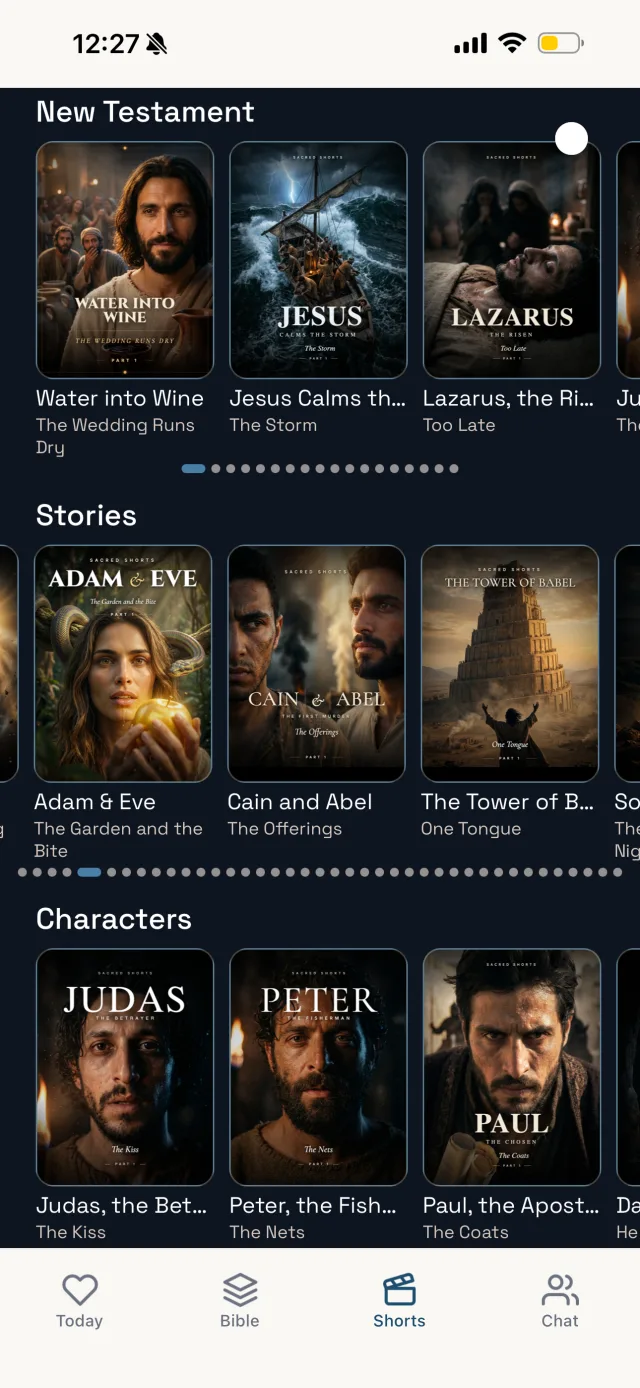
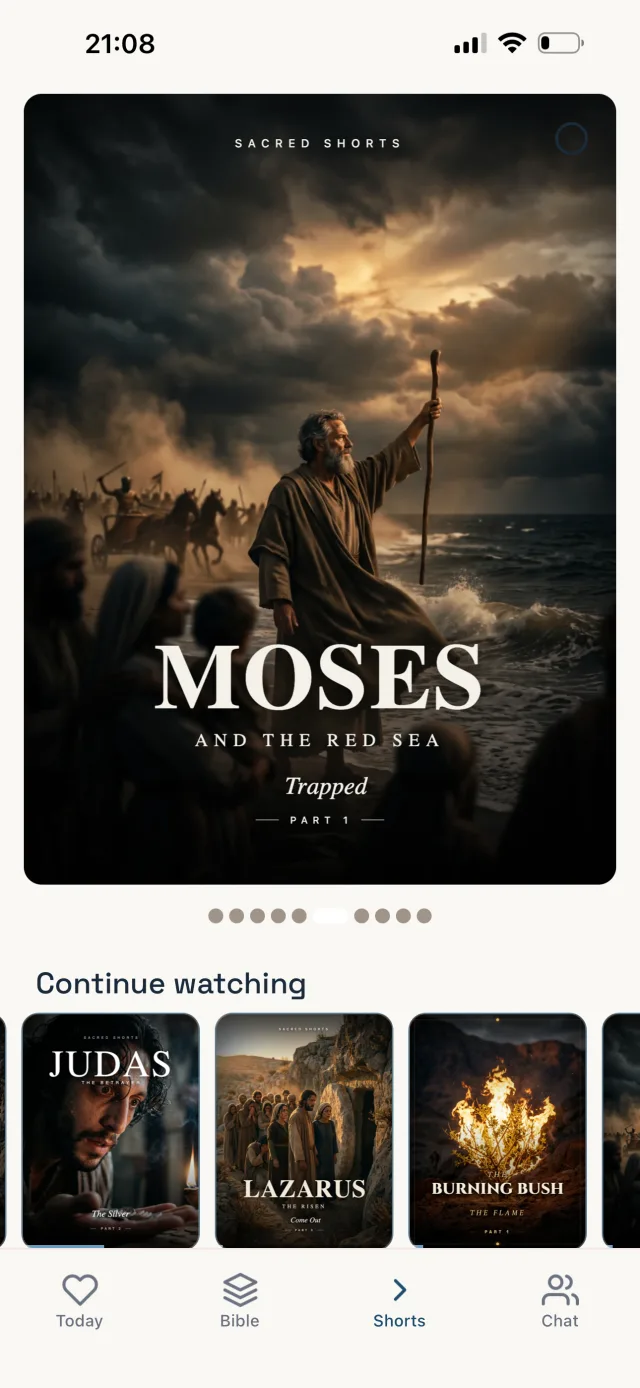
 Sacred Shorts
Watch the Bible like never before
Cinematic Bible stories, a complete Study Bible, daily devotionals, and guided prayer. New episodes every week.

Frequently asked questions
Start with 10-15 minutes and gradually increase as you become more comfortable. The key is consistency, not duration.
The Gospel of John is a great starting point, as it offers a comprehensive view of Jesus' life and teachings.
Use Bible commentaries and study guides to gain clarity. Prayerfully ask God for understanding and be patient with yourself.