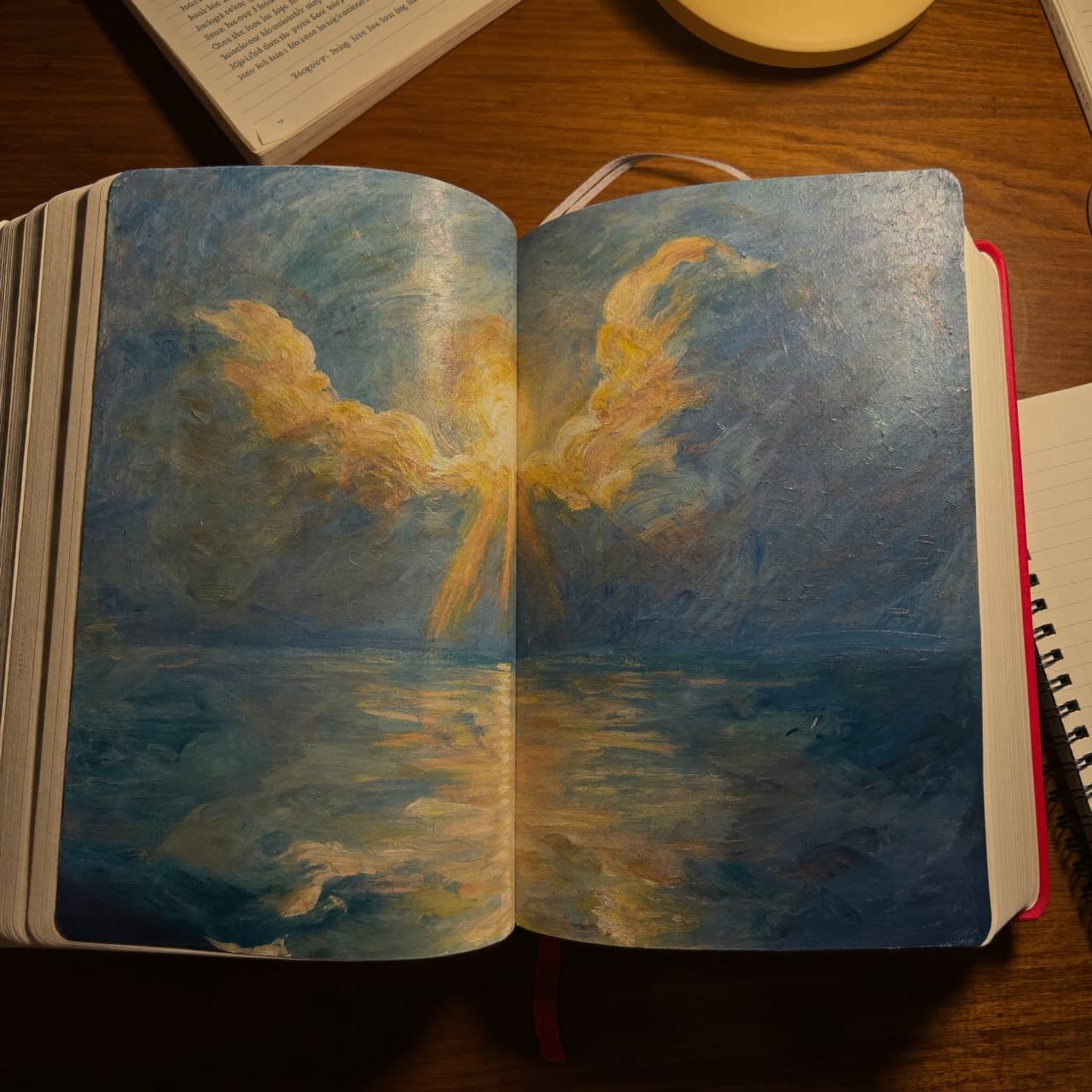
Visual Bible study means pairing the biblical text with video, so that you first see a story unfold and then read it slowly on the page. Done well, it is not a shortcut around Scripture but a doorway into it: the video captures your imagination, and the text rewards your attention. This guide explains why the method works, gives you a simple four-step structure, and points you to the best free resources to build it into your week.
Quick answer: key takeaways
- Visual Bible study is a watch-then-read method: video first for context and imagination, Scripture second for depth.
- Much of the Bible is narrative, written to be pictured; video restores the vividness that familiarity can flatten.
- A complete session has four steps: Watch, Read, Reflect, Respond, and fits in 15–20 minutes.
- Free resources cover every need: animated overviews, word-for-word Gospel films, dramatic series, and short cinematic episodes.
- Video never replaces the text; it prepares you to read it with fresh eyes.
What is visual Bible study?
Most Bible study methods are built entirely around the page: read, underline, cross-reference, journal. Visual Bible study adds one step in front: watch a faithful visual telling of the passage before you read it. That small change does something significant. The stories of Scripture were told aloud and pictured in the imagination for centuries before most believers could read them; stained glass windows existed precisely because the church has always known that images teach.
Video engages the same instinct. When you have watched the waters pile up in the crossing of the Red Sea before reading Exodus 14, the text stops being a familiar summary and becomes a scene you are standing inside. You notice details you have skimmed for years: the pillar of cloud moving behind Israel, the Egyptians' wheels coming off, the fear before the faith.
There is also a memory benefit. Educators have long observed that people retain narrative and imagery more readily than abstract summary, which is one reason Jesus taught in parables rather than bullet points. When a passage has a face, a landscape, and a sequence of scenes attached to it, it comes back to you during the week, in traffic, in conflict, in prayer, in a way that a highlighted verse fragment often does not.
The goal remains what it has always been:
"Keep this Book of the Law always on your lips; meditate on it day and night, so that you may be careful to do everything written in it. Then you will be prosperous and successful." — Joshua 1:8 (NIV)
Video does not replace meditation on the text. It makes the text easier to meditate on.
Does watching Bible videos count as Bible study?
Honestly: watching alone is devotional viewing, not study. It is valuable, the way a good sermon illustration is valuable, but study requires contact with the text itself. Every adaptation interprets: it chooses camera angles, invents dialogue, compresses timelines. Those choices can illuminate, and they can also mislead if they become your only source.
So the rule of visual Bible study is simple: the video is never the last step. Watch, then open the passage and ask three questions:
- What did the video get exactly right?
- What did it add, skip, or interpret?
- What does the text say that no camera could capture?
That comparison work is itself study. It forces you to read closely, which is the whole point:
"All Scripture is God-breathed and is useful for teaching, rebuking, correcting and training in righteousness." — 2 Timothy 3:16 (NIV)

The Bible has never felt like this
Watch this story come to life as a cinematic series in Sacred.
4.8on the App Store
How to structure a visual Bible study session
Here is a four-step method that takes 15–20 minutes alone, or about an hour with a group.
1. Watch (3–8 minutes)
Choose one story and one video. Short is better than long for study: a focused episode on Cain and Abel serves a session better than a full-length film. Watch without multitasking, the way you would listen to Scripture read aloud.
2. Read (5–10 minutes)
Open the passage the video came from and read it slowly, twice if it is short. Mark anything the video helped you see and anything the video left out. If you are studying a story like Noah and the Flood, read the whole unit (Genesis 6–9), not just the famous verses.
3. Reflect (3–5 minutes)
Ask the classic questions: What does this passage reveal about God? About people? Where does it point toward Jesus? Write one or two sentences; writing sharpens what watching and reading have stirred.
4. Respond (2–3 minutes)
End in prayer shaped by the passage, and name one concrete response. If you studied the fall of Adam and Eve, the response might be confessing a specific place you have been hiding from God.
Common mistakes to avoid
Three habits quietly undermine the method. The first is skipping the read step "just this once"; once becomes always, and the study collapses back into viewing. The second is choosing videos that are too long, since a 50-minute episode leaves no energy for the text, so keep clips under ten minutes on study days. The third is treating the video as an authority instead of an interpretation; when the film and the text disagree, the text wins, and noticing the disagreement is itself one of the best study prompts you will ever get.
Best video resources for visual Bible study
Different resources serve different steps. This table matches the well-known options to their strengths:
| Resource | Best for | Format and length | Cost |
|---|---|---|---|
| BibleProject | Understanding a book's structure and themes before studying it | Animated explainers, 5–10 minutes | Free on YouTube |
| LUMO Project | Word-for-word visual reading of the Gospels | Feature-length films using the actual Gospel text | Free to stream |
| The Chosen | Entering the world and relationships around Jesus | Dramatic series, ~50-minute episodes | Free to stream |
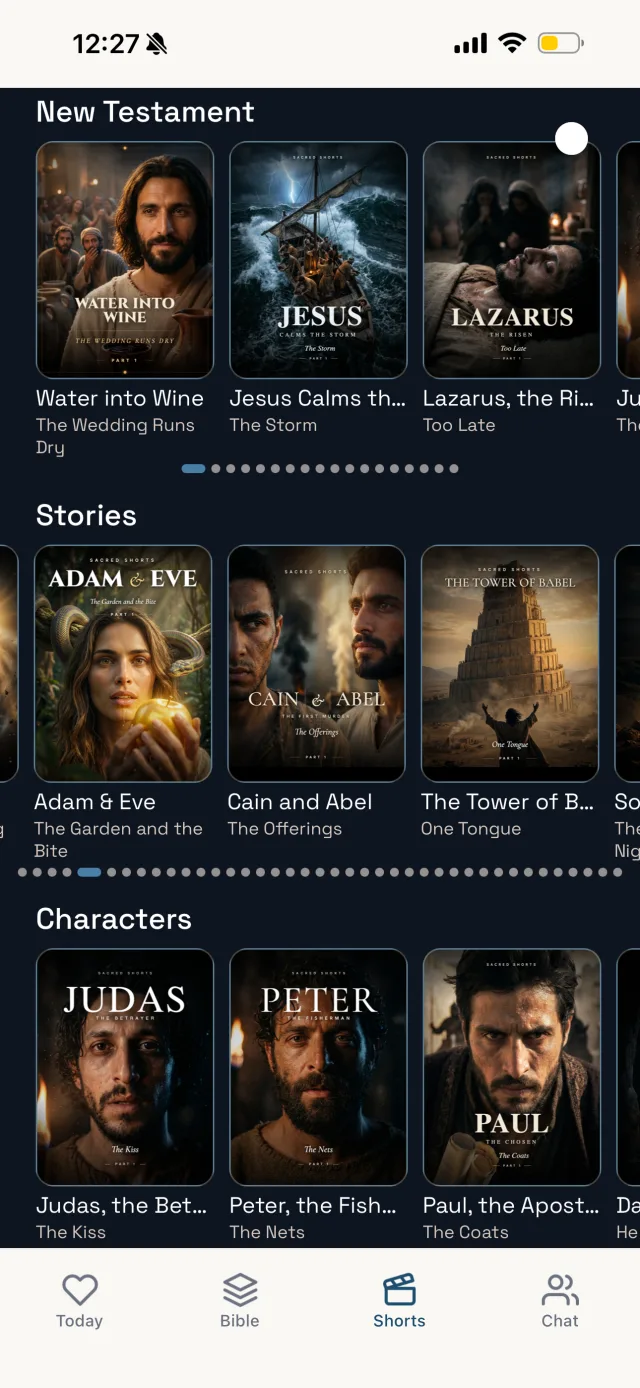
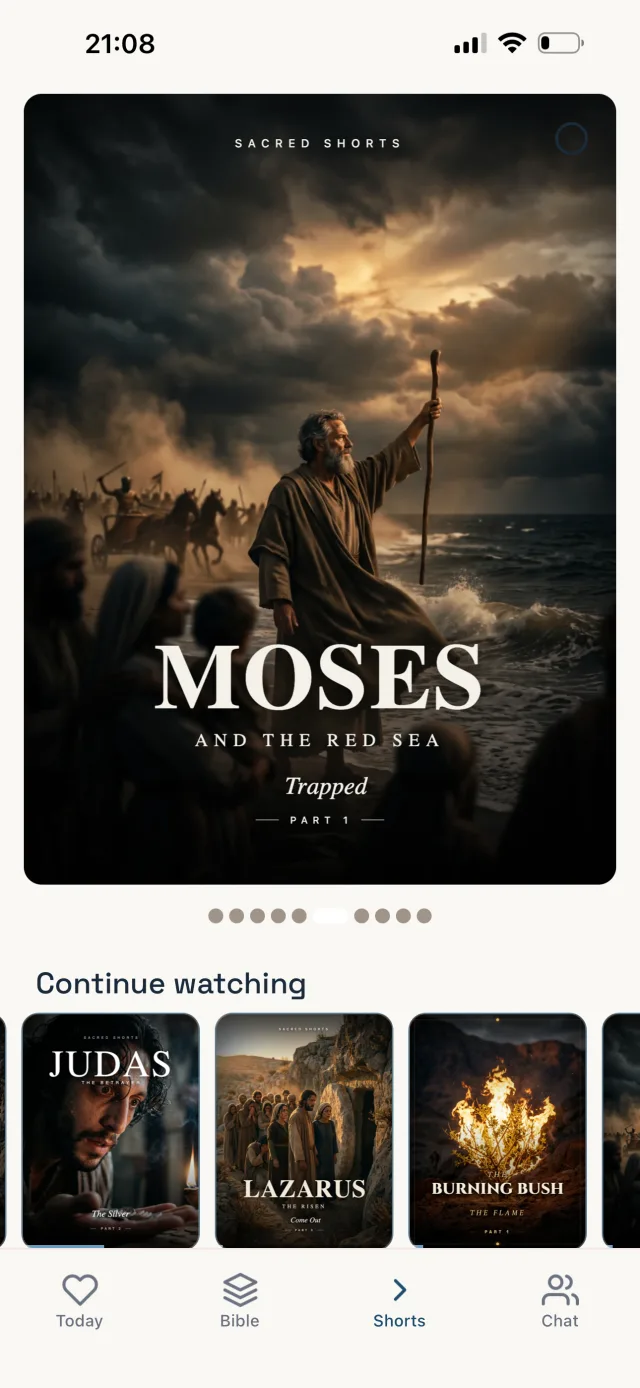
| Sacred Shorts (Sacred app) | Story-focused sessions on Old Testament narratives: Creation, Adam & Eve, Cain & Abel, The Burning Bush, The Plagues, Moses and the Red Sea, plus Lazarus and Judas | Cinematic vertical episodes, a few minutes each; new series weekly | Free app (iOS & Android) |
| Superbook | Visual study with children | Animated episodes, ~25 minutes | Free episodes online |
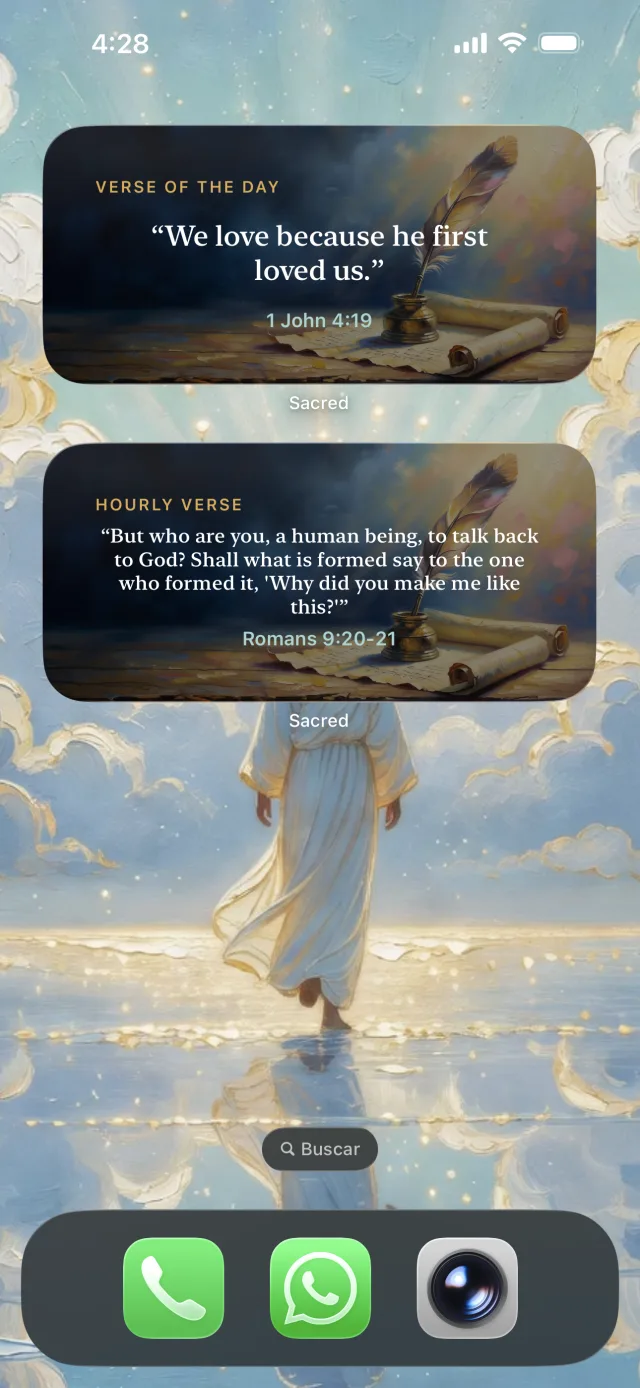
The Sacred app pairs its short episodes with a full Bible reader in multiple translations and an AI-powered Bible Chat, which keeps the watch step and the read step in one place. For working through stories in narrative sequence, follow the roadmap in how to watch the Bible in order.
Visual Bible study for groups and families
The method scales naturally beyond personal devotions:
- Small groups. Open with a short video instead of an icebreaker. Everyone arrives at the passage with the same mental picture, which levels the field between seasoned readers and newcomers.
- Families. Watch an episode together after dinner, then let each person share one thing they noticed. Children engage stories on screen long before they can navigate a printed Bible.
- Couples. A few minutes of watching and reading together before bed is one of the simplest shared spiritual habits to sustain, and if evenings are your only margin, these ideas for short Bible videos for busy people can help you protect the habit.
Whatever the setting, keep the order fixed: watch first, text last, so Scripture always gets the final word.
"Let the message of Christ dwell among you richly as you teach and admonish one another with all wisdom through psalms, hymns, and songs from the Spirit, singing to God with gratitude in your hearts." — Colossians 3:16 (NIV)
Start this week: one story, four steps
Do not overhaul your devotional life; add one visual session this week. Pick a single story, perhaps one you think you already know well, watch a short faithful telling of it, then read the passage and walk through Reflect and Respond. Most people are surprised by how much a familiar story opens up when they see it before they read it. If you need help choosing a first story, browse the Bible Stories collection and start with the one that has always intrigued you most.
 Sacred Shorts
Watch the Bible like never before
Cinematic Bible stories, a complete Study Bible, daily devotionals, and guided prayer. New episodes every week.
Frequently asked questions
Visual Bible study pairs Scripture reading with video, imagery, or animation so you engage the text with both eyes and imagination. A typical session means watching a faithful adaptation of a passage, then reading the passage itself and reflecting on it.
Watching alone is closer to devotional viewing than study. It becomes real study when you open the passage afterward, compare it with what you watched, and respond in prayer or action. Video is the on-ramp; the text is the destination.
BibleProject offers free animated overviews of every book, the LUMO Project films present the Gospels word for word, The Chosen dramatizes the life of Jesus, and Sacred Shorts tells Old Testament stories in cinematic short episodes. Each serves a different step of study.
A meaningful session can take 15 to 20 minutes: a few minutes of video, five to ten minutes reading the passage, and a few minutes of reflection and prayer. Groups usually take 45 to 60 minutes with discussion.