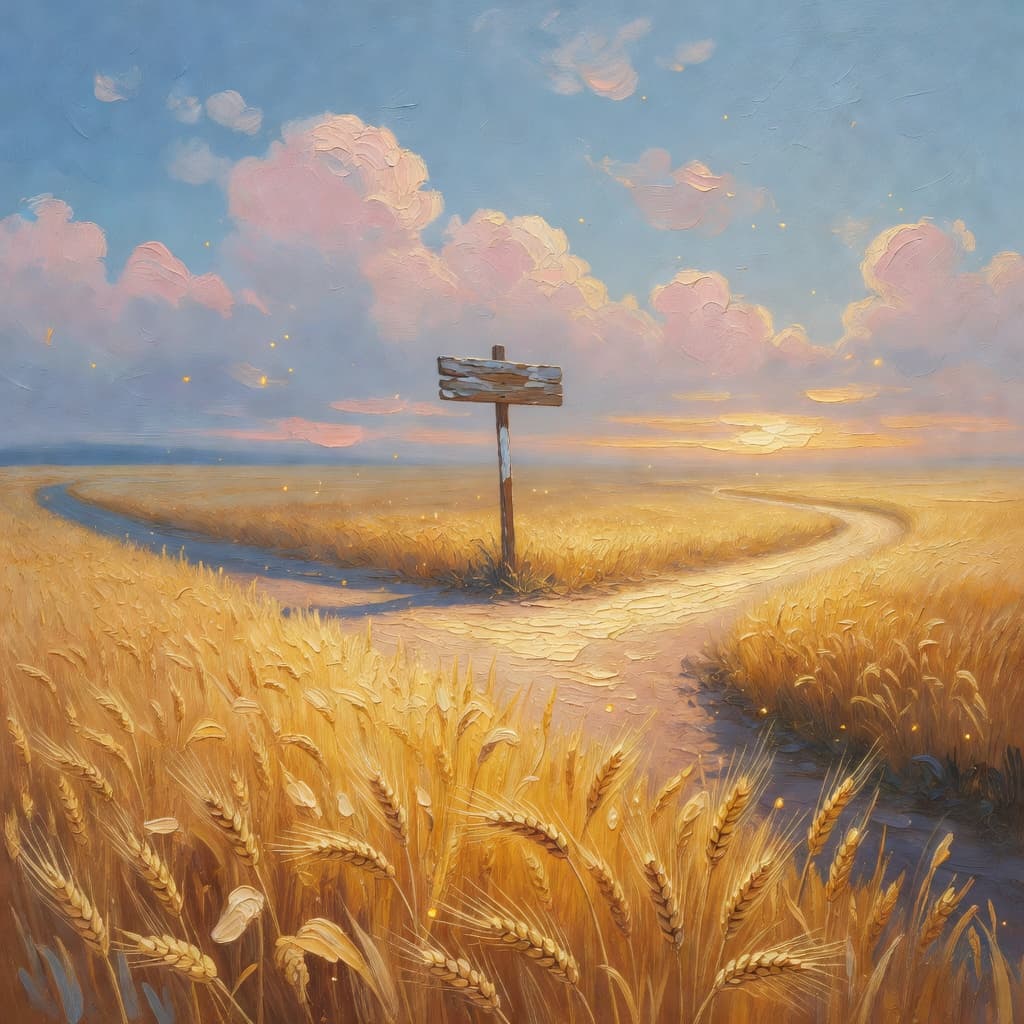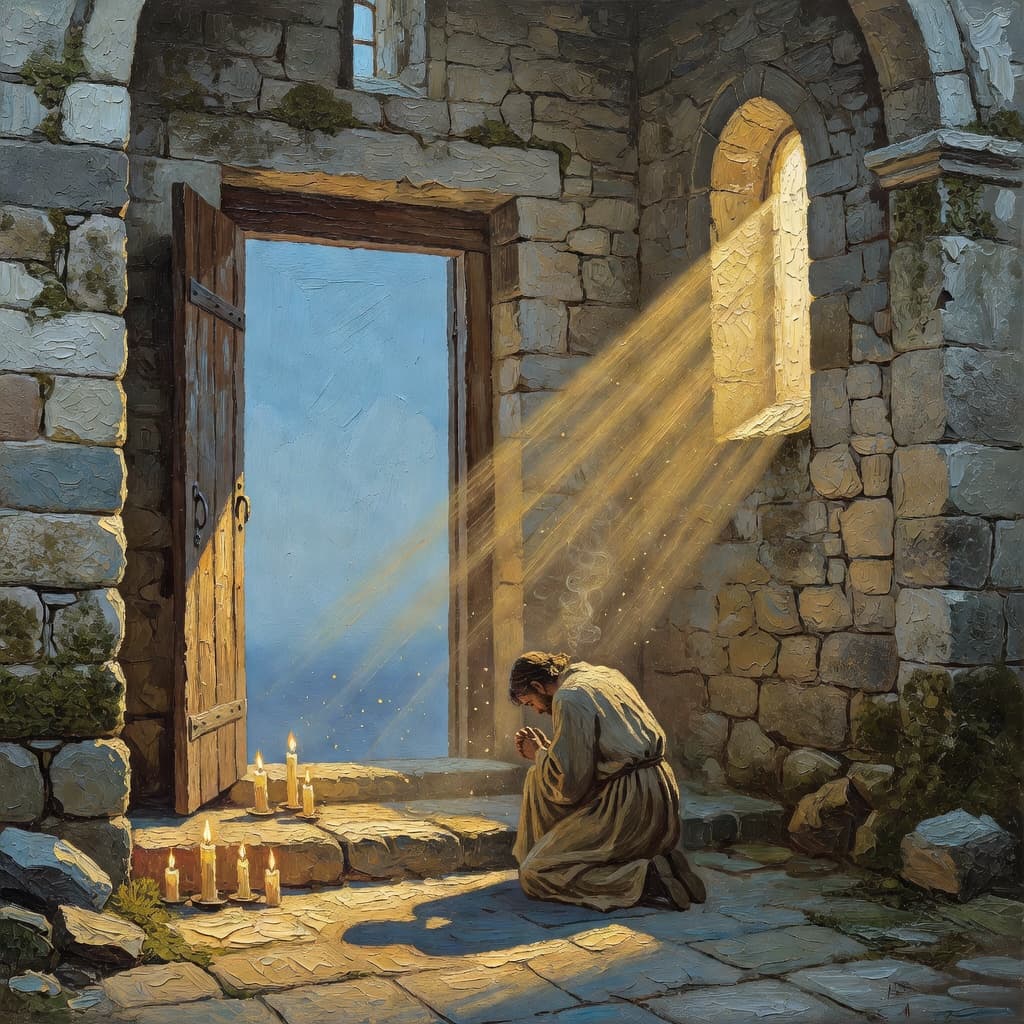
If you've ever sat down to pray and felt completely blank — unsure what to say, how to start, or whether you're doing it right — you're not alone. This is one of the most common struggles in the spiritual life, and it affects beginners and lifelong believers alike. The good news is that the Bible itself addresses this problem and offers practical solutions that can transform your prayer life.
Quick Answer
You don't need eloquent words to pray. The Bible teaches that honest, simple conversation with God is the heart of prayer. Romans 8:26 says the Holy Spirit helps us when we don't know what to pray. Start with honesty ("God, I don't know what to say"), use Scripture as your words, try a simple framework like ACTS, or simply sit in silence. Prayer is about connection, not performance.
Why This Matters
Prayer is consistently described in the Bible as the primary way humans connect with God — yet it's also one of the practices people struggle with most. A 2024 Pew Research study found that while 55% of Americans pray daily, many report feeling uncertain about whether they're "doing it right."
The pressure to pray perfectly can actually prevent prayer altogether. If you believe prayer requires beautiful language, deep theological knowledge, or a specific emotional state, you'll avoid it whenever you don't feel "ready." This creates a painful cycle: the times you most need prayer are often the times you feel least capable of it.
The Bible offers a radically different perspective. Prayer in Scripture is messy, honest, sometimes angry, often tearful, and always welcomed by God. Understanding this can free you from the performance pressure that keeps many people from praying at all.
If you're also navigating difficult emotions that make prayer feel harder, you might find it helpful to explore what the Bible says about anxiety or what Scripture teaches about fear.
Step 1: Start with Honesty, Not Formulas
The most important thing about prayer isn't getting the words right — it's being honest. The Psalms model this repeatedly. David didn't come to God with polished speeches. He came with raw emotion:
"How long, LORD? Will you forget me forever? How long will you hide your face from me?" — Psalm 13:1 (NIV)
"My God, my God, why have you forsaken me?" — Psalm 22:1 (NIV)
These are not polite, composed prayers. They're desperate, confused, even accusatory. And God never rebukes the psalmists for their honesty. In fact, these raw prayers became part of Scripture — canonized as models for all future generations.
Practical application: When you don't know what to say, start with exactly that. "God, I don't know what to say right now. I'm here, but I don't have words." This is a legitimate prayer. You've acknowledged God's presence and your own honesty — that's the foundation of every meaningful prayer in Scripture.
If depression or emotional heaviness is making it hard to find words, know that God hears even the prayers that feel incomplete.
Step 2: Use Scripture as Your Words
One of the most powerful prayer techniques in Christian history is praying Scripture — using the Bible's own words as your prayer. This practice, called lectio divina in the Catholic tradition or "praying the Word" in Protestant circles, has been used since the earliest centuries of Christianity.
The Psalms are the most natural starting point. They were originally prayers and songs — written to be spoken to God. When you read a Psalm aloud as your own prayer, you're joining a conversation that's been going on for 3,000 years.
How to pray Scripture practically:
- Choose a short passage (Psalm 23, Psalm 139:1-6, or Philippians 4:6-7 are good starting points)
- Read it slowly, one phrase at a time
- After each phrase, pause and make it personal: "The LORD is my shepherd, I lack nothing"
- If a phrase resonates, stay with it. Don't rush through
- Let the passage lead you into your own words when they come
If you're new to the Bible and unsure where to start reading, our guide on how to start reading the Bible can help you find your footing.
Example: Using Psalm 23:
- "The LORD is my shepherd" → "God, I need you to guide me today. I feel lost."
- "I lack nothing" → "Help me trust that you're providing what I need, even when it doesn't feel like it."
- "He leads me beside quiet waters" → "I need your peace right now. My mind won't stop racing."
This technique removes the pressure of generating words from nothing. The Bible provides the script; you provide the personal application.
Step 3: Pray Through the ACTS Model
If you want a simple framework that covers the breadth of prayer without feeling formulaic, the ACTS model is one of the most widely used:
A — Adoration. Start by acknowledging who God is. This isn't flattery; it's orientation. Before bringing your problems, remember who you're talking to. Examples: "God, you are powerful enough to handle what I'm facing." "You are present even when I can't feel you."
C — Confession. Be honest about where you've fallen short. Confession isn't about guilt — it's about clearing the air so you can be fully present. The Bible teaches that confession brings freedom: "If we confess our sins, he is faithful and just and will forgive us" (1 John 1:9).
T — Thanksgiving. Name specific things you're grateful for. Gratitude shifts your perspective from what's wrong to what God has already done. Even in difficult seasons, there are usually concrete things to acknowledge — health, a relationship, food on the table, the fact that you showed up to pray.
S — Supplication. Now bring your requests. Be specific. The Bible encourages specific prayers: "Present your requests to God" (Philippians 4:6). Don't be vague. Tell God exactly what you need, want, or hope for. And include prayers for others — this is called intercession, and it's one of the most powerful forms of prayer.
You don't need to follow this order rigidly. Some days you might spend all your time in thanksgiving. Other days, confession might be what you need most. The framework is a starting point, not a cage.

The Bible has never felt like this
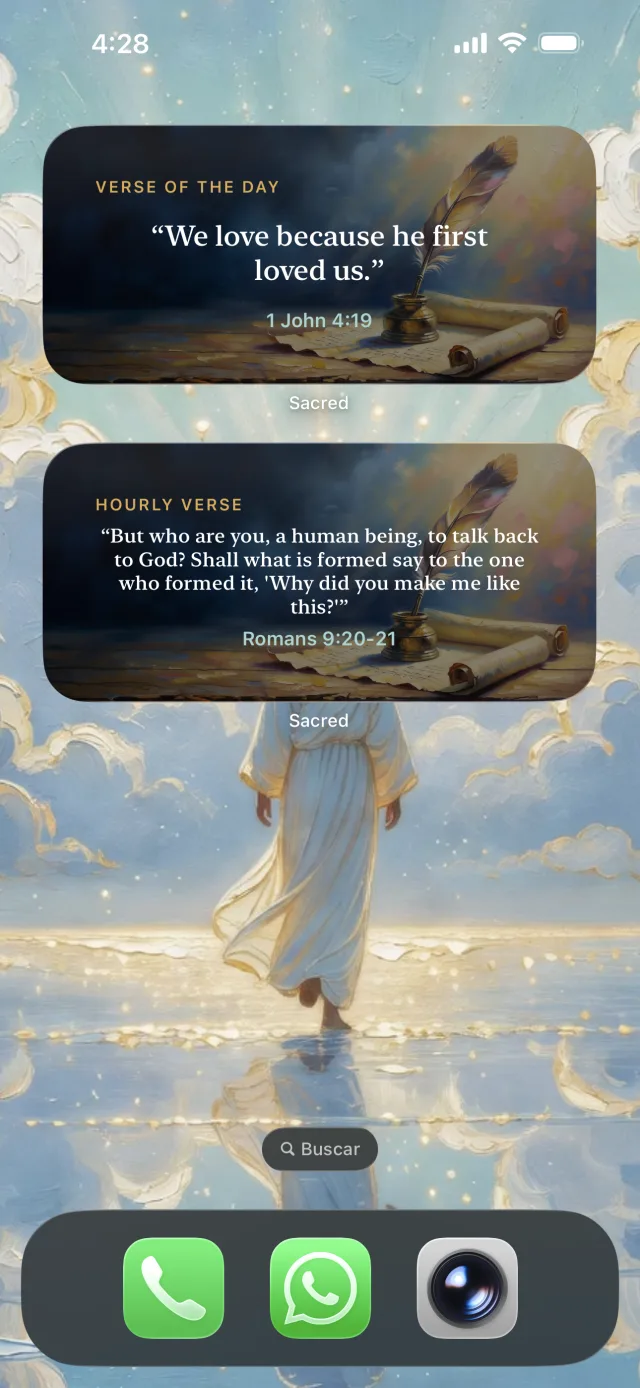
Watch this story come to life as a cinematic series in Sacred.
4.8on the App Store
Step 4: Embrace Silence as Prayer
Many people assume prayer must involve words. But some of the deepest prayer traditions in Christianity involve silence. Psalm 46:10 says, "Be still, and know that I am God." Sometimes being still is the prayer.
The prophet Elijah discovered God not in the wind, earthquake, or fire, but in a "gentle whisper" (1 Kings 19:12). Silence creates space to hear that whisper. If you've been dealing with stress, silence can be especially healing.
Practical silent prayer:
- Set a timer for 5 minutes (start small)
- Sit comfortably. Close your eyes
- Take several slow, deep breaths
- When thoughts come (and they will), don't fight them. Gently return your attention to God's presence
- You might use a single word as an anchor: "Jesus," "Peace," "Father"
- Don't evaluate the experience. Just show up
Silent prayer feels unproductive at first — like you're "not doing anything." But presence is itself a form of communication. You're telling God, "I'm here. I don't need to perform. I just want to be with you." That's deeply relational prayer.
Step 5: Write It Down
Journaling prayer is one of the most practical solutions for people who struggle with spoken prayer. Writing slows your thoughts, gives them structure, and creates a record you can look back on.
The psalmists essentially journaled their prayers — that's what the Psalms are. Written prayers that captured honest moments of faith, doubt, anger, gratitude, and hope.
How to start a prayer journal:
- Keep it simple. A plain notebook works. You don't need a specialized journal
- Date each entry. This lets you track answered prayers over time — one of the most faith-building practices available
- Write like you're talking. Don't worry about grammar, theology, or sounding spiritual. Write exactly what you'd say to a trusted friend
- Include questions for God. "Why is this happening?" and "What should I do?" are legitimate prayers
- Review monthly. Looking back at old entries reveals patterns: recurring concerns, answered prayers you forgot about, and evidence of growth
Writing prayer also helps when emotions are overwhelming. If you're processing fear or difficult emotions, putting words on paper can externalize what feels too heavy to carry internally.
Common Mistakes When Learning to Pray
Mistake 1: Believing prayer must be long. Jesus criticized lengthy prayers done for show (Matthew 6:7). Some of the most powerful prayers in the Bible are short: "Lord, save me!" (Peter, Matthew 14:30). "God, have mercy on me, a sinner" (Luke 18:13). Short, honest prayers are fully valid.
Mistake 2: Waiting until you "feel spiritual." Prayer isn't a reward for spiritual maturity — it's the practice that builds it. Pray when you feel it and when you don't. Showing up matters more than feeling ready.
Mistake 3: Treating prayer as a monologue. Prayer is conversation, not a speech. Leave space for listening. Sometimes what God wants to say to you is more important than what you want to say to Him.
Mistake 4: Comparing your prayer life to others. Your prayer life is unique to your relationship with God. There's no single "right way." Some people pray walking, some kneeling, some driving. The posture matters less than the sincerity.
Mistake 5: Giving up when it feels empty. Many saints throughout history described "dry seasons" in prayer — periods where God feels distant and prayer feels pointless. These seasons are normal, not permanent. Keep showing up.
A Simple Plan to Start Today
If you've been struggling with prayer, here's a concrete plan for this week:
Day 1-2: Honesty prayers. Simply tell God how you feel. No structure needed. "God, here's where I am today..."
Day 3-4: Scripture prayers. Pick one Psalm per day (start with Psalm 23 and Psalm 139). Read it slowly and make it personal.
Day 5-6: ACTS framework. Spend 2-3 minutes on each letter. Don't rush.
Day 7: Silent prayer. Set a timer for 5 minutes. Just be present.
After one week, notice what felt most natural. That's probably your entry point into a sustainable prayer practice. Build from there.
Remember: the goal isn't perfect prayer. The goal is consistent connection with God. Even your struggle to find words is itself a form of prayer — because it means you're showing up, which is what matters most. Try Sacred free — your daily spiritual ritual in 6 minutes.
Ready to build a daily spiritual habit? Sacred gives you a personalized verse, guided prayer, and biblical chat — all in 6 minutes. Download Sacred free.
Frequently Asked Questions
Is it okay to not know what to say in prayer?
Absolutely. Romans 8:26 says the Holy Spirit intercedes for us "through wordless groans" when we don't know what to pray. Many biblical figures struggled with prayer — even the disciples asked Jesus to teach them how (Luke 11:1). Not knowing what to say isn't a sign of spiritual immaturity; it's a common experience that can actually deepen your prayer life.
What is the ACTS prayer model?
ACTS stands for Adoration (praising God for who He is), Confession (honestly acknowledging mistakes), Thanksgiving (expressing gratitude for specific things), and Supplication (bringing your requests and needs). It's a simple framework that gives structure without rigidity, helping you move beyond "I don't know what to say."
Can I pray by reading the Bible?
Yes, and this is one of the oldest prayer traditions in Christianity. Praying Scripture — reading a passage slowly and turning it into personal prayer — has been practiced since the early church. The Psalms were originally prayers and songs. Reading them aloud to God is itself a form of prayer.
Does God hear silent prayers?
Yes. 1 Samuel 1:13 describes Hannah praying silently — "she was praying in her heart" — and God heard and answered. Jesus taught that the Father "knows what you need before you ask" (Matthew 6:8). Prayer doesn't require eloquence or even words. God hears the intention of your heart.
How long should I pray?
There's no biblical requirement for prayer length. Jesus criticized lengthy prayers done for show (Matthew 6:7) and also spent entire nights in prayer (Luke 6:12). Quality matters more than quantity. Starting with five focused minutes is better than thirty distracted ones. Let your prayer life grow naturally over time.
 Sacred Shorts
Watch the Bible like never before
Cinematic Bible stories, a complete Study Bible, daily devotionals, and guided prayer. New episodes every week.
Frequently asked questions
Absolutely. Romans 8:26 says the Holy Spirit intercedes for us 'through wordless groans' when we don't know what to pray. Many biblical figures struggled with prayer — even the disciples asked Jesus to teach them how (Luke 11:1). Not knowing what to say isn't a sign of spiritual immaturity; it's a common experience that can actually deepen your prayer life.
ACTS stands for Adoration (praising God for who He is), Confession (honestly acknowledging mistakes), Thanksgiving (expressing gratitude for specific things), and Supplication (bringing your requests and needs). It's a simple framework that gives structure without rigidity, helping you move beyond 'I don't know what to say.'
Yes, and this is one of the oldest prayer traditions in Christianity. Praying Scripture — reading a passage slowly and turning it into personal prayer — has been practiced since the early church. The Psalms were originally prayers and songs. Reading them aloud to God is itself a form of prayer.
Yes. 1 Samuel 1:13 describes Hannah praying silently — 'she was praying in her heart' — and God heard and answered. Jesus taught that the Father 'knows what you need before you ask' (Matthew 6:8). Prayer doesn't require eloquence or even words. God hears the intention of your heart.
There's no biblical requirement for prayer length. Jesus criticized lengthy prayers done for show (Matthew 6:7) and also spent entire nights in prayer (Luke 6:12). Quality matters more than quantity. Starting with five focused minutes is better than thirty distracted ones. Let your prayer life grow naturally over time.