
The Sermon on the Mount is not an action scene in the usual sense. No sea is split, no giant falls, no prison doors open. Jesus sits on a mountainside and teaches. Yet Matthew 5–7 can be one of the most cinematic passages in the Gospels because the drama is happening inside the listener. The poor in spirit are called blessed. The angry are confronted. The merciful are honored. The anxious are invited to look at birds and flowers. The crowd hears a kingdom that is near, holy, demanding, and full of grace.
That is why a video of the Sermon on the Mount can be powerful when it is handled reverently. It can help us imagine the hillside, the dust, the silence, the disciples leaning in, and ordinary people hearing words that search the heart. But Christian imagination must stay anchored in Scripture. A cinematic scene can help us enter the moment; it cannot replace Matthew’s Gospel. The better rhythm is watch → read → reflect → pray.
The biblical setting of the Sermon on the Mount
Matthew places the Sermon on the Mount early in Jesus’ public ministry. After announcing the kingdom of heaven, calling disciples, teaching in synagogues, healing the sick, and drawing crowds, Jesus goes up the mountain, sits down, and begins to teach. The setting itself matters. Matthew’s Gospel often presents Jesus as the promised Messiah who fulfills Israel’s story. A mountain, a gathered people, and divine instruction naturally echo earlier biblical moments, while also showing that Jesus speaks with unique authority.
The sermon begins with the Beatitudes: blessed are the poor in spirit, those who mourn, the meek, those who hunger and thirst for righteousness, the merciful, the pure in heart, the peacemakers, and those persecuted for righteousness. These blessings overturn the usual imagination of success. Jesus is not blessing self-display, religious performance, or public power. He is naming the life of the kingdom.
From there, Jesus teaches about salt and light, the fulfillment of the Law and the Prophets, anger, lust, marriage, truthfulness, enemies, generosity, prayer, fasting, treasure, anxiety, judgment, and the narrow way. The sermon ends with the wise and foolish builders. The question is not only whether people admire Jesus’ words. The question is whether they hear and do them.
Why teaching can be cinematic
Some Bible videos depend on visible movement: a storm, a battle, a journey, a miracle. The Sermon on the Mount depends on attention. A faithful video can use faces, pauses, weather, distance, and sound to help viewers feel what it might have been like to hear Jesus speak in public. The camera can show a tax collector hearing about mercy, a worried parent hearing about daily bread, or a young disciple hearing that anger matters before God.
This kind of visual storytelling can slow us down. Many readers know phrases from the sermon but have never sat with them as a whole. “Blessed are the peacemakers” can become a slogan. “Do not worry” can become a quick command. “Love your enemies” can become an ideal we admire from far away. A video can remind us that these were spoken to real people under Roman occupation, with family burdens, religious expectations, poverty, conflict, and longing for God’s kingdom.
Still, adaptation requires humility. A video must not soften Jesus’ hard sayings until they become vague encouragement. It also must not turn the sermon into moralism detached from grace. Jesus’ words expose the heart, but they are spoken by the same Lord who calls disciples, forgives sinners, heals the broken, and teaches us to pray to our Father.

The Bible has never felt like this
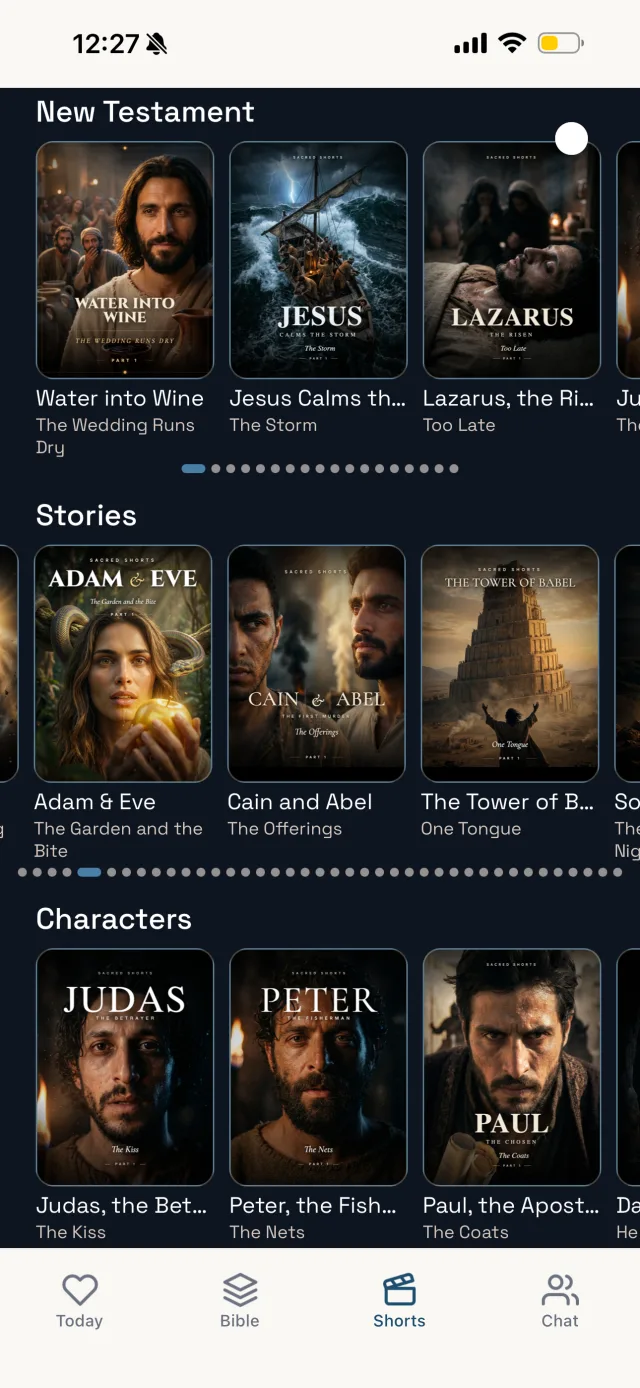
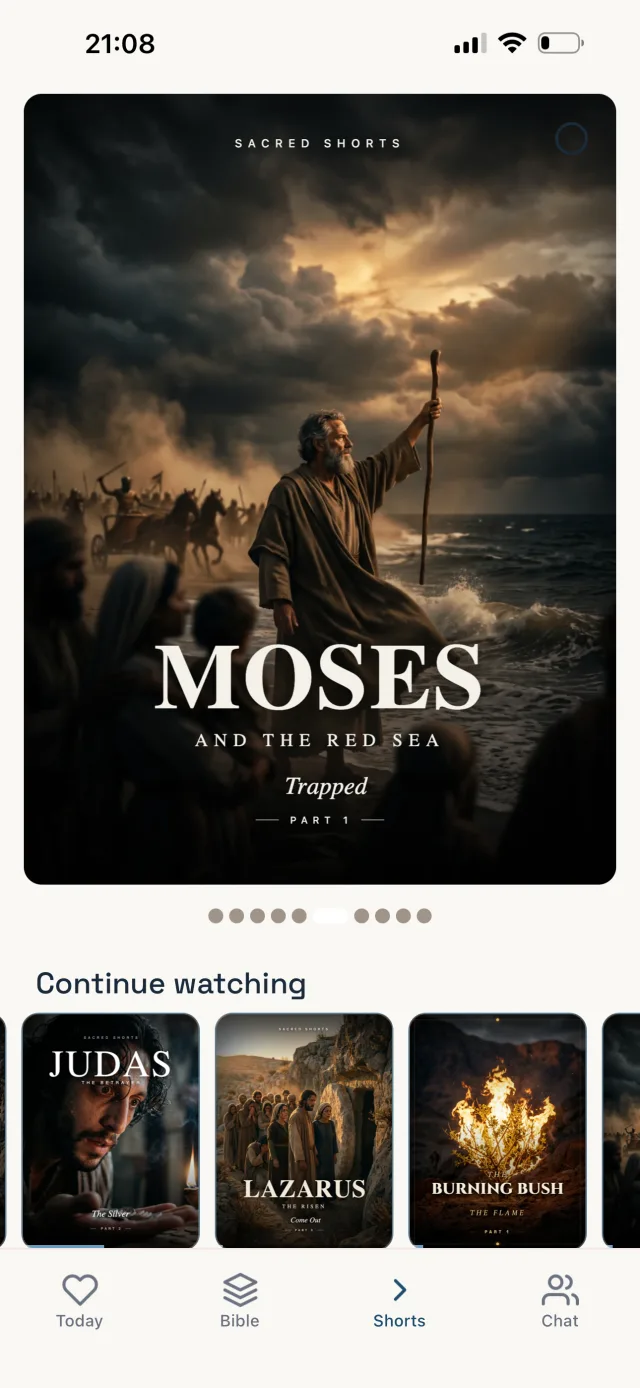
Watch this story come to life as a cinematic series in Sacred.
4.8on the App Store
Video helps us imagine, but Scripture remains first
Every portrayal of the Sermon on the Mount makes choices. What does Jesus sound like? How close is the crowd? Which phrases receive emphasis? What do listeners feel? Those choices can be helpful, but they are not the inspired text. Scripture gives us the words and the frame. Video can make us attentive; it cannot become the authority over what Jesus means.
This matters because Christians sometimes emphasize different aspects of the sermon. Some traditions read it primarily as the pattern of kingdom discipleship now. Others stress how it exposes our need for grace. Many hold both together in different ways: Jesus truly commands a transformed life, and that life is received and lived by grace. Because denominational emphases can differ, a faithful video should invite viewers back to Matthew 5–7 rather than pretending one adaptation settles every interpretive question.
When you watch, ask: What did the video make vivid? What did it leave out? Did it preserve the seriousness of Jesus’ commands? Did it also preserve the tenderness of his invitation? Then open the passage and let the text correct, deepen, and strengthen what you saw.
A simple rhythm: watch → read → reflect → pray
First, watch with attention. Do not treat the Sermon on the Mount as background noise. Notice the crowd. Notice the vulnerability of people hearing blessings that do not match worldly status. Notice the weight of Jesus’ words when he speaks about hidden motives, secret prayer, forgiveness, anxiety, and the Father’s care.
Second, read Matthew 5–7 slowly. If possible, read it in one sitting so the sermon’s flow remains intact. Then return to smaller sections. The Beatitudes, the Lord’s Prayer, the teaching on treasure, and the wise builder all belong together. Reading the whole sermon keeps a favorite verse from being isolated from Jesus’ larger call.
Third, reflect honestly. Which words comfort you? Which words confront you? Are you performing righteousness to be seen? Are you carrying anxiety as if the Father does not see you? Are you hearing Jesus’ teaching but refusing to build your life on it? Reflection is not vague self-improvement. It is a response to the living Word.
Finally, pray. You might pray: “Father, let me hear Jesus’ words with humility. Make me poor in spirit, merciful, pure in heart, and faithful in secret. Teach me to build on Christ, not on appearance.” Prayer turns a powerful teaching scene into discipleship.
Where Sacred fits naturally
Sacred is designed for this Scripture-first rhythm. Sacred Shorts can help a teaching scene feel present rather than distant. The Study Bible can take you back into Matthew 5–7 with context and chapter-by-chapter reading. AI Bible Chat can help you ask thoughtful questions about phrases like “poor in spirit,” “fulfill the Law,” or “seek first the kingdom.” Guided Prayer can help you respond to Jesus’ words without rushing past them.
Reading Scripture is always free in Sacred, because the video is not the destination. It is a doorway. The Word is where we return, and prayer is where the sermon becomes personal before God.
FAQ
What is the main message of the Sermon on the Mount?
The sermon reveals the life of the kingdom under Jesus’ authority. It blesses the humble, exposes hidden motives, teaches trust in the Father, and calls hearers to build their lives on Jesus’ words.
Is the Sermon on the Mount only about moral behavior?
No. It includes real commands, but it is more than moral advice. It shows the character of kingdom discipleship and drives us toward dependence on God’s grace, mercy, and Fatherly care.
How should I use a video of the Sermon on the Mount?
Watch it to slow down and imagine the setting, then read Matthew 5–7. Reflect on what Jesus is saying to your heart, and pray for grace to hear and obey.
 Sacred Shorts
Watch the Bible like never before
Cinematic Bible stories, a complete Study Bible, daily devotionals, and guided prayer. New episodes every week.
Frequently asked questions
The Sermon on the Mount is found in Matthew 5–7, with related teachings also appearing in Luke’s Gospel.
A video can help you imagine the hillside, the crowd, and the weight of Jesus’ words, but it should lead you back to the biblical text.
No. Video can support attention and imagination, but Scripture remains the source for Jesus’ teaching and authority.