
The story of Jesus walking on water is already cinematic before anyone adapts it. The disciples are far from land. Night has fallen. Wind pushes against them. The boat is beaten by waves. Then, in the middle of fear and exhaustion, they see someone coming toward them on the sea. They cry out because they think it is a ghost. Jesus answers with a word that steadies the whole scene: “Take heart; it is I. Do not be afraid.”
A Bible video can help us feel the pressure of that moment. It can show the darkness, the movement of the water, the faces of the disciples, and the shock of seeing Jesus approach where no one expects him to be. But the video is not the authority. It is a doorway back to the Gospel text. The healthiest rhythm is simple: watch → read → reflect → pray. Watch the scene to awaken attention. Read Matthew 14, Mark 6, and John 6. Reflect on what the story reveals about Jesus. Pray from the place where fear and faith meet.
The biblical context of the storm
The walking on water account comes after Jesus feeds the crowd. In Matthew and Mark, Jesus sends the disciples ahead in the boat while he goes up the mountain to pray. The scene matters because the disciples are not in trouble because they disobeyed him. They are on the lake because Jesus sent them there. Faithfulness does not mean the absence of wind.
Matthew 14 gives the fullest dramatic detail. Jesus comes to the disciples in the fourth watch of the night. They are terrified. He identifies himself and tells them not to fear. Peter answers, “Lord, if it is you, command me to come to you on the water.” Jesus says, “Come.” Peter steps out, walks toward Jesus, sees the wind, becomes afraid, and begins to sink. His prayer is short and urgent: “Lord, save me.” Jesus immediately reaches out his hand.
Mark 6 emphasizes the disciples’ hardness of heart and their failure to understand the loaves. John 6 connects the scene to the crowd’s search for Jesus and the larger teaching about the bread of life. Reading the accounts together keeps the story from becoming only a motivational lesson about taking risks. It is first a revelation of Jesus: his authority over creation, his nearness in fear, and his ability to save.
Christians sometimes differ in how they preach Peter’s step from the boat. Some emphasize bold faith. Others emphasize keeping our eyes on Christ. Others warn against testing God or making the story mainly about human courage. Those emphases can be helpful when they remain tethered to the text. The central figure is Jesus, not Peter’s bravery.
Why this scene is powerful on screen
This passage works well as video because it joins external danger with internal fear. The storm is not only weather. It reveals the disciples’ limited vision. They have seen Jesus feed thousands, yet they still panic when he comes in a way they do not recognize. A reverent short film can help viewers notice how strange and merciful the scene is: Jesus approaches in the very place that threatens them.
The camera can linger on hands gripping the boat, water striking wood, eyes scanning the dark, and the silence after Jesus speaks. It can portray Peter’s first step as both wonder and vulnerability. It can make the moment of sinking feel honest: faith is not the absence of fear, and fear can return even after a real step of obedience.
Still, adaptation requires restraint. Scripture does not give us every facial expression, every line of dialogue, or every motive in Peter’s heart. A video should not turn the story into a spectacle detached from the Gospels. It should invite viewers to ask better questions when they open the Bible: What does Jesus reveal about himself? Why are the disciples afraid? What does Peter’s prayer teach us? What happens when Jesus enters the boat?

The Bible has never felt like this
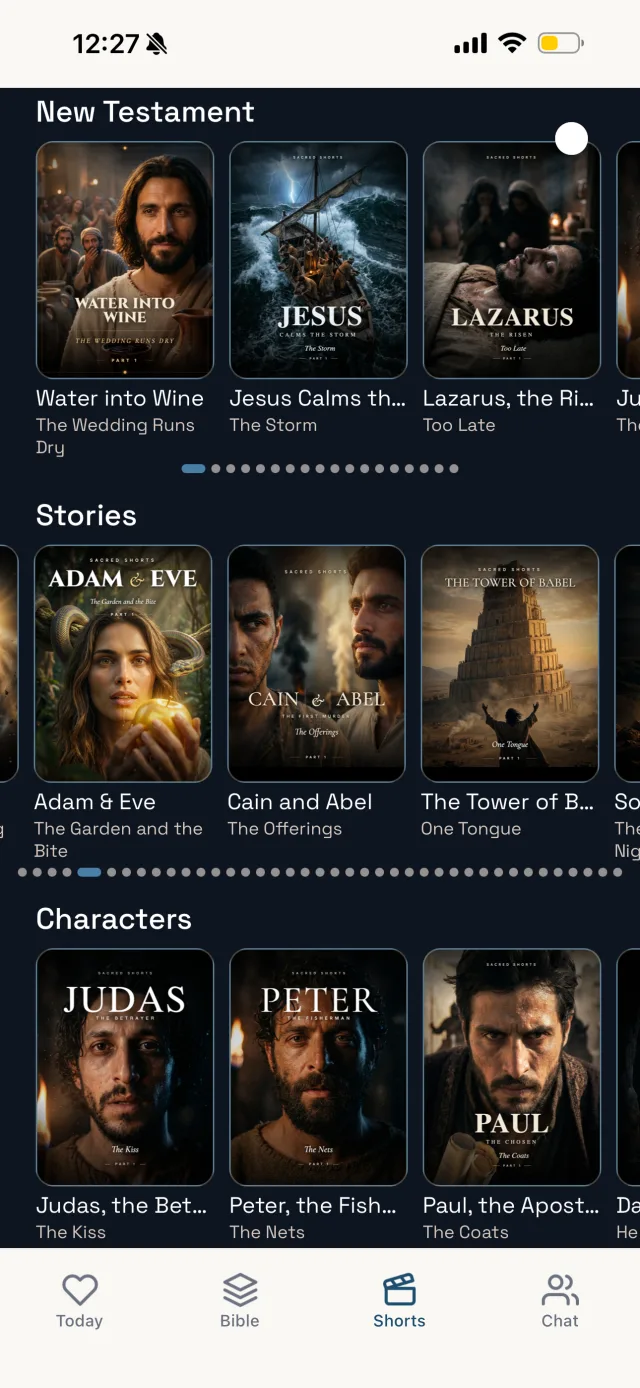
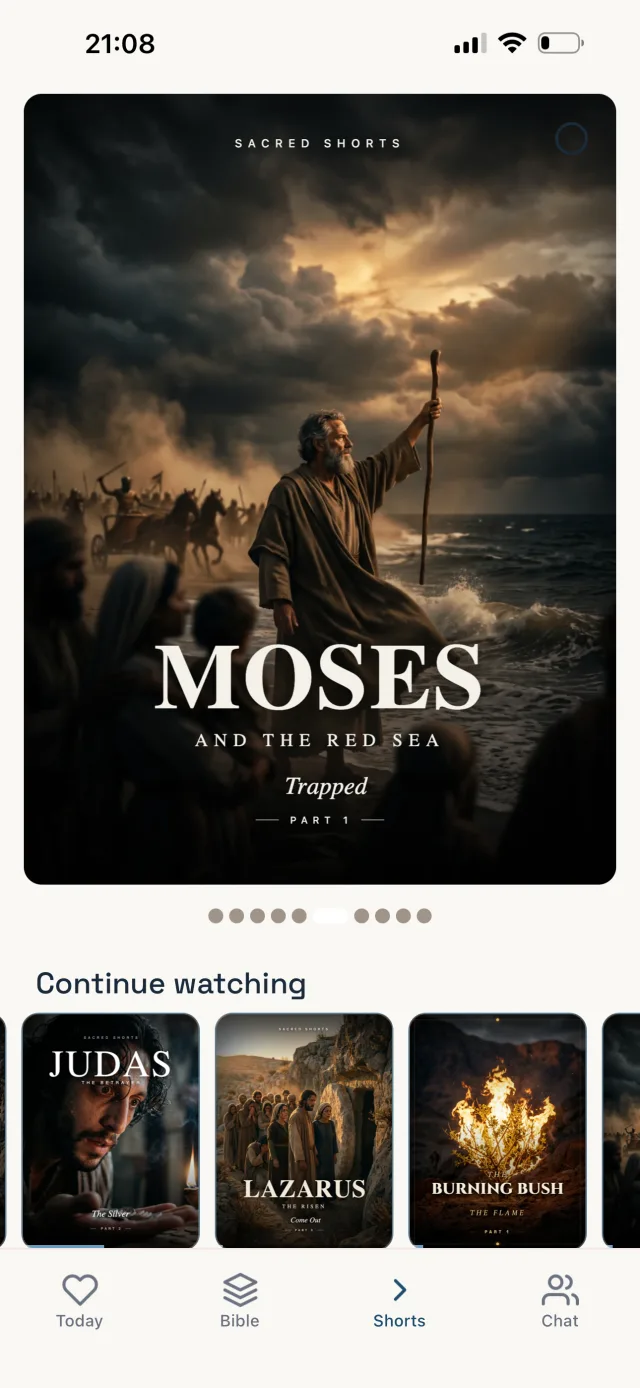
Watch this story come to life as a cinematic series in Sacred.
4.8on the App Store
Video helps us imagine, but Scripture remains first
A cinematic Bible scene can make the story feel close. That is valuable, especially when familiar passages become flat from repetition. But no image, soundtrack, or performance can replace the written witness of Scripture. The Bible gives the inspired account. Video can support attention, but it cannot carry final authority.
This is especially important with a passage that people often use as a metaphor for personal storms. The story can encourage believers who feel afraid, pressured, or overwhelmed. Yet we should avoid turning it into a promise that Jesus will remove every difficulty immediately or that strong faith means never sinking. Peter cries out, Jesus saves him, and the disciples worship. The focus is not self-confidence. The focus is Jesus, the Son of God.
When you watch a video of this scene, let it sharpen your reading rather than replace it. Notice what the video emphasized. Then ask whether Matthew, Mark, and John emphasize the same thing. Did the adaptation slow you down? Did it make you curious about a phrase in the passage? Did it lead you to worship Christ more clearly? If so, the video has served its proper place.
A Scripture-first rhythm: watch → read → reflect → pray
First, watch with reverence. Do not rush through the scene as entertainment. Let the storm, the boat, and the words of Jesus draw your attention. Ask what part of the story feels most vivid: the disciples’ fear, Peter’s step, Jesus’ hand, or the worship at the end.
Second, read the passage. Start with Matthew 14:22–33, then compare Mark 6:45–52 and John 6:16–21. Look for what each Gospel includes and what each leaves unsaid. The differences are not a problem to flatten; they are invitations to read carefully.
Third, reflect. Where do you recognize fear in the disciples? Where do you recognize your own desire to trust Jesus and your own tendency to look at the wind? What does the passage reveal about Christ’s authority, patience, and saving nearness?
Finally, pray. You might pray, “Lord Jesus, meet me in the storm without letting me make the storm the center. Teach me to hear your voice, trust your presence, and return to your Word with faith.” Prayer turns the scene into a response.
Where Sacred fits naturally
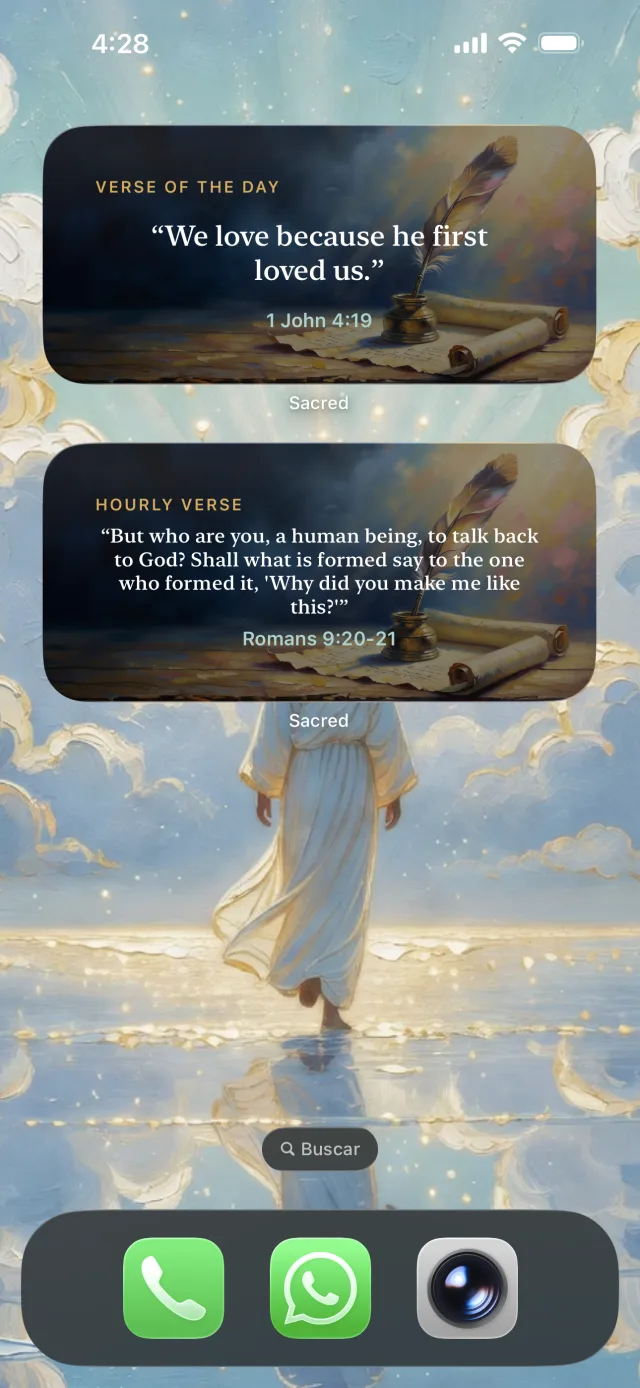
Sacred is built for this kind of rhythm. Sacred Shorts can help the Gospel scene feel vivid. The Study Bible can bring you back to the chapter. AI Bible Chat can help you ask context questions about Matthew, Mark, and John without treating a video as the final word. Guided Prayer can help you respond slowly instead of moving on to the next piece of content.
Reading Scripture is always free in Sacred because the Word remains central. A short film may help you imagine the boat and the waves. Scripture gives you Jesus’ words, the disciples’ response, and the worship that follows.
FAQ
What does Jesus walking on water reveal about him?
It reveals Jesus’ authority over creation, his nearness to fearful disciples, and his power to save. In Matthew, the disciples respond by worshiping him as the Son of God.
Why does Peter begin to sink?
Matthew says Peter saw the wind and became afraid. The point is not to mock Peter, but to show both the reality of fear and the immediacy of Jesus’ saving hand when Peter cries out.
How should I use a video of this story devotionally?
Watch the scene, then read Matthew 14, Mark 6, and John 6. Reflect on what the Gospels actually say, and pray honestly about fear, faith, and the presence of Jesus.
 Sacred Shorts
Watch the Bible like never before
Cinematic Bible stories, a complete Study Bible, daily devotionals, and guided prayer. New episodes every week.
Frequently asked questions
The story appears in Matthew 14, Mark 6, and John 6, with Matthew including Peter stepping out of the boat toward Jesus.
The darkness, wind, waves, fear, and sudden presence of Jesus make the scene vivid, but the meaning must still come from Scripture.
No. A video can help you imagine the storm and the disciples’ fear, but Scripture remains the source for understanding Jesus’ identity and call to faith.