
Paul’s encounter with the risen Jesus on the road to Damascus is one of the great turning points in the New Testament. A man who breathed threats against the disciples of the Lord is stopped by a light from heaven. A persecutor hears his own name. A confident religious enemy is brought to the ground. Then the voice of Jesus asks a question that exposes everything: “Saul, Saul, why are you persecuting me?”
A Bible video can help us feel the movement of that moment: the road, the companions, the sudden light, the fall, the silence after the voice, and the blindness that follows. Yet the video is not the authority. It is a doorway back to Acts. The best rhythm is watch → read → reflect → pray. Watch to awaken attention. Read Acts 9, Acts 22, and Acts 26 carefully. Reflect on Christ’s mercy, Paul’s calling, and the courage of Ananias. Pray in response to the Lord who can interrupt a life and redirect it for his purposes.
The biblical context of the Damascus road
Before he is known as Paul the apostle, Scripture introduces him as Saul. He is present at Stephen’s death in Acts 7 and approves of it. In Acts 8, he ravages the church, entering house after house and dragging off men and women to prison. By Acts 9, he is still breathing threats and murder against the disciples. He asks for letters to the synagogues in Damascus so he can bind followers of “the Way” and bring them to Jerusalem.
That background matters. Paul’s conversion is not presented as a gentle improvement in an already neutral life. It is the mercy of Christ meeting an enemy. The risen Jesus identifies himself with his persecuted people: “I am Jesus, whom you are persecuting.” To harm the church is not a small matter to Christ. He knows the suffering of his people and speaks from resurrection authority.
Acts 9 gives the narrative. Acts 22 and Acts 26 retell it through Paul’s own testimony. Those retellings add details about his calling, his witness before Jews and Gentiles, and the mission he receives. The story is not only about a private spiritual experience. It is about the Lord appointing a witness, sending him to proclaim Christ, and showing that grace can reach even the person who seemed least likely to serve the gospel.
Why this scene is powerful on screen
The Damascus road is cinematic because it contains external action and inward collapse. A journey becomes an encounter. Brightness interrupts confidence. A voice exposes the truth. Blindness turns a powerful man into someone who must be led by the hand. For three days Saul cannot see, and he does not eat or drink. The story moves from motion to stillness, from control to dependence.
A reverent video can help viewers imagine the shock without turning the miracle into spectacle. It can show the dust of the road, the urgency of Saul’s mission, the fear of his companions, and the strange humility of being led into Damascus. It can also linger on Ananias, who is often easy to overlook. Ananias hears the Lord’s command and understandably hesitates. Saul’s reputation is known. Still, Ananias obeys, goes to him, calls him “Brother Saul,” lays hands on him, and becomes part of the restoration.
That is a beautiful detail for visual storytelling. The same man who came to bind believers is touched by a believer in obedience to Jesus. The church’s enemy receives ministry from the church. A video can help us notice the tenderness of that moment, but it should make us want to open the text, not replace it.

The Bible has never felt like this
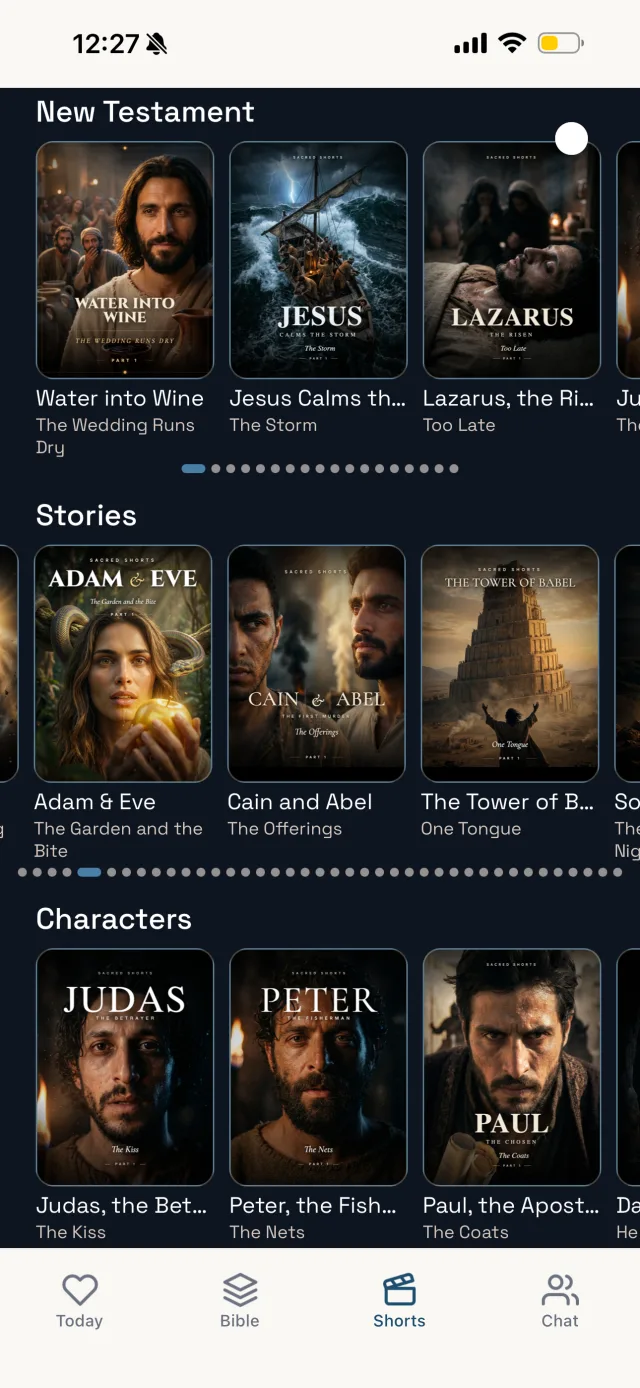
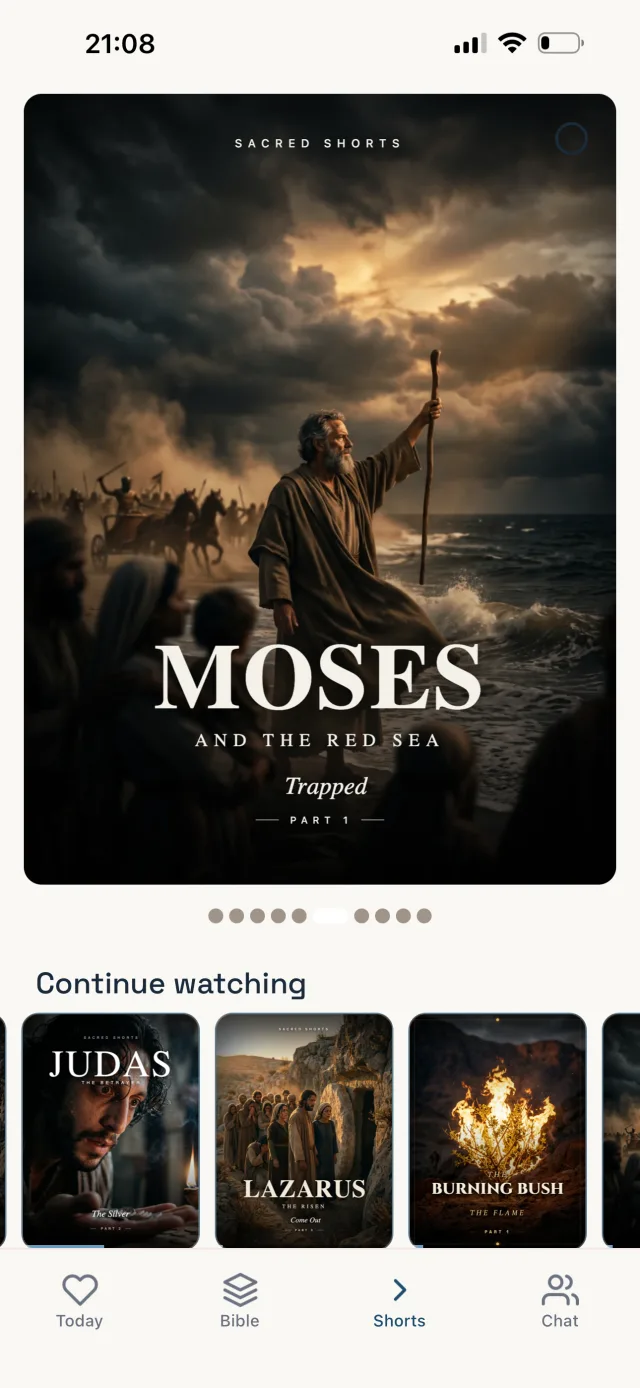
Watch this story come to life as a cinematic series in Sacred.
4.8on the App Store
Video helps us imagine, but Scripture remains first
A cinematic Bible short can make the road to Damascus feel near. It can help modern readers slow down and see the human texture of the story: fear, confusion, obedience, prayer, and grace. That matters because familiar stories can become flat if we only remember their outline. Video can restore attention.
But no adaptation can carry the final authority of Scripture. Acts tells us what matters most: Jesus is risen, he speaks, he identifies with his people, he shows mercy to an enemy, and he commissions a witness. A video may imagine expressions, pacing, landscape, and sound, but it must not invent a message that competes with the biblical one. Scripture remains the source; video is a servant.
Christians sometimes describe Paul’s experience with different theological emphases. Some stress sudden conversion, others vocation and calling, others the continuity between Paul’s Jewish background and his mission to the nations. Those differences should be handled with humility. Acts itself gives us enough to worship: salvation is grace, Christ is Lord, and the person changed by mercy is sent to bear witness.
A Scripture-first rhythm: watch → read → reflect → pray
First, watch with attention. Notice Saul’s confidence before the encounter and his dependence afterward. Pay attention to the question Jesus asks, the blindness, the waiting, and Ananias’s obedience.
Second, read the biblical passages. Begin with Acts 9:1–19. Then read Acts 22:3–16 and Acts 26:9–18 to hear Paul tell the story in his own defense. You may also read Galatians 1:11–24 and 1 Timothy 1:12–17, where Paul reflects on grace, calling, and mercy.
Third, reflect honestly. Where do you see Christ’s initiative? What does it mean that Jesus identifies himself with his suffering people? How does Ananias model costly obedience? Where might God be calling you away from pride, control, or hostility and toward surrender?
Finally, pray. You might pray, “Lord Jesus, interrupt whatever in me resists your voice. Lead me back to your Word. Make me humble enough to receive mercy and brave enough to obey when you send me.” Prayer turns the scene into response.
Where Sacred fits naturally
Sacred is built for this kind of Scripture-first rhythm. Sacred Shorts can help you imagine the Damascus road with reverence. The Study Bible brings you back to Acts and Paul’s letters. AI Bible Chat can help you ask careful questions about context, calling, and the early church. Guided Prayer can help you respond slowly before God.
Reading Scripture is always free in Sacred because the Bible remains central. A short film may help you picture the light on the road. Scripture gives you the risen Christ’s words, Paul’s calling, and the grace that changed an enemy into a witness.
FAQ
What changed in Paul on the road to Damascus?
Paul encountered the risen Jesus, was confronted about persecuting Christ’s people, was blinded for a time, received ministry through Ananias, and was called to become a witness of Jesus.
Why is Ananias important in the story?
Ananias shows obedient courage. He knows Saul’s reputation, yet he listens to the Lord, goes to Saul, calls him brother, lays hands on him, and helps welcome him into the community of faith.
How should I use a video of Paul’s conversion devotionally?
Watch the scene, then read Acts 9, Acts 22, and Acts 26. Reflect on Christ’s mercy, the seriousness of persecuting his people, and the call to witness, then pray from the text.
 Sacred Shorts
Watch the Bible like never before
Cinematic Bible stories, a complete Study Bible, daily devotionals, and guided prayer. New episodes every week.
Frequently asked questions
Paul’s encounter with the risen Christ is told in Acts 9 and retold in Acts 22 and Acts 26, with Paul also reflecting on grace and calling in his letters.
The journey, light, voice, blindness, waiting, prayer, and restoration create a vivid story, but the meaning must be read from Scripture.
No. A video can help you imagine the road and the shock of the encounter, but Scripture remains the source for understanding Paul’s calling and Christ’s mercy.