
The prayer app that helps you most is the one you will open tomorrow morning. Before comparing features, name what gets in the way of your prayer life: forgetting, not knowing what to say, or a mind that wanders. Then look for an app that meets that need, with reminders at the right time, guided prayers that leave room for your own words, Scripture at the center, and content that fits your church tradition.
Start with what you actually need
The disciples watched Jesus pray and then asked him, "Lord, teach us to pray, just as John taught his disciples" (Luke 11:1, NIV). Wanting help with prayer is not a sign of weak faith. It is one of the oldest requests in the Gospels.
Most struggles fall into a few groups, and each one points to a different feature:
- "I forget." You need reminders, and a simple way to see that a habit is forming.
- "I don't know what to say." You need guided prayers, written prayers or prompts drawn from Scripture.
- "My mind wanders." Audio can help. Hearing a prayer or a psalm read aloud gives your attention something to hold.
- "I want to remember what God has done." Journaling, in an app or a notebook, lets you see answered prayers over months.
An app that does everything except touch your main obstacle won't help much. Choose for the problem you actually have.
Reminders that serve you instead of nagging you
A reminder works best when it is tied to something you already do: your first coffee, the drive to work, the moment the kids are finally in bed. One well-timed reminder beats five scattered ones you learn to swipe away.
Streaks can be motivating too. Seeing seven days in a row is encouraging. But a streak is a tool, not a measure of where you stand with God. If you miss a day, his mercies are still "new every morning" (Lamentations 3:23, NIV). Look for an app whose tone invites you back instead of making you feel guilty.
Guided prayer or free prayer?
Christians have always prayed both ways. The Psalms are a book of written prayers, and Jesus prayed them, even on the cross. The Lord's Prayer was given as a pattern. Many churches use prayer books, liturgies and set times of prayer. At the same time, Scripture is full of raw, spontaneous prayer: Hannah weeping at Shiloh, David crying out from a cave, Jesus in Gethsemane.
Guided prayers help when you are tired, grieving or simply out of words. Free prayer keeps your conversation with God personal and honest. And Paul reminds us that even when words fail, we are not praying alone: "We do not know what we ought to pray for, but the Spirit himself intercedes for us through wordless groans" (Romans 8:26, NIV).
The best apps hold both. They give you words to begin with, then get out of the way. If you often feel stuck, our guide on how to pray when you don't know what to say offers simple patterns you can use with or without an app.
When audio makes a difference
Listening is not a lesser way to pray. For much of church history, most believers heard Scripture read aloud rather than reading it themselves. A narrated prayer or chapter can carry you through a commute or a walk, or help at night when your eyes are tired and your mind is too scattered to read.
If audio matters to you, check three things: whether the voice is calm and clear, whether it keeps playing with the screen locked, and whether you can listen to Scripture itself, not only to short prayers.

A daily prayer, read aloud for you
Sacred's daily devotional pairs a verse and a short reflection with a narrated prayer.
4.8on the App Store
 Scan with your phone
Journaling: remembering what God has done
Writing your prayers down lets you look back months later and see what changed, including things you had forgotten you asked for. Some apps include a journal. Many people prefer a simple notebook beside their Bible. Both work. What matters is writing honestly and rereading now and then. If you want to begin, here is how to start a prayer journal.
Does it fit your tradition?
This question is easy to skip and worth asking. Prayer apps reflect the theology of the people who make them. Catholic apps often center the Rosary, the Liturgy of the Hours or prayers to the saints. Orthodox resources tend to follow the church calendar and its traditional prayers. Evangelical and other Protestant apps lean toward spontaneous prayer and Scripture-based devotionals. Non-denominational apps usually aim for common ground: the Psalms, the Lord's Prayer, thanksgiving and confession.
None of this is a reason to avoid an app, but it is a reason to read a week of its content before you commit. Ask yourself: Who is this prayer addressed to? Does it sound like what my church teaches? Would I be comfortable praying this out loud with my congregation?
Red flags to watch for
- Ads in the middle of prayer. Few things break a quiet moment faster.
- Promises of guaranteed results. Prayer is not a technique for getting what you want.
- An endless feed. If the app keeps you scrolling instead of praying, it is working against you.
- Guilt-driven notifications. You need encouragement, not shame.
- A substitute for church. An app can support your prayer life, but it can't be your community.
When prayer feels dry even with the right tools, that is normal too. Our article on what to do when prayer feels empty is a good companion for those seasons.
How Sacred helps you pray
Sacred is a Christian app with a non-denominational tone. Each day it offers a short devotional: a Bible verse, a brief reflection and a prayer narrated aloud, so you have words to start with even on a hard morning. Prayer reminders help you keep a regular time, and a streak lets you see the habit taking shape without making it the point.
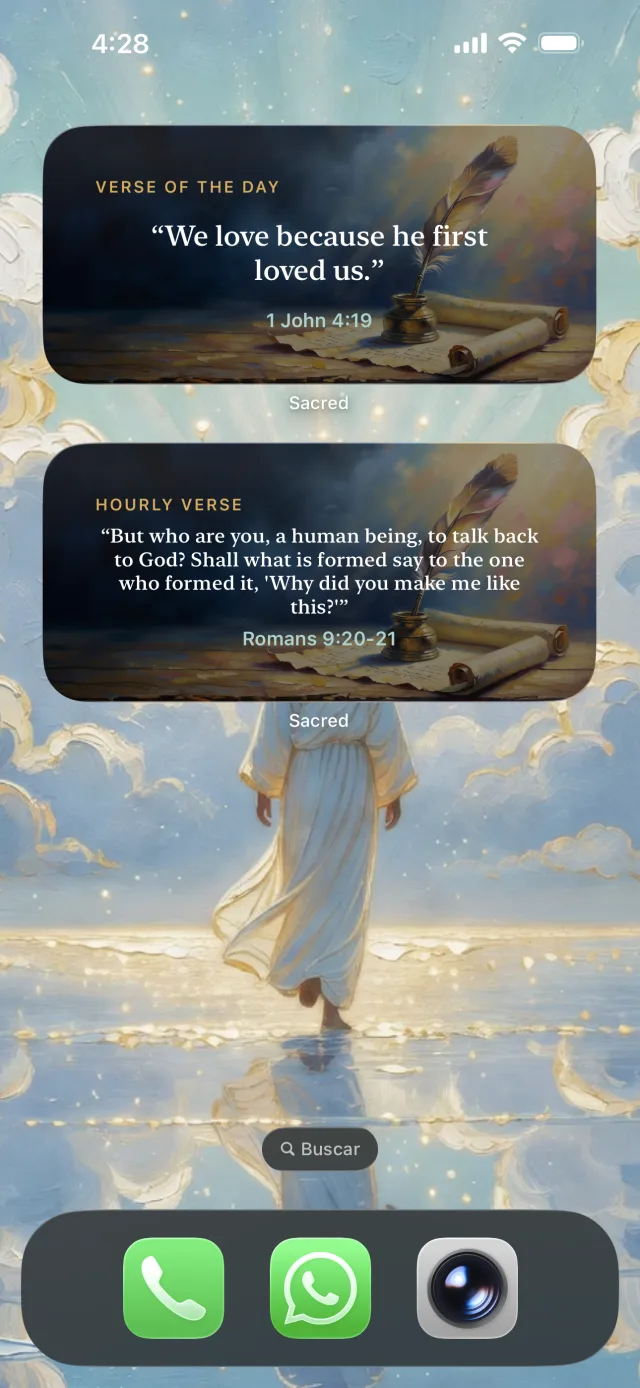
Because prayer and Scripture belong together, the full Bible is in the app too, narrated chapter by chapter with each verse highlighted as it is read, and it keeps playing with the screen locked. Many people use it to pray through the Psalms. There is also an AI Bible chat for questions about a passage, a verse widget for your iPhone or Android home screen, and no ads. If journaling is part of how you pray, keep a notebook next to your phone.
A simple way to test any prayer app
Choose one app and one time of day, and use it for seven days in a row. On the last day, ask yourself a single question: did I pray more honestly this week? If the answer is yes, keep going. If you want somewhere to begin tomorrow, start with this morning prayer.
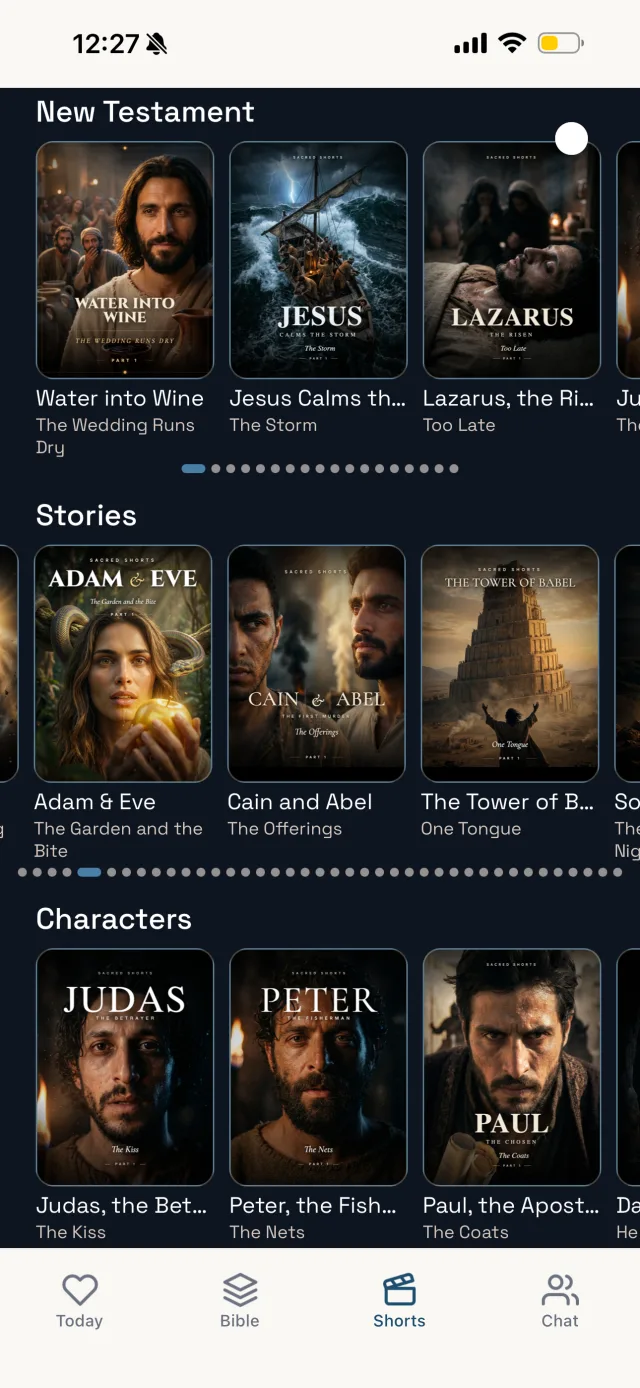
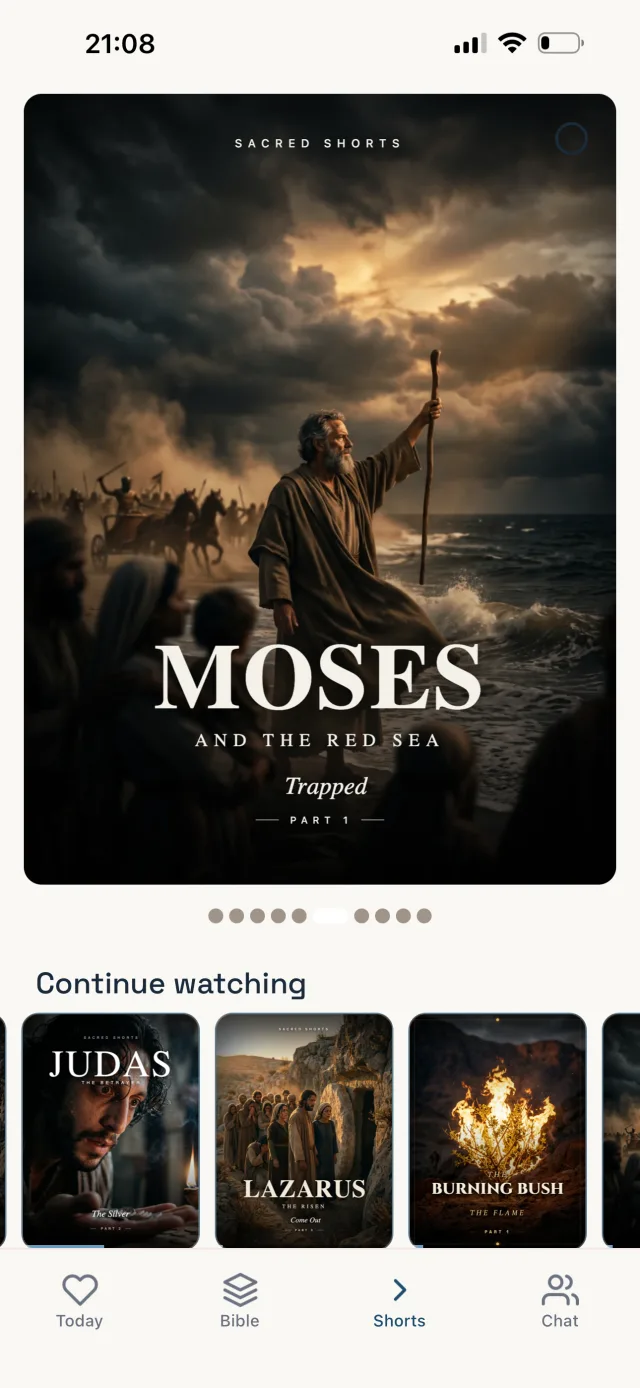
 Sacred Shorts
Make room to pray every day
A daily devotional with a narrated prayer, prayer reminders and the full Bible narrated. No ads.
 Scan with your phone
Frequently asked questions
The best one is the app you will actually open tomorrow. Look for reminders at a time that fits your routine, guided prayers for days when words are hard, room for your own words, Scripture at the center and content that fits your tradition. Try one for a full week before deciding.
Both have deep roots in the Christian life. The Psalms and the Lord's Prayer are written prayers believers have prayed for centuries, and Scripture also invites honest, spontaneous prayer. Many people start with a guided prayer and then keep going in their own words.
An app is a tool, like a printed prayer book or an alarm on your phone. What matters is whether it helps you pray to God more honestly and more often, and whether it keeps you connected to the Bible and to your church.
Set one reminder tied to something you already do every day, such as your first coffee or your commute. Keep the first goal small, a few minutes a day, and if you miss a day, simply begin again the next morning.