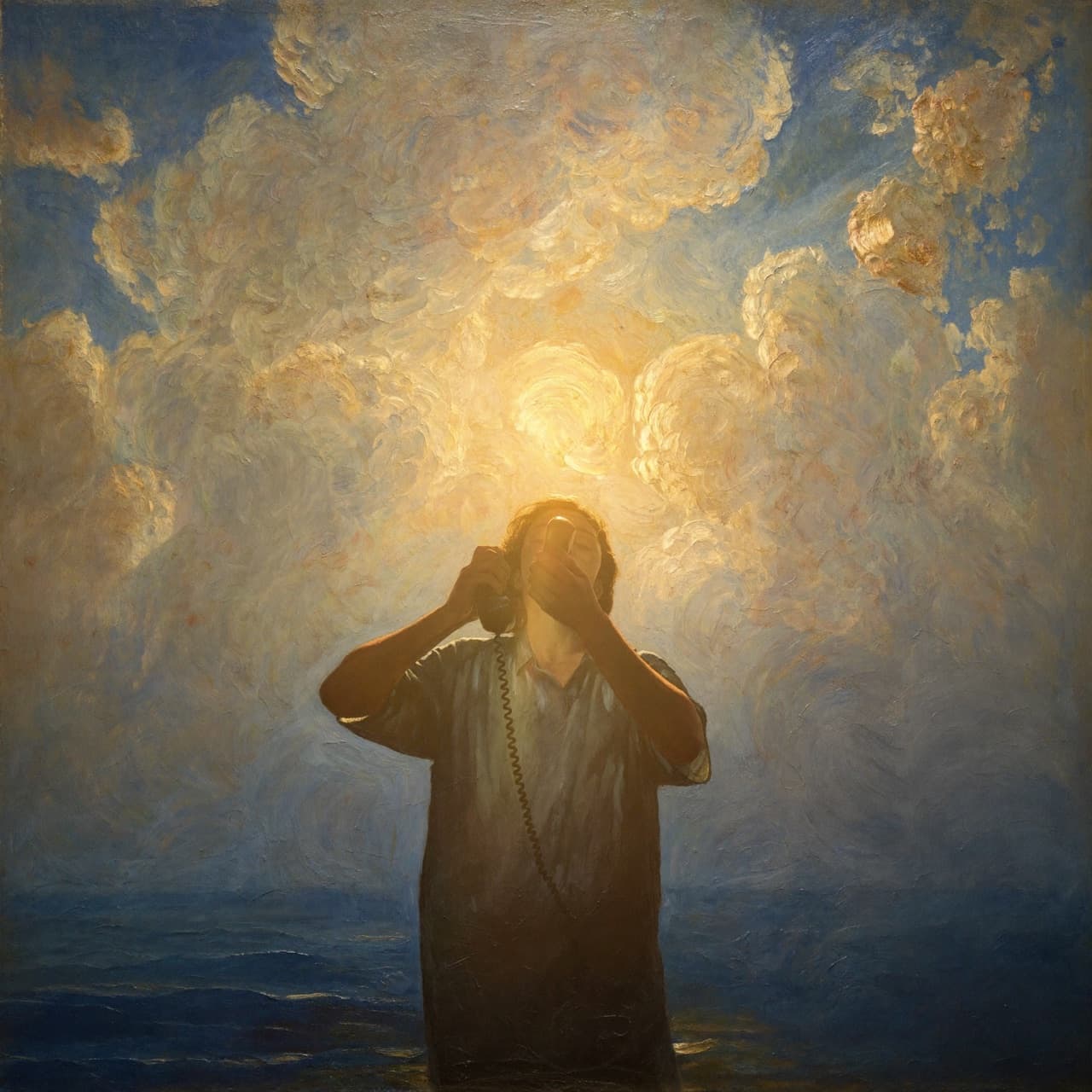
If you use a Bible app to pray, read slowly or end the day with Scripture, an ad-free app is worth choosing on purpose. Ads break attention at the moments you most want to protect, they often come with tracking, and they shape what an app is built to do. But "no ads" alone doesn't make an app good. You also want to know how it is paid for, what other distractions it has and what it does with your data. Here is how to check all three.
What an ad does in the middle of a prayer
Picture it: you are halfway through Psalm 23, finally slowing down, and a banner slides up for a car loan. Even if you ignore it, your mind has already left the psalm. Getting back takes effort, and on a tired morning many of us simply don't.
Jesus gave a very physical picture of prayer: "But when you pray, go into your inner room, shut your door, and pray to your Father, who is unseen" (Matthew 6:6, BSB). A phone is not an inner room, but it can come close if nothing else is allowed in. An ad opens the door from the inside. The same goes for Bible reading. "Be still and know that I am God" (Psalm 46:10, BSB) is hard to practice while something keeps trying to sell you something.
How Bible apps pay for themselves
Every app costs money to build and run: developers, servers, audio, translation licenses. Someone pays. The question is how, because the model shapes the experience.
| Model | How it works | Upside | Trade-off | What to check |
|---|---|---|---|---|
| Ads | Free to download, ads pay the bills | No cost to you | Interruptions, tracking, pressure to keep you in the app | Where ads appear, privacy label |
| Subscription | You pay weekly, monthly or yearly | No ads, steady funding | Cost, renewals | Price, what is included, how to cancel |
| Donations or ministry | A church, ministry or donors fund it | Often free and ad-free | Depends on donors, may ask for gifts | Who runs it and what they believe |
| Free plus paid | Basic features free, extras paid | Try before paying | Upgrade prompts | What sits behind the paywall |
None of these is more spiritual than the others. A ministry-funded app can be excellent. So can a paid one. And remember that you never need to pay to read the Bible: printed Bibles and many free digital translations exist. Subscriptions bought through the App Store or Google Play are managed and canceled from your store account settings, so look there before you subscribe.
Ads aren't the only distraction
An app with zero ads can still be noisy. While you try it, watch for:
- Autoplay that rolls into the next video before you have finished thinking about the last one.
- Badges and red dots that make you feel behind.
- Notification floods: several pings a day instead of one reminder at the time you picked.
- Social feeds and likes next to your reading, turning prayer into performance.
- Upgrade prompts that pop up mid-chapter. Ad-free doesn't always mean prompt-free.
- Gamification pressure that makes a missed day feel like failure.
A good Bible app lets you finish something and close it. If you want to think more about this, our piece on a Christian alternative to endless scrolling looks at the difference between short content that ends and content designed never to end.

Pray and read without ads
Sacred has no ads, so nothing interrupts a prayer or a chapter.
4.8on the App Store
 Scan with your phone
What to check about your data
Ad networks usually need data to target ads, which is one more reason an ad-free app tends to be quieter behind the scenes too. Still, check:
- The privacy label. The App Store shows an "App Privacy" section and Google Play a "Data safety" section on every listing.
- Tracking requests. On iPhone, apps must ask before tracking you across other companies' apps and websites. You can say no.
- Sensitive text. Prayer requests, journal entries and chat questions are personal. Find out whether they are stored and how to delete your account.
- AI features. What you type into an AI chat is processed on a server. Don't type anything you wouldn't want stored.
A five-minute checklist before you download
- Read the store listing for any mention of ads or "contains ads."
- Open the privacy label and note what is collected.
- Find out how the app is funded: subscription, donations or ads.
- If it is paid, check the price and how renewal works.
- Open a chapter and read for two minutes. Did anything interrupt you?
- Look at notification settings. Can you choose one reminder time?
- Check whether the translation you read is available.
- Ask yourself whether you closed the app feeling calmer or more scattered.
Set up your phone for focused prayer
Even the quietest app can't stop your other apps. Before you pray or read:
- Turn on Focus on iPhone or Do Not Disturb on Android, allowing only calls from favorites.
- Put the phone face down once audio is playing, or lock the screen if the app keeps playing.
- Decide on the passage before you open anything, so you aren't browsing.
- Keep the same time and place each day. Habit does a lot of the work.
If you often sit down and don't know how to begin, our guide on how to pray when you don't know what to say gives simple starting words. For building the daily rhythm itself, see how to build a daily devotional habit.
How Sacred fits
Sacred has no ads anywhere in the app. It is funded by subscriptions, so it is not free; check the current price in your app store before you decide.
What you get for that: cinematic series in short episodes based on Bible stories, the full Bible to read in the Berean Standard Bible (BSB) or the King James Version, and the whole Bible narrated in the BSB with each verse highlighted as it is read. You can change the playback speed and keep listening with the screen locked, which makes it easy to pray or reflect without looking at the phone. There is a daily devotional with a verse, a reflection and a narrated prayer, prayer reminders at a time you choose, favorites, verse widgets for iPhone and Android, and an AI Bible chat for questions.
What it can't do: it can't silence your other apps. Pair it with Focus or Do Not Disturb. And it doesn't replace a paper Bible, a church or a quiet room.
The bottom line
An ad-free Bible app protects the few quiet minutes many of us have each day. Check how the app is funded, what else competes for your attention inside it, and what it does with your data. Then shut the door, as Jesus put it, and pray.
 Sacred Shorts
A quieter place to read and pray
Bible stories in short episodes, the full Bible narrated and a daily prayer, all without ads.
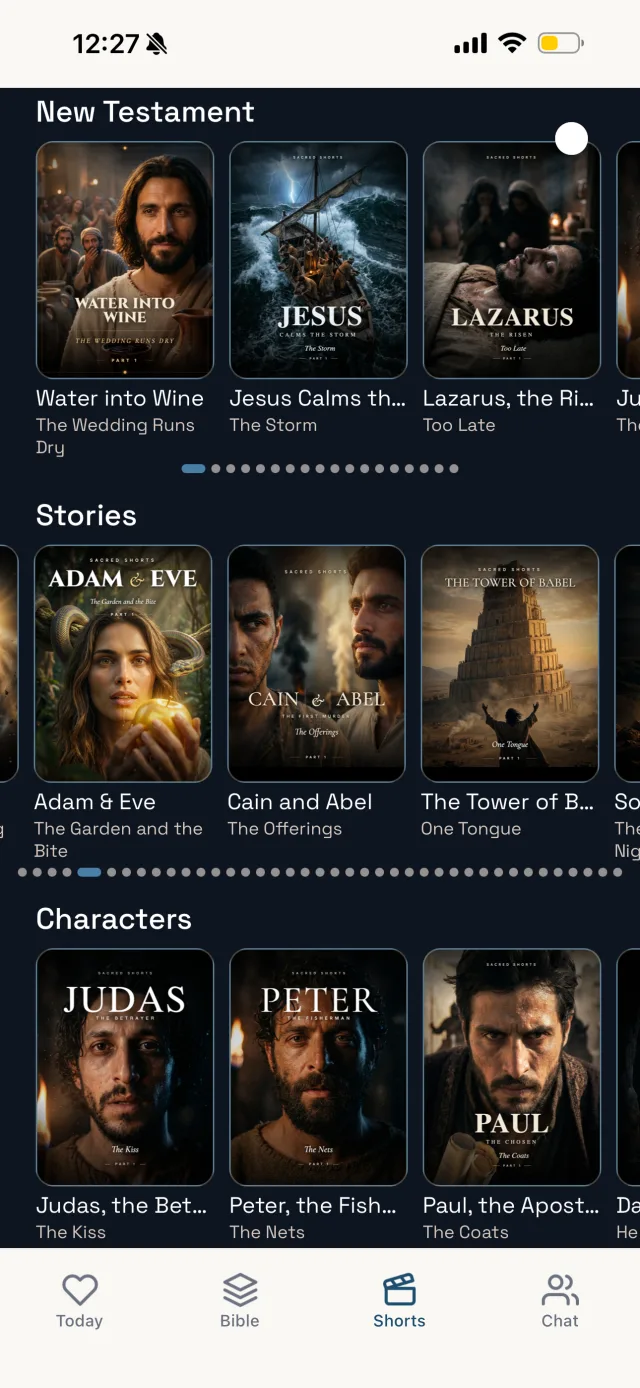
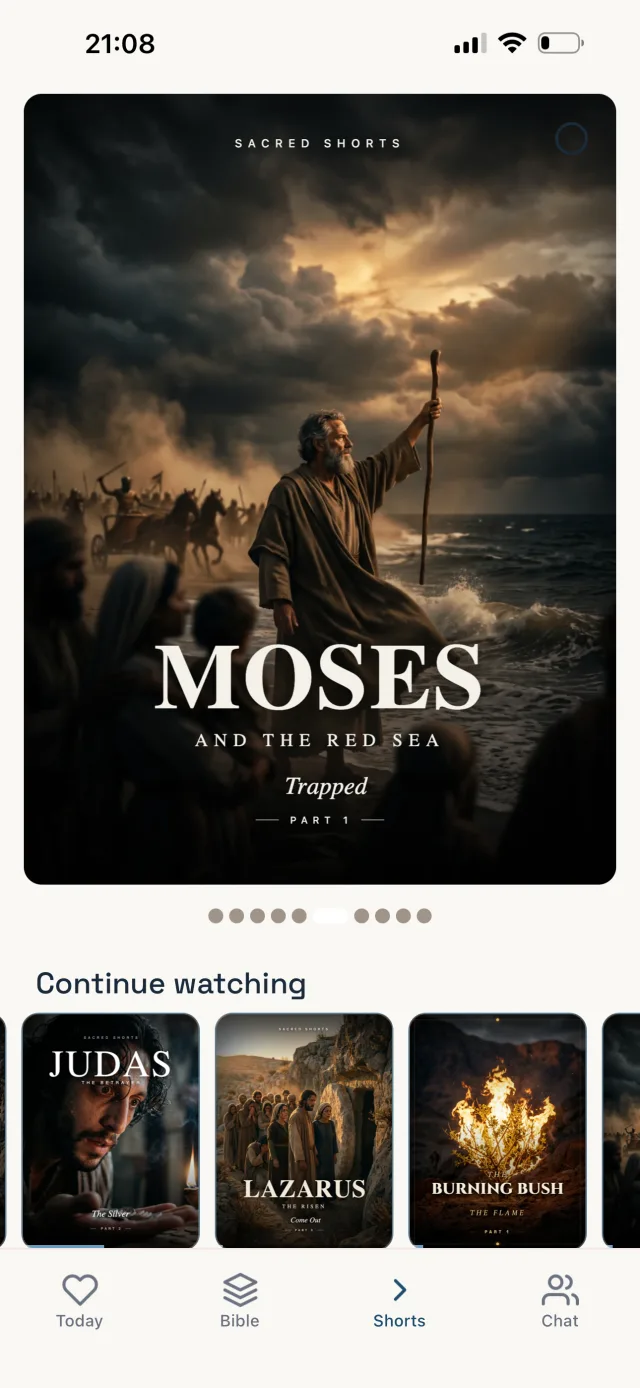
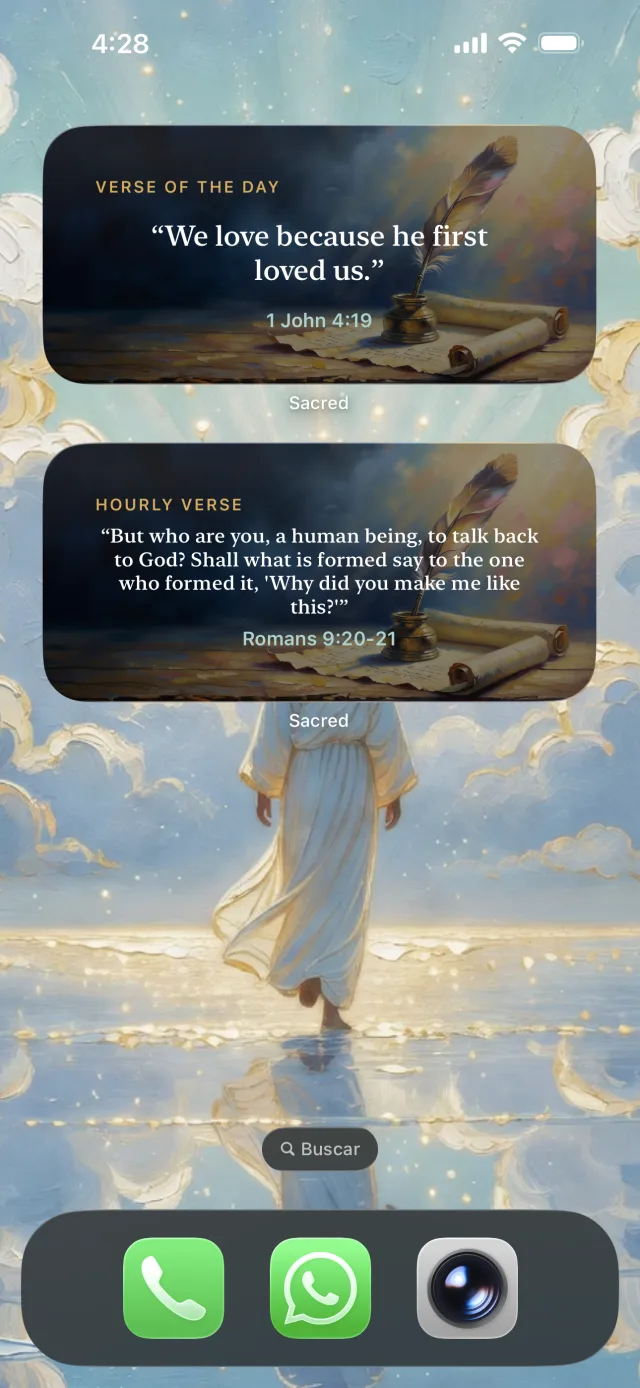 Scan with your phone
Frequently asked questions
Yes. Some are paid for by subscriptions, others by churches, ministries or donations. The store listing and a few minutes of use will usually show you whether ads appear and where.
Building and running an app costs money. Ads let a developer offer it at no charge. The trade-off is interruptions and, often, data collection used to target those ads.
You never need to pay to read Scripture. A paid app is worth it only if its extras, like narration, video or a daily devotional, help you read and pray more consistently.
Turn on Focus or Do Not Disturb, silence notifications from other apps, decide on the passage before you open the app, and use audio with the screen locked when you can.