
The story of Esther is one of the most dramatic narratives in the Old Testament. It has a hidden identity, a royal court, a dangerous enemy, a courageous queen, a sleepless king, and a reversal that turns mourning into joy. As a Bible story video, Esther can feel almost cinematic from the first scene. The setting is vivid, the tension grows slowly, and the stakes involve the life of an entire people living in exile.
Yet Esther is not only a story about bravery in a palace. It is a story about providence, wisdom, timing, and costly intercession. The book is famously unusual because God is not named directly in the text, and that matters. A faithful Esther video should not force words into Scripture that are not there, but it can help viewers feel the pressure of a world where God’s hand is often discerned through timing, courage, reversal, and the preservation of his people. Video helps us imagine and enter the biblical story, but it does not replace Scripture. The best rhythm is watch → read → reflect → pray.
The biblical context of Esther
Esther takes place among Jewish exiles in the Persian Empire. The people of God are away from Jerusalem, scattered under foreign rule, and vulnerable to the decisions of powerful rulers. Esther, also called Hadassah, is raised by her cousin Mordecai after the death of her parents. Through a painful and complicated series of events in the royal court, she becomes queen, though her Jewish identity remains hidden for a time.
The crisis begins when Haman rises to power and becomes enraged by Mordecai’s refusal to bow before him. His pride turns into a murderous plan against all the Jews in the empire. The decree is not a private threat; it becomes law. Families who already live as exiles now face destruction because of one man’s hatred and a king’s careless approval.
Mordecai sends word to Esther, urging her not to imagine that palace walls will keep her safe. His famous question presses the weight of the moment: who knows whether she has come to the kingdom for such a time as this? Esther’s response is courageous but not impulsive. She asks the people to fast, and then she risks approaching the king without being summoned. The story’s courage is not loud self-confidence. It is trembling obedience in a moment when silence would be easier.
Why Esther is powerful on screen
A faithful video adaptation of Esther can help viewers feel the contrast between beauty and danger. The palace may look secure, but it is filled with fragile power, hidden motives, and sudden reversals. Esther’s clothing, banquets, corridors, and approach to the throne can be visually striking, but the heart of the story is not glamour. The heart is intercession: Esther risks her life to speak for her people.
Video can also slow down moments we may pass over too quickly when reading. Imagine Esther standing before the inner court, knowing that the king could reject her. Imagine Mordecai in sackcloth outside the gate. Imagine Haman building a gallows for Mordecai, not knowing his own pride will become part of his downfall. Imagine the people waiting, fasting, and wondering whether deliverance will come.
Still, every adaptation makes choices. It chooses Esther’s expressions, the look of the Persian court, the pacing of the banquets, and the emotional tone of each conversation. Those choices may be reverent and helpful, but they are not the inspired text. After watching, open the book of Esther and read carefully. Notice what the narrator emphasizes: hidden identity, public danger, wise timing, reversal, and remembrance.

The Bible has never felt like this
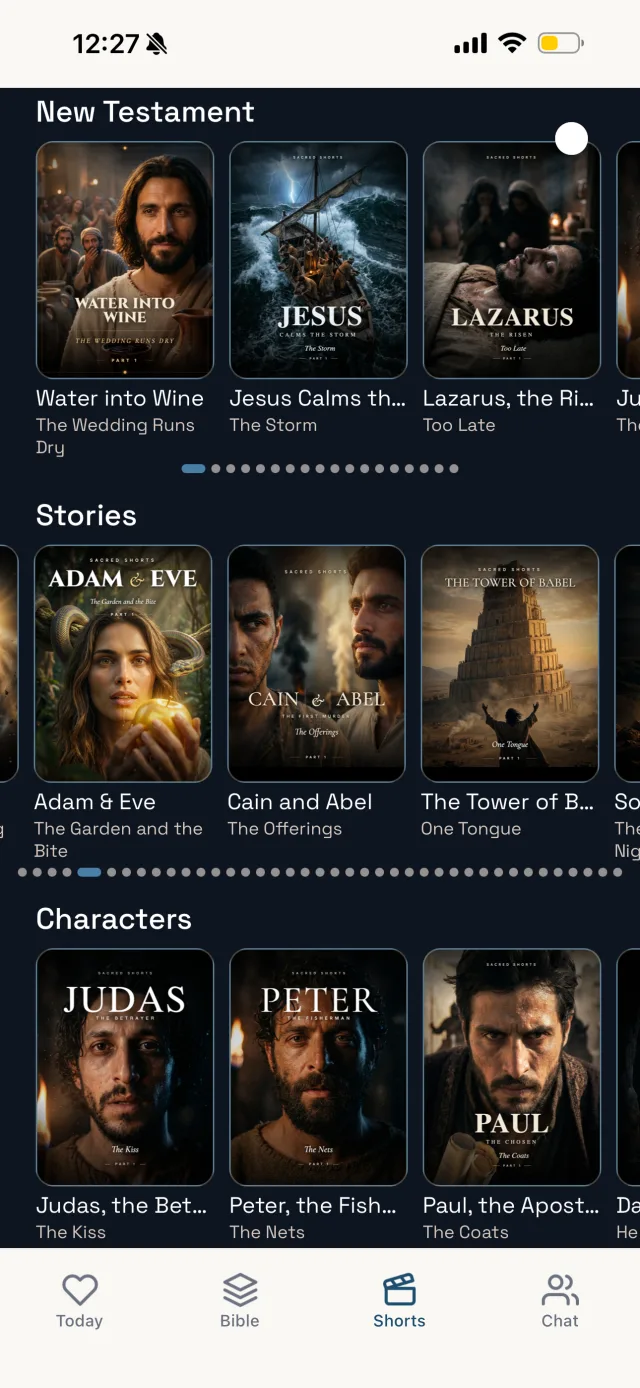
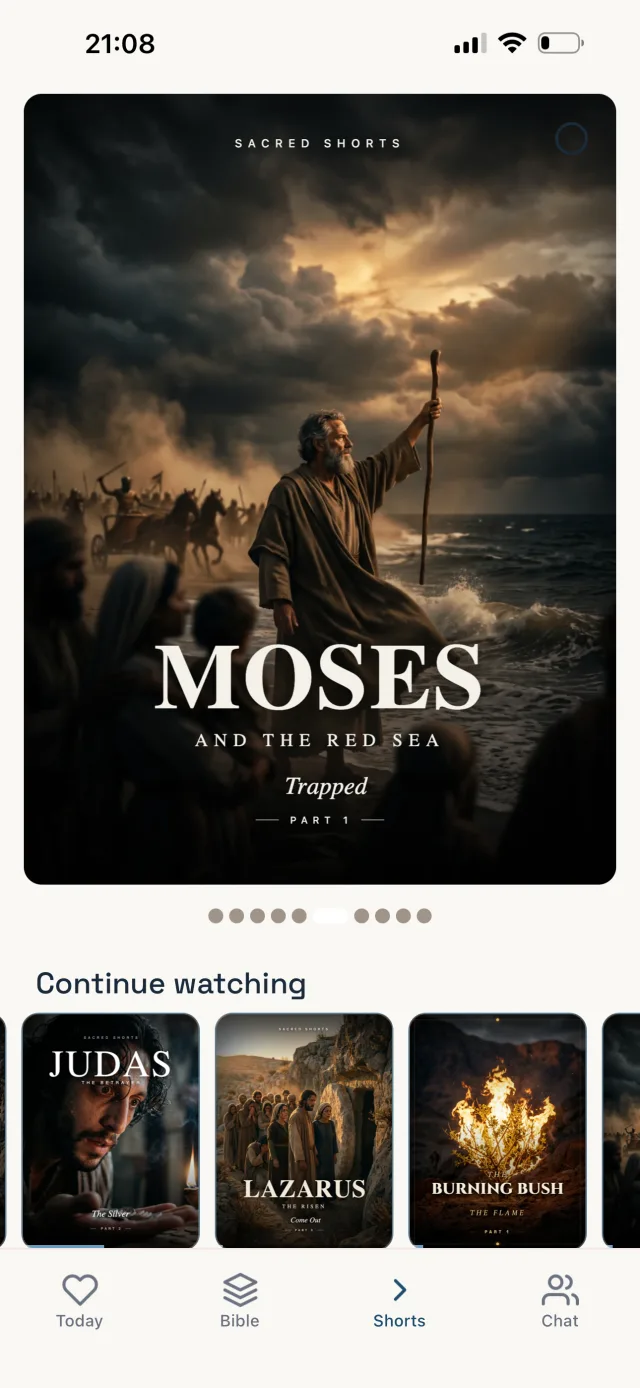
Watch this story come to life as a cinematic series in Sacred.
4.8on the App Store
Courage for such a time as this
Esther’s courage is often summarized in one phrase, but the story gives that phrase depth. “Such a time as this” is not a slogan for chasing personal importance. It is a call to faithful responsibility when God’s people are in danger and silence would protect only the self. Esther does not control the empire. She cannot guarantee the outcome. She can only discern the moment, prepare with fasting, and step forward.
That makes the story deeply practical. Most readers will not stand before an ancient king, but many will face moments when truth, mercy, or loyalty requires cost. There are times when faithfulness means speaking carefully rather than staying comfortable. There are times when timing matters, when prayer and patience are not passivity, and when courage is expressed through wise action rather than dramatic noise.
Christians from different traditions may describe providence in slightly different ways, especially in a book where God is not named directly. Some will emphasize God’s hidden governance. Others will focus on covenant faithfulness, communal fasting, or moral courage in exile. Those emphases can vary, but the story clearly refuses despair. Even in a foreign empire, the people of God are not forgotten.
Video helps us enter the story, but Scripture remains first
An Esther story video can make the narrative feel immediate. It can help children, families, small groups, and new Bible readers understand the danger behind the decree and the courage behind Esther’s request. It can make the reversal of the story memorable, especially when Haman’s pride collapses and the threatened people receive room to defend themselves.
But the video must remain a doorway, not the destination. The book of Esther contains details that shape interpretation: the exile setting, Mordecai’s mourning, Esther’s fasting request, the king’s sleepless night, the written decrees, and the institution of Purim as remembrance. A short film can highlight these moments, but Scripture gives the full witness.
This is why Sacred should stay Scripture-first. Sacred Shorts can help you imagine the scene. The Study Bible can bring you back to the passage. AI Bible Chat can help you ask context questions about Persia, exile, and Purim, while Guided Prayer can help you respond with humility and courage. Reading Scripture is always free in Sacred; cinematic video is an invitation back to the Word, never a replacement for it.
A simple rhythm: watch → read → reflect → pray
Start by watching with attention. What part of Esther’s story becomes vivid: Mordecai’s grief, Esther’s hidden identity, the dangerous walk toward the king, the banquet tension, or the sudden reversal? Let the video help you notice the human weight of the passage.
Then read Esther slowly. If you are short on time, begin with Esther 3–8, but when possible read the whole book so the reversals and remembrance make sense. Ask what the text says and what it does not say. Notice that the book can speak about God’s providence without naming God directly in every line.
Reflect on your own moment. Where are you tempted to choose safety over faithful responsibility? Where do you need patience, wise timing, and courage rather than panic? Where might God be inviting you to serve others without making yourself the center of the story?
Finally, pray. You might say: “Lord, give me wisdom for the moment in front of me. Teach me courage without pride, patience without fear, and love that is willing to act for others.” Esther’s story does not promise easy outcomes, but it does remind us that courage can matter deeply in the hidden places of history.
FAQ
Where should I start reading Esther?
Start with the whole book if you can. For the central crisis and Esther’s courageous action, read Esther 3–8, then return to the opening chapters for context and the closing chapters for remembrance.
What does Esther teach about courage?
Esther teaches that courage is not the absence of risk. Biblical courage can include fasting, counsel, wise timing, and costly action for the sake of others.
How can I use an Esther video for Bible study?
Use the video as a doorway. Watch the scene, read Esther, reflect on courage and providence, then pray for wisdom to act faithfully in your own moment.
 Sacred Shorts
Watch the Bible like never before
Cinematic Bible stories, a complete Study Bible, daily devotionals, and guided prayer. New episodes every week.
Frequently asked questions
Esther’s story is found in the book of Esther, especially chapters 2–8, where her courage helps protect the Jewish people in exile.
The story has palace tension, hidden identity, dangerous decisions, reversal, courage, and deliverance, which all help viewers feel the stakes of the narrative.
No. A video can help you imagine the scene, but Scripture remains the source for Esther’s courage, Mordecai’s counsel, and the story’s meaning.