
The parable of the Good Samaritan is short enough to read in a few minutes and deep enough to unsettle us for a lifetime. A man travels from Jerusalem to Jericho, falls among robbers, and is left half dead by the road. A priest comes by and passes on the other side. A Levite does the same. Then a Samaritan, someone many in Jesus' Jewish audience would have seen as an outsider, stops with compassion, binds the man's wounds, carries him to safety, and pays for his continued care.
A cinematic Bible video can make that road feel less abstract. It can show the dangerous descent, the silence after violence, the tension of people choosing distance, and the interruption of mercy when the Samaritan draws near. But the video must stay in its proper place. It helps us imagine and enter the biblical story; it does not replace the Scripture Jesus gave us. The faithful rhythm is simple: watch → read → reflect → pray.
The biblical setting of Luke 10
Luke places the parable inside a conversation about the greatest commandment. A lawyer stands up to test Jesus and asks, "Teacher, what shall I do to inherit eternal life?" Jesus points him back to the law, and the man answers with love for God and love for neighbor. Jesus affirms the answer. Then the lawyer, wanting to justify himself, asks, "And who is my neighbor?"
That question matters. The parable is not first a general story about being nice. It is Jesus' answer to a boundary-making question. The lawyer wants to know where obligation ends. Jesus tells a story in which the expected boundaries are overturned. The wounded man is in desperate need. The priest and Levite have recognizable religious identities, yet they move away. The Samaritan, culturally unexpected in the role of hero, is moved with compassion and acts.
Jesus ends with a different question: not "Who qualifies as my neighbor?" but "Which of these three proved to be a neighbor?" The lawyer answers, "The one who showed him mercy." Jesus says, "You go, and do likewise." The point lands with force. Neighbor love is not merely identifying who belongs inside our circle. It is becoming a merciful neighbor to the person God places before us.
Why this parable is powerful on screen
The Good Samaritan is naturally visual. There is a road, a wounded body, passing footsteps, oil and wine, bandages, an animal, an inn, coins placed in another person's hand. A thoughtful video can slow the viewer down to feel each decision. The priest does not need to be portrayed as a cartoon villain. The Levite does not need melodramatic music. The power of the story is often in the ordinary movement away from need.
That is where video can serve the text well. It can let us feel how easy distance becomes. A person can see suffering, feel the cost of involvement, and keep walking. A person can have religious language and still fail to love. On the other hand, the Samaritan's mercy is concrete. He sees, draws near, treats wounds, transports the man, spends money, and promises follow-up. Compassion becomes action over time.
A visual retelling can also help modern readers notice the scandal of the Samaritan's role. Jesus chooses someone from a despised group to become the example of obedience. That does not flatten every historical or theological difference, and Christians should avoid turning the parable into a simplistic political slogan. But it does confront the instinct to decide in advance who can teach us mercy. Jesus forces the listener to receive the lesson from the unexpected neighbor.

The Bible has never felt like this
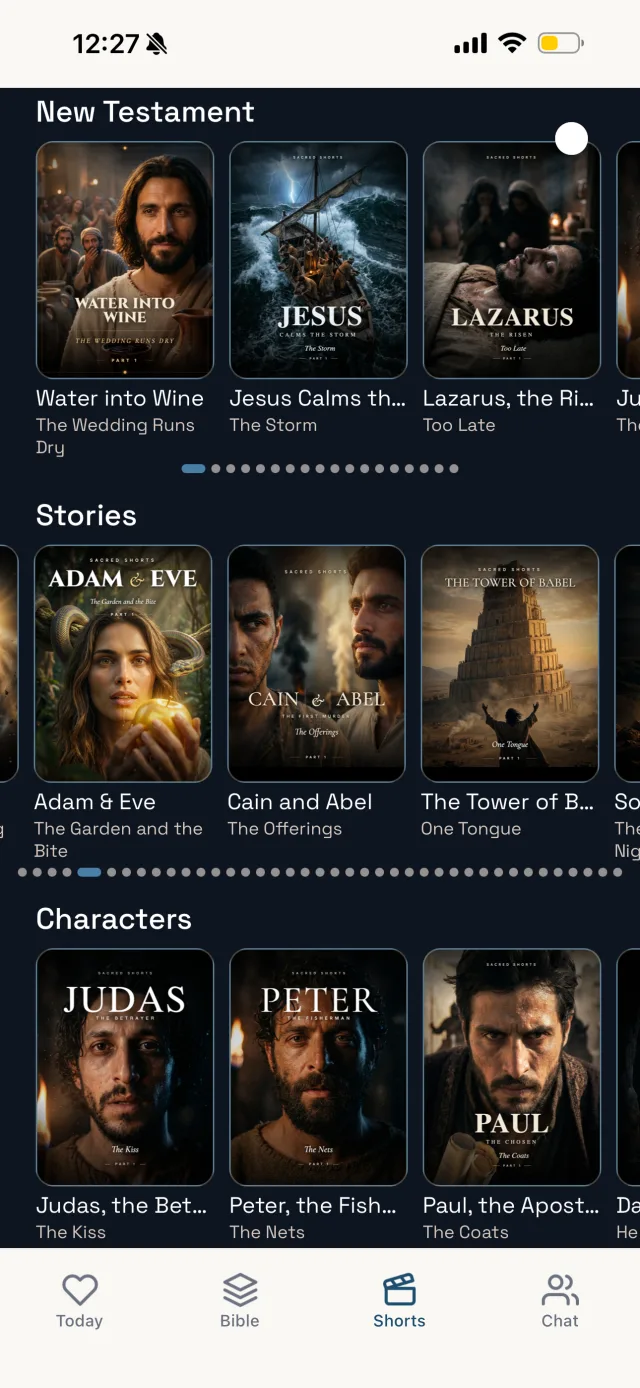
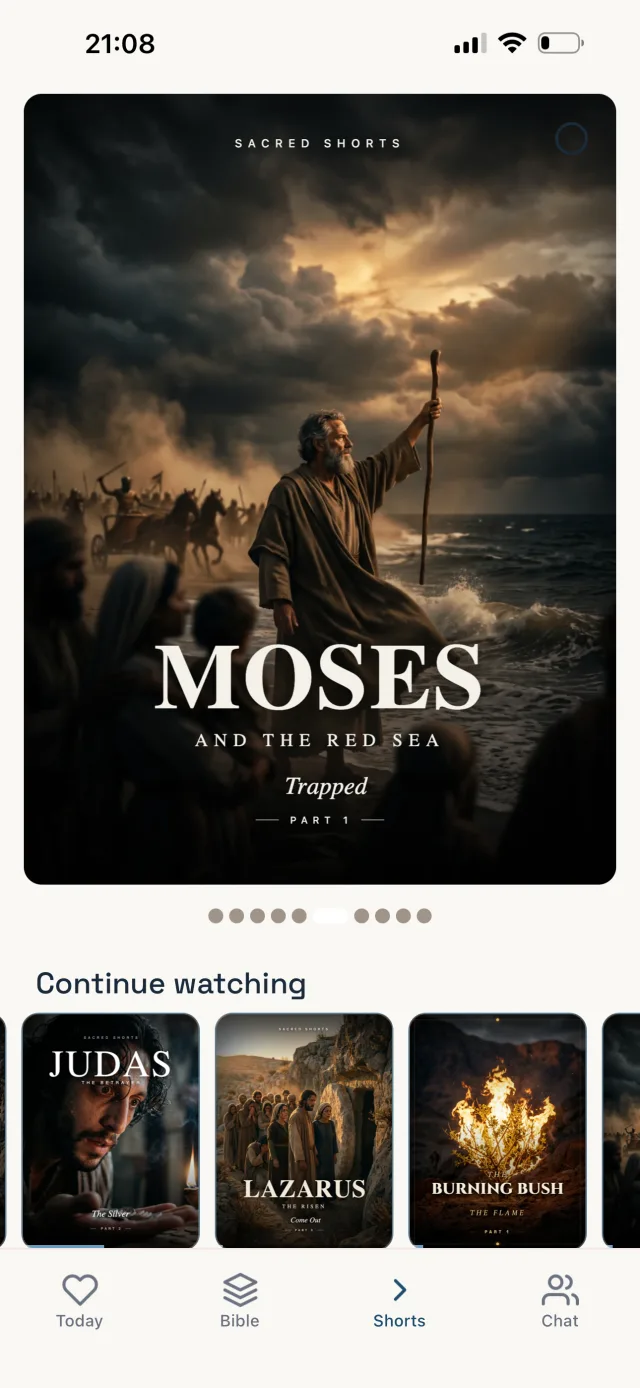
Watch this story come to life as a cinematic series in Sacred.
4.8on the App Store
Video helps us imagine, but Scripture remains first
Every Bible video makes interpretive decisions. What does the road look like? How badly is the traveler wounded? How does the priest react when he first sees the man? Does the Samaritan hesitate before stopping? Those choices can help attention, but they are not the inspired text. Luke 10 gives us the words, the setting, and Jesus' own conclusion.
That is why a good video should send you back to the passage. After watching, read Luke 10:25–37 slowly. Notice the questions before and after the parable. Notice that Jesus does not answer the lawyer by naming a limited category of people worthy of love. He tells a story that exposes the heart and calls the listener to mercy.
Christians from different traditions may emphasize different dimensions of the parable. Some focus on personal charity, some on the church's calling to serve the vulnerable, and some have read the Samaritan allegorically as an image of Christ healing wounded humanity. Those readings should be tested and held under the plain force of the text: love of God and love of neighbor cannot remain abstract when a person lies wounded on the road.
A simple rhythm: watch → read → reflect → pray
First, watch with attention. Notice who moves away and who moves near. Notice the difference between seeing need and taking responsibility. Let the scene become specific rather than sentimental. The wounded traveler is not a theme; he is a person. Mercy costs time, safety, money, and interruption.
Second, read Luke 10. If you have time, begin earlier in the chapter and notice Jesus' mission-focused teaching, then read the lawyer's question and the parable. The story is sharper when you see that it comes from an attempt to justify the self. Scripture does not let us use religious knowledge to avoid obedience.
Third, reflect honestly. Where do you ask, "Who is my neighbor?" because you want a smaller answer? Where have you seen need and crossed to the other side? Where might God be calling you to draw near with wise, concrete mercy? Reflection should not become vague guilt. It should become attentiveness to the next faithful act.
Finally, pray. You might pray: "Lord Jesus, teach me to receive your Word without defending myself. Give me eyes to see the wounded, courage to draw near, and wisdom to love in practical ways. Make mercy more than an idea in me." Prayer turns the watched scene into a response before God.
Where Sacred fits naturally
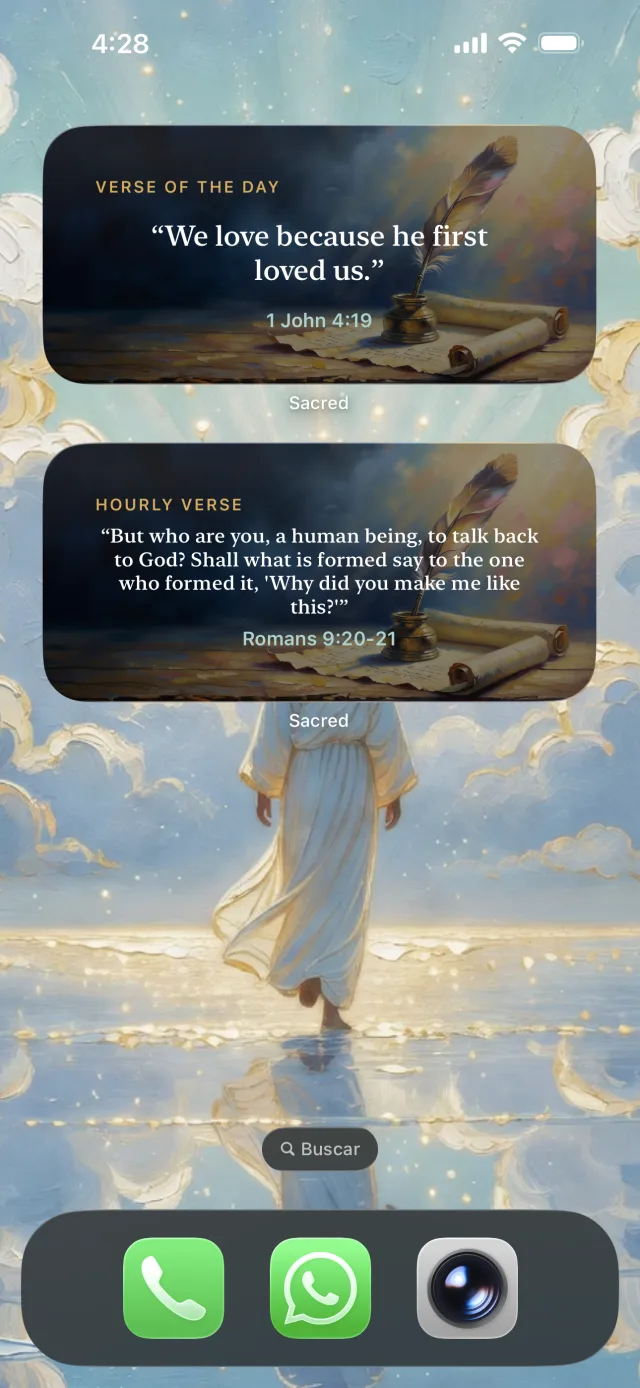
Sacred is built for this Scripture-first rhythm. Sacred Shorts can help a familiar parable feel present again. The Study Bible can bring you back to Luke 10 with context, chapter-by-chapter reading, and space to keep the text central. AI Bible Chat can help you ask careful questions about Samaritans, the Jericho road, mercy, and how Jesus uses questions. Guided Prayer can help you respond personally without pretending a video has replaced Scripture.
Reading Scripture is always free in Sacred because the video is not the destination. It is a doorway. Watch the scene, read the passage, reflect on the mercy Jesus commands, and pray for the grace to go and do likewise.
FAQ
What is the main message of the Good Samaritan?
The parable teaches that love of neighbor cannot remain abstract. Jesus moves the question from defining who deserves love to becoming a merciful neighbor to the person in need.
Why does Jesus make a Samaritan the merciful figure?
The Samaritan would have been an unexpected example for many of Jesus' hearers. By making him the one who shows mercy, Jesus challenges prejudice and exposes the danger of religious identity without neighbor love.
How should I use a video of the Good Samaritan?
Watch it to imagine the road, the wounded traveler, and the Samaritan's costly care. Then read Luke 10, reflect on where the text confronts your boundaries, and pray for concrete mercy.
 Sacred Shorts
Watch the Bible like never before
Cinematic Bible stories, a complete Study Bible, daily devotionals, and guided prayer. New episodes every week.
Frequently asked questions
The parable of the Good Samaritan is found in Luke 10:25–37, in Jesus' conversation with a lawyer about loving God and neighbor.
A video can help you notice the road, the wounded man, the passing religious figures, and the Samaritan's costly mercy, but it should lead you back to Luke 10.
No. Video can support imagination and attention, but Scripture remains the source and measure for understanding Jesus' teaching.