
Solomon’s wisdom is often remembered through one unforgettable scene: two women stand before the young king, both claiming the same child, and Solomon must discern the truth when no witness can settle the matter. It is dramatic enough for cinema, but the story is more than courtroom suspense. It reveals what kind of wisdom Israel needed from its king: not quick opinion, not theatrical power, but judgment shaped by reverence for God and attention to human life.
A Bible video can make the room feel close. We can picture the silence of the court, the grief in the women’s voices, the vulnerability of the child, and the moment when Solomon’s words expose the heart of the true mother. Visual storytelling helps us imagine and enter the biblical story, but it does not replace Scripture. The video should send us back to the text of 1 Kings 3. The healthiest rhythm is watch → read → reflect → pray.
The biblical context: wisdom after worship
The judgment of Solomon does not appear in isolation. In 1 Kings 3, Solomon is still at the beginning of his reign. David has died, the kingdom is now in Solomon’s hands, and the young king knows that governing God’s people is beyond him. At Gibeon, the Lord appears to Solomon in a dream and says, “Ask what I shall give you.” Solomon does not ask first for long life, wealth, or the death of enemies. He asks for an understanding heart to govern the people and to discern between good and evil.
That request is the key to the whole chapter. Solomon understands kingship as responsibility before God. He is not merely managing a nation; he is called to judge among people who belong to the Lord. God is pleased with the request and gives Solomon wisdom, along with riches and honor. Then the narrative immediately shows that wisdom in action.
Two women come to the king. Both have recently given birth. One child has died in the night. The living child is claimed by both. There are no modern tools, no recorded evidence, and no neutral witness mentioned in the text. The case depends on discernment. Solomon’s task is not to display cleverness for its own sake, but to reveal truth in a situation where truth is hidden beneath pain, fear, and desperation.
Why the scene is so powerful on screen
Solomon’s judgment works visually because almost everything important happens through faces, silence, and timing. A faithful adaptation does not need to exaggerate the scene. The text already gives a moment of terrible tension: Solomon commands that the living child be divided. The command is shocking, but it is not cruelty for spectacle. It is a test that reveals who loves the child enough to lose the argument in order to preserve his life.
The true mother’s response is the turning point. She cries for the child to be given to the other woman rather than killed. The other woman accepts the division. Solomon then identifies the mother whose compassion protects life. “Give the living child to the first woman,” he says in effect, because her love has revealed the truth.
On screen, this can be portrayed with reverence. The camera may linger on the child, on the king’s stillness, on the instant when a mother’s protective love becomes visible. But a good Bible video should also respect the limits of the passage. It should not invent motivations with careless certainty or turn the women into flat symbols. The text gives enough to show grief, conflict, and discernment without pretending to know every hidden detail.

The Bible has never felt like this
Watch this story come to life as a cinematic series in Sacred.
4.8on the App Store
What biblical wisdom is, and what it is not
This story helps correct a shallow idea of wisdom. Biblical wisdom is not simply being smarter than everyone else. It is moral perception. It listens to reality, fears the Lord, and seeks what is just. Solomon’s judgment is wise because it understands that genuine love will sacrifice possession before it sacrifices life.
That matters for daily discipleship. We often ask God for wisdom when decisions are confusing, relationships are tense, or competing claims seem impossible to sort out. The story does not give us a trick to copy. Most of us are not kings, and we should not imitate Solomon’s method mechanically in real disputes. Instead, the passage invites us to ask for a heart that can discern what protects life, honors truth, and refuses manipulation.
Christians from different traditions may emphasize different aspects of Solomon: the gift of wisdom, the responsibility of rulers, the foreshadowing of Christ as the greater Son of David, or the warning that even wise people can later drift from obedience. Those emphases can coexist with the plain lesson of 1 Kings 3: wisdom begins as a gift sought from God and becomes visible in just action.
Video can invite attention, but Scripture remains the authority
A cinematic Bible scene can help modern readers slow down. Many people know the phrase “the wisdom of Solomon” but have not sat with the passage. Video can restore texture: the weight of public judgment, the vulnerability of the powerless, and the fear of making a decision that cannot be undone. It helps us imagine the story not as a proverb on a page, but as a living encounter in a royal court.
Still, video must remain a servant of Scripture. Any adaptation chooses clothing, architecture, tone, pacing, and facial expression. Those choices can be helpful, but they are not the inspired text. After watching, open 1 Kings 3:1-28. Notice where the scene begins: Solomon’s prayer for an understanding heart. Notice where it ends: all Israel hears of the judgment and recognizes that the wisdom of God is in him to do justice.
That movement matters. The court scene is not entertainment detached from worship. It is the answer to Solomon’s prayer becoming visible among the people.
A simple rhythm: watch → read → reflect → pray
Start by watching with attention. What did the scene help you feel: the mother’s fear, the king’s burden, the seriousness of justice, or the danger of false claims? Name that response without rushing.
Then read. Read 1 Kings 3 slowly. If possible, read the prayer before the judgment, not only the famous case. Ask what the video emphasized and what the text says directly. Ask where the adaptation may have filled in gaps.
Reflect. Where do you need wisdom that is more than speed or cleverness? Where do you need to listen before deciding? Where might love require surrendering the need to win? Where do you need to pray for an understanding heart instead of merely asking God to bless a decision you already made?
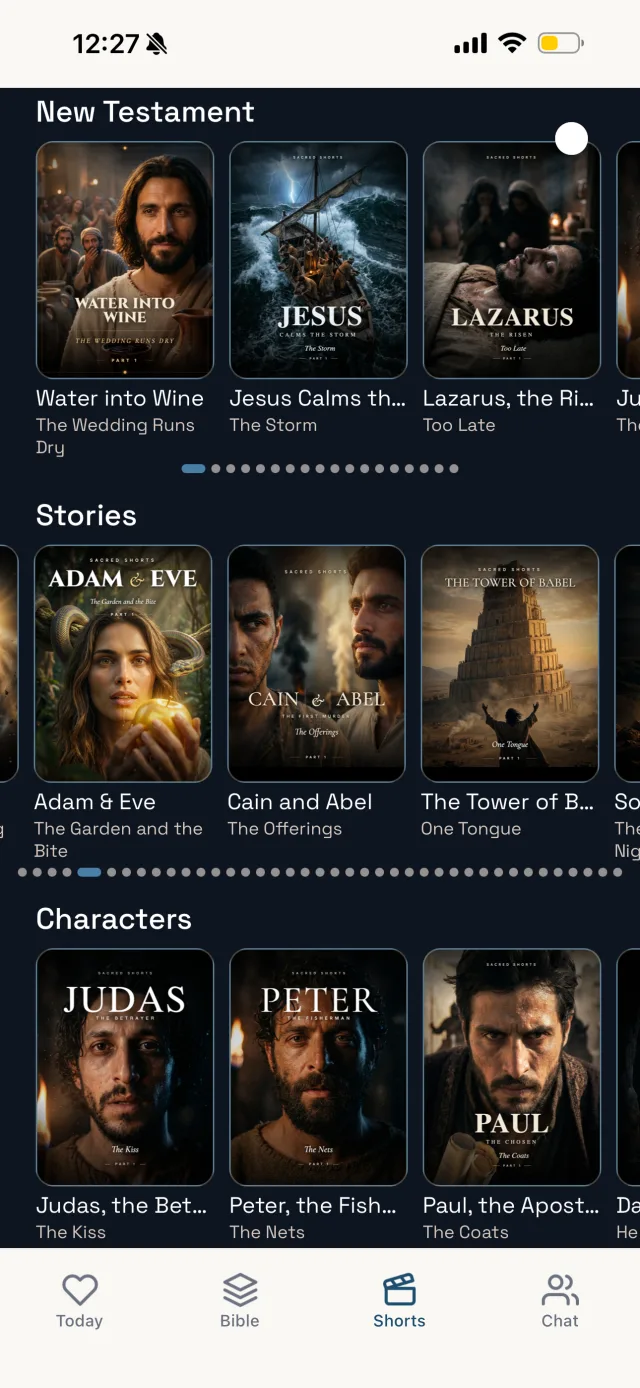
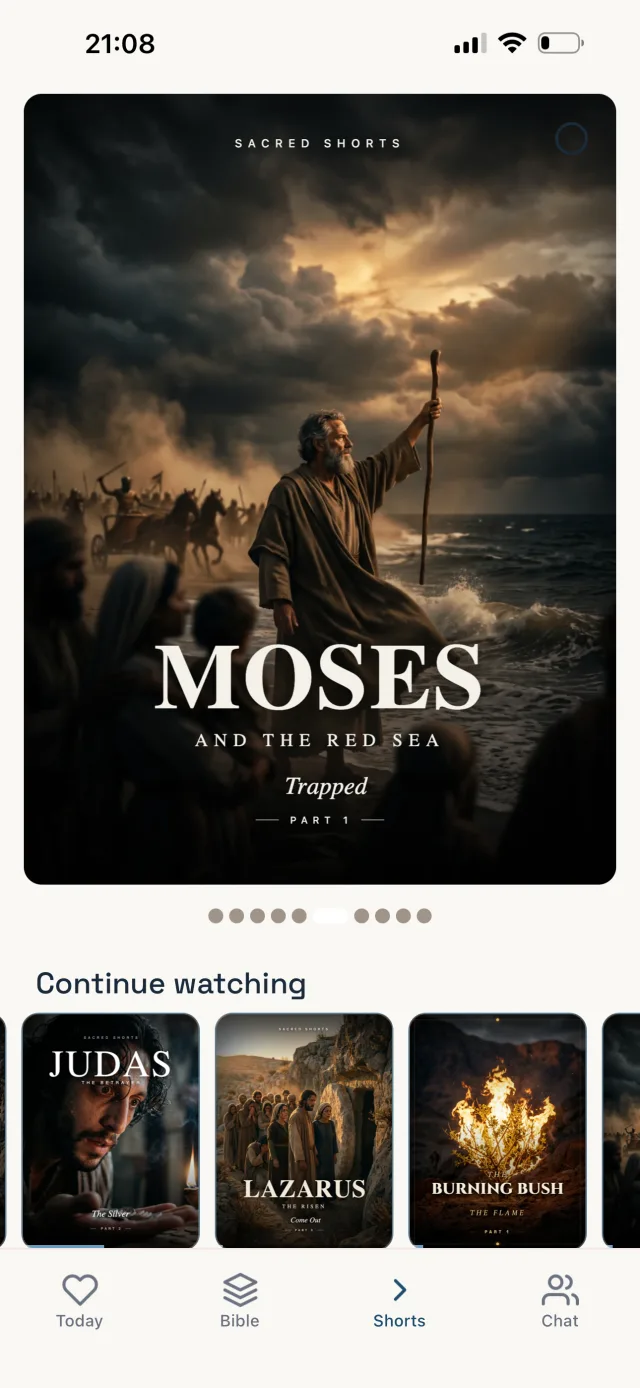
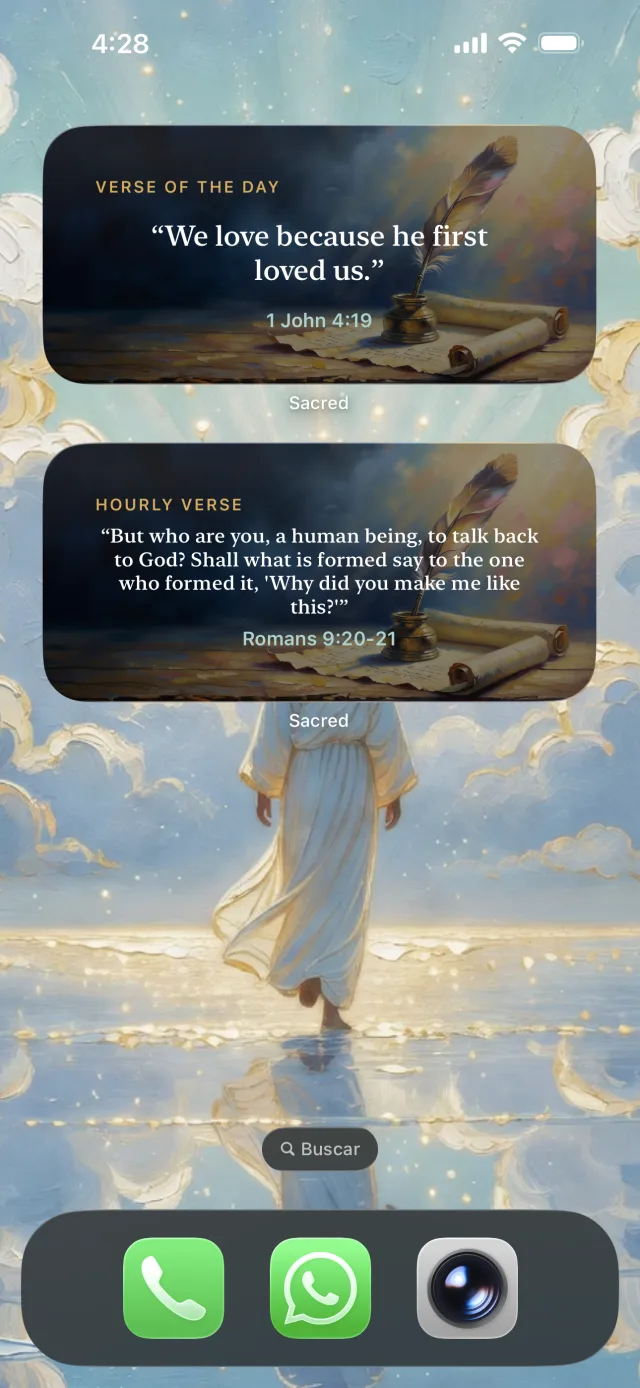
Finally, pray. You might pray, “Lord, give me an understanding heart. Teach me to love truth, protect what is vulnerable, and seek justice without pride.” Sacred can support this rhythm gently: Sacred Shorts can help you watch cinematic Bible stories, the Study Bible brings you back to the passage, AI Bible Chat can help with context questions, and Guided Prayer can help you respond. Reading Scripture is always free in Sacred; video is an invitation back to the Word, not a replacement for it.
FAQ
Where is Solomon’s wise judgment in the Bible?
The story is in 1 Kings 3:16-28. It follows Solomon’s prayer at Gibeon, where he asks God for an understanding heart to govern the people and discern good from evil.
What does Solomon’s judgment teach about wisdom?
It teaches that wisdom is not just clever problem-solving. Biblical wisdom listens, discerns, protects life, and seeks justice before God. Solomon’s test reveals the mother whose love values the child’s life above winning the case.
Should we use Bible videos to study Solomon?
Yes, if the video leads you back to Scripture. A visual scene can help you imagine the tension and humanity of the story, but 1 Kings 3 remains the authority for understanding Solomon’s wisdom.
 Sacred Shorts
Watch the Bible like never before
Cinematic Bible stories, a complete Study Bible, daily devotionals, and guided prayer. New episodes every week.
Frequently asked questions
The famous judgment between two women is found in 1 Kings 3:16-28, immediately after Solomon asks God for wisdom to govern Israel.
The story shows that biblical wisdom is not cleverness alone. It listens carefully, discerns what love protects, and seeks justice before God.
No. A video can help you imagine the tension of the royal court, but Scripture remains the source for understanding Solomon’s judgment.