
Elijah’s story is one of the most cinematic arcs in the Old Testament. A prophet stands before a king, announces drought, hides by a brook, receives bread in unexpected places, confronts false worship on Mount Carmel, runs into the wilderness, and finally hears God not in the wind, earthquake, or fire, but in a low whisper. It is easy to imagine this as a powerful Bible video because the scenes already carry movement, contrast, and tension.
But Elijah is not only a dramatic figure. He is a prophet called to speak the word of the Lord in a divided and spiritually confused time. A video can help us imagine the heat of Carmel, the fear of the wilderness, and the stillness of Horeb, but it does not replace Scripture. The goal is not spectacle. The healthiest rhythm is watch → read → reflect → pray, letting the visual scene send us back to 1 Kings with greater attention.
The biblical context: a prophet in a divided kingdom
Elijah appears during the reign of Ahab, king of Israel. First Kings presents Ahab as a king who did evil in the sight of the Lord and promoted Baal worship with Jezebel. In that setting, Elijah’s first recorded words are not gentle advice but prophetic judgment: there will be neither dew nor rain except by the Lord’s word. The drought is not random disaster in the narrative; it confronts Israel’s false trust in Baal, who was associated with storm and fertility.
The story quickly moves from public confrontation to hidden dependence. Elijah goes east of the Jordan, drinks from the brook Cherith, and is fed by ravens. When the brook dries up, God sends him to a widow in Zarephath. There, in a fragile household, the Lord provides flour and oil. This contrast matters: Elijah’s courage is real, but his life is sustained by God’s mercy, not by his own strength.
Later, Elijah returns to confront Ahab and the prophets of Baal on Mount Carmel. The central question is direct: “How long will you go limping between two different opinions?” Israel must not pretend loyalty to the Lord while chasing another god. The contest on Carmel shows that the Lord, not Baal, is God. Fire falls, the people confess, and rain eventually returns. Yet the next chapter surprises us. Elijah runs in fear, sits under a broom tree, and asks that he might die. The same prophet who stood before a crowd now feels alone and exhausted.
Why Elijah works so well on screen
Elijah’s story naturally invites visual imagination. Carmel can be portrayed with dry ground, gathered crowds, anxious silence, and the stark difference between frantic religious performance and Elijah’s simple prayer. The wilderness can feel empty and exposed. Horeb can slow the pace until viewers notice wind, earthquake, fire, and then the quietness that follows.
A faithful Bible video does not need to make Elijah larger than life in every frame. The text is stronger when it shows both fire and frailty. Elijah is bold, but he is not invulnerable. He prays, obeys, waits, fears, eats, sleeps, and needs God to speak again. That makes the story spiritually honest.
Visual storytelling can help us enter that humanity. We may feel the loneliness of obedience, the pressure of being misunderstood, or the relief of hearing that God is still at work beyond what Elijah can see. But the video should resist turning the passage into mere action cinema. The fire on Carmel matters because it reveals the Lord. The whisper at Horeb matters because it corrects our assumption that God is only present in the loudest moment.

The Bible has never felt like this
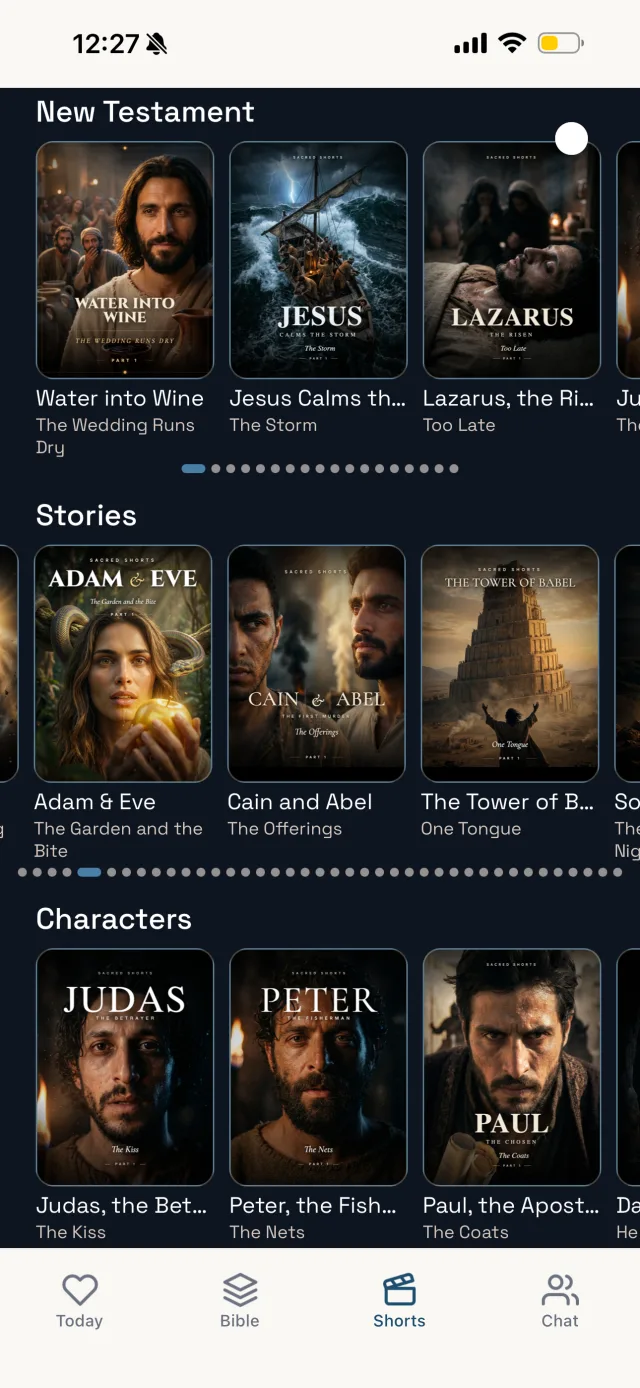
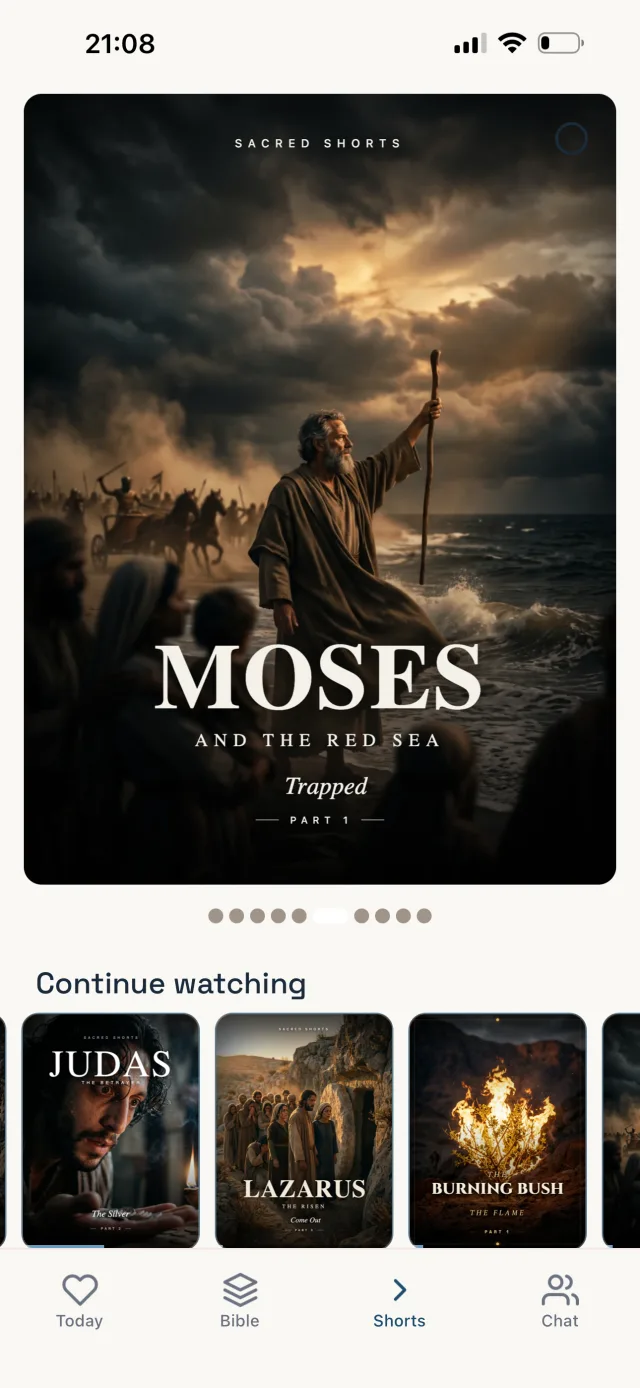
Watch this story come to life as a cinematic series in Sacred.
4.8on the App Store
Fire, faith, and the voice of God
The Mount Carmel scene is memorable because it is dramatic, but its theological center is worship. Elijah repairs the altar of the Lord, drenches the sacrifice, and prays that Israel would know the Lord is God and that he is turning their hearts back. The fire is not entertainment. It is a sign that calls a wandering people to return.
Then 1 Kings 19 deepens the picture. Elijah expects, perhaps understandably, that victory on Carmel would settle everything. Instead, Jezebel threatens him, and he flees. Under the broom tree, God does not begin by scolding him. An angel gives him bread and water. Elijah needs rest before he can interpret his calling. This is not a medical claim or a formula for exhaustion; it is a careful observation from the story itself: God meets his servant with embodied mercy before sending him onward.
At Horeb, Elijah experiences wind, earthquake, and fire, but the Lord is not described as being in those signs in the same way. Then comes the sound of a low whisper. Christians may describe this moment differently across traditions: some emphasize contemplative listening, some emphasize the prophetic word, and some connect Elijah’s mountain encounter with later biblical themes of revelation. What should remain clear for all readers is that God is not controlled by our expectations. He can answer with fire, and he can speak in quietness.
Video can awaken attention, but Scripture remains the authority
A cinematic Elijah video can be a gift when it helps us slow down. Many people remember isolated scenes from Elijah’s life but have not read the flow of 1 Kings 17-19. Video can restore sequence: dependence by the brook, hospitality in Zarephath, confrontation on Carmel, fear in the wilderness, and renewed calling at Horeb. Seeing that movement can protect us from flattening Elijah into only “the prophet of fire.”
Still, every adaptation makes choices. It chooses Elijah’s tone of voice, Ahab’s expression, the look of the altar, the pace of the crowd, and the atmosphere of Horeb. Those choices may be reverent and useful, but they are not the inspired text. After watching, open Scripture. Read 1 Kings 18 and 19 together if you can. Notice what the Bible says, what it leaves unsaid, and how the Lord deals with both idolatry and discouragement.
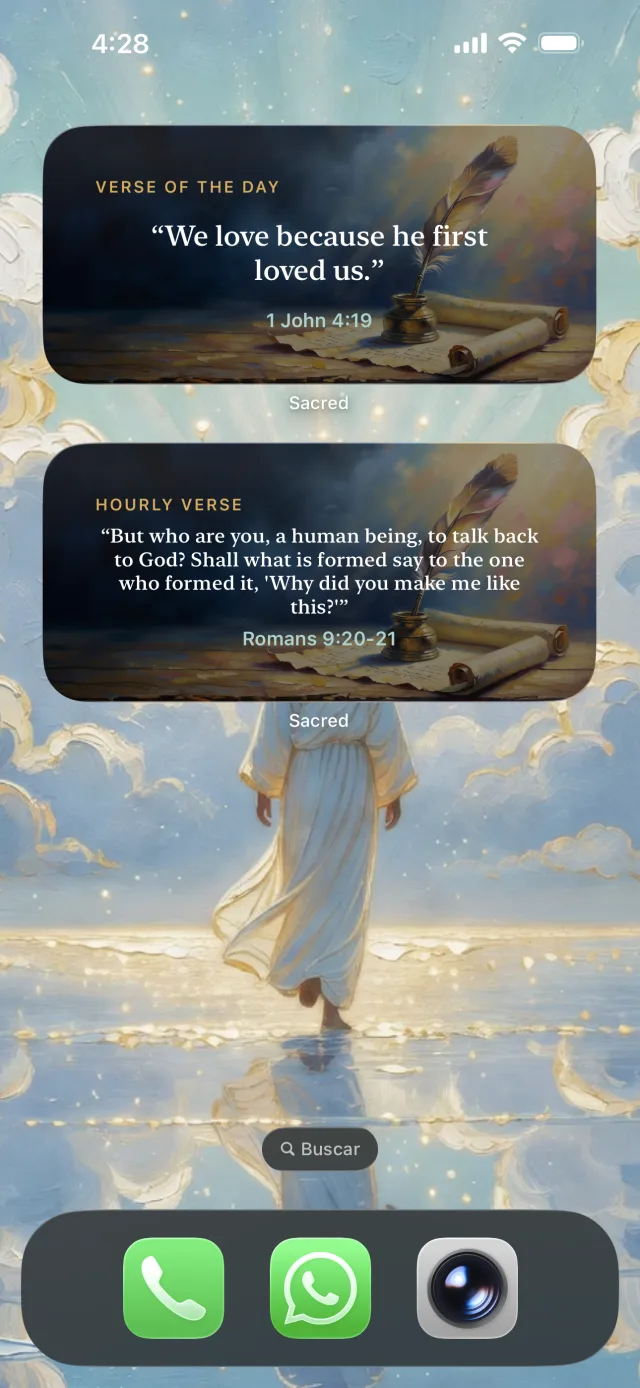
This is why Sacred’s approach should remain Scripture-first. Sacred Shorts can help you imagine a biblical scene. The Study Bible can bring you back to the passage. AI Bible Chat can help with context questions, and Guided Prayer can help you respond. Reading Scripture is always free in Sacred; video is an invitation back to the Word, never a replacement for it.
A simple rhythm: watch → read → reflect → pray
Begin by watching with attention. What did the scene make vivid: the courage of confrontation, the emptiness of the wilderness, the mercy of bread and water, or the gentleness of God’s voice? Name what you noticed without rushing to a lesson.
Then read. Start with 1 Kings 17-19, or choose a focused passage such as 1 Kings 18:20-39 and 1 Kings 19:1-18. Ask what the video emphasized and what the text itself emphasizes. Pay attention to Elijah’s prayers, God’s provision, and the repeated question, “What are you doing here, Elijah?”
Reflect. Where are you tempted to limp between divided loyalties? Where do you expect God only in dramatic signs while missing his quiet word? Where do you need courage, and where do you need to receive care before taking the next step of obedience?
Finally, pray. You might pray: “Lord, turn my heart back to you. Teach me to recognize your word, receive your mercy, and obey without needing to be seen.” Elijah’s story is full of fire, but it also teaches us to listen.
FAQ
Where should I start reading Elijah’s story?
A strong starting point is 1 Kings 17-19. Those chapters move from the drought and God’s provision to Mount Carmel and then to Elijah’s wilderness journey and encounter with God at Horeb.
What does Elijah’s story teach about faith?
It teaches that faith involves courageous obedience, but also dependence. Elijah confronts false worship, yet he also needs food, rest, and God’s patient word. The story holds boldness and weakness together.
Is an Elijah Bible video good for study?
Yes, when it leads you back to Scripture. A video can help you imagine the setting and emotional movement of the story, but the Bible remains the authority for understanding Elijah and the voice of God.
 Sacred Shorts
Watch the Bible like never before
Cinematic Bible stories, a complete Study Bible, daily devotionals, and guided prayer. New episodes every week.
Frequently asked questions
Elijah appears especially in 1 Kings 17-19 and 2 Kings 1-2, with Mount Carmel in 1 Kings 18 and the gentle whisper at Horeb in 1 Kings 19.
His story moves from drought and confrontation to fear, silence, and God’s patient voice, giving visual storytelling both drama and depth.
No. Video can help you imagine the scene, but Scripture remains the source for understanding Elijah, Israel, and the Lord’s word.