
If you're looking for Psalms audio, the quickest answer is to match the psalm to the moment. For sleep, start with Psalms 4, 3, 23, 91, 121 and 131. When you're anxious, try 46, 56, 62, 94, 34 and 139. For mornings, 5, 57, 90, 92, 143 and 118. For gratitude, 100, 103, 107, 136, 138 and 145. Most psalms take only a few minutes to hear, so one fits almost anywhere: in bed, in the car, or in the minute before a hard conversation.
Why the Psalms work so well out loud
The Psalms were written to be sung and prayed aloud. They were Israel's songbook, used in worship and on the road to Jerusalem, and Jesus himself prayed them. On the cross he cried out the opening line of Psalm 22: "My God, my God, why have you forsaken me?" (Matthew 27:46, NIV).
They're also built for the ear. Hebrew poetry often says one thing twice in slightly different words ("The LORD is my light and my salvation... The LORD is the stronghold of my life," Psalm 27:1, NIV). That repetition makes a psalm easy to follow without the text in front of you. And because the Psalms cover the whole range of human emotion, from joy to rage to grief, there's one for whatever you bring to them.
You'll sometimes hear the word Selah in a psalm. Its exact meaning is uncertain, but it may mark a pause. When you're listening, take it as an invitation to stop for a breath.
Psalms to listen to for sleep
At night, choose psalms that are calm and familiar, so your mind can rest instead of following an argument.
- Psalm 4. The classic evening psalm: "In peace I will lie down and sleep, for you alone, LORD, make me dwell in safety" (Psalm 4:8, NIV).
- Psalm 3. David sleeps while enemies surround him: "I lie down and sleep; I wake again, because the LORD sustains me" (Psalm 3:5, NIV).
- Psalm 23. The shepherd, the quiet waters, the table prepared. Our article on the meaning of Psalm 23 explores it line by line.
- Psalm 91. Shelter under God's wings, and no need to fear "the terror of night" (Psalm 91:5, NIV).
- Psalm 121. The God who watches over you "will neither slumber nor sleep" (Psalm 121:4, NIV).
- Psalm 131. Three verses about a soul that has been "calmed and quieted" (Psalm 131:2, NIV).
- Psalm 63. For when you're awake in the dark: "I think of you through the watches of the night" (Psalm 63:6, NIV).
Lower the volume and the speed a little, lock the screen, and let one psalm play two or three times rather than many in a row.
Psalms to listen to when you're anxious
The psalms for anxiety don't pretend everything is fine. Many begin in fear and only reach trust at the end, which is exactly why they help. They give you honest words first.
- Psalm 46. Earthquakes, roaring seas, nations in uproar, and in the middle of it: "Be still, and know that I am God" (Psalm 46:10, NIV). See our guide to what Psalm 46:10 means.
- Psalm 56. Short and direct: "When I am afraid, I put my trust in you" (Psalm 56:3, NIV).
- Psalm 62. "Truly my soul finds rest in God" (Psalm 62:1, NIV), echoed again in verse 5 like a refrain you can hold onto.
- Psalm 94. A single verse many people memorize: "When anxiety was great within me, your consolation brought me joy" (Psalm 94:19, NIV).
- Psalm 34. "The LORD is close to the brokenhearted" (Psalm 34:18, NIV).
- Psalm 139. You are known, everywhere, completely, and still held.
- Psalms 42 and 43. A conversation with your own heart: "Why, my soul, are you downcast?" (Psalm 42:5, NIV).
When anxiety is heavy, listen to the same psalm several days in a row. Familiar words reach a tired mind more easily than new ones. If you'd also like words to pray, our prayer for during anxiety is a gentle place to start. And if anxiety is overwhelming or constant, it's wise to talk with a pastor, a counselor or a doctor too. The Psalms sit well alongside that kind of help.

Listen to the Psalms in Sacred
All 150 psalms narrated, with each verse highlighted as it plays.
4.8on the App Store
 Scan with your phone
Psalms to listen to in the morning
Morning psalms turn your attention outward before the day's to-do list takes over.
- Psalm 5. "In the morning, LORD, you hear my voice; in the morning I lay my requests before you and wait expectantly" (Psalm 5:3, NIV).
- Psalm 57. "I will awaken the dawn" (Psalm 57:8, NIV), written from a cave while David was hiding.
- Psalm 90. "Teach us to number our days, that we may gain a heart of wisdom" (Psalm 90:12, NIV). A good psalm for Mondays.
- Psalm 92. It is good to be "proclaiming your love in the morning and your faithfulness at night" (Psalm 92:2, NIV).
- Psalm 143. "Let the morning bring me word of your unfailing love" (Psalm 143:8, NIV).
- Psalm 118. "This is the day that the LORD has made; let us rejoice and be glad in it" (Psalm 118:24, ESV).
A simple routine: play one morning psalm with your coffee, then choose one line to repeat on the way out the door.
Psalms to listen to for gratitude
When you want to give thanks, or when you know you should but don't feel it yet, these psalms carry you.
- Psalm 100. "Enter his gates with thanksgiving and his courts with praise" (Psalm 100:4, NIV). Five verses, perfect for a short pause.
- Psalm 103. "Praise the LORD, my soul, and forget not all his benefits" (Psalm 103:2, NIV), followed by a list of those benefits.
- Psalm 107. Story after story of people rescued, each ending in thanks.
- Psalm 136. Every one of its 26 verses ends with the same refrain: "His love endures forever" (Psalm 136:1, NIV). Out loud, it's like a congregation answering.
- Psalms 138 and 145. Thanks for answered prayer and for God's character.
- Psalm 150. The last psalm, nothing but praise.
Quick reference: which psalm, when
| Moment | Start with | Then try |
|---|---|---|
| Falling asleep | Psalm 4 | 3, 23, 91, 121, 131 |
| Anxious moments | Psalm 46 | 56, 62, 94, 34, 139 |
| Morning | Psalm 5 | 57, 90, 92, 143, 118 |
| Gratitude | Psalm 100 | 103, 107, 136, 138, 145 |
| Hard, honest days | Psalm 13 | 22, 42, 77, 88 |
That last row matters. Psalms of lament like Psalm 13 ("How long, LORD?") give you permission to be honest with God, and most of them turn toward hope: "But I trust in your unfailing love" (Psalm 13:5, NIV).
How to listen to a psalm, not just hear it
- Listen once, straight through. Don't do anything else for those few minutes.
- Listen again and find the turn. Many psalms shift halfway, often at a "but" or a "yet." Notice where.
- Pick one line and pray it. Say it back to God in your own words.
- Save it. Keep that verse somewhere you'll see it later in the day.
- Stay with it for a week. One psalm heard seven times often goes deeper than seven different psalms.
If you'd like to pair the Psalms with images and reflection, our article on Psalms in video for prayer and reflection offers another approach.
How Sacred helps you listen to the Psalms
Sacred has all 150 psalms narrated as part of the complete Bible. In English the narration uses the Berean Standard Bible (BSB), clear and easy to follow by ear. As each psalm plays, the current verse is highlighted on screen, which makes it easy to catch the exact line you want to keep. You can slow the speed for bedtime or keep it normal in the morning, and the audio keeps playing with the screen locked, so a psalm can go with you on a walk or stay on the nightstand. There are no ads.
Verses that stay with you can be saved to your favorites, so your own "psalms for hard days" are always one tap away. If a line raises a question, such as what Selah means or who wrote a particular psalm, Sacred's Bible chat can give you context. And the daily devotional, with a verse, a short reflection and a narrated prayer, is a good companion for the mornings when you want a little more guidance.
Start with one. Tonight, Psalm 4. Tomorrow morning, Psalm 5. Let the Psalms give you words for the day's beginning and its end.
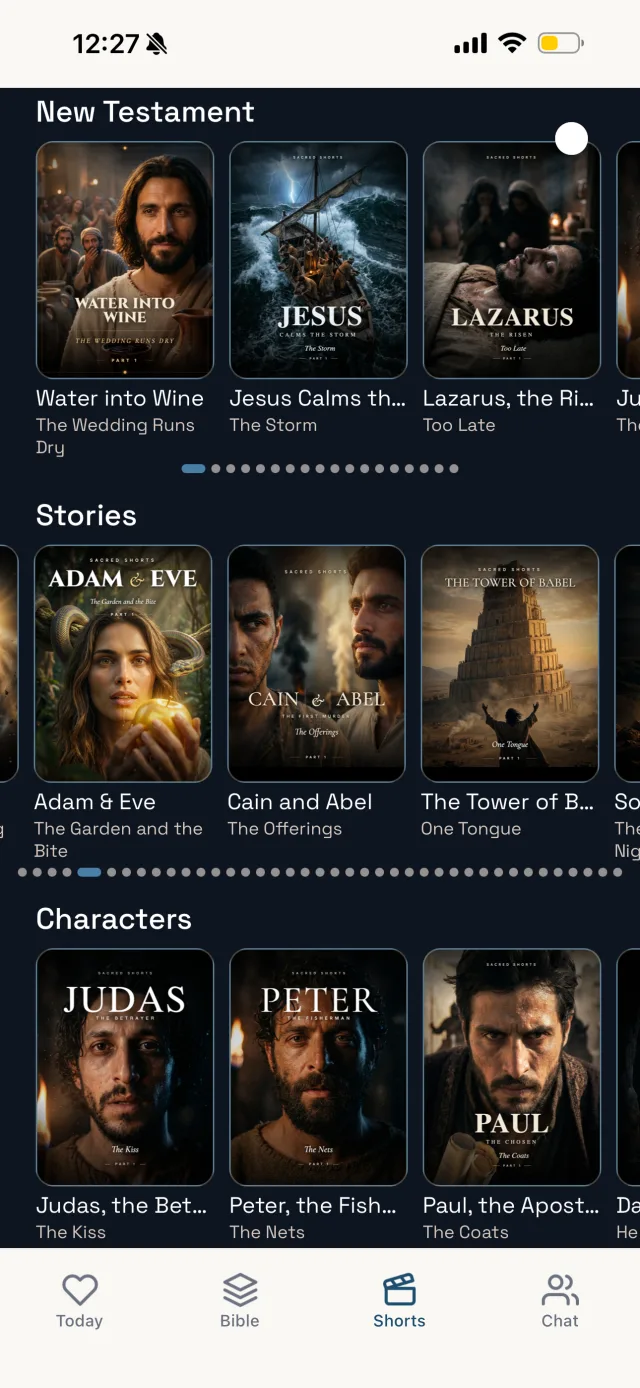
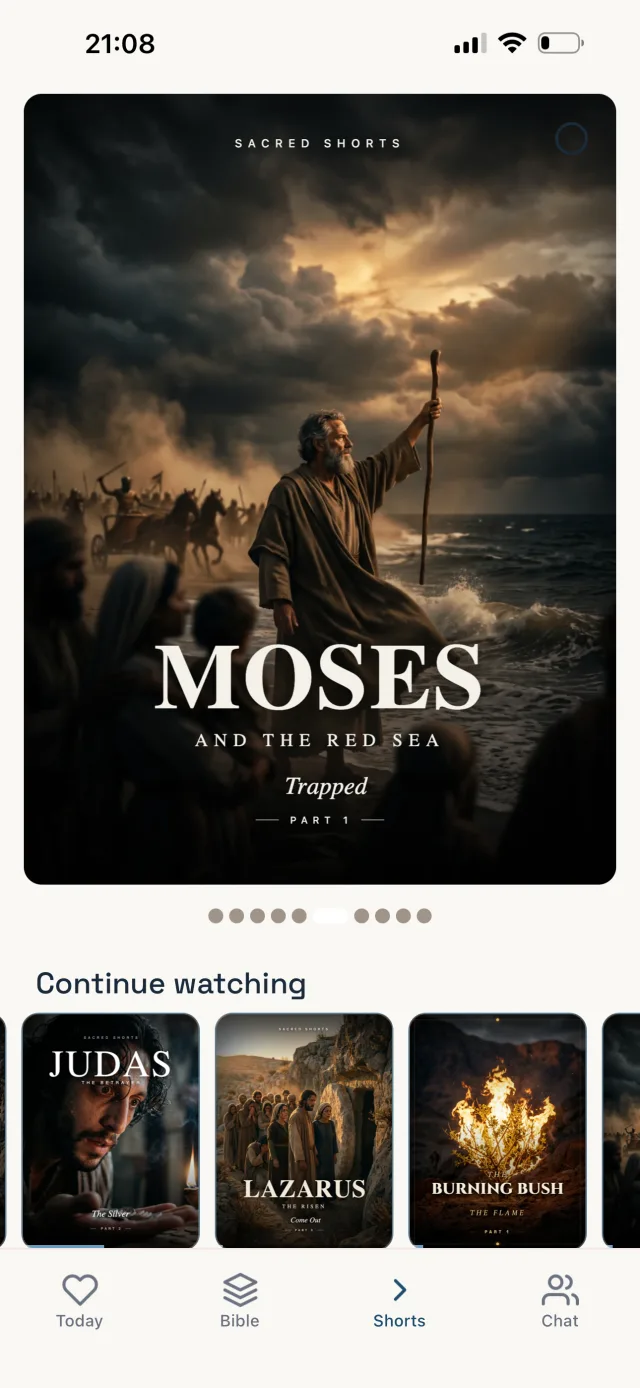
 Sacred Shorts
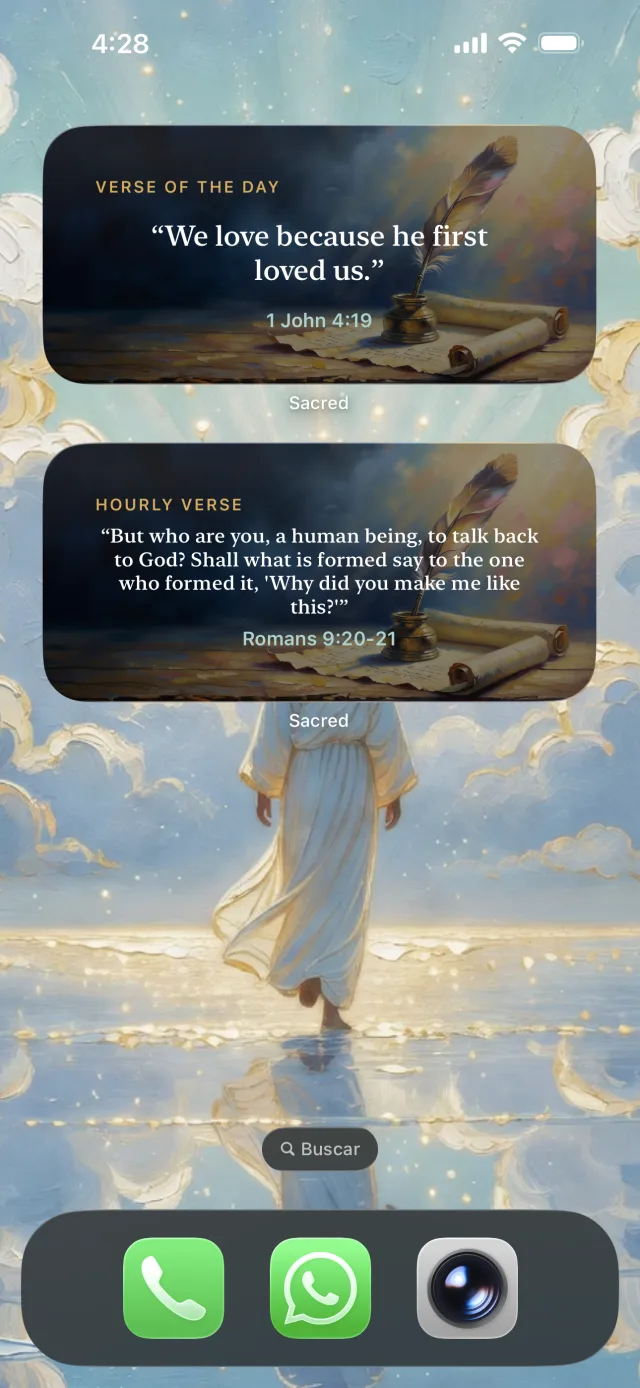
A psalm for every part of your day
Play a psalm at bedtime, in an anxious moment or with your morning coffee, and save the verses that stay with you.
 Scan with your phone
Frequently asked questions
Psalm 4 is the classic evening psalm: 'In peace I will lie down and sleep.' Psalms 3, 23, 91, 121 and 131 are also calm, familiar choices for bedtime.
Psalm 46 is a good first choice, with its call to 'be still, and know that I am God.' Psalms 56, 62, 94, 34 and 139 also speak directly to fear and worry, and many of them move from distress to trust by the end.
Most psalms take only a few minutes to hear. Psalm 117, the shortest chapter in the Bible, takes well under a minute, while Psalm 119, the longest, is better heard in sections over several days.
Yes. Sacred narrates all 150 psalms as part of the complete Bible, highlights each verse as it plays, lets you adjust the speed and keeps playing with your screen locked.