
If you want to listen to the Bible while you sleep, keep it simple: choose a calm, familiar passage, lower the volume and the speed, lock the screen and set a timer so the audio stops on its own. Psalms 4, 23, 91 and 121, or Jesus' words in John 14, are good places to begin. The goal isn't to absorb a dozen chapters while you're unconscious. It's to let the last thing on your mind be God's Word instead of the day's worries or your phone's feed.
Is it okay to fall asleep listening to Scripture?
Some people feel guilty about drifting off mid-chapter, as if they were walking out on God. The Psalms point the other way. Lying down in peace is described as an act of trust:
"In peace I will lie down and sleep, for you alone, LORD, make me dwell in safety." (Psalm 4:8, NIV)
David says something similar in a far more dangerous moment, while fleeing from his own son: "I lie down and sleep; I wake again, because the LORD sustains me" (Psalm 3:5, NIV). Psalm 121 gives the reason we can let go of the day: the one who watches over his people "will neither slumber nor sleep" (Psalm 121:4, NIV).
So falling asleep with Scripture playing isn't disrespect. It's closer to a child falling asleep while a parent is still reading. On the nights you stay awake longer, you'll simply hear more.
What to listen to at bedtime
At night, familiar beats new. Passages you already know let your mind rest instead of following a plot. Here are good choices, grouped by what you need.
For peace and safety
- Psalm 4, the classic evening psalm
- Psalm 23, the shepherd who leads beside quiet waters
- Psalm 91, with its promise that "you will not fear the terror of night" (Psalm 91:5, NIV). Our article on the meaning of Psalm 91 goes deeper.
- Psalm 121, the God who never sleeps
For a busy, anxious mind
- Psalm 131: "I have calmed and quieted myself" (Psalm 131:2, NIV)
- Matthew 6:25–34, Jesus on worry and tomorrow
- John 14: "Do not let your hearts be troubled and do not be afraid" (John 14:27, NIV)
- Matthew 11:28–30, the invitation to the weary to come and rest
For ending the day with thanks
- Psalm 16: "even at night my heart instructs me" (Psalm 16:7, NIV)
- Psalm 103, a long list of what God has done
- Psalm 134, a three-verse blessing for those who serve "by night"
What to save for the daytime. The battle chapters in Judges and Kings, the intense visions of Revelation and long legal sections are all worth hearing, but they rarely help you wind down. Give them your morning attention instead.
If you'd rather have single verses to repeat as you fall asleep, our list of Bible verses for before sleep is a good companion.

Fall asleep to a psalm tonight
In Sacred every chapter is narrated and keeps playing with your screen locked.
4.8on the App Store
 Scan with your phone
How to set up your phone for sleep listening
A few settings make the difference between a peaceful routine and lying awake waiting for the next noise.
- Lower the volume. Set it just loud enough to follow if you're paying attention. If it's loud, it will keep you awake or wake you later.
- Slow the speed slightly. A narration a little slower than normal is easier to rest under.
- Lock the screen and turn the phone face down. Light from the screen works against sleep. Your audio app has to keep playing with the screen off, so test that before you rely on it.
- Set a timer. On iPhone, open the Clock app, choose Timer, tap "When Timer Ends" and pick "Stop Playing." Twenty or thirty minutes is usually enough. On Android it depends on the phone, so look in your clock app or settings. If there's no such option, choose one psalm or one chapter rather than an open-ended session.
- Silence notifications. Turn on Do Not Disturb or your phone's sleep mode so a message doesn't break in at midnight.
- Speaker or earbuds? Many people find the phone's own speaker on the nightstand more comfortable than sleeping with earbuds in. If you share a room, a single earbud at low volume works.
A 15-minute bedtime routine with Scripture
If you like structure, try this. It's short on purpose.
- Put the day down (2 minutes). Lie down, breathe slowly and name, in one sentence, what you're carrying.
- Listen to one passage (5–10 minutes). A psalm, or a short section of a Gospel. Do nothing else while it plays.
- Pray briefly (2 minutes). Thank God for one thing and hand him one worry. If words won't come, our prayer for when you can't sleep at night can give you a few.
- Let it play or let it stop. Replay the same psalm at low volume until the timer ends, or rest in silence. Both are fine.
Some people prefer something visual earlier in the evening and then audio only once the lights are off. If that's you, see our ideas for calming Bible videos to wind down at night.
If you wake up in the middle of the night
Waking at 3 a.m. with your mind racing is common, and the psalmist knew it: "On my bed I remember you; I think of you through the watches of the night" (Psalm 63:6, NIV).
Instead of scrolling, keep the screen dark and play the same passage you fell asleep to. Familiar words make it easier to settle again. If the worry is specific, pray it out plainly, then go back to listening. Not every night will be restful, but the middle of the night can become a place where you meet God instead of a place where you wrestle your thoughts alone.
How Sacred helps at night
Sacred has the complete Bible narrated chapter by chapter, in English using the Berean Standard Bible. At night three things matter most, and Sacred has all of them: you can slow down the playback speed, the audio keeps playing with the screen locked, and there are no ads, so nothing loud breaks into a psalm at midnight. If you do glance at the screen, the verse being read is highlighted, so you find your place without searching.
If your evenings work better with a guided moment, Sacred's daily devotional ends with a narrated prayer, and you can set prayer reminders for the evening so the routine starts before you're already exhausted. Verses you want to come back to can be saved to your favorites, which makes it easy to build your own short collection of bedtime passages.
A gentle word about sleep
Listening to Scripture can quiet a restless mind, but it isn't a treatment for insomnia, and nothing here replaces medical advice. If poor sleep lasts for weeks or starts to affect your days, talk to a doctor. Light, caffeine, stress and habits all play a part. Scripture can sit alongside all of that, reminding you each night that you are not the one holding the world together.
Tonight, try just one psalm. Psalm 4 takes only a few minutes. Turn the volume down, lock the screen, and let it be the last voice you hear before you sleep.
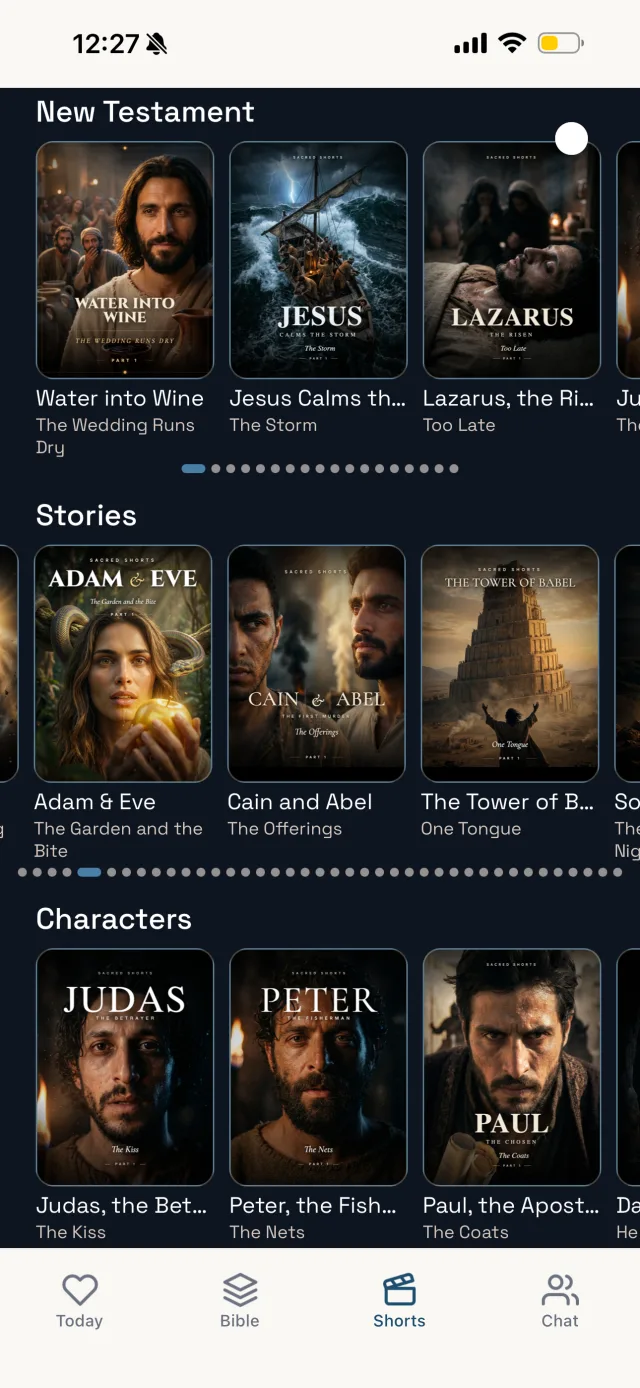
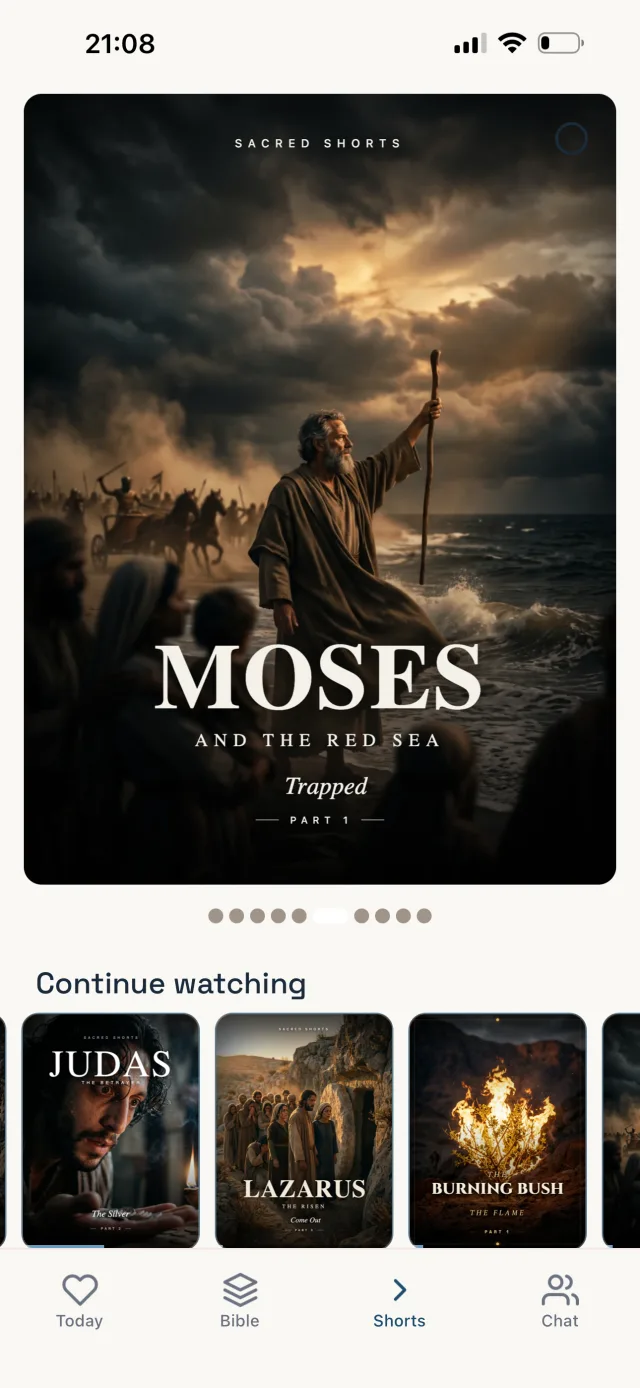
 Sacred Shorts
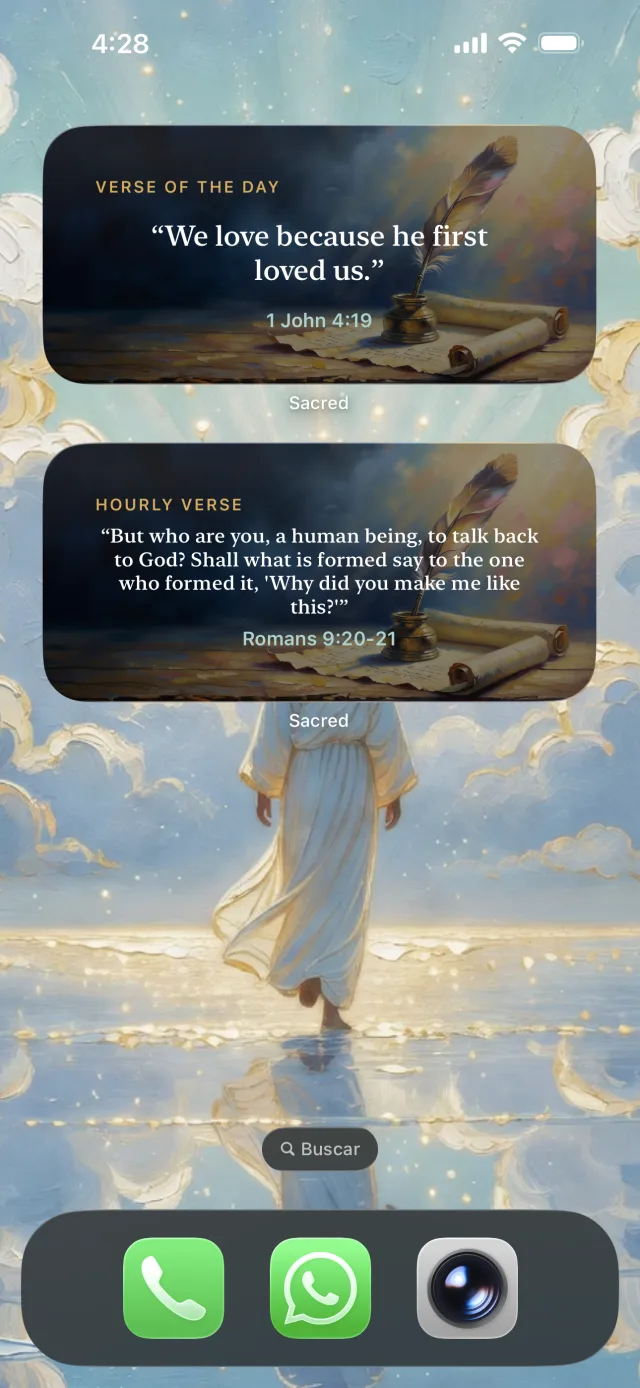
End the day with God's Word
Listen to the Psalms and the whole Bible narrated in Sacred, slow the speed for bedtime and save the verses that help you rest.
 Scan with your phone
Frequently asked questions
Yes. The Psalms describe lying down in peace as an act of trust in God (Psalm 4:8). Falling asleep with Scripture playing isn't disrespectful. It simply means you ended the day resting in God's words rather than in your worries.
Calm, familiar passages work best: Psalms 4, 23, 91, 121 and 131, Matthew 6:25-34 and John 14. Save the battle chapters and the more intense prophetic visions for the daytime.
On iPhone, open the Clock app, choose Timer, set When Timer Ends to Stop Playing and pick 20 or 30 minutes. On Android the option depends on the phone. If yours has none, play a single psalm or chapter instead of a long session.
Many people find that a calm passage at a low volume helps them settle, but it is not a medical treatment. If trouble sleeping lasts for weeks or affects your daily life, talk to a doctor.