Quick Answer
Starting to read the Bible doesn't require seminary training, religious background, or hours of free time. The best approach for beginners: start with the Gospel of John, read one chapter at a time, don't worry about understanding everything immediately, and build a small daily habit. Five minutes of engaged reading beats an hour of forced reading every time.
Why Reading the Bible Matters
Over 5 billion copies of the Bible have been distributed worldwide, making it the most published book in human history. But more importantly for you personally, the Bible offers something rare: a collection of texts that have helped people navigate fear, anxiety, grief, purpose, and meaning for over three thousand years.
You don't have to be religious to benefit from reading it. You don't have to agree with everything in it. You just have to be willing to engage with it honestly and see what resonates.
The Bible isn't a single book — it's a library of 66 books written by roughly 40 different authors across 1,500 years. It includes history, poetry, letters, prophecy, biography, law, and wisdom literature. Understanding this changes everything about how you approach it.
Step 1: Choose Your Starting Point
Do not start at Genesis 1:1. This is the most common mistake beginners make. Genesis is fascinating, but by chapter 25 of Exodus, you'll be reading detailed instructions for building a tabernacle. By Leviticus, many beginners give up entirely.
Instead, start here:
Week 1-2: The Gospel of John. Twenty-one chapters that tell you who Jesus is, what He taught, and why it matters. John writes with simplicity and depth — every chapter is accessible yet profound. Read one chapter per day.
Week 3-4: Psalms (selected). Start with Psalms 23, 27, 34, 42, 46, 51, 91, 103, 121, and 139. These ten psalms cover the full range of human emotion — from loneliness and sadness to gratitude and wonder. Read one per day, slowly.
Week 5-6: Proverbs. Thirty-one chapters of practical wisdom — one for each day of the month. Read one chapter per day. Don't try to absorb everything; let one or two verses land each day.
Week 7+: Genesis 1-25, then Romans. Now you're ready for the origin story and Paul's most systematic explanation of Christian faith.
Step 2: Pick the Right Translation
The Bible was written in Hebrew, Aramaic, and Greek. Every English Bible is a translation, and translations differ in approach:
| Translation | Style | Best For |
|---|---|---|
| NIV | Balance of accuracy and readability | Best all-around for beginners |
| NLT | Thought-for-thought, very readable | Easiest to understand |
| ESV | More literal, slightly formal | Study-oriented readers |
| KJV | 17th-century English | Beautiful but difficult for beginners |
| MSG | Paraphrase, very contemporary | Devotional reading alongside a standard translation |
Recommendation: Start with the NIV or NLT. Use a study Bible if possible — it includes notes that explain historical context, cultural references, and difficult passages.
Step 3: Read Small, Read Consistently
The biggest enemy of Bible reading isn't lack of interest — it's ambition. People try to read too much, get overwhelmed, and stop.
The right amount: One chapter per day. Sometimes one paragraph. Sometimes five verses. The quantity doesn't matter. The consistency does.
The right time: Pick a time that already exists in your routine. Right after your morning prayer. During your commute (audio Bible). Right before bed. Attach Bible reading to a habit you already have — this is called "habit stacking" and it's the most reliable way to build new routines.
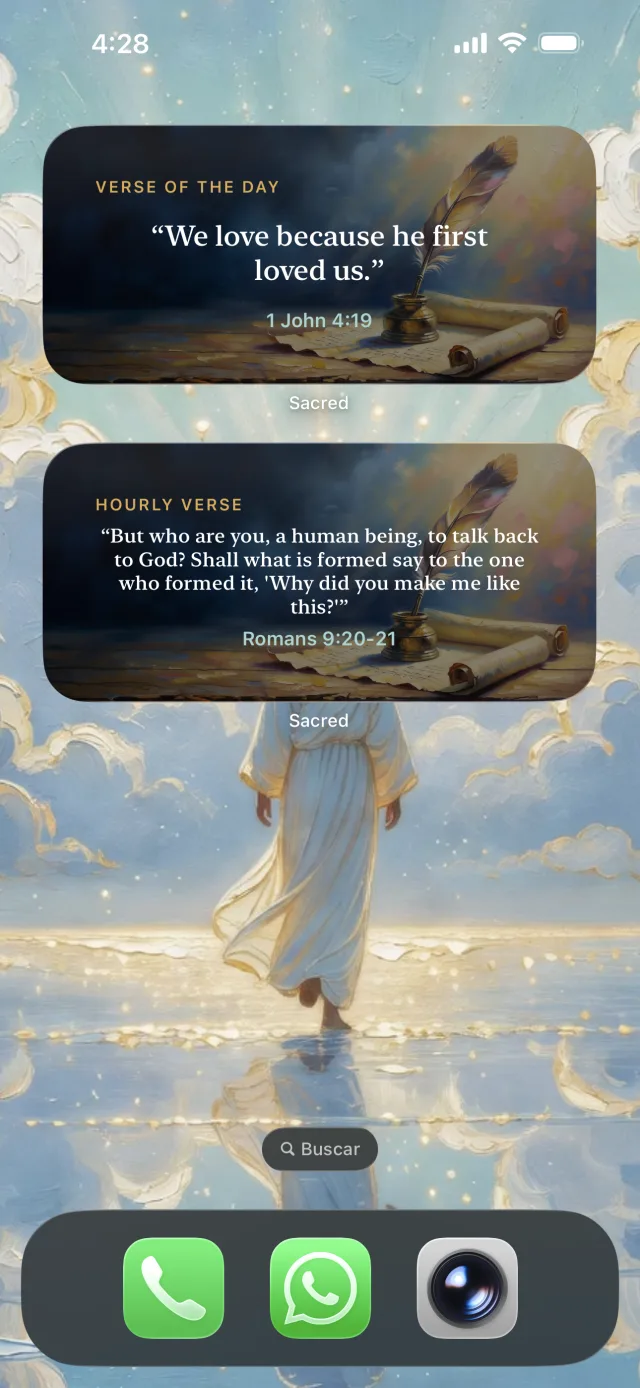
The right posture: Come curious, not obligated. You're not punching a time clock. You're exploring a text that billions of people have found life-changing. Some days it will speak directly to your situation, like a Verse of the Day. Other days it will feel distant. Both are normal.

The Bible has never felt like this
Watch this story come to life as a cinematic series in Sacred.
4.8on the App Store
Step 4: Use the SOAP Method
When you read, don't just let your eyes scan the page. Use a simple framework:
S — Scripture: Write down the verse or passage that stood out to you.
O — Observation: What does this passage actually say? What's happening? Who is speaking? What's the context?
A — Application: How does this connect to your life right now? Is there a decision you're facing, a worry you're carrying, a relationship that needs attention?
P — Prayer: Talk to God about what you read. It doesn't need to be formal. "God, this verse about stress really landed today. Help me trust You with this situation at work."
You don't need a journal for this (though it helps). You can do SOAP mentally in three minutes.
Step 5: Don't Read Alone
The Bible was written for communities, not isolated individuals. Most of the New Testament letters were written to churches, meant to be read aloud together. Reading alone is fine — but reading with others accelerates understanding dramatically.
Options:
- A friend or partner. Read the same chapter each day and text each other what stood out. Simple, effective.
- A small group or Bible study. Most churches offer these for beginners. The social structure creates accountability.
- A guided devotional app. Tools like Sacred provide daily readings with context and reflection prompts, making the Bible accessible even if you have no background. Try Sacred free — your daily spiritual ritual in 6 minutes. ## Common Mistakes Beginners Make
Mistake 1: Starting at page one and reading straight through. The Bible isn't designed to be read like a novel. Skip around. Follow a plan. Start with what's most accessible.
Mistake 2: Expecting to understand everything. You won't. Scholars who've studied the Bible for decades still discover new things. It's okay to read a passage and think "I don't get this." Mark it, move on, come back later.
Mistake 3: Reading without context. A verse pulled from its context can mean almost anything. When you read something confusing, check the surrounding verses, the introduction to the book, or a study Bible's notes. Context is everything.
Mistake 4: Treating every verse as a direct command to you. Some passages are historical narrative (describing what happened), some are poetry (expressing emotion), some are letters to specific ancient communities. Not every sentence is a personal instruction. Learning to distinguish genre is one of the most important Bible reading skills.
Mistake 5: Giving up after missing a few days. You will miss days. That's fine. The goal isn't perfection — it's the long arc. Missing Tuesday doesn't mean the habit is broken. Just read on Wednesday.
A Simple Plan to Start Today
If you do nothing else after reading this article, do this:
- Download a Bible app (YouVersion is free) or find a physical NIV Bible.
- Open the Gospel of John, Chapter 1. Read it slowly. It's about 50 verses — roughly 5 minutes.
- Write down one thing that struck you. Just one.
- Set a reminder for the same time tomorrow: John Chapter 2.
- Repeat for 21 days. By then, you'll have finished John and developed the beginning of a habit.
That's it. No pressure. No exam. No performance. Just honest engagement with a text that has shaped human civilization for three millennia.
Ready to build a daily spiritual habit? Sacred gives you a personalized verse, guided prayer, and biblical chat — all in 6 minutes. Download Sacred free.
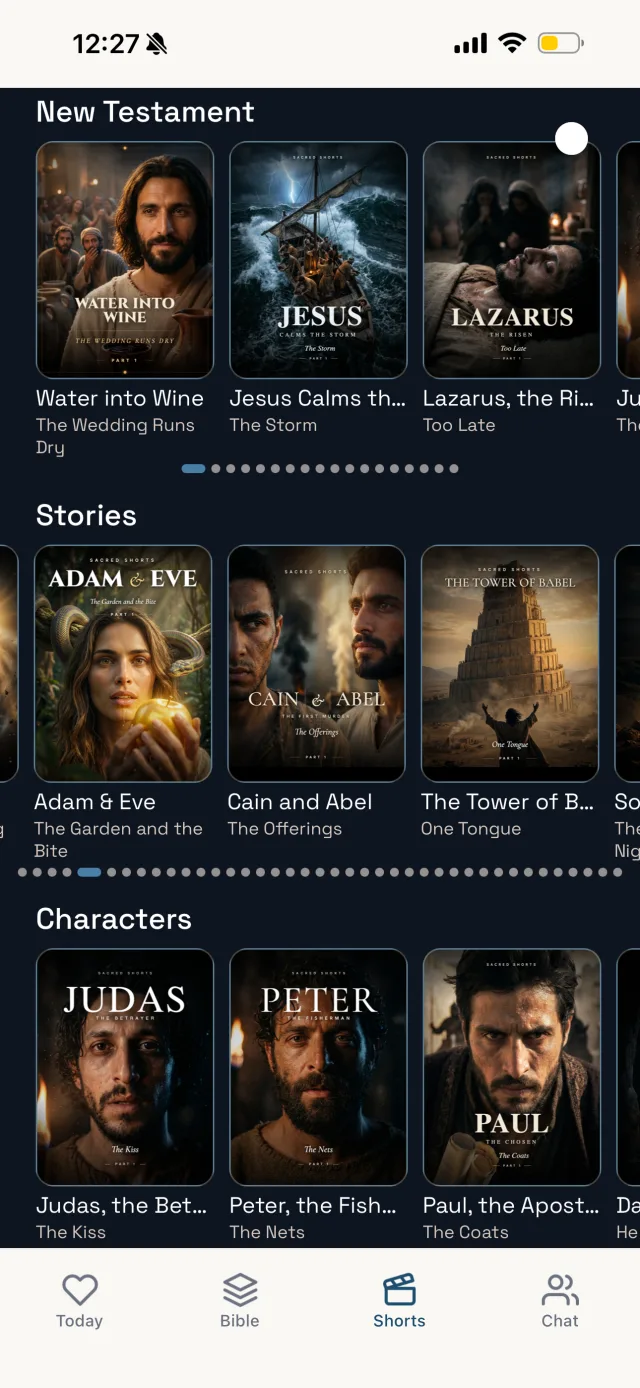
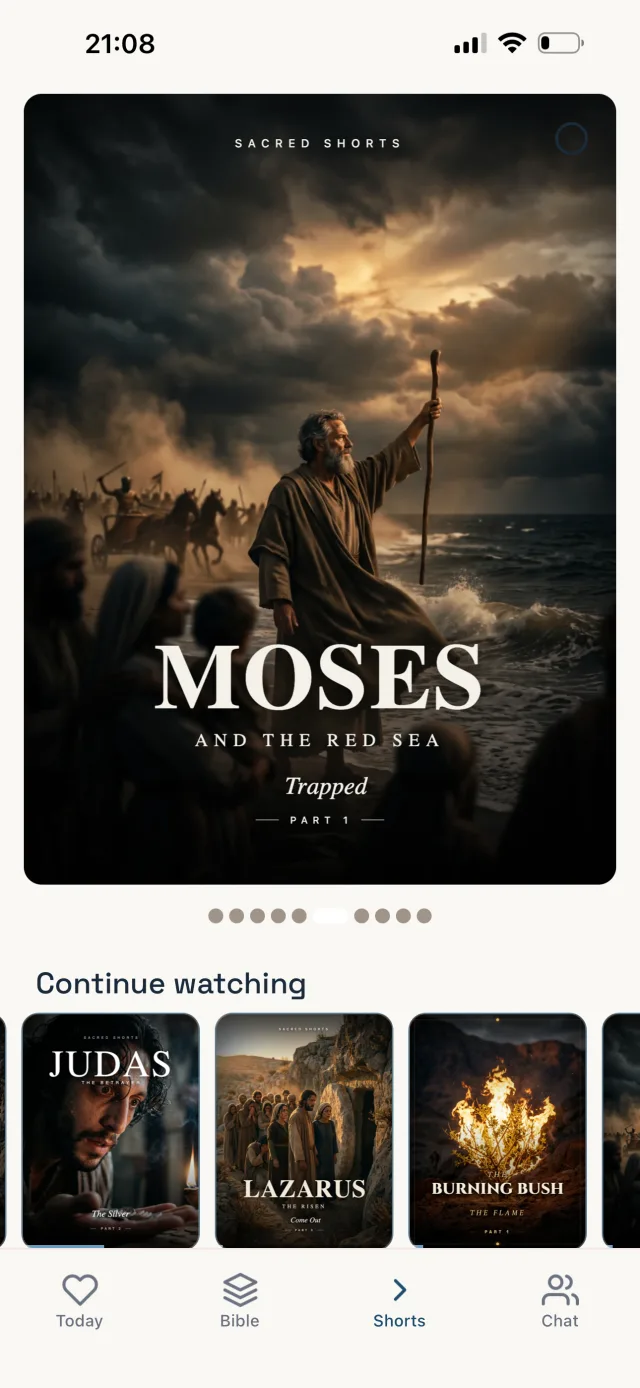
 Sacred Shorts
Watch the Bible like never before
Cinematic Bible stories, a complete Study Bible, daily devotionals, and guided prayer. New episodes every week.
Frequently asked questions
Most Bible scholars and pastors recommend starting with the Gospel of John. It's clear, narrative-driven, and focuses on who Jesus is. After John, the book of Psalms offers rich emotional and spiritual depth, and Proverbs provides practical daily wisdom.
The average person can read the entire Bible in about 70-80 hours. Reading 15 minutes a day, you'd finish in roughly a year. But reading the whole Bible isn't the goal for beginners — understanding what you read matters more than how much you read.
No. The Bible isn't a single narrative meant to be read front-to-back like a novel. It's a library of 66 books spanning different genres, time periods, and purposes. Starting with Genesis often leads beginners to get stuck in Leviticus. Starting with John, then Psalms, then Genesis is a much more engaging path.
For English readers, the NIV (New International Version) offers a good balance of accuracy and readability. The NLT (New Living Translation) is even more accessible. Avoid the King James Version as a first Bible — its archaic language creates an unnecessary barrier for beginners.
Absolutely. The Bible app YouVersion is free and includes dozens of translations, reading plans, and audio versions. What matters is that you read it, not the format. That said, some people find that a physical Bible helps them focus and reduces digital distractions.