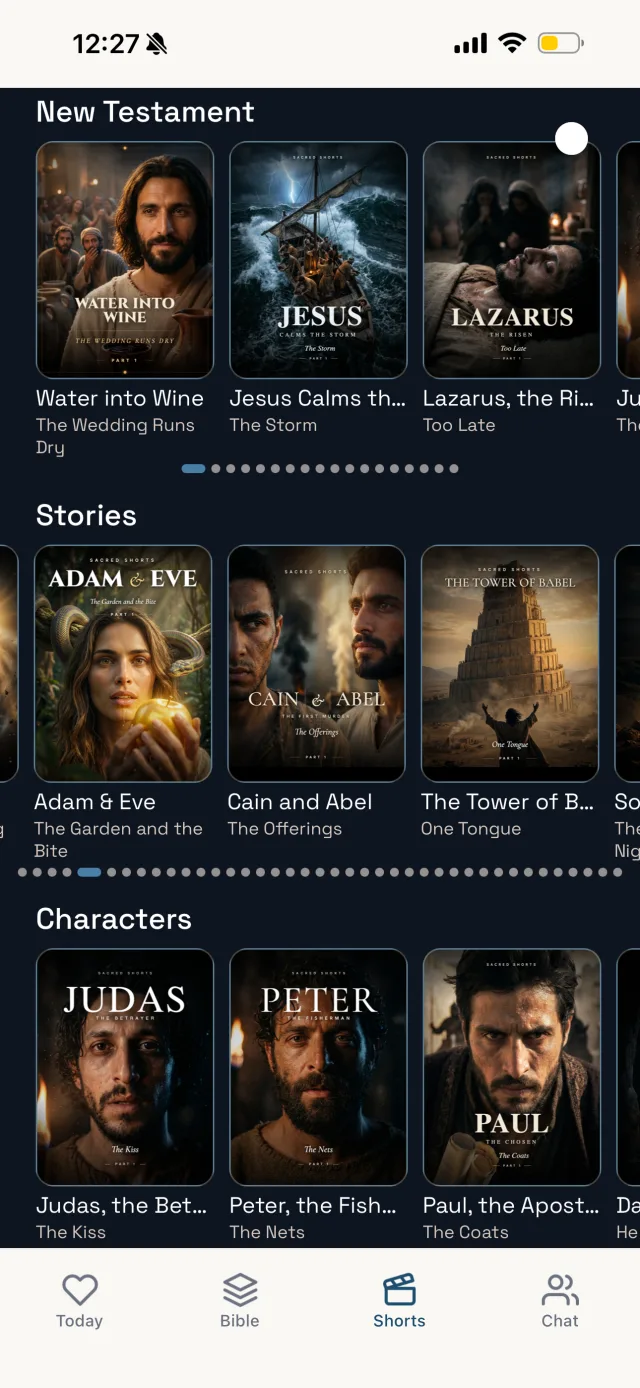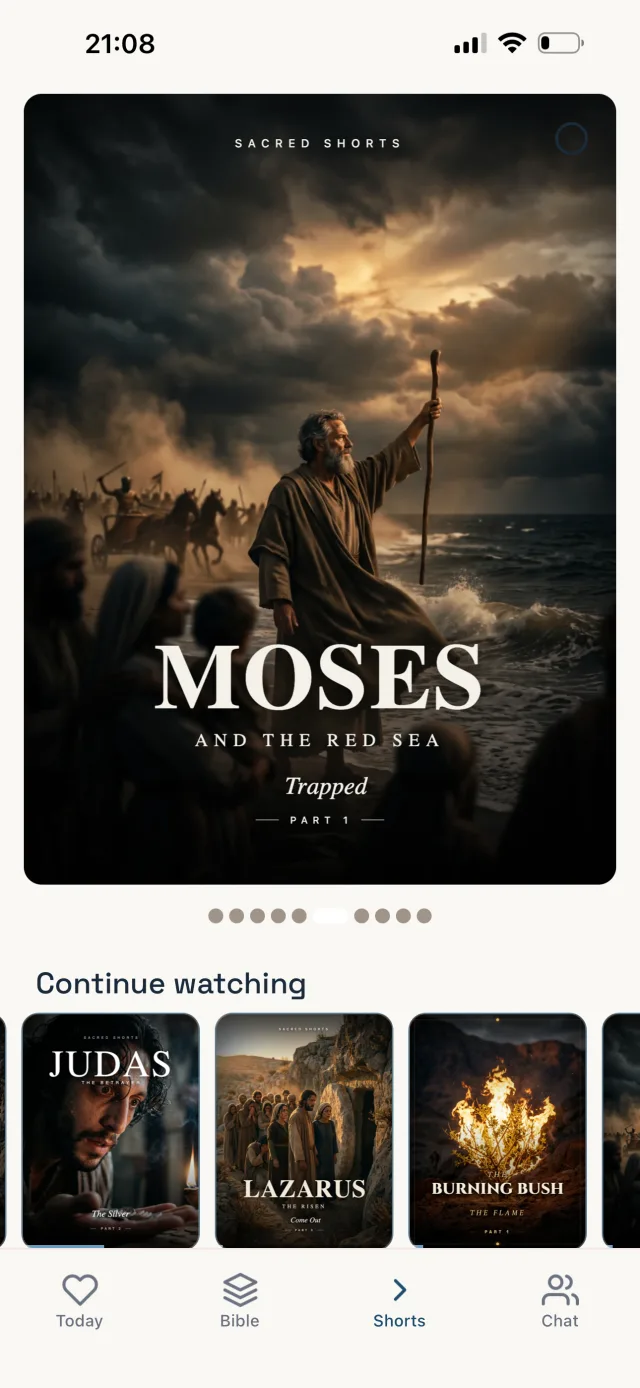
Bible videos can make a passage feel close. A desert road, a crowded table, a frightened disciple, a prophet standing before a king, or Jesus speaking to a wounded person can awaken attention in a way that plain scrolling often does not. Many people who feel distant from Bible reading find that a well-made scene helps them slow down, imagine the world of the text, and want to know what Scripture actually says.
That is a gift when it is used in the right order. Video helps us imagine and enter the biblical story, but it does not replace Scripture. A cinematic scene can serve the text, but it cannot become the text. The Bible is where the story is given to the church. The video is an interpretation that uses actors, music, pacing, lighting, and visual details. Those choices may be reverent and helpful, yet they still need to be tested by the written Word.
A healthy rhythm keeps the relationship clear: watch → read → reflect → pray. Watch with attention. Read the passage slowly. Reflect on what the text reveals. Pray in response to God. That rhythm lets the imagination become a doorway instead of a detour.
Why Scripture must stay central
Christians have always cared about the words of Scripture because faith is not built on atmosphere alone. The Bible gives us the message, context, commands, promises, warnings, songs, prayers, history, wisdom, prophecy, gospel witness, and apostolic teaching. A video can show a face in a moment of fear, but Scripture tells us what the Lord says. A scene can portray a miracle with beauty, but Scripture names the sign, its witnesses, and its meaning. A short film can make a parable memorable, but the words of Jesus still interpret the story.
Keeping Scripture central also protects us from confusing artistic additions with biblical facts. Every adaptation makes choices. It may imagine the weather, the expression on someone’s face, the silence before a line, or the movement between two verses. Sometimes those choices help us notice the humanity of the people involved. Sometimes they may lean too hard in one direction. The viewer needs the text open enough to ask, “What is actually written here? What did the scene help me notice? What did it add for imagination? What did it leave out?”
This is not suspicion for its own sake. It is a form of reverence. If we believe Scripture matters, we return to it gladly. We let the video stir attention, then let the Bible set the meaning.
What Bible videos can do well
A good Bible video can help with attention. Many readers begin a passage distracted. A brief scene can gather the mind and remind the heart that Scripture is not a set of abstract ideas floating above real life. The Bible often speaks through roads, meals, prisons, boats, fields, courts, gardens, deserts, temples, homes, and tears. Seeing a scene can help a reader remember that God meets people in embodied places.
Video can also help with memory. When you watch Peter step toward Jesus on the water, Joseph face his brothers, Ruth choose loyalty, or Paul fall on the road to Damascus, the story may stay with you longer. Later, when you read the passage again, the visual memory can prompt questions: Why did the disciples fear? What did forgiveness cost Joseph? What did Ruth risk? What did Paul hear and obey?
Video can lower the barrier for people who are new to Scripture or returning after a long season away. It gives them a starting point. Instead of opening a chapter cold, they can enter a story and then read with curiosity. But that curiosity should move toward the Bible, not away from it. The best Bible video leaves you wanting to open the passage.

The Bible has never felt like this
Watch this story come to life as a cinematic series in Sacred.
4.8on the App Store
The watch → read → reflect → pray method
Start by watching one scene, not an endless stream of clips. Give your attention to the people, conflict, setting, and emotional movement. Ask what stood out, but do not make your first reaction the final interpretation.
Then read the passage. Read it aloud if possible. Notice what comes before and after. A verse in isolation can be misunderstood, and a scene can feel different when the larger context is heard. If you are watching a Gospel scene, compare the Gospel account connected to it. If more than one Gospel includes the event, notice both shared witness and distinct emphasis. Different Christian traditions may emphasize certain details differently, but careful reading gives everyone a common ground.
After reading, reflect. What does this passage reveal about God’s character? What does it reveal about human need, sin, faith, fear, obedience, mercy, or hope? Which details in the video were directly from the passage? Which were artistic imagination? Did the scene help you feel a question that the text answers? Did Scripture correct an assumption you made while watching?
Finally, pray. Do not end only with analysis. If the passage shows mercy, ask for mercy. If it shows courage, ask for faithfulness. If it reveals sin, confess honestly. If it gives a promise, give thanks. Prayer teaches the heart to respond to the Word, not merely consume content about the Word.
How to evaluate a Bible video faithfully
A faithful Bible video does not need to show every detail, but it should honor the passage’s meaning. It should avoid using Scripture as a costume for a message the text does not carry. It should not turn holy moments into spectacle for shock. It should be honest that some details are imagined and should encourage viewers to read the Bible for themselves.
Ask simple questions. Does the scene point me back to the passage? Does it preserve the main movement of the biblical story? Does it avoid making promises Scripture does not make? Does it treat God, human suffering, sin, repentance, worship, and prayer with reverence? Does it leave room for humility where Christians have interpretive differences?
This matters especially in passages involving sacraments, prophecy, end-times themes, miracles, angels, demons, suffering, or church practice. Christians from Catholic, Orthodox, Protestant, evangelical, charismatic, and other traditions may bring different theological emphases. A video can help people picture a passage, but it should not pretend to settle every doctrinal question by its artistic choices.
A gentle way to use Sacred
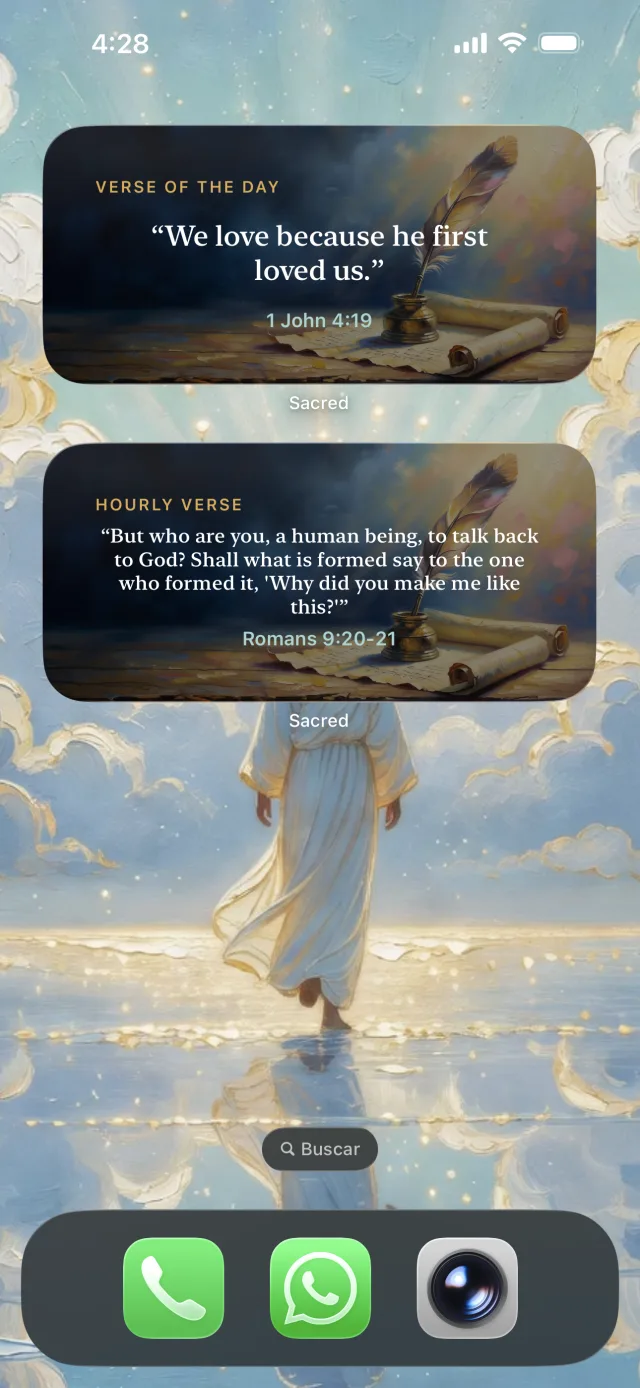
Sacred is built around this order. Sacred Shorts helps you experience cinematic biblical scenes, but the Study Bible keeps the text close. Daily devotionals help you reflect, Guided Prayer helps you respond, and AI Bible Chat can support context questions while Scripture remains the foundation.
Use a short film as the doorway. Open the Bible as the room. Let reflection slow you down. Let prayer turn attention into worship and obedience. The Bible has never felt like this when the image leads you back to the Word instead of pulling you away from it.
FAQ
Can Bible videos replace reading the Bible?
No. Bible videos can help you imagine and engage a passage, but they are interpretations. Scripture remains the source and authority. The healthiest pattern is to watch, read the passage, reflect on the text, and pray.
What should I look for in a Bible video with Scripture?
Look for videos that point clearly back to the biblical passage, avoid unsupported claims, treat the story reverently, and make you want to open Scripture rather than stay only with the screen.
How can I use Bible videos in daily study?
Choose one scene, watch it attentively, read the related passage slowly, write down what Scripture emphasizes, and pray from the passage. Keep the video short enough that the Bible remains central.
 Sacred Shorts
Watch the Bible like never before
Cinematic Bible stories, a complete Study Bible, daily devotionals, and guided prayer. New episodes every week.