The story of manna in the wilderness is one of the Bible's clearest pictures of daily dependence on God. Israel has been delivered from Egypt, but freedom does not immediately feel easy. The people stand in a harsh desert with no settled fields, no stable pantry, and no visible path toward ordinary provision. A manna in the wilderness video can help modern viewers feel that tension: the heat of the desert, the uncertainty of families waking before sunrise, and the surprise of finding bread-like flakes on the ground.
Video can help us imagine and enter the biblical story, but it does not replace Scripture. The manna account belongs especially in Exodus 16, with later reflection in Numbers 11, Deuteronomy 8, Psalm 78, and John 6. Those passages give the meaning, boundaries, and spiritual weight of the scene. A faithful video should lead us back to the text, not away from it. The best rhythm is simple: watch, read, reflect, pray.
Where manna fits in Israel's journey
Exodus 16 comes after dramatic rescue. Israel has seen the plagues, the Passover, the crossing of the sea, and the defeat of Pharaoh's army. The people have sung of the Lord's triumph. Yet only a short time later, hunger exposes fear. They remember Egypt through the distorted lens of scarcity, speaking as if slavery came with secure meals and freedom came only with death.
The Lord's response is not merely to send food. He teaches trust. Manna appears in the morning, and the people are told to gather enough for each day. If they hoard it, it spoils. On the sixth day, they gather enough for the Sabbath. Provision becomes a daily school of faith: receive what God gives, obey his instruction, rest when he commands rest, and learn that life is sustained by the word of the Lord.
That context matters for any visual retelling. The story is not simply a miracle about food falling from heaven. It is about a redeemed people learning to live by God's faithfulness one morning at a time. The wilderness is not wasted space in Scripture. It becomes the classroom where fear, memory, obedience, and worship are all tested.
Why manna works on screen
Manna is visually quiet compared with the Red Sea or Mount Sinai, but that quietness is part of its power. A video can show the camp waking in dim light, parents searching the ground, children asking what the strange flakes are, and elders realizing that the Lord has answered their complaint with mercy. It can show the repeated pattern: morning gathering, measured portions, the temptation to store extra, the discovery that yesterday's hoarded manna cannot carry today's faith.
The scene also invites viewers to slow down. Many people read quickly past the details: an omer per person, the Sabbath exception, the command not to leave any until morning, the jar of manna kept as testimony. Film can make those details feel concrete. It can remind us that trust is not only an emotion. It involves bodies, meals, calendars, obedience, and rest.
Still, every adaptation interprets. Does the video make Israel's complaint look merely foolish, or does it help us understand the fear of newly freed people in a dangerous land? Does it show God's provision as magic spectacle, or as covenant mercy? Does it connect manna with later Scripture, especially Moses' words in Deuteronomy 8 that humanity does not live by bread alone? After watching, the open Bible must test and deepen what the screen has stirred.

The Bible has never felt like this
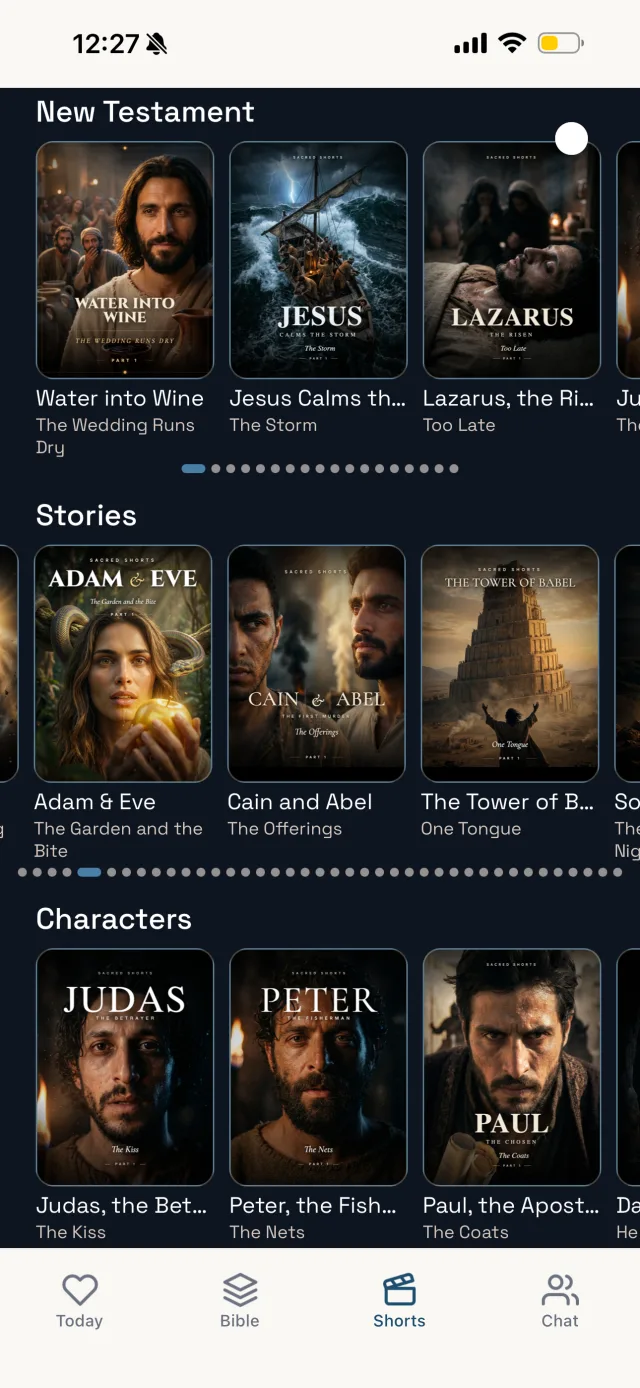
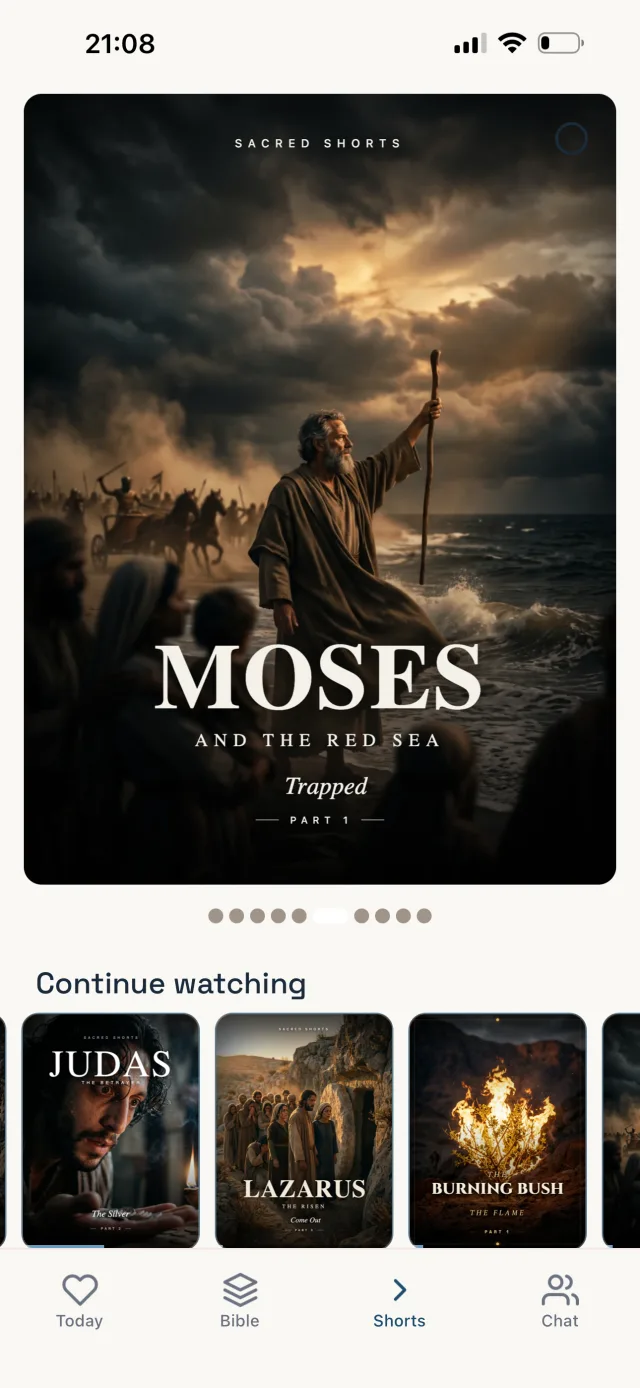
Watch this story come to life as a cinematic series in Sacred.
4.8on the App Store
Daily bread and Christian reflection
Christians often hear the manna story alongside Jesus' teaching about daily bread and his words in John 6, where he speaks of the true bread from heaven. Traditions may explain the connection between manna, Christ, Eucharistic or Communion theology, and spiritual nourishment with different emphases. Catholic, Orthodox, Protestant, and other Christian communities do not always use the same language here. A careful article or video should acknowledge that breadth while keeping the shared biblical movement clear: God provides, God teaches dependence, and Christ is central to Christian reading of Scripture.
Manna also challenges modern habits. Many of us prefer visible reserves, control, and certainty. We want enough proof today that tomorrow will require no faith. The wilderness story resists that impulse. The Lord gives enough, not because anxiety is imaginary, but because trust grows through repeated receiving. Israel had to wake up again and again, step outside again and again, and discover that God's mercy had not failed overnight.
That does not mean Scripture encourages carelessness. The sixth-day provision shows order, preparation, and Sabbath rest. The issue is not planning versus faith. The deeper question is whether provision becomes something we clutch apart from God, or something we receive from God with gratitude and obedience.
Watch, read, reflect, pray
A helpful way to use a manna in the wilderness video is to begin by watching with attention. Notice the landscape, the hunger, the uncertainty, and the tenderness of God's answer. Let the visuals help you imagine what daily dependence felt like before Israel had land, harvest, or permanent homes.
Then read Exodus 16 slowly. Pay attention to the people's complaint, the Lord's instruction, Moses and Aaron's words, the amount gathered, and the Sabbath pattern. If you have more time, read Deuteronomy 8:1-10 and John 6:25-35. Those passages help the story move from wilderness provision to humility, memory, and the deeper hunger that only God can satisfy.
Next, reflect honestly. Where are you tempted to romanticize an old bondage because the present requires trust? Where do you try to store emotional or spiritual security in ways that cannot actually preserve life? What would it look like to receive today's provision with gratitude instead of demanding tomorrow's certainty before you obey today?
Finally, pray. Ask God for daily bread, not only as a phrase but as a posture. Pray for trust when provision feels ordinary, patience when it feels delayed, and obedience when God's instructions seem small. Prayer turns the story from something watched into something received before the Lord.
Continuing with Sacred
Sacred is designed around this watch, read, reflect, pray rhythm. Sacred Shorts can help you see a biblical moment with cinematic attention. The Study Bible brings you back to the passage. Devotionals help connect the text to daily life. Guided prayer gives you space to respond. AI Bible Chat can support thoughtful questions about context, meaning, and related passages while keeping Scripture at the center.
If you watch a manna in the wilderness video today, do not stop with the image of bread on the ground. Open Exodus. Read the story. Reflect on the God who provides in the wilderness. Then pray for the grace to trust him one day at a time. Video can help you enter the story; Scripture is where the story speaks with authority.
FAQ
Where is the manna in the wilderness story found in the Bible?
The main account is in Exodus 16. The story is also remembered in Numbers 11, Deuteronomy 8, Psalm 78, and in the New Testament discussion of bread from heaven in John 6.
Can a manna video replace reading Exodus 16?
No. A video can help you imagine the wilderness, the morning gathering, and the daily pattern of trust, but it should lead you back to Scripture. The best rhythm is watch, read, reflect, and pray.
What does manna teach about trusting God?
Manna teaches daily dependence. Israel received enough for each day, with a Sabbath pattern that taught rest and obedience. The story invites readers to receive God's provision with gratitude instead of trying to control tomorrow apart from him.
 Sacred Shorts
Watch the Bible like never before
Cinematic Bible stories, a complete Study Bible, daily devotionals, and guided prayer. New episodes every week.