Joseph's story is one of the most cinematic narratives in Genesis. It begins with a favored son, a distinctive garment, jealous brothers, a pit, and a slave caravan. It moves through false accusation, prison, dreams, famine, public authority, family fear, and finally a scene of forgiveness that still feels startling. A Joseph story video can help modern readers slow down and feel the dust around the pit, the silence of prison, the tension of brothers standing before the one they betrayed, and the tears Joseph cannot hold back.
But video is a doorway, not the destination. It does not replace Genesis. It should awaken attention and send us back to Scripture. Joseph's life is told mainly in Genesis 37 and 39-50, and every adaptation has to choose what to show, compress, or leave quiet. The Bible gives the inspired text; video helps us imagine the scene, but Scripture remains where the story speaks with authority.
Where Joseph fits in Genesis
Joseph belongs to the family of Abraham, Isaac, and Jacob. Genesis has already traced God's promise through a deeply imperfect family: faith mixed with fear, blessing mixed with rivalry, and divine purpose moving through complicated human choices. Joseph is Jacob's son through Rachel, and Jacob's favoritism intensifies the conflict with his brothers. Genesis does not hide the family's sin. It shows envy, deception, violence, grief, temptation, and misuse of power alongside providence, wisdom, and mercy.
That honesty makes the story visually powerful. Joseph is not a flat hero in an easy lesson. He is sold by his brothers, carried into Egypt, and placed in a world where he has little control. In Potiphar's house he acts with integrity, yet he is accused unjustly and sent to prison. In prison he interprets dreams but is forgotten. Later, when Pharaoh dreams and Egypt needs wisdom, Joseph is raised into authority. The movement from pit to palace is dramatic, but Genesis does not present it as luck or self-made success. The story keeps pointing to the hidden faithfulness of God.
A faithful video should resist turning Joseph into a prosperity formula. The text does not promise that every wound becomes visible promotion in this life. It shows that God can work in and through evil without calling evil good.
Why this story works on screen
Joseph's story has scenes that invite imagination. The coat marks favoritism. The pit becomes abandonment. The caravan represents exile. The Egyptian household introduces a foreign world of status, danger, and temptation. The prison becomes a place where Joseph's gifts remain alive when his future appears closed. Pharaoh's court widens the story from family conflict to national survival. The storehouses during famine show wisdom serving others. Then the brothers arrive, hungry and unaware, and the whole story tightens around memory, testing, confession, and mercy.
A video can make those transitions concrete. It can show the distance between Canaan and Egypt, the loneliness of Joseph's early years, the pressure of leadership during famine, and the emotional restraint required when he recognizes his brothers. It can also help viewers notice what they might skim: how long Joseph waits, how painful family reconciliation can be, and how biblical forgiveness is not shallow denial.
Still, every camera angle interprets. Was Joseph gentle or severe in a certain moment? How did his brothers look when guilt returned? How much time should a scene give Jacob's grief? The Bible gives enough to guide us, but a film must still make choices. That is why watching should lead to reading. After viewing a scene, open Genesis and ask what the video illuminated, what it added for dramatic clarity, and what the text emphasizes most.

The Bible has never felt like this
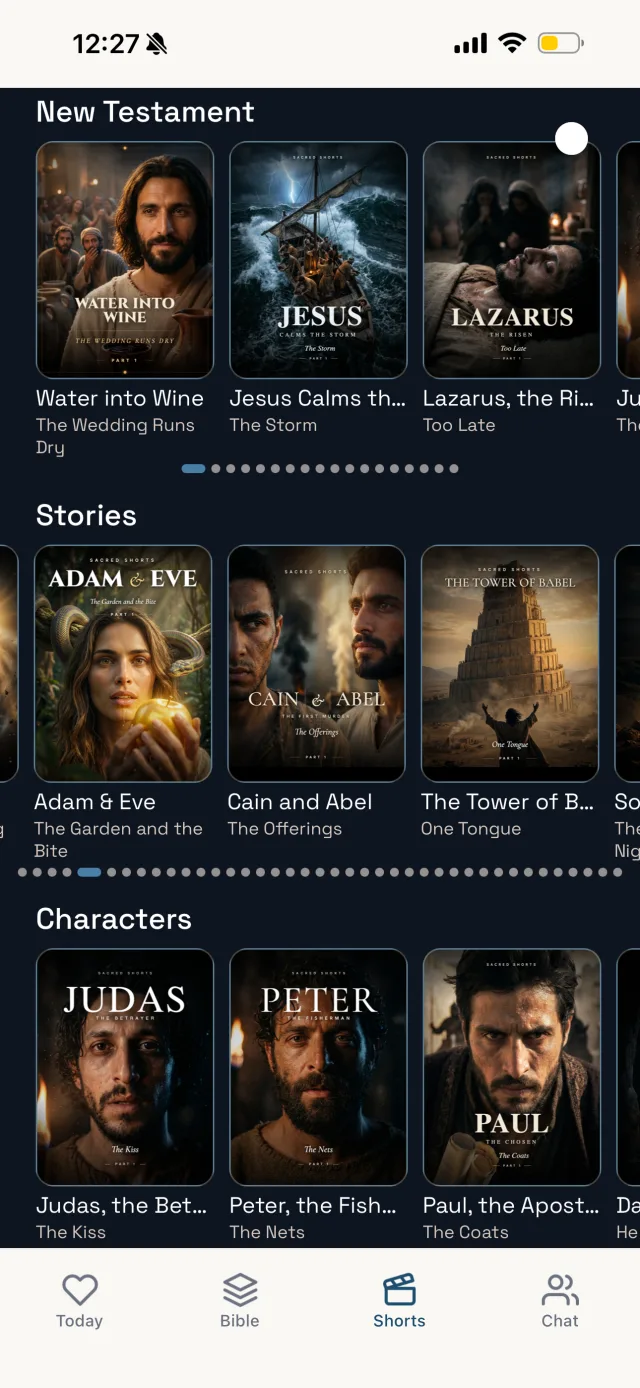
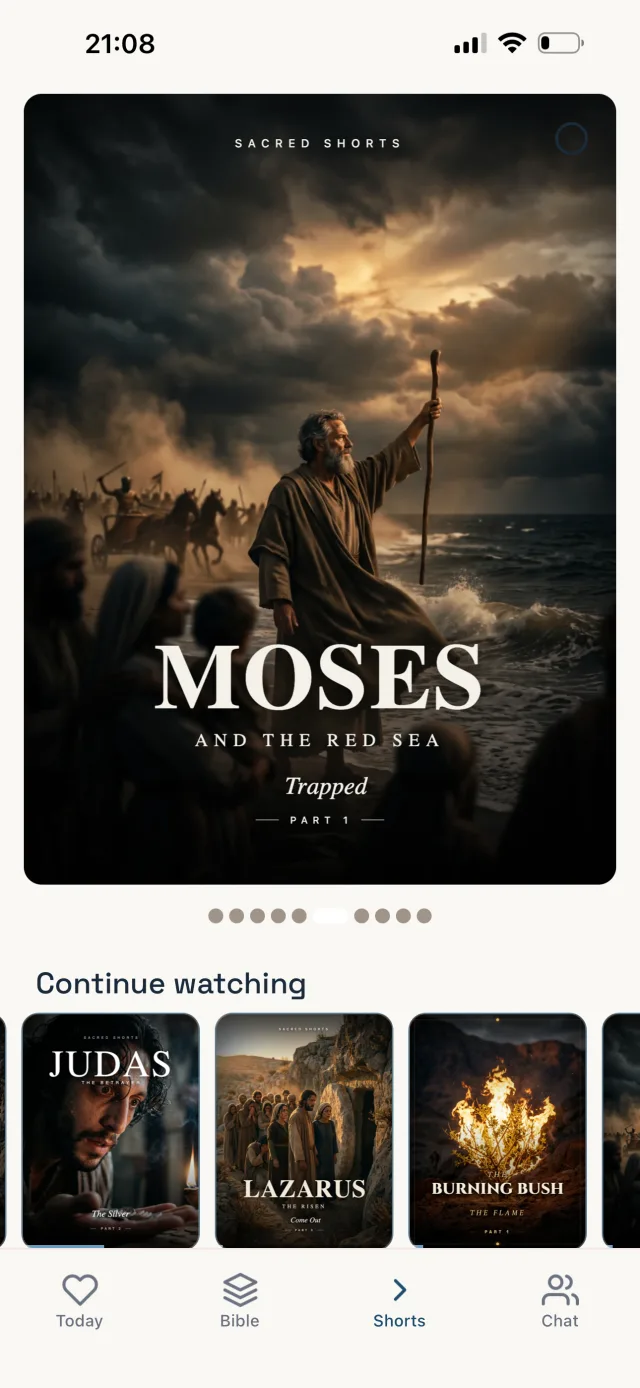
Watch this story come to life as a cinematic series in Sacred.
4.8on the App Store
Betrayal, providence, and forgiveness
The story begins with a wound that should not be softened. Joseph's brothers do not merely misunderstand him; they plan violence, sell him, and deceive their father. If a video rushes too quickly to the ending, betrayal can start to feel like a necessary step in a tidy success story. Scripture is more sober. Human evil remains evil, even when God can bring good from what people intended for harm.
Joseph names that tension near the end: "you meant evil against me, but God meant it for good" (Genesis 50:20). He does not pretend his brothers meant well. He names the evil. He also confesses that God's purpose was larger than their sin. Forgiveness does not erase truth. Providence does not excuse cruelty. Mercy does not require a false version of history.
A thoughtful Joseph video can hold those truths together. It can let viewers feel the seriousness of what happened while showing Joseph's refusal to become a prisoner of revenge. That makes the story deeply relevant, but not simplistic. Christian traditions may discuss forgiveness, reconciliation, justice, and prudence with different emphases, and real situations can require wise counsel, boundaries, and time.
Watch, read, reflect, pray
A simple way to use a Joseph video is the rhythm: watch, read, reflect, pray. First, watch a short scene with attention. Notice what rises in you: anger at the brothers, sorrow for Jacob, admiration for Joseph's endurance, discomfort with power, or relief at mercy. Second, read the biblical passage. Begin with Genesis 37, continue through Genesis 39-45, and return to Genesis 50:15-21. Read slowly enough to notice repeated themes: dreams, clothing, remembering, weeping, famine, and God's unseen hand.
Third, reflect honestly. Where does Joseph show integrity when no one seems to reward it? Where do his brothers begin to face the truth? What does forgiveness look like here, and what does it not mean? How does God's providence appear without making human choices meaningless? What part of the story challenges your assumptions about timing, justice, or family wounds?
Fourth, pray. Ask for patience in hidden seasons, courage to tell the truth, freedom from revenge, wisdom about reconciliation, or faith to trust God when the story is not resolved yet. Prayer keeps the video from becoming mere entertainment and turns study into response before God.
Continuing with Sacred
Sacred is built for that rhythm: cinematic Bible moments that invite you back into Scripture, a Study Bible for reading the passage, devotionals for reflection, guided prayer for response, and AI Bible Chat for thoughtful questions about context and meaning. Joseph's story is exactly the kind of account where a short film can open the imagination, but the richest fruit comes when you return to Genesis, sit with the text, and pray through what God may be teaching you.
If you watch Joseph's story today, do not stop when the scene ends. Open Genesis. Read the words. Reflect on betrayal, providence, and forgiveness. Then pray with honesty. The video can help you enter the story; Scripture is where the story speaks with authority.
FAQ
What Bible passages tell Joseph's story?
Joseph's story is found mainly in Genesis 37 and Genesis 39-50. Key moments include his brothers selling him, his time in Potiphar's house and prison, his interpretation of dreams, his leadership in Egypt, and his reconciliation with his brothers.
Can a Joseph story video replace reading Genesis?
No. A video can help you imagine the setting and emotion of the story, but it should not replace Scripture. The healthiest pattern is watch, read, reflect, and pray so that the visual experience leads you back to the biblical text.
What is the main lesson of Joseph's forgiveness?
Joseph's forgiveness shows that evil should be named truthfully, yet God's providence can work beyond human sin. Genesis 50:20 holds both together: his brothers meant evil, but God worked to preserve life.
 Sacred Shorts
Watch the Bible like never before
Cinematic Bible stories, a complete Study Bible, daily devotionals, and guided prayer. New episodes every week.