The story of Jacob and Esau is a family story before it is anything else. It begins with twins struggling in Rebekah’s womb, continues through favoritism, hunger, bargain, deception, blessing, fear, exile, wrestling, and finally a trembling reunion. A Jacob and Esau story video can help viewers feel the human drama of Genesis 25–33: the smell of the field, the quiet of the tent, Isaac’s failing sight, Rebekah’s urgency, Jacob’s fear, Esau’s anger, and the long road toward reconciliation.
But video should never become the final word. It helps us imagine and enter the biblical story, but it does not replace Scripture. The healthiest rhythm is watch → read → reflect → pray. Watch the scene with attention. Then read the chapters themselves. Reflect on what the Lord reveals about family sin, divine election, human responsibility, blessing, fear, and grace. Then pray honestly about the relationships, desires, and wounds the passage brings to the surface.
Jacob and Esau are not simple heroes and villains. Genesis presents a tangled household where parental favoritism shapes the sons, impulsive choices have real consequences, and God’s purposes move through people who are not morally tidy. That is part of the power of the story. It does not flatter the family. It shows how deeply broken a covenant household can be, and how faithfully God continues His promise.
What happens in Genesis
Genesis 25 introduces Isaac and Rebekah waiting for children. When Rebekah conceives, the children struggle within her, and the Lord tells her that two nations are in her womb. Esau is born first, red and hairy; Jacob comes out holding Esau’s heel. Their names and birth order set the stage for a lifetime of rivalry.
As the boys grow, Esau becomes a skillful hunter, a man of the field. Jacob is described as a quiet man dwelling in tents. Isaac loves Esau because he eats of his game, while Rebekah loves Jacob. That line is painful because it is so ordinary. Before the famous deception, the household is already divided by preference. A faithful video should not rush over that detail. The blessing crisis grows in soil already marked by partiality.
The first major conflict comes when Esau returns from the field exhausted. Jacob is cooking stew, and Esau asks for some. Jacob demands the birthright in exchange. Esau, driven by hunger and immediacy, sells it. The text says he despised his birthright. This does not make Jacob’s opportunism beautiful, but it does show Esau treating a sacred inheritance casually. Both brothers are exposed.
Later, in Genesis 27, Isaac prepares to bless Esau. Rebekah overhears and tells Jacob to deceive his father. Jacob worries less about the lie itself than about being caught. He wears Esau’s garments and goat skins, brings prepared food, and approaches Isaac. The scene is emotionally heavy: a blind father asking, touching, smelling, blessing; a son pretending to be his brother; a mother directing the plan; another son returning too late. When Esau discovers what happened, he cries out with a great and bitter cry. A visual retelling can help us feel the damage, but Scripture must interpret the moment. Sin has entered the room wearing family clothing.
Blessing, election, and human responsibility
This story raises hard questions. God had spoken before the boys were born, and the older would serve the younger. Later biblical writers reflect on Jacob and Esau in different theological contexts. Christian traditions do not always explain divine election, foreknowledge, and human responsibility in the same way. A short video should not pretend to settle every doctrinal debate.
What it can do is keep the biblical tension visible. God’s purpose is not defeated by human weakness. At the same time, the deception is not harmless. Jacob receives the blessing, but he also leaves home in fear. Rebekah gains what she wanted for Jacob, but the family is torn apart. Esau’s grief is real. Isaac’s trembling is real. The story does not invite us to admire manipulation. It invites us to see the mystery of God’s promise moving through a family that desperately needs mercy.
That is why the Jacob and Esau story is so relevant for viewers today. It speaks to rivalry, resentment, comparison, inheritance, favoritism, and the desire to be blessed. It asks whether we grasp for blessing as if God must be manipulated, or whether we learn to receive from Him in truth. It also warns us that spiritual language can be used to cover selfish action if the heart is not humbled before God.

The Bible has never felt like this
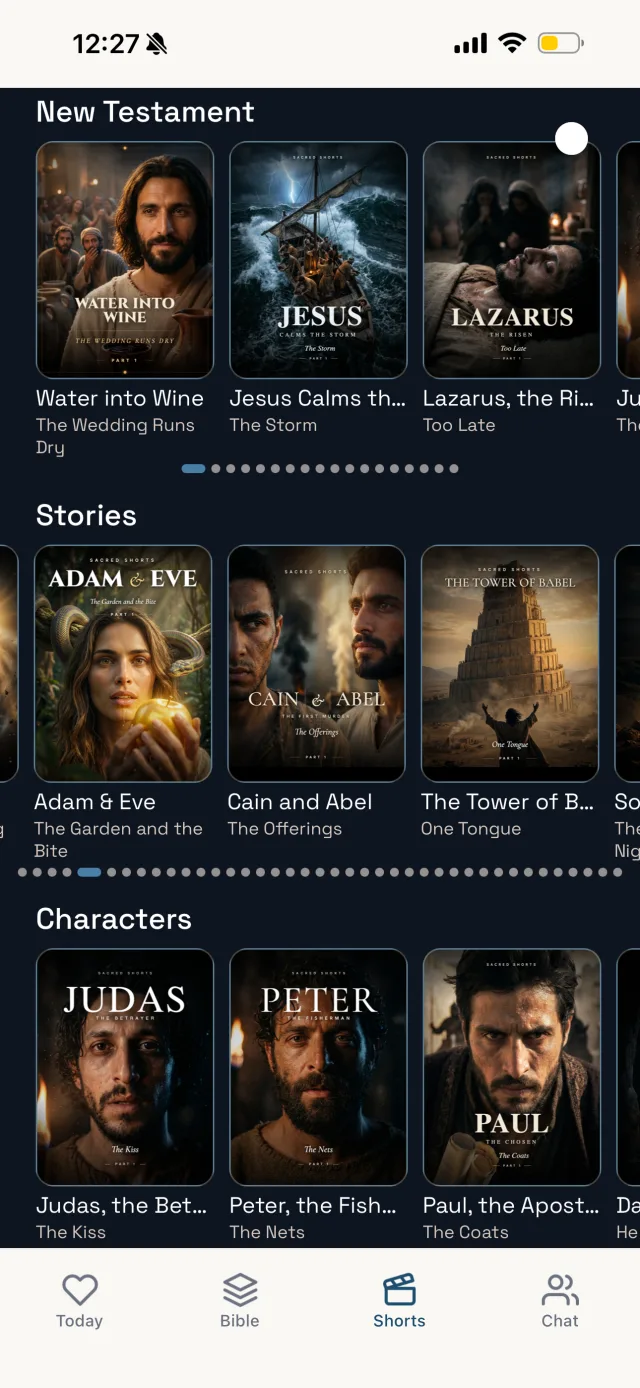
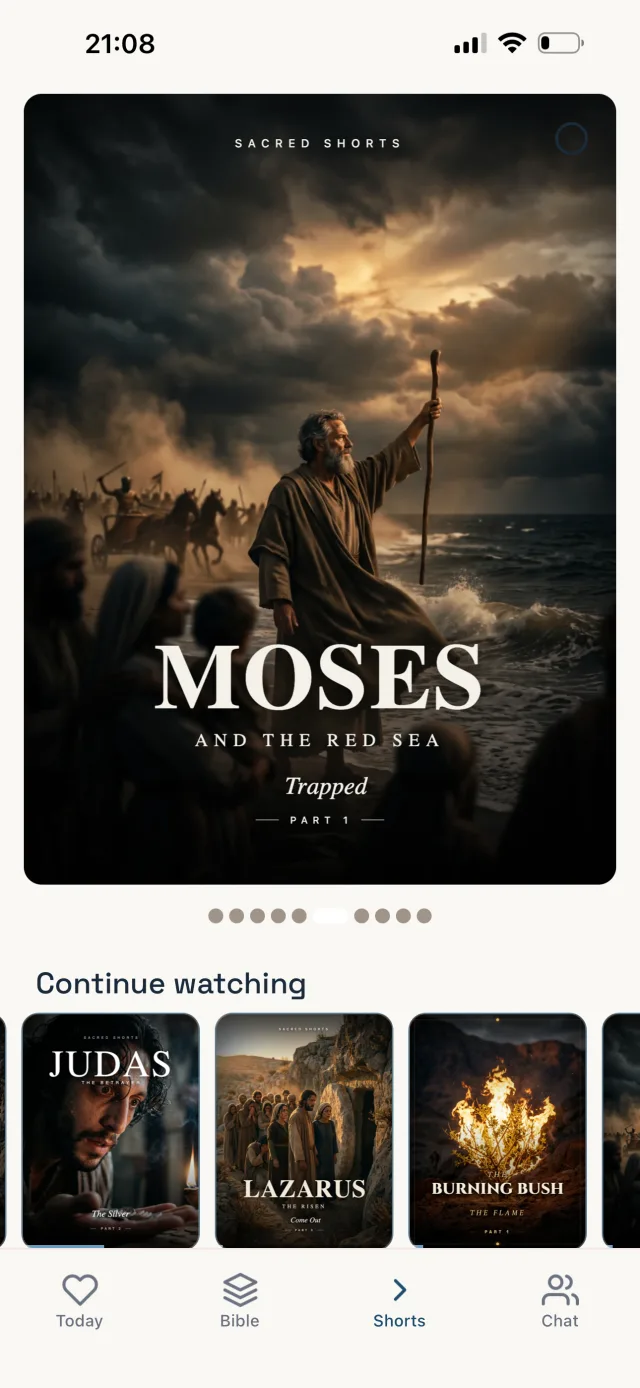
Watch this story come to life as a cinematic series in Sacred.
4.8on the App Store
How video can help you read the passage better
A cinematic retelling can slow down scenes that readers often pass over quickly. We may know “Jacob stole Esau’s blessing” as a summary, but video can make us pause at Isaac’s repeated questions: Who are you? How did you find it so quickly? Are you really my son Esau? The hesitation matters. The trembling matters. Esau’s cry matters. Jacob’s fear on the road matters.
Good biblical imagination serves the text. It may portray Rebekah’s face, Esau’s exhaustion, Isaac’s blindness, or Jacob’s nervous hands, but those artistic choices should send us back to Genesis, not away from it. Ask what the video helped you notice. Ask what the text actually says. Ask which details were imagined because the Bible does not specify them. The authority remains Scripture; the video is a companion for attention.
The reunion in Genesis 33 is especially powerful on screen. Jacob approaches Esau with fear, bowing repeatedly. Esau runs to meet him, embraces him, falls on his neck, and kisses him. Both men weep. The scene does not erase everything that happened, and readers should not force every painful family story into a quick resolution. Yet it offers a real picture of mercy: the brother Jacob feared comes running with an embrace.
Watch → read → reflect → pray
Begin by watching a Jacob and Esau story video slowly. Let it prepare your attention, especially for the movement from rivalry to rupture and from fear to reunion. Notice the household dynamics. Notice the small choices before the public crisis. Notice how long it takes for reconciliation to appear.
Then read Genesis 25:19–34, Genesis 27, Genesis 28, Genesis 32, and Genesis 33. You may not read all of those chapters in one sitting, but keep the arc together. The story is not only about one stolen blessing. It is about birth, promise, deception, exile, encounter with God, wrestling, humility, and meeting again.
Reflect with concrete questions. Where do I seek blessing by grasping instead of trusting? Where has comparison shaped my family or my heart? Have I treated sacred things casually, like Esau with the birthright? Have I used religious language to justify manipulation, like Jacob in Isaac’s tent? Where might God be inviting me toward humility, repentance, or reconciliation?
Then pray. You might pray, “Lord, teach me to receive Your blessing without deceit.” Or, “Heal rivalry and resentment where they have taken root.” Or, “Give me courage to pursue reconciliation without pretending the past was small.” Sacred can support this rhythm gently: Sacred Shorts helps you watch cinematic Bible scenes, the Study Bible keeps Genesis open, Guided Prayer helps you respond, and AI Bible Chat can help you explore context while Scripture remains central.
FAQ
What is the main meaning of the Jacob and Esau story?
The story shows family rivalry, the seriousness of despising or grasping for blessing, and the faithfulness of God’s promise despite human sin. It should be read across Genesis 25–33, not only as one isolated scene.
Does a Jacob and Esau story video replace reading Genesis?
No. Video helps you imagine and enter the biblical story, but it does not replace Scripture. Use the rhythm watch → read → reflect → pray.
How should Christians discuss Jacob, Esau, and election?
With humility. Different Christian traditions explain election and human responsibility differently. The story itself calls readers to keep God’s promise, human choices, sin, mercy, and reconciliation together under the authority of Scripture.
 Sacred Shorts
Watch the Bible like never before
Cinematic Bible stories, a complete Study Bible, daily devotionals, and guided prayer. New episodes every week.