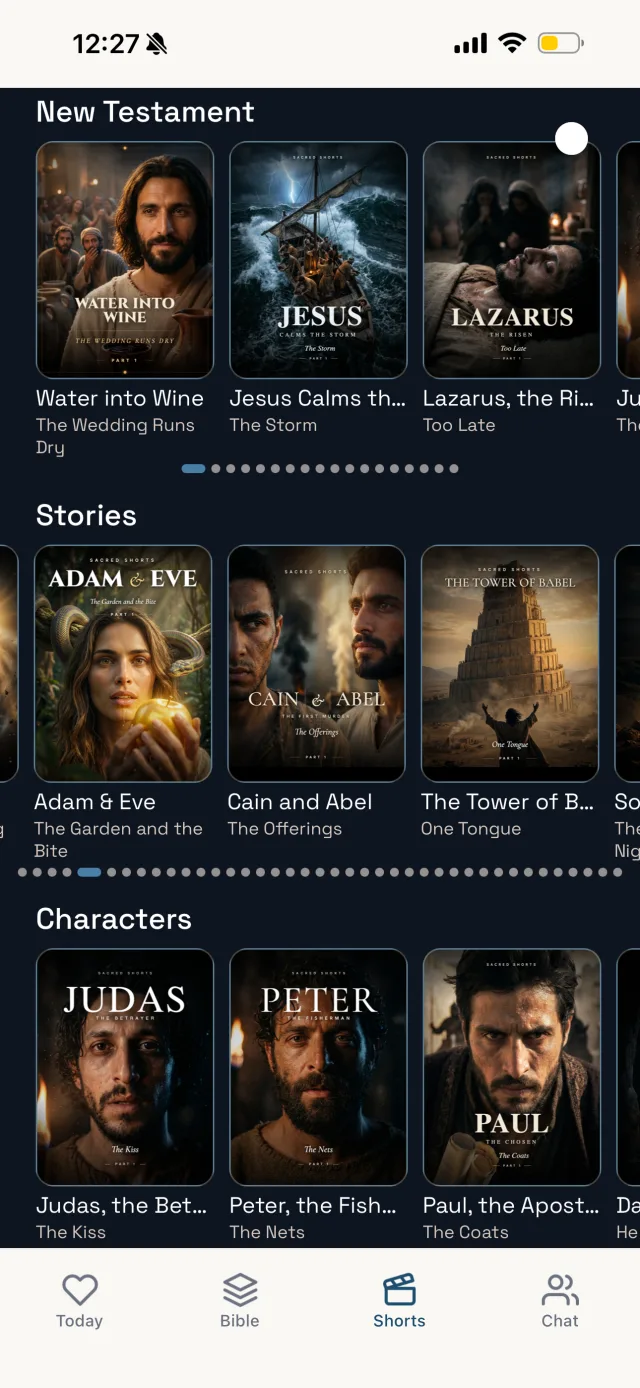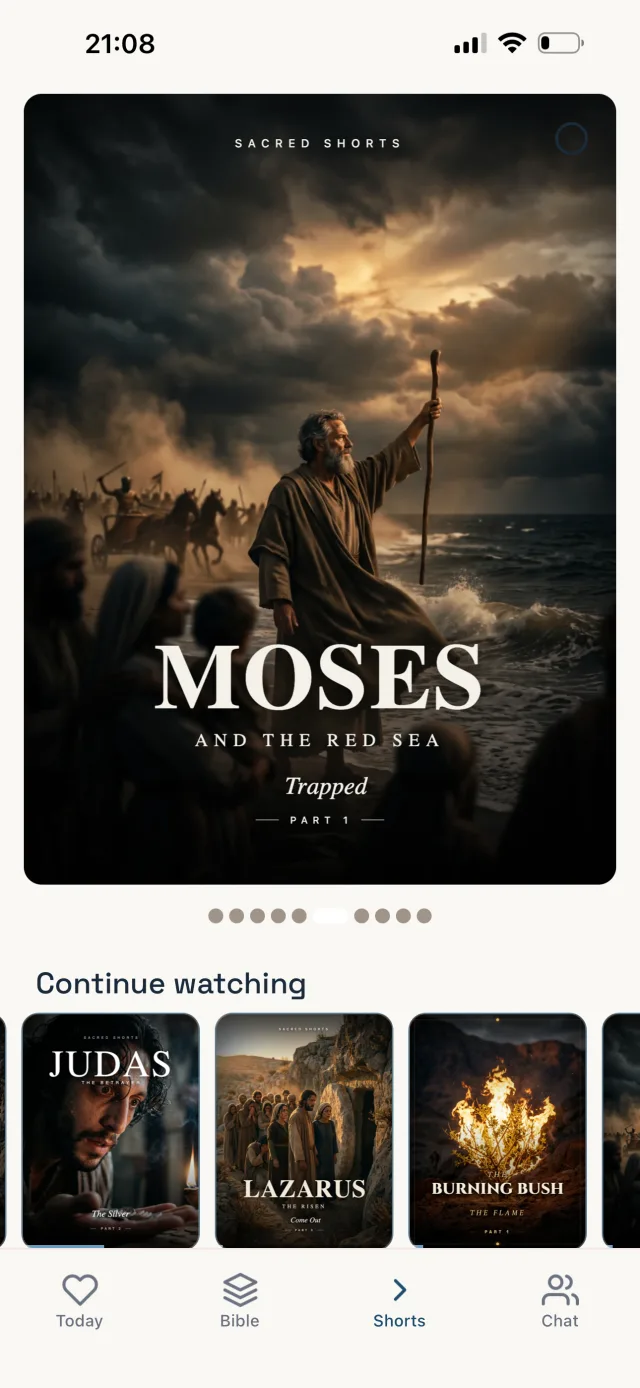
A Bible video can make Scripture feel near. A prophet’s silence can feel heavy. A road can feel long. A crowded room, a wilderness night, a boat in the storm, or a table shared with sinners can become easier to picture. That is one reason cinematic Bible storytelling can be powerful: it gives attention a place to land. But whenever Scripture is adapted into video, a deeper question matters more than production quality: is this faithful to the biblical text?
Faithfulness does not mean a video can show every detail, answer every question, or remove every interpretive decision. No adaptation can do that. A video must choose faces, settings, pace, music, camera angle, emotional emphasis, and sometimes implied dialogue. Those choices can help viewers imagine and enter the biblical story, but they do not replace Scripture. The Bible remains the source, the measure, and the place to which the viewer should return.
A faithful Bible video serves the text instead of using the text as decoration. It invites the viewer to watch, then read, then reflect, then pray. That simple rhythm keeps the cinematic experience in its proper place. Video may awaken curiosity and imagination. Scripture gives the words, context, meaning, correction, comfort, and authority.
Faithfulness begins with the actual passage
The first test is simple: can the viewer find the scene in Scripture? A faithful video should be connected clearly to a biblical passage, not merely inspired by a vague spiritual mood. If the story is David sparing Saul, the viewer should be able to read 1 Samuel and see the central shape of the scene. If the story is Jesus calming the storm, the Gospels should be the anchor. If the story is Paul on the road to Damascus, Acts should guide the telling.
This does not mean every line on screen must be a direct quote. Scripture often gives a compact account, and a visual retelling may need silence, movement, setting, or transitions to make the scene understandable. But the core events should not be reversed, the moral weight should not be distorted, and the biblical emphasis should not be replaced by a message the passage does not carry.
A good habit is to ask: what is clearly in the text, what is a reasonable visual inference, and what is creative addition? A crowd around Jesus may be a reasonable inference in many Gospel scenes. A specific private conversation not found in the passage should be treated more carefully. A faithful video helps the viewer distinguish between Scripture and imagination rather than blending them as if they have the same authority.
Faithfulness respects context
A Bible scene rarely stands alone. It belongs inside a chapter, a book, a covenant story, and the whole witness of Scripture. A faithful video does not flatten that context into a generic inspirational moment. Joseph forgiving his brothers is not only a moving family reunion; it belongs to a long story of betrayal, suffering, providence, and preservation. The Last Supper is not only an intimate meal; it sits inside Passover, covenant language, betrayal, and the path to the cross. The Sermon on the Mount is not only ethical advice; it is Jesus teaching with kingdom authority.
Context also protects application. If a video presents a biblical character as a simple model to copy, the viewer may miss the deeper revelation of God. David is not only courage. Moses is not only leadership. Esther is not only bravery. Peter is not only failure or recovery. Scripture shows real people inside God’s larger work. Faithful video storytelling keeps that bigger frame visible.
Some passages also touch areas where Christian traditions explain details differently. Sacraments, images, spiritual gifts, prophecy, church authority, and end-times themes can carry denominational differences. A faithful presentation does not pretend those differences do not exist. It can focus on what the text clearly says while encouraging viewers to read carefully, listen humbly, and seek wise teaching in their own church tradition.

The Bible has never felt like this
Watch this story come to life as a cinematic series in Sacred.
4.8on the App Store
Faithfulness avoids spectacle for its own sake
Cinematic storytelling naturally uses emotion. Light, music, silence, faces, and pacing can help viewers feel a scene. That can be good. The danger comes when spectacle takes over and the biblical meaning becomes secondary. A faithful Bible video should not make violence feel entertaining, suffering feel cheap, miracles feel like special effects detached from Christ, or prayer feel like a technique that guarantees results.
The goal is reverence, not sensationalism. A dramatic scene should deepen attention to the passage, not distract from it. When Jesus heals, the point is not only wonder; it is the compassion and authority of Christ. When Elijah confronts the prophets of Baal, the point is not merely fire; it is the living God calling his people back. When Daniel remains faithful under pressure, the point is not only danger; it is trust in God amid exile.
This is especially important for viewers who are new to the Bible. A video may be their first doorway into a story. If the doorway is loud but inaccurate, it can shape expectations in the wrong direction. If it is beautiful and humble, it can awaken a desire to read the passage for themselves.
Faithfulness leads back to reading
One of the clearest signs of a faithful Bible video is what it makes you want to do next. Does it make you want only the next episode, or does it make you want to open the Bible? A faithful video can be engaging and still point beyond itself. It says, in effect, “Come and see the text.”
The rhythm is practical: watch → read → reflect → pray. Watch the scene with attention. Read the passage slowly. Reflect on what the text reveals about God, humanity, sin, grace, obedience, hope, or mission. Then pray in response. That rhythm honors the gift of visual imagination while keeping Scripture central.
Reading after watching also corrects assumptions. You may discover that the video emphasized one character while the passage emphasizes another. You may notice words Jesus actually spoke that were not included. You may see a connection to earlier Scripture. You may realize that your emotional response needs to be tested by the text. This is not a failure of video; it is how video becomes a servant of Scripture.
Faithfulness is humble about what it cannot show
Some biblical truths cannot be captured fully on screen. Holiness, covenant, repentance, grace, judgment, mercy, incarnation, resurrection, and the mystery of God’s presence are not merely visual ideas. A faithful Bible video can suggest, dramatize, and invite attention, but it should remain humble about its limits.
That humility matters because Scripture is not only material for storytelling. Christians receive it as God’s Word, read in worship, prayer, study, family life, and discipleship. A video can support those practices, but it cannot become their replacement. It cannot bear the full weight of doctrine, pastoral care, or spiritual authority. For serious theological or pastoral questions, believers should return to Scripture and seek wise guidance from trusted Christian leaders.
Sacred is built around that posture. Sacred Shorts helps you experience cinematic stories of faith in short form. The Study Bible helps you return to the passage. Daily devotionals, Guided Prayer, and AI Bible Chat can support reflection and questions. Reading Scripture is always free in Sacred. The aim is not to replace the Bible with video, but to help the screen become a doorway back to the Word.
FAQ
How can I tell whether a Bible video is faithful?
Ask whether the main events, meaning, and tone match the biblical passage. Then read the passage yourself and notice what the video added, omitted, or emphasized.
Do creative details make a Bible video unfaithful?
Not automatically. Settings, silence, pacing, and implied emotions can help a scene make sense visually. They become a problem when they distort the text or carry more authority than Scripture.
What should I do after watching a Bible video?
Use the rhythm watch → read → reflect → pray. Let the video awaken attention, then return to Scripture for context, meaning, and faithful response.
 Sacred Shorts
Watch the Bible like never before
Cinematic Bible stories, a complete Study Bible, daily devotionals, and guided prayer. New episodes every week.