If you love the ease of short vertical video but wish it left you fuller instead of foggier, there is a Christian alternative: apps that use the same few-minute format to tell Bible stories, spark reflection, and point your attention toward God. The goal is not to shame the scroll but to redirect it, because the minutes you already spend watching are minutes that could be forming your faith. Here is a thoughtful look at redeeming short-form video, and where to start.
Quick answer: key takeaways
- Short-form video is a format, not a moral category; the question is what it fills your mind with.
- Philippians 4:8 gives the filter: whatever is true, noble, right, pure, lovely, and admirable.
- A realistic strategy is substitution, not abstinence: swap one scrolling session a day for faith-first content.
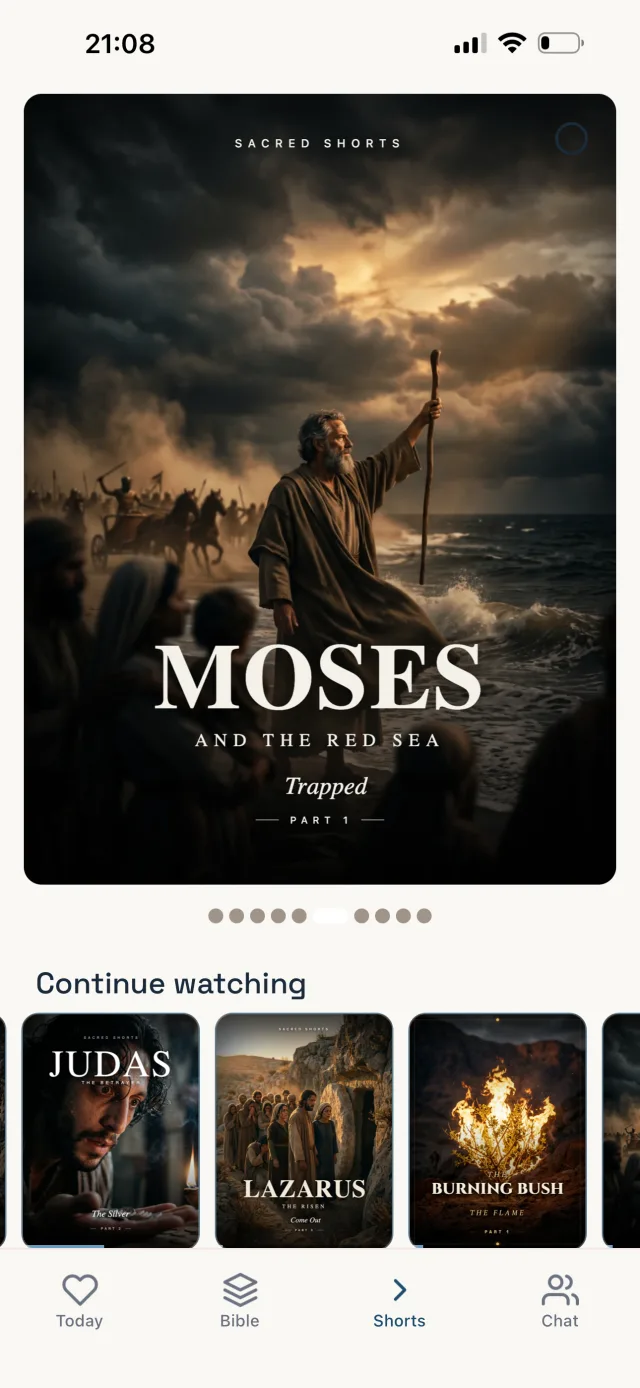
- Sacred Shorts offers cinematic Bible stories in vertical episodes of a few minutes, available on iOS and Android (subscription), with new series weekly.
- Small inputs compound: a few minutes of Scripture daily shapes you more than an occasional long session.
Why do we scroll in the first place?
Be honest about the appeal before judging it. Short video is frictionless: no decisions, no commitment, instant novelty. After a draining day, it asks nothing of you, and that is precisely why it works. There is no need for fear-mongering here; enjoying a funny clip is not a spiritual failure, and social media also carries testimony, worship, and genuine connection for millions of believers.
The problem is subtler. Feeds are engineered to keep you watching whatever keeps you watching, which means your attention gets steered by an algorithm's goals rather than your own. Most of us have closed an app after twenty minutes unable to name a single thing we saw. Scripture has a category for that experience: sowing and reaping.
"Do not be deceived: God cannot be mocked. A man reaps what he sows. Whoever sows to please their flesh, from the flesh will reap destruction; whoever sows to please the Spirit, from the Spirit will reap eternal life." — Galatians 6:7-8 (NIV)
The scroll is a field. The question is what you are planting in it. Twenty daily minutes of anything, repeated for a year, is more than a hundred hours of formation; the only real choice is who directs it. Naming that honestly, without panic and without denial, is the first step toward a feed that serves you instead of the other way around.
What does the Bible say about what we watch?
The Bible predates smartphones by a couple of millennia, but it speaks directly to attention, because attention has always been the doorway to the heart. Paul's instruction to the Philippians reads like it was written for the feed era:
"Finally, brothers and sisters, whatever is true, whatever is noble, whatever is right, whatever is pure, whatever is lovely, whatever is admirable, if anything is excellent or praiseworthy, think about such things." — Philippians 4:8 (NIV)
Notice what this is not: it is not a command to think about nothing, or to fear everything. It is a positive filter. Paul assumes your mind will dwell on something and tells you to choose material worthy of the dwelling. Likewise, "set your minds on things above, not on earthly things" (Colossians 3:2) is less about escaping the world than about ordering your inputs so that the deepest ones win.
Applied to short video, the question shifts from "how do I quit?" to "what would it look like for my feed to pass the Philippians 4:8 test?"

The Bible has never felt like this
Watch this story come to life as a cinematic series in Sacred.
4.8on the App Store
Substitution beats willpower: the swap strategy
Digital habits research and pastoral experience agree on one point: cold-turkey rarely lasts, because the habit loop (tired, reach for phone, watch something) remains intact. What works is keeping the loop and changing the content. You will still reach for your phone at the bus stop; the win is what opens when you do.
Practical swaps that keep the same rhythm:
- Replace one session, not all of them. Make the first scroll of the morning or the last of the night a faith-first one.
- Move the apps. Put a Bible-story app where your default scrolling app used to sit on your home screen; friction and placement decide more than intentions do.
- Watch complete stories instead of infinite feeds. A series with episodes and endings gives your brain a natural stopping point that an endless feed deliberately removes.
- Pair watching with reading. After a short episode about Moses, read the chapter it came from; our guide to the Exodus from Egypt is a good companion.
This is the same wisdom behind every spiritual discipline: you do not empty a habit, you fill it with something better.
A word of caution in the other direction, too: guard against turning this into legalism. The goal is not a scoreboard where Bible videos earn points and everything else loses them. Plenty of what you enjoy online is harmless, funny, or genuinely good, and Christian liberty is real. The swap strategy is not about purging your phone; it is about making sure the loudest daily voice in your attention is one you actually chose. If a week of swaps leaves you feeling freer and fuller rather than restricted, you will not need rules to keep going.
What does a faith-first short video app look like?
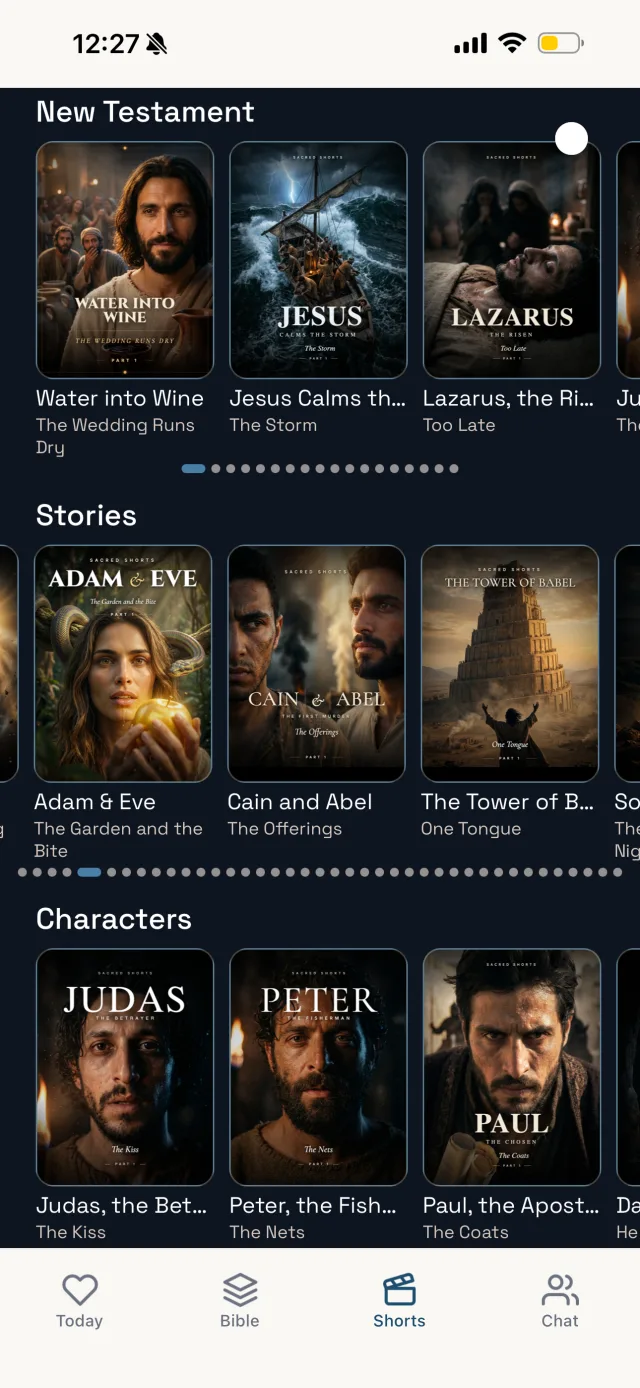
Sacred Shorts was built for exactly this swap. It takes the format people already love, short vertical episodes of a few minutes, and fills it with cinematic Bible-story series: Moses and the Red Sea, Cain and Abel, Judas, Lazarus, The Burning Bush, The Plagues, Creation, and Adam and Eve, with new series added weekly. Instead of an infinite algorithmic feed, you get stories with beginnings and endings, drawn from Scripture.
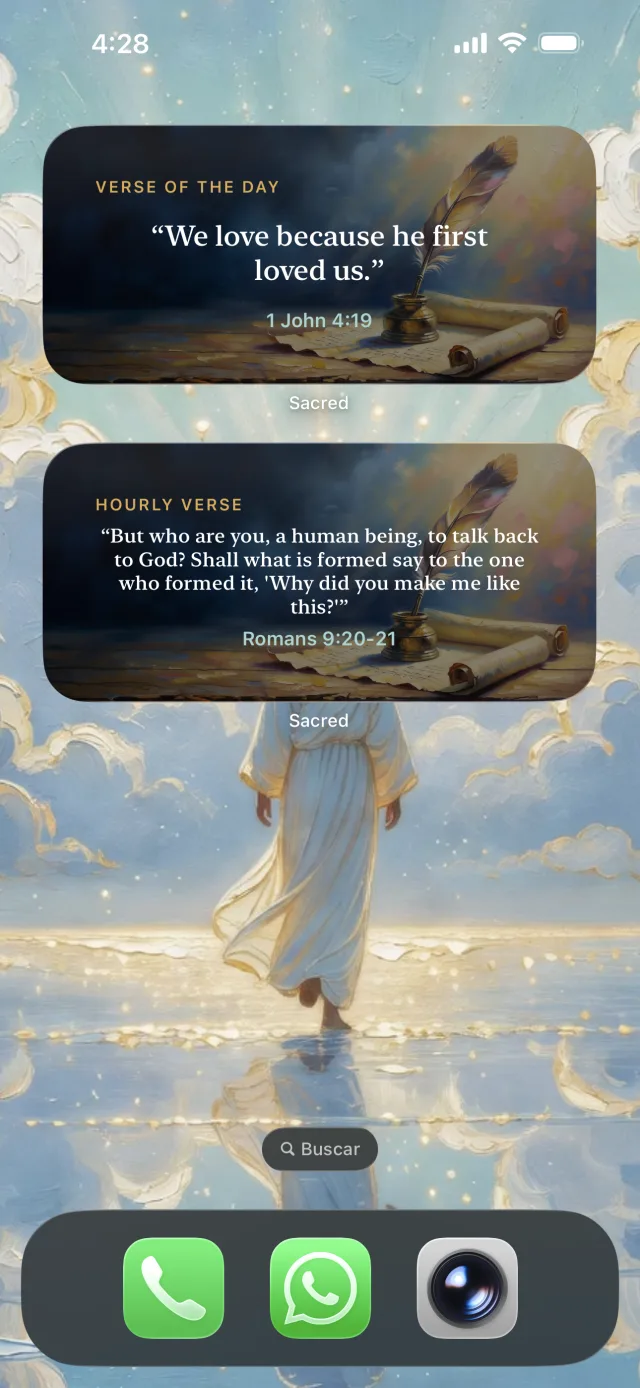
The app is a subscription app for iOS and Android, holds a 4.8-star rating on the App Store, and goes beyond video: it includes a full Bible reader with multiple translations, AI-powered Bible Chat for questions, and daily devotionals, in English, Spanish, and Portuguese. Think of it as cinematic, series-style Bible stories: series worth finishing rather than a feed designed never to end.
If your spare minutes are the issue, our guide to short Bible videos for busy people offers more ways to use them, and if you are choosing between formats altogether, see Bible series vs. Bible movies.
Will a few minutes a day actually change anything?
Yes, because formation is cumulative in both directions. The same mechanism that lets twenty daily minutes of random clips shape your appetites lets ten daily minutes of Scripture shape your soul. Consider what regular exposure to Bible stories does over a year: the accounts of Noah and the flood, the fall of Adam and Eve, the Exodus, and the Gospels stop being vaguely remembered plots and become the furniture of your mind, the stories you think with when life gets hard.
Jesus described the kingdom as a mustard seed, the smallest input producing the largest tree. Small and daily beats big and rare. That is not a scrolling hack; it is how discipleship has always worked.
It also helps to notice what the swap does to the rest of your day. People who begin a morning with even a few minutes of Scripture consistently report that it changes what they notice afterward: a verse resurfaces in a hard meeting, a story reframes a conflict at home. Psychologists call this priming; the psalmist called it meditating on the law day and night, and described the person who does it as a tree planted by streams of water (Psalm 1:2-3). The point of a faith-first feed is not the minutes themselves but what those minutes do to all the other ones.
Your next step: run a seven-day swap
Try this for one week: each day, replace a single scrolling session with one complete Bible-story episode and thirty seconds of reflection on what you watched. Do not delete anything, do not announce a fast, just make one swap a day. At the end of the week, ask the Philippians 4:8 question about both feeds: which one gave you things that were true, lovely, and worth dwelling on? Then decide what your defaults should be. For more practical guides on faith in daily habits, browse our Christian Living category.
 Sacred Shorts
Watch the Bible like never before
Cinematic Bible stories, a complete Study Bible, daily devotionals, and guided prayer. New episodes every week.
Frequently asked questions
Yes. Faith-first short video apps offer the same quick, vertical format with Scripture-centered content. Sacred Shorts, for example, tells cinematic Bible stories in episodes of a few minutes on iOS and Android, alongside a Bible reader and daily devotionals.
The format itself is neutral; what matters is what fills it. Philippians 4:8 calls believers to dwell on whatever is true, noble, and praiseworthy, and short videos can carry those things just as easily as anything else.
Start by replacing one scrolling session a day with intentional content: a short Bible story, a psalm, or a devotional video. Changing what you reach for is usually more sustainable than trying to quit reaching altogether.
Sacred Shorts offers cinematic Bible-story series in short vertical episodes, including Moses and the Red Sea, Cain and Abel, Judas, Lazarus, The Burning Bush, and Creation, with new series added weekly. The app is a subscription app for iOS and Android, available in English, Spanish, and Portuguese.