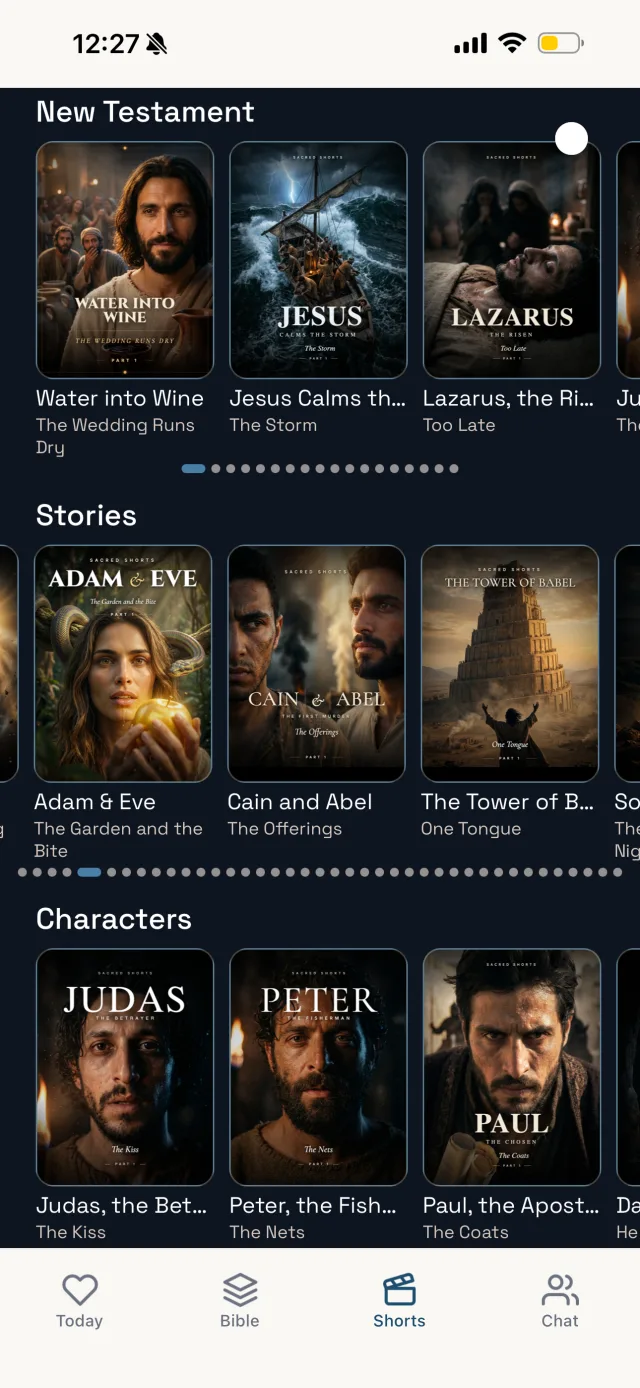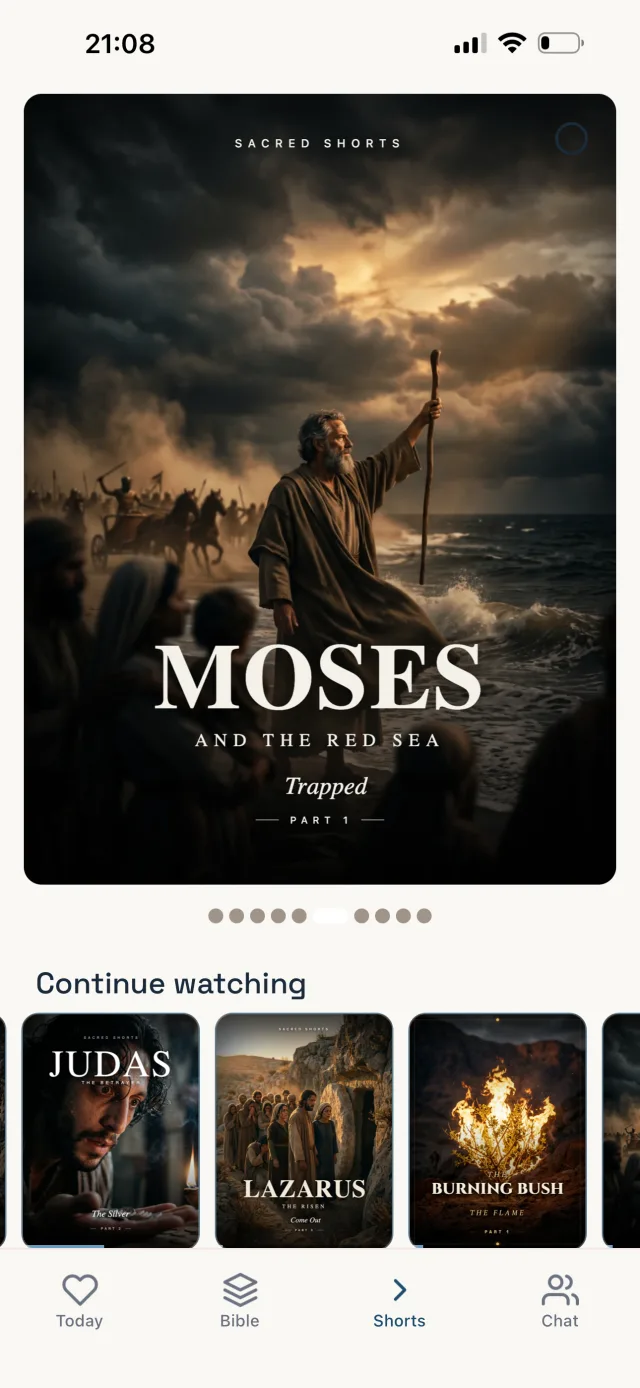
A Bible scene can stay on the screen, or it can become a doorway into prayer. When we watch Moses hesitate before God’s call, Hannah pour out her grief, David refuse revenge, Mary receive a word she cannot fully understand, or Peter step out into a storm, we are not only looking at ancient people from a distance. We are being invited to return to Scripture with attention and then respond honestly before God.
This is where Bible videos can serve a daily prayer life. A cinematic scene can help you imagine and enter the biblical story: the room, the road, the silence, the fear, the mercy, the surprise. But the video does not replace Scripture. It is not the final authority, and it should not become the whole devotional moment. The healthier rhythm is simple and repeatable: watch → read → reflect → pray.
Start with one clear biblical scene
Begin small. Choose one scene rather than an entire season of content. Prayer becomes harder when our attention is scattered across too many images, themes, and emotions. A short biblical moment gives the heart something concrete to hold: Abraham hearing a promise, Israel standing before the sea, Ruth choosing faithfulness, Elijah listening for God’s voice, Jesus touching the unclean, the father welcoming the prodigal son, or Paul blinded on the road to Damascus.
Ask one simple question after watching: “What did this scene awaken in me that I should bring back to Scripture?” Maybe it awakened a question, a longing, a conviction, a memory, or gratitude. Do not treat that first reaction as the conclusion. Treat it as a starting point.
Read the passage before you pray
The next step is to read the biblical passage itself. If the scene is based on a few verses, read the verses before and after it. If it comes from a larger story, read enough context to understand what is happening. Prayer shaped by Scripture needs Scripture, not only a moving image.
When passages touch doctrine, sacraments, spiritual gifts, prophecy, or the end of all things, humility matters. Christians across traditions often honor the same Scriptures while understanding certain details differently. A video can help us slow down, but it should not settle every interpretive question. Read carefully, compare Scripture with Scripture, and when needed seek trusted guidance within your own church tradition.
Reflect with Scripture-shaped questions
Before you turn the scene into prayer, pause with a few questions. What does this passage reveal about God? What does it reveal about human need? Is there a promise to trust, a command to obey, a warning to heed, a sin to confess, a comfort to receive, or an example to consider? What part of the scene was visualized, and what part of the text did the video not show?
These questions keep prayer from becoming vague. Instead of saying only, “That was powerful,” you can name what was powerful. Maybe the passage shows God’s patience with a reluctant servant. Maybe it reveals Christ’s compassion toward someone others avoided. Maybe it exposes the cost of bitterness or the beauty of repentance. Reflection gives prayer its direction.

The Bible has never felt like this
Watch this story come to life as a cinematic series in Sacred.
4.8on the App Store
Turn what you noticed into prayer
Now pray directly from the passage. Use the language of the story when you can. If Moses is afraid, pray about fear and calling. If Hannah is grieving, pray about grief and honest dependence. If David refuses revenge, pray about restraint and mercy. If Jesus welcomes sinners, pray about confession and grace. If the early church is courageous, pray for faithful witness without pretending courage is easy.
A helpful pattern is: name God, name the truth, name your need, and ask for grace. “Lord, you are patient with people who feel weak. I see that in this story. I often feel unready for what obedience requires. Give me courage to take the next faithful step.” That is enough. Personal prayer does not need religious decoration. It needs honesty shaped by the Word.
You can also pray in four movements. First, worship: what does this passage show about God’s character? Second, confession: what does it reveal in you? Third, request: what grace do you need? Fourth, surrender: what step of obedience, trust, forgiveness, or patience is before you? This pattern keeps prayer rooted and practical.
Keep imagination under the authority of Scripture
Christian prayer has always made room for imagination in careful ways. We picture the shepherd of Psalm 23, the father running toward the prodigal son, the storm on Galilee, or the table where Jesus breaks bread with his disciples. Visual attention can help the heart slow down. But imagination is healthiest when it bows before Scripture.
This posture protects prayer from becoming self-centered fantasy. We are not using the Bible merely as a mirror for our feelings. We are coming before the living God through the witness of Scripture. The scene opens the door. The text gives the room its shape. Prayer is our response.
A simple routine: watch → read → reflect → pray
Try this in ten to fifteen minutes. Watch one short Bible scene with attention. Read the related passage slowly, including context. Reflect with one or two questions: what does this show about God, and how should I respond? Then pray one honest prayer in your own words. If you have more time, write a sentence of gratitude, confession, or obedience afterward.
This routine works for personal devotion, family prayer, or a small group. With children or new Bible readers, keep the questions simple and return often to the text: “What happened in the passage?” “What did God do?” “What can we pray?” In groups, allow different people to notice different things while keeping the conversation anchored in Scripture.
Sacred is built to support this kind of Scripture-first rhythm. Sacred Shorts can help you watch a cinematic biblical scene, the Study Bible keeps the passage close, Daily Devotionals can guide reflection, Guided Prayer can help you respond, and AI Bible Chat can support questions about verses, context, and meaning. Reading Scripture is always free in Sacred, because the video is a doorway, not the destination.
If one scene stays with you today, do not leave it only as an impression. Return to the passage. Let the Word clarify what you saw. Then pray with honesty: “Lord, meet me here, teach me through your Word, and shape my response.”
FAQ
Can I use a Bible video as part of my prayer time?
Yes. A Bible video can help you imagine and enter the biblical story, but it should lead you back to Scripture. Use it as the first step in the rhythm watch → read → reflect → pray.
How do I turn a Bible story into a personal prayer?
Read the passage, notice what it reveals about God and human need, then pray honestly from that truth. Name what you saw in Scripture, name your need, and ask God for grace to respond.
Do Bible videos replace guided prayer or Bible reading?
No. Bible videos do not replace Scripture, and they are not a substitute for prayer. They can support attention and reflection, while the biblical text remains the anchor and prayer becomes your response to God.
 Sacred Shorts
Watch the Bible like never before
Cinematic Bible stories, a complete Study Bible, daily devotionals, and guided prayer. New episodes every week.