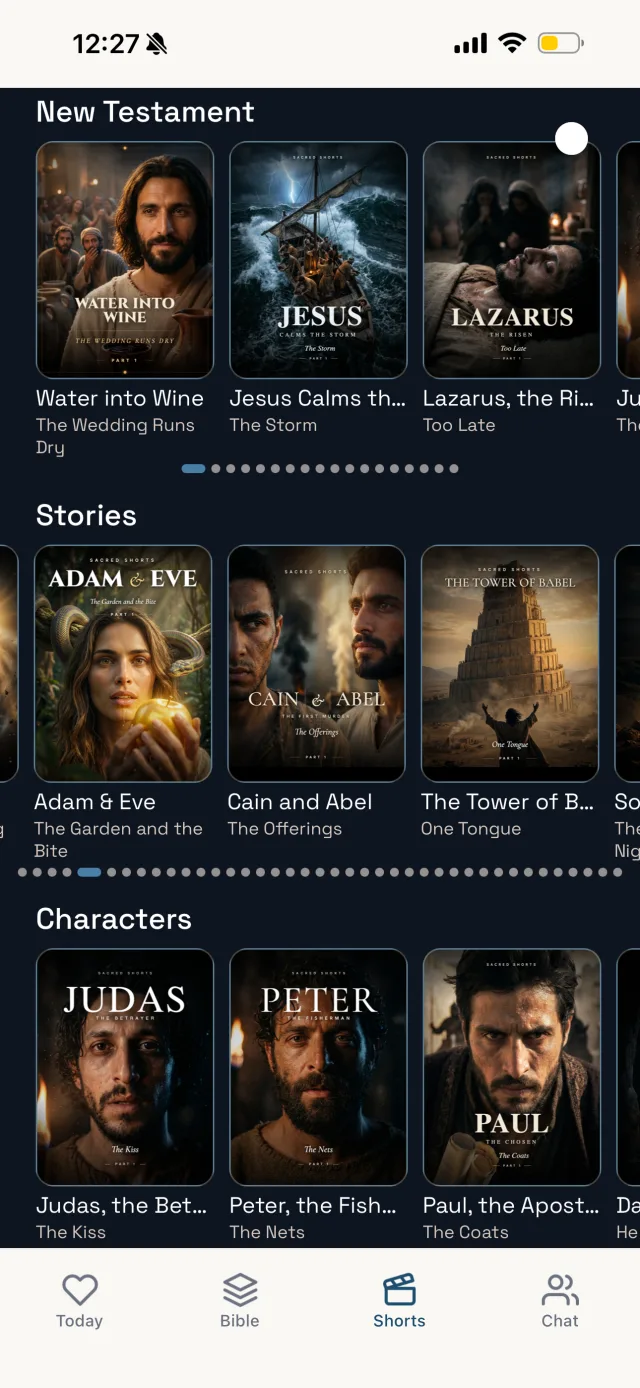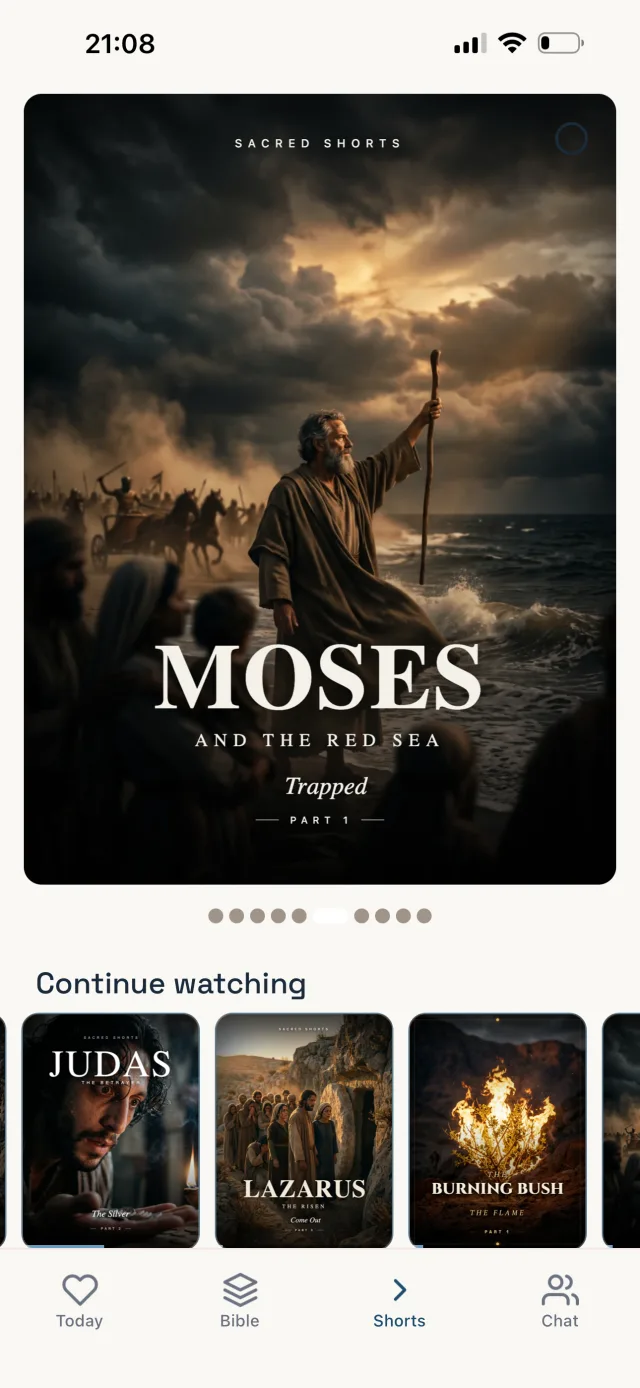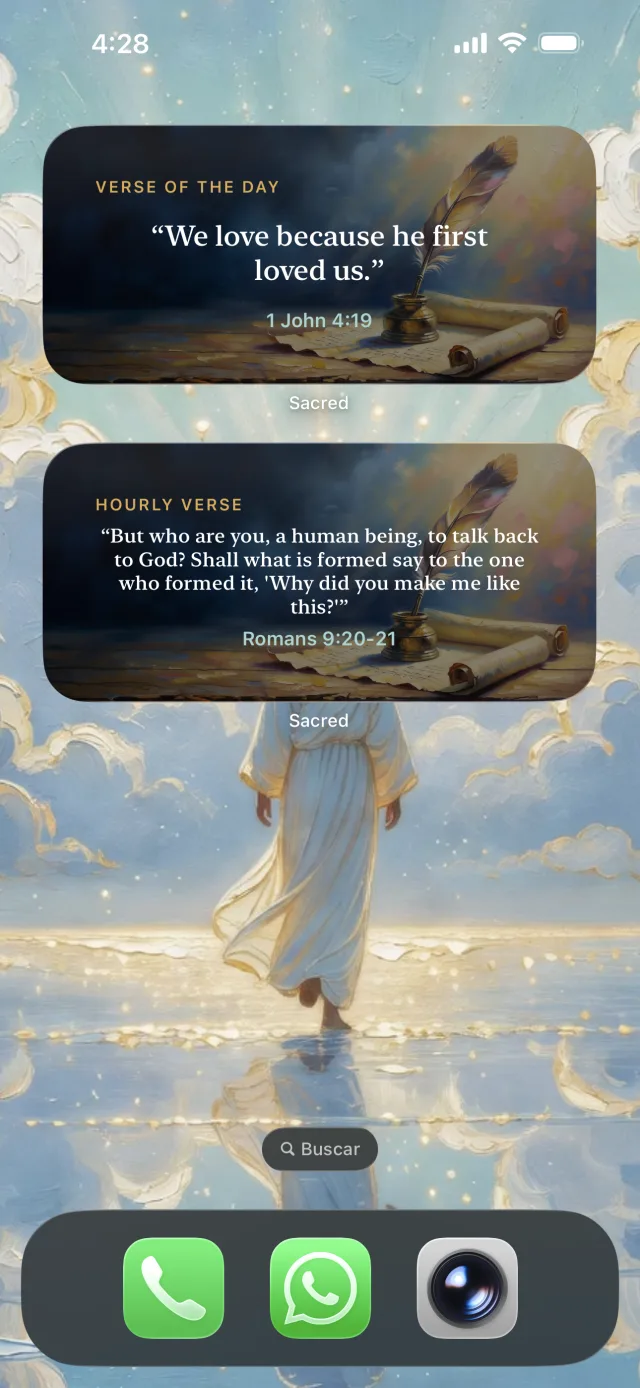
Returning to the Bible can feel strangely difficult. You may believe Scripture is true and still find yourself opening it less than you want. You may not know where to begin, especially if the names, places, laws, prophets, parables, and letters feel far away from ordinary life. That is where Bible videos can become a gentle doorway back.
A well-made Bible video can help you picture the road, the room, the wilderness, the sea, the crowd, or the silence before a prayer. It can slow your attention long enough for a passage to feel near. But the doorway is not the destination. Video can help you imagine and enter the biblical story, but it does not replace Scripture. The Bible remains the source, the place where meaning is tested, and the voice that must lead the whole experience.
The goal is not to become a passive viewer of holy scenes. The goal is to return to the Word with fresh attention. A simple rhythm can help: watch → read → reflect → pray. Watch a short scene. Read the passage itself. Reflect on what the text reveals. Pray in response. That rhythm keeps the image in service of Scripture, not the other way around.
Start without shame
Many people avoid the Bible because they feel they should already be better at reading it. Shame whispers that if you were serious, you would already have a plan, a journal, a highlighter system, and a long streak. But Scripture often meets people in the middle of interruption, failure, confusion, and return. Peter is restored after denial. Thomas is invited after doubt. The disciples on the road to Emmaus are taught in disappointment.
So begin small. Choose one biblical scene that draws your attention: Jesus calming the storm, Moses at the burning bush, Ruth in the field, David refusing revenge, the prodigal son coming home. Let the video make the setting concrete. Then open the passage and read it slowly. If you only read ten verses with honesty, that is still a real return.
Do not use video to avoid the text. Use it to lower the first barrier. When the scene has your attention, let Scripture speak more deeply than the scene can.
Choose stories that invite reentry
Some parts of the Bible are easier places to reenter than others. The Gospels are often a wise beginning because they bring you directly to the words and actions of Jesus. Mark moves quickly and can be read in short sections. Luke gives careful attention to outsiders, meals, prayer, and mercy. John invites slower reflection on who Jesus is. If you are returning after a long absence, choose one Gospel and stay with it for several days.
Old Testament stories can also help. Genesis introduces creation, promise, family conflict, failure, and providence. Exodus shows God hearing oppression and forming a people. The Psalms give words for prayer when your own words feel thin. These texts do not need to be mastered in one sitting. They need to be received patiently.
A Bible video can highlight the drama of a moment, but Scripture gives the wider context. Abraham is not only a symbol of courage; he is part of a covenant story. David is not only a brave shepherd; he is also a flawed king. Esther is not only courageous; her story asks us to notice providence, risk, and hidden faithfulness. Let the Bible complicate and deepen what the video helps you see.
Use the watch → read → reflect → pray rhythm
The simplest way to return is to repeat one pattern until it becomes familiar.
First, watch. Keep it short. Let the scene gather your attention, not consume the whole time you set aside. Notice what the scene makes you feel, but hold that feeling lightly. Every visual adaptation makes choices about faces, tone, pacing, and emphasis.
Second, read. Open the passage in the Bible. Read before and after the moment if you can. Ask, “What does the text actually say?” Notice repeated words, commands, questions, promises, and responses. If a detail in the video is not in the passage, treat it as imagination, not as doctrine.
Third, reflect. Choose one question: What does this reveal about God? What does it reveal about human need? Where do I see faith, fear, repentance, mercy, or obedience? What surprised me? Reflection is not the same as forcing a lesson. It is patient attention before the text.
Fourth, pray. Speak plainly. You can pray a verse back to God, confess what the passage exposes, give thanks for what it reveals, or ask for grace to take one faithful step. In many Christian traditions, Scripture and prayer have always belonged together. Your own church tradition may shape how you pray, but every believer can begin with honest words before God.

The Bible has never felt like this
Watch this story come to life as a cinematic series in Sacred.
4.8on the App Store
Let questions become invitations, not excuses
Returning to the Bible often raises questions. Why did God act this way? How does this story connect to Jesus? What did a phrase mean in its original context? Why do different Christian traditions read certain passages differently? Questions are not a failure. They can become invitations to study.
This is where a Study Bible, a pastor, a mature believer, or a careful Bible study tool can help. Sacred includes AI Bible Chat as a study aid for questions about verses, context, and meaning, but it should never replace Scripture, wise community, or pastoral care. A helpful answer should send you back to the text with more clarity, not make the text unnecessary.
When a passage touches on baptism, communion, church order, end times, spiritual gifts, or other areas where Christians disagree, read humbly. Notice what the passage says, learn how your tradition has understood it, and avoid pretending every faithful Christian explains every detail the same way.
Make the habit human-sized
A return to Scripture usually fails when it is built on a heroic plan. Start with ten or fifteen minutes and one natural pause: morning coffee, lunch break, after dinner, or before bed. If you miss a day, return the next day without turning failure into identity.
Bible videos can be especially helpful because they give you a starting point when your attention is tired. Instead of scrolling through random noise, you can choose a scene that opens into Scripture. But keep the order clear: the video awakens attention; the Bible leads; reflection slows you down; prayer turns attention into response.
If you use Sacred, you can pair Sacred Shorts with the free Scripture reading experience, daily devotionals, Guided Prayer, and follow-up study questions. The app is there to support the rhythm, not to replace the living practice of reading the Word.
A simple first week back
For your first week, do not try to read the whole Bible. Choose seven scenes and seven passages. Day one: Jesus calls the first disciples. Day two: the storm on the sea. Day three: the prodigal son. Day four: Psalm 23. Day five: Moses at the burning bush. Day six: the cross and resurrection. Day seven: the road to Emmaus. Each day, keep the same movement: watch → read → reflect → pray.
By the end of the week, you may not feel dramatic change, and that is okay. Scripture forms us over time. The first gift may simply be that you returned. You opened the text. You listened again. You prayed again. A Bible video helped you step toward the story, but Scripture welcomed you into something deeper.
FAQ
Can Bible videos help me return to the Bible?
Yes. Bible videos can make a passage feel concrete and approachable, especially when reading feels distant. Use them as a doorway, then read the passage itself for context and meaning.
Do Bible videos replace reading Scripture?
No. Video can help you imagine and enter the biblical story, but it does not replace Scripture. A faithful rhythm is watch → read → reflect → pray.
Where should I start if I have not read the Bible in a long time?
Start with a Gospel passage about Jesus, a psalm for prayer, or a familiar story from Genesis or Exodus. Keep the first step small and consistent rather than trying to master everything at once.
 Sacred Shorts
Watch the Bible like never before
Cinematic Bible stories, a complete Study Bible, daily devotionals, and guided prayer. New episodes every week.