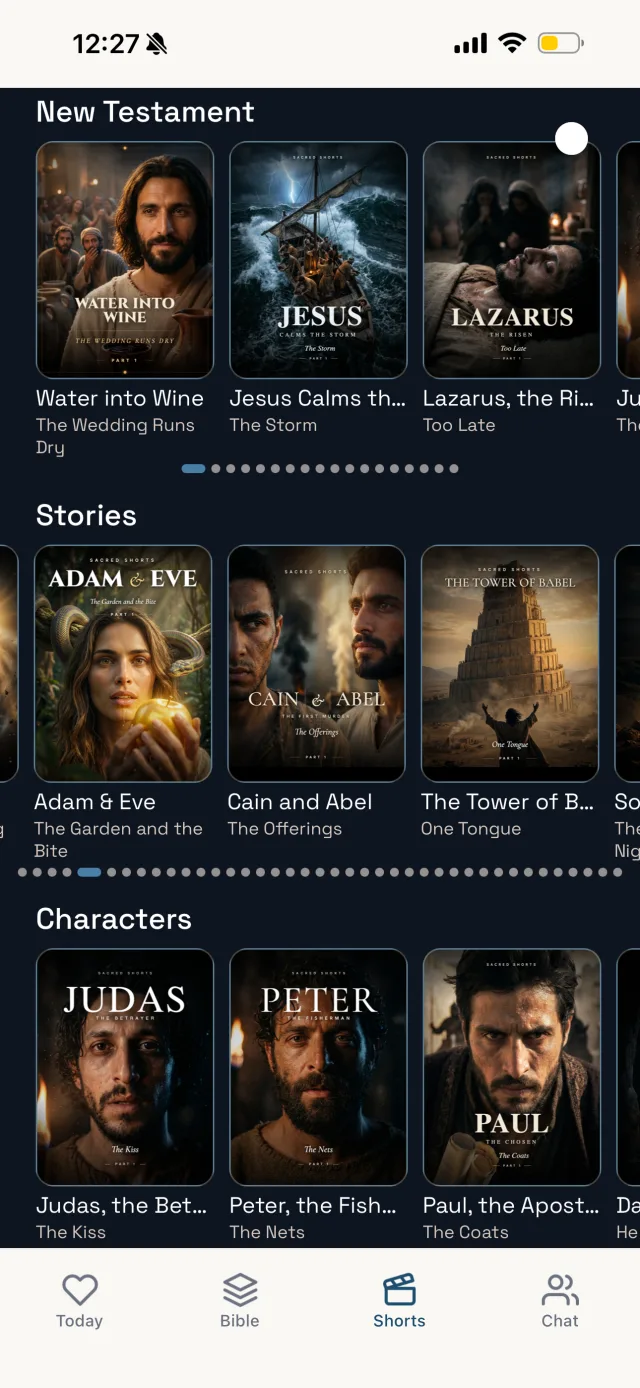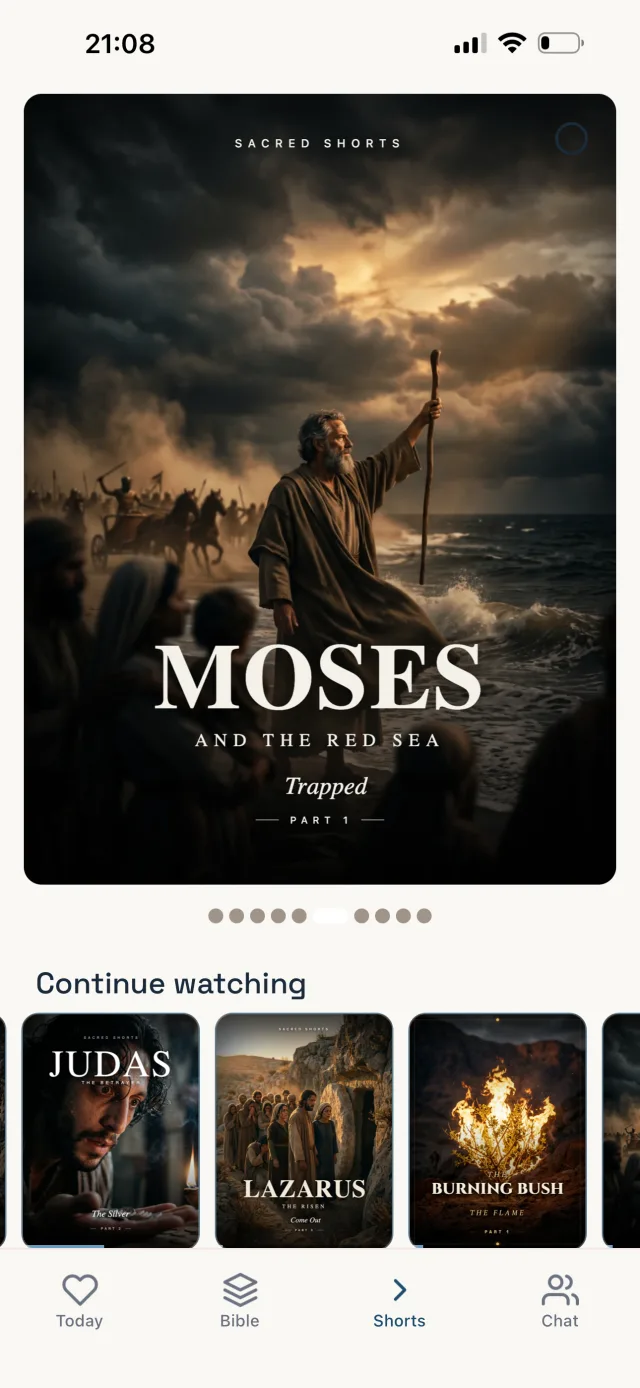
Returning to the Bible does not always begin with a long plan, a perfect schedule, or a stack of commentaries. Sometimes it begins with a small moment of attention: a scene from Genesis, a road in Galilee, a meal with Jesus, a prayer in the wilderness, a frightened disciple, a forgiving brother. A Bible video can help that moment feel close enough to enter. It can give your imagination a doorway into a passage you may have read before, forgotten, avoided, or never understood.
But the doorway is not the destination. Video can help you imagine and enter the biblical story, but it does not replace Scripture. The Bible remains the source, the authority, and the place where meaning is tested. A faithful routine uses video as an invitation: watch the scene, read the passage, reflect on what God reveals, and pray in response. This 7-day plan is designed to be simple enough to start today and deep enough to rebuild a real habit.
Before you begin: keep the rhythm simple
For the next week, do not measure success by how much you read. Measure it by whether you return to Scripture with honesty and attention. Each day has four movements: watch → read → reflect → pray. Watch a short biblical scene with your phone away from distractions if possible. Read the related passage slowly, even if it is only a chapter or a paragraph. Reflect with one question. Pray in plain words.
If you use Sacred, you can pair Sacred Shorts with the Study Bible, a short devotional, Guided Prayer, or AI Bible Chat for follow-up questions. Reading Scripture is always free in Sacred, and the goal is not to make the app the center. The goal is to help you come back to the Word with a little more focus and love.
Day 1: Creation and attention
Begin with the opening movement of Scripture: God speaks, creates, orders, blesses, and calls creation good. A cinematic scene can help you slow down before the scale and beauty of Genesis 1, but read the text after you watch. Notice the repeated phrases. Notice that God is not rushed. Notice that the world is not an accident in the biblical story; it is received as gift.
Reflect: where has my attention become scattered or cynical? Pray: Lord, teach me to see your world with gratitude again. This first day is not about solving every interpretive question around Genesis. Christians differ on details of creation interpretation. Begin with what the passage clearly invites: worship, humility, and wonder before God.
Day 2: Abraham and trust
On the second day, enter the long road of Abraham. Watch a scene that suggests leaving, waiting, promise, or obedience, then read a portion of Genesis 12, 15, or 22. Abraham’s story is not simple success. It includes faith, fear, delay, failure, promise, and God’s faithfulness. Video can help you feel the dust of the journey, but Scripture gives the covenant weight of the story.
Reflect: what promise of God do I struggle to trust while waiting? Pray without pretending your trust is stronger than it is. The Bible is honest about human weakness. That honesty is part of why returning to Scripture can feel like coming home rather than performing.
Day 3: Exodus and rescue
On day three, watch a scene from the Exodus story: the oppression of Israel, Moses before Pharaoh, the sea, or the wilderness. Then read Exodus 3, 12, 14, or 16. The visuals may make the danger and deliverance feel vivid, but let the text frame the meaning. Exodus is not only an escape story. It is a revelation of God’s name, mercy, judgment, covenant, and presence with his people.
Reflect: where do I need to remember that God’s rescue is not always instant, but his presence is not absent? Pray for courage to follow one step at a time. Avoid turning Exodus into a private motivational slogan. Let it remain the story Scripture tells: God hears, acts, and forms a people for himself.

The Bible has never felt like this
Watch this story come to life as a cinematic series in Sacred.
4.8on the App Store
Day 4: The Psalms and prayer
By the middle of the week, move from story to prayer. Watch a visual reflection connected to a psalm: lament, thanksgiving, confession, or praise. Then read Psalm 23, 27, 42, 51, or 103 aloud. The Psalms teach us that prayer does not require polished language. It can include fear, thirst, joy, repentance, silence, and trust.
Reflect: which line of the psalm gives words to what I could not say? Pray that line slowly. If your tradition sings or chants the Psalms, you may recognize this as part of a long Christian practice. If not, begin simply: let Scripture lend you words.
Day 5: Jesus and the Gospels
On day five, watch a Gospel scene: Jesus calling disciples, teaching a crowd, welcoming sinners, healing, calming a storm, or sharing a meal. Then read the related passage in Matthew, Mark, Luke, or John. The face, tone, and pacing of a video are interpretive choices, so read carefully. Ask what the Gospel writer actually emphasizes.
Reflect: what does this passage reveal about Jesus before it asks something of me? Pray in response to that revelation. Many people return to the Bible looking first for advice. The Gospels invite something deeper: to behold Christ, hear his words, and follow him.
Day 6: The cross and resurrection
On day six, approach the center of the Christian story with reverence. Watch a scene connected to the Last Supper, Gethsemane, the crucifixion, the empty tomb, or the risen Christ. Then read from Luke 22–24, John 19–20, or another Gospel account. Video can help you slow down before the sorrow and hope of Holy Week, but it cannot carry the full weight of the gospel. Scripture must lead.
Reflect: what do I see here about love, sin, forgiveness, and hope? Pray with gratitude and humility. Christians across traditions may explain certain details differently, especially around the Lord’s Supper, liturgy, and sacramental theology. Keep the text central and let your own church tradition guide deeper formation.
Day 7: Acts and a next step
End the week with movement. Watch a scene from Acts: Pentecost, Peter and John, Stephen, Philip, Saul on the road to Damascus, or the early church gathered in prayer. Then read Acts 2, 8, 9, or 16. The Bible is not only a collection of inspiring scenes. It is the story of God forming witnesses, communities, and people who live by the Spirit in the world.
Reflect: what is one faithful next step I can take this week? Pray for obedience that is quiet and real. Maybe your next step is reading one Gospel chapter a day. Maybe it is joining a Bible study, returning to church, asking a mature believer a question, or praying each morning before reaching for the news.
How Sacred can support the week
Sacred is built for this kind of rhythm. Sacred Shorts can help a biblical story feel immediate. The Study Bible helps you return to the passage. Daily devotionals can guide reflection. Guided Prayer can help you answer God with words. AI Bible Chat can help with context, while remaining a study aid rather than the final authority. The pattern stays the same: watch → read → reflect → pray.
If you miss a day, do not restart with shame. Return gently. Scripture is not a streak to impress God; it is a gift through which God teaches, corrects, comforts, and calls his people. Let video awaken attention, but let the Word lead you.
FAQ
Can Bible videos help me start reading the Bible again?
Yes, they can help by making a passage feel concrete and approachable. The key is to use the video as a doorway, then read the biblical text for context and meaning.
Do Bible videos replace daily Bible reading?
No. Video can help you imagine and enter the story, but it does not replace Scripture. A healthy rhythm is watch → read → reflect → pray.
What if I miss a day in the 7-day plan?
Continue with the next day or repeat the missed passage without guilt. The goal is a humble return to Scripture, not a perfect performance.
 Sacred Shorts
Watch the Bible like never before
Cinematic Bible stories, a complete Study Bible, daily devotionals, and guided prayer. New episodes every week.