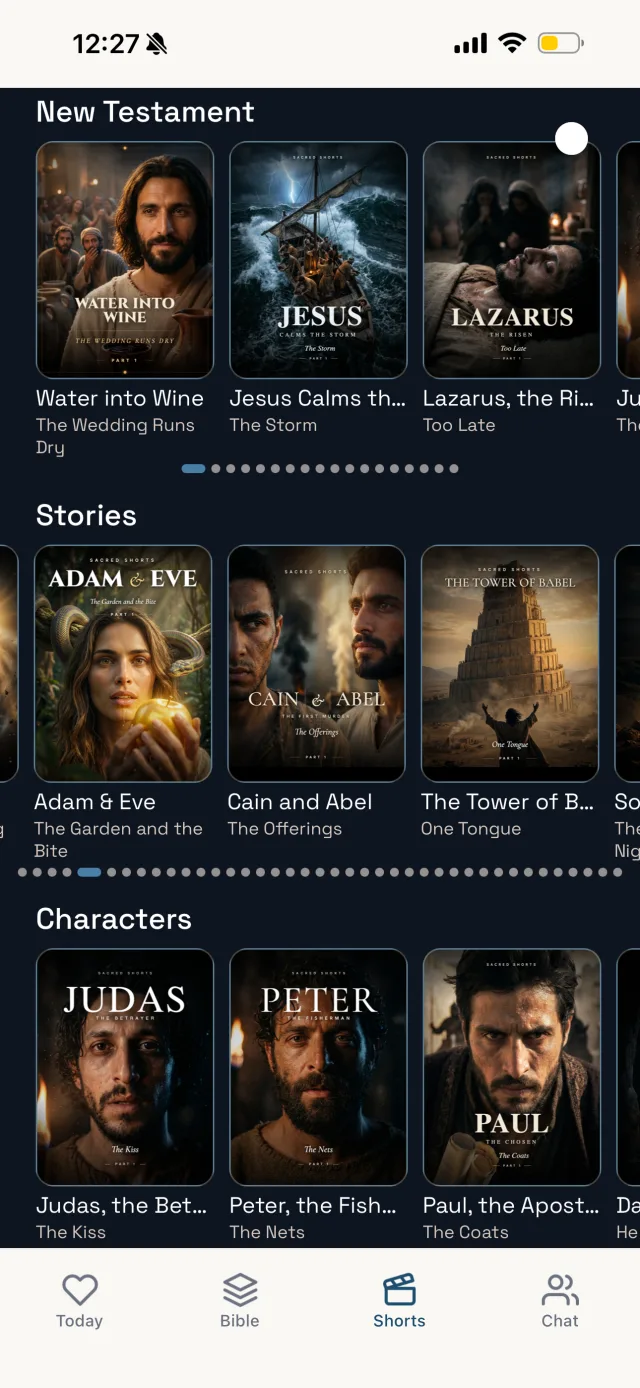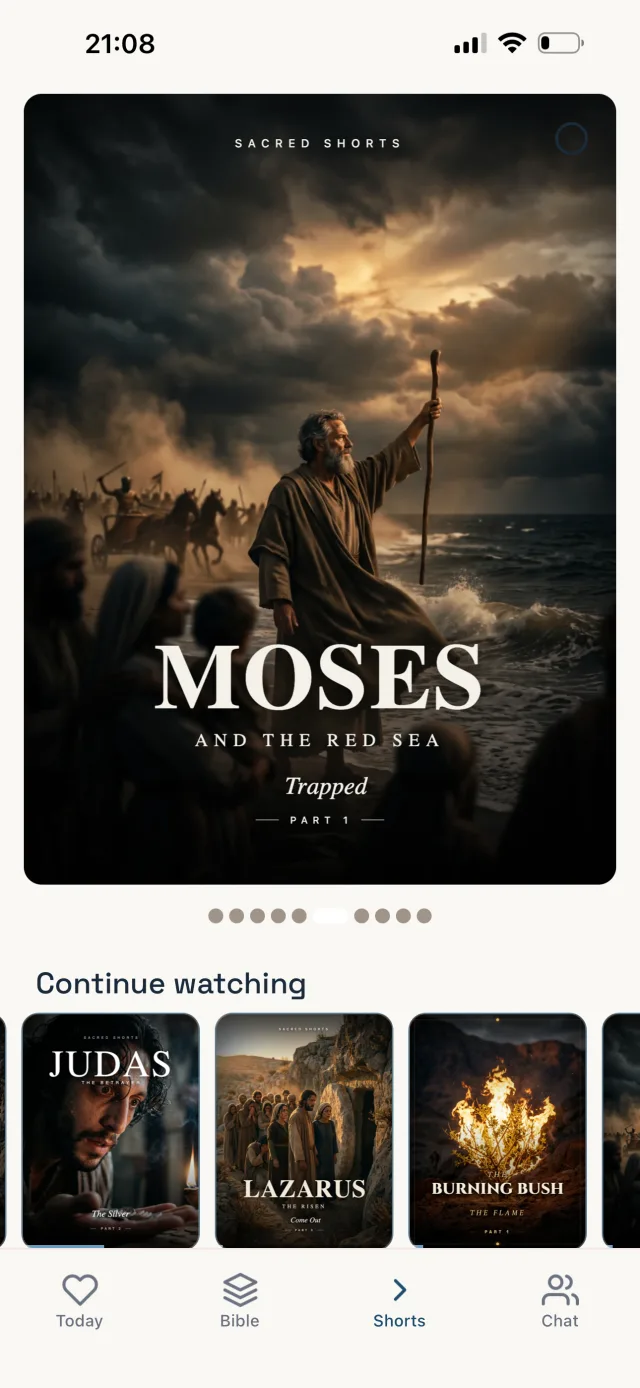
A Bible video can make a scene feel close. A desert road gains heat and dust. A frightened disciple has a face. A table, a storm, a prison, a garden, or a city gate becomes easier to imagine. That kind of visual storytelling can be a gift when it awakens attention to Scripture. But the best question after watching a Bible video is not simply, “Did I like it?” The better question is, “How can this lead me back to the Word of God?”
Every Bible video is an interpretation in visual form. It chooses a pace, a landscape, a tone of voice, a look between characters, and sometimes dialogue that is implied rather than directly written in the passage. Those choices can help you enter the biblical story with fresh attention, but they cannot replace Scripture. The Bible remains the place where the story is given, where context is tested, and where faith is formed. Video helps you imagine and enter the scene; Scripture teaches, corrects, comforts, and guides.
That is why a simple rhythm matters: watch → read → reflect → pray. Watch the scene with attention. Read the related passage for yourself. Reflect with questions that honor the text. Pray in response to what God reveals. This order keeps the screen in service to Scripture instead of allowing Scripture to become background material for the screen.
Start with observation: what did the video help me notice?
Begin with what you saw, but do not stop there. Ask, “What detail did the video help me notice?” Maybe the silence before Jesus speaks stood out. Maybe the fear of the disciples in the boat felt more real. Maybe the loneliness of Hagar in the wilderness, the shame of Peter after his denial, or the courage of Esther before the king became easier to feel. These observations can become doors into careful reading.
Then ask, “What part of this is clearly in the biblical text?” Open the passage and look. Who is named? What words are actually spoken? What happens before and after the scene? What did the video leave out because of time? What did it add for dramatic clarity? These are not suspicious questions; they are reverent questions. They treat Scripture as the source, not the afterthought.
It can also help to ask, “What emotion did the video stir in me, and where does the passage itself invite that response?” Sometimes a scene makes us feel compassion, awe, grief, repentance, courage, or hope. Those responses can be good, but they should be anchored in the text. If the emotion grows from what Scripture reveals, let it deepen your reading. If the emotion came mainly from music, pacing, or cinematography, bring it humbly back to the passage.
Ask context questions before application questions
Many people jump too quickly from a Bible scene to personal application. Application matters, but context protects it. After watching, ask, “Where does this scene sit in the larger story?” A miracle of Jesus is not only a display of power; it belongs within the revelation of the kingdom of God and the identity of Christ. An Old Testament rescue is not only an inspiring moment; it may sit within covenant, promise, judgment, exile, or hope. A scene in Acts is not only a model of bravery; it belongs to the Spirit’s work in the early church.
Ask, “What comes immediately before and after this passage?” The verses around the scene often change how you understand it. The calming of the storm follows Jesus’ teaching and reveals his authority. The prodigal son belongs with parables about lost things being found. Paul’s road to Damascus is not merely a dramatic personal turn; it becomes part of Christ’s mission to the nations.
Then ask, “Are there differences Christians should acknowledge?” Some passages touch areas where traditions explain details differently: sacraments, church authority, spiritual gifts, images, prophecy, or the end times. A good question does not flatten those differences or turn them into arguments. It says, “What is clear in the text, and where should I listen humbly to Scripture, tradition, and wise teachers?”

The Bible has never felt like this
Watch this story come to life as a cinematic series in Sacred.
4.8on the App Store
Ask meaning questions that lead to Christ and faithful response
After observation and context, ask, “What does this passage reveal about God?” This keeps the conversation from becoming only about human drama. Does the passage reveal God’s mercy, holiness, patience, justice, faithfulness, nearness, or authority? Does it show Christ welcoming sinners, confronting hypocrisy, calming fear, healing, teaching, or calling people to follow him?
Ask, “What does this passage reveal about us?” Bible stories often show fear, pride, hunger for control, hidden shame, impatience, envy, courage, repentance, and trust. The point is not to make every character a simple hero or villain. Scripture is more honest than that. The question is how the passage exposes the human heart and invites a faithful response.
Ask, “What promise, command, warning, or invitation should I carry today?” Some passages call for repentance. Some invite trust. Some warn against hardened hearts. Some comfort the weary. Some send the reader toward mercy, forgiveness, prayer, obedience, or witness. Keep the application concrete and modest. Do not promise automatic transformation or make claims the passage does not make. Let Scripture set the weight of the response.
Use AI Bible Chat as a study aid, not a final authority
After watching and reading, you may still have questions. What does a word mean? Who was this ruler? Why does one Gospel include a detail another Gospel does not emphasize? How does this story connect to the Old Testament? This is where a tool like AI Bible Chat can be useful when it is used carefully.
Good questions sound like: “What is the context of this passage?” “Where else does Scripture use this image?” “What are common Christian interpretations of this verse?” “What should I be careful not to assume from the video?” “How do different traditions understand this practice?” These questions keep AI in the right place: a study helper that points you back to Scripture, not a pastor, priest, confessor, or final authority.
Sacred’s AI Bible Chat is designed to help with thoughtful, Scripture-based questions about verses, context, and meaning. But the healthiest pattern is still to read the Bible directly, compare what you hear with the text, and seek wise Christian counsel for serious doctrinal or pastoral matters.
Turn questions into prayer
The final question after a Bible video should not only be, “What did I learn?” It can also be, “How should I pray?” If you watched a scene of Jesus calming the storm, pray for trust in his presence. If you watched Joseph forgive his brothers, pray for grace to release revenge. If you watched the early church pray under pressure, pray for courage and faithfulness. Prayer lets the passage move from observation into response.
Sacred can support this rhythm gently. Sacred Shorts helps you watch cinematic Bible stories in short form. The Study Bible helps you return to the passage. Daily devotionals and Guided Prayer can help you reflect and respond. Reading Scripture is always free in Sacred. The goal is not to replace the Bible with video, but to help you build a habit where visual imagination leads back to the Word: watch, read, reflect, and pray.
FAQ
What should I do immediately after watching a Bible video?
Open the related Scripture passage and read it. Ask what the video helped you notice, what is actually in the text, and what needs to be understood in context.
Can Bible videos help me understand Scripture?
Yes, they can help you imagine places, emotions, and narrative movement. But they are adaptations, so they should serve Scripture rather than replace it.
What questions are best for AI Bible Chat after a video?
Ask about context, biblical connections, key words, and common Christian interpretations. Use AI Bible Chat as a study aid while keeping Scripture as the authority.
 Sacred Shorts
Watch the Bible like never before
Cinematic Bible stories, a complete Study Bible, daily devotionals, and guided prayer. New episodes every week.