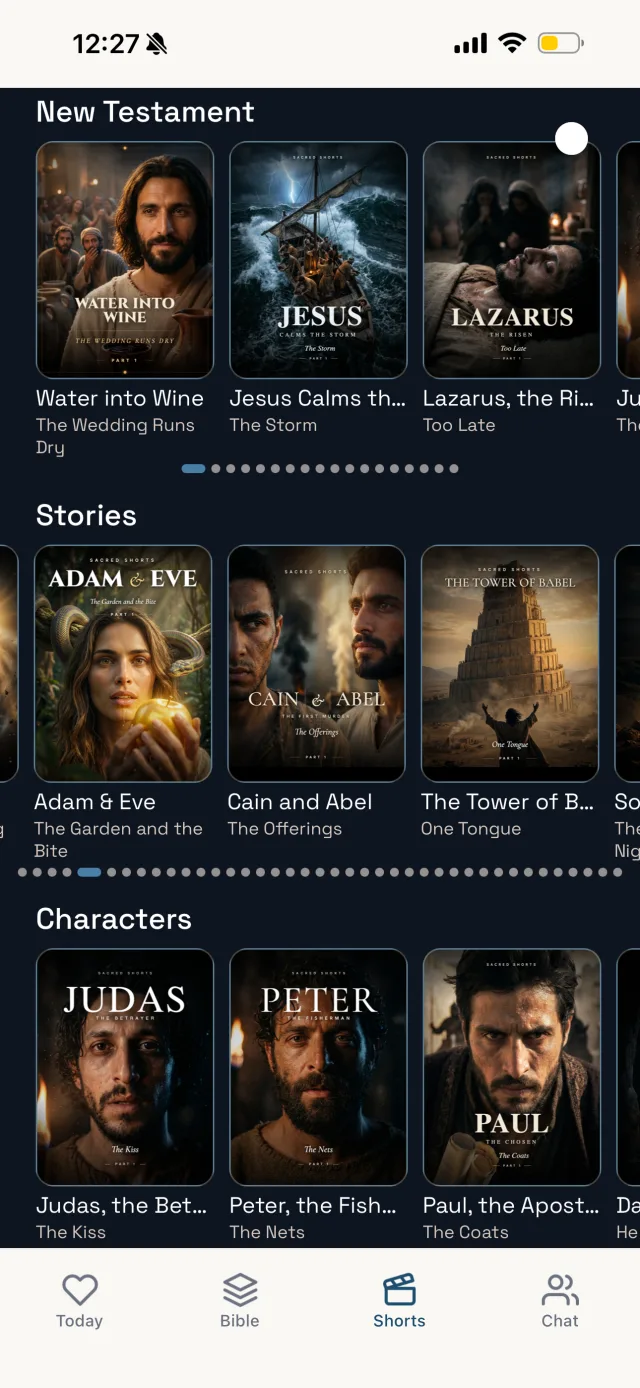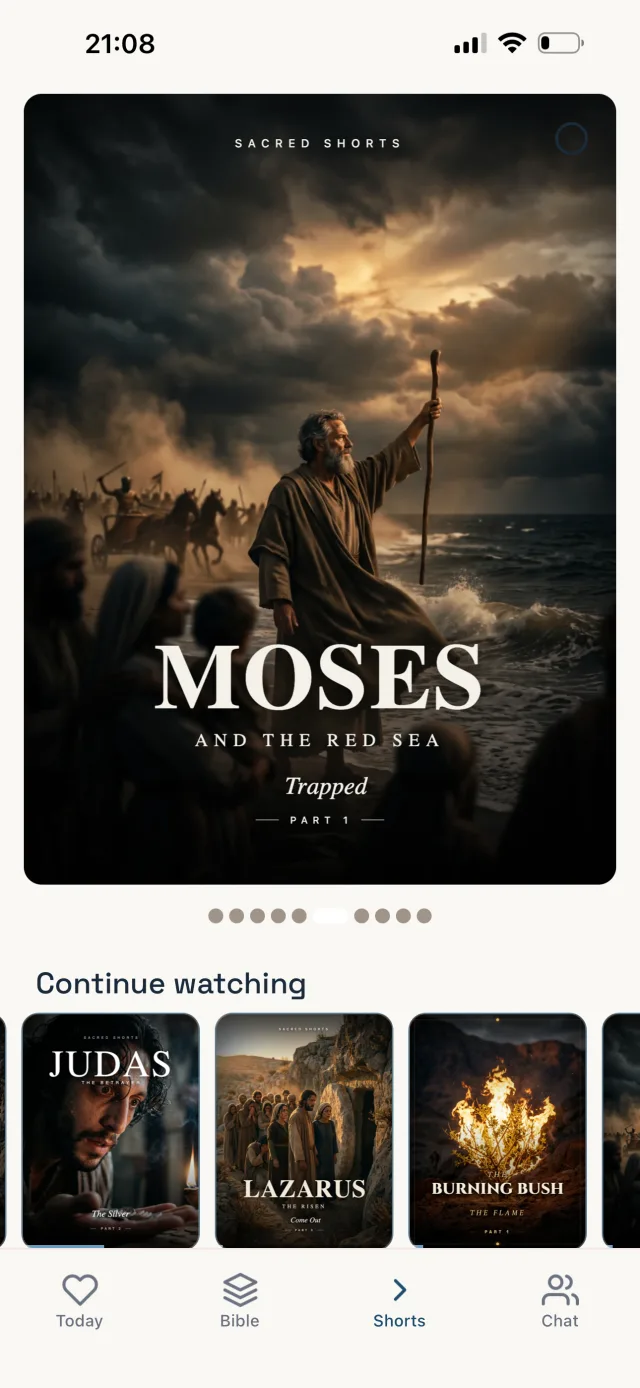
The New Testament is the part of Scripture where many readers first meet Jesus closely: His birth, teaching, compassion, miracles, suffering, death, resurrection, and the mission of His followers. It also shows the early church learning to live by the Spirit, carry the gospel across cultures, endure pressure, and become a community shaped by Christ. Because these scenes are full of movement, faces, roads, meals, crowds, prisons, boats, prayers, and letters, New Testament Bible videos can be a helpful doorway into the story.
But they must remain a doorway, not the destination. Video helps us imagine and enter the biblical story, but it does not replace Scripture. A visual scene always makes interpretive decisions: how Jesus’ voice sounds, how a crowd reacts, how long a silence lasts, or what a room looks like. Those choices can stir attention, but the inspired text is where Christian faith returns for truth, doctrine, prayer, and discernment.
A simple rhythm keeps the order right: watch → read → reflect → pray. Watch a short scene to awaken attention. Read the relevant passage slowly. Reflect on what the text actually reveals. Pray in response, asking God to form your life by His Word.
Begin with the Gospels, not isolated scenes
The four Gospels—Matthew, Mark, Luke, and John—are the best place to start. They are not merely collections of inspirational moments. Each Gospel bears witness to Jesus with its own shape and emphasis. Matthew highlights fulfillment and the kingdom. Mark moves with urgency toward the cross. Luke gives careful attention to mercy, outsiders, prayer, and the work of the Spirit. John invites readers to behold the Word made flesh and believe.
A New Testament video can make a parable, healing, sermon, or table scene feel vivid. Yet the meaning becomes clearer when the scene is watched within the Gospel’s larger testimony. For example, the feeding of the five thousand is not only a miracle of abundance; in the Gospels it reveals Jesus’ compassion, authority, and identity. The storm on the sea is not only suspense; it asks who Jesus is when wind and waves obey Him.
After watching any Gospel scene, read the surrounding chapter. Notice what comes before and after. Ask: What does this reveal about Jesus? What does it reveal about the human heart? What invitation, warning, or promise is present in the text?
Watch Jesus’ teaching with patience
Some people assume cinematic Bible videos work best for action: miracles, travel, conflict, or dramatic reversals. The New Testament also asks us to slow down for teaching. The Sermon on the Mount, the parables, the farewell discourse in John, and Jesus’ conversations with individuals are deeply visual when handled reverently. You can imagine a hillside, a small room, a road, a well, a dinner table, or a temple court.
Still, Jesus’ words should not be reduced to a mood. Read the teaching itself. Let phrases stay in view. When Jesus says, “Blessed are the poor in spirit,” “Love your enemies,” or “I am the way, and the truth, and the life,” a video may help you picture the moment, but the words carry the weight. Different Christian traditions may explain certain passages with different emphases, but all serious reading must begin by listening carefully to the text.
Try this after a teaching scene: choose one sentence from the passage, write it down, and pray through it slowly. Ask not only, “What did I feel while watching?” but, “What is Jesus saying here?”
Move from Jesus to Acts
After the Gospels, the book of Acts shows what happens when the risen Christ sends His people by the Spirit. Acts is full of scenes that work well on video: Pentecost, Peter preaching, believers sharing life together, prison doors opening, Stephen bearing witness, Philip explaining Scripture, Saul meeting Christ on the road to Damascus, and Paul carrying the gospel through cities, synagogues, homes, courts, and storms.
Videos can help readers track the movement from Jerusalem to Judea, Samaria, and the ends of the earth. They can also help us feel the cost of witness. The early church is not presented as a flawless institution. It is a Spirit-led community learning courage, repentance, generosity, discernment, and mission amid real tensions.
Read Acts with a map-like imagination, but also with a prayerful heart. After watching a scene, ask: Who is speaking? Who is listening? What resistance appears? How does God guide His people? Then pray for faithful witness in your own ordinary setting.

The Bible has never felt like this
Watch this story come to life as a cinematic series in Sacred.
4.8on the App Store
Do not skip the letters
Bible videos often focus on narrative, but the New Testament also includes letters that interpret the gospel for real churches and real disciples. Romans, Corinthians, Galatians, Ephesians, Philippians, and the other epistles teach doctrine, worship, ethics, unity, suffering, hope, and love. They may seem less cinematic at first, yet each letter has a world behind it: congregations gathering, questions being asked, conflicts being addressed, and believers learning to follow Jesus.
A good viewing rhythm can use narrative video before reading a letter. For example, watch a scene from Paul’s journeys in Acts, then read Philippians or 1 Thessalonians with the awareness that these were not abstract essays. They were pastoral words to communities. This helps the letters feel connected to lived faith rather than detached religious language.
Again, keep Scripture first. Do not let an imagined background overpower what the letter says. Let video provide context and attention; let the text provide authority and substance.
A practical New Testament viewing path
If you are new to New Testament Bible videos, try this order. First, watch a scene from Jesus calling the disciples, then read Luke 5 or Mark 1. Second, watch a parable such as the Prodigal Son or Good Samaritan, then read Luke 10 or Luke 15. Third, watch a miracle scene and read the whole chapter around it. Fourth, watch a Holy Week scene—the Last Supper, Gethsemane, the trial, the cross, or the empty tomb—and read the Gospel account carefully. Fifth, move into Acts with Pentecost or the road to Damascus. Sixth, connect Acts to one letter, such as Philippians.
For each step, use the same rhythm: watch, read, reflect, pray. Reflect with concrete questions. What did the video help me notice? What does the passage actually say? Where did the visual adaptation fill in details not stated by Scripture? What response of faith, repentance, hope, love, or obedience is fitting?
A gentle way to continue with Sacred
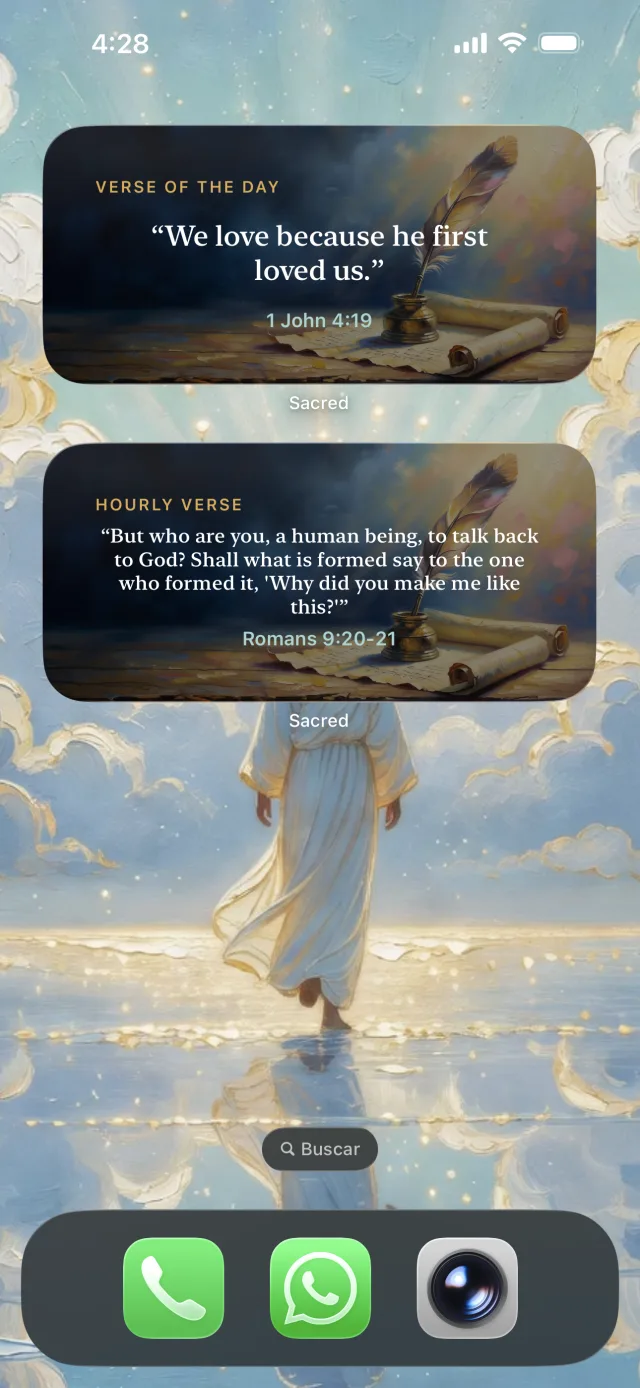
Sacred is designed for that kind of rhythm. Sacred Shorts can help you enter a biblical scene with fresh attention. The Study Bible keeps the actual text at the center. Guided prayer gives you a way to respond rather than simply move on to another video. AI Bible Chat can help you ask careful questions about context, meaning, and connections while remembering that Scripture remains the foundation.
The goal is not to rush through the New Testament as content. The goal is to meet Christ in the testimony of Scripture, to understand the early church with humility, and to let the Word shape daily life.
FAQ
What New Testament Bible video should I watch first?
Start with a Gospel scene that clearly points you back to the text: Jesus calling disciples, a parable, a healing, the Sermon on the Mount, or a resurrection account. Then read the surrounding chapter so the video stays connected to Scripture.
Can New Testament videos replace reading the Gospels and Acts?
No. Videos can help you imagine setting, emotion, and movement, but they are interpretations. The New Testament text remains the foundation for Christian belief, prayer, worship, and study.
What is the best routine after watching a New Testament Bible video?
Use watch → read → reflect → pray. Watch the scene, read the passage, reflect on what the text reveals about Jesus and His people, then pray in response with honesty and faith.
 Sacred Shorts
Watch the Bible like never before
Cinematic Bible stories, a complete Study Bible, daily devotionals, and guided prayer. New episodes every week.