The story of Adam and Eve is one of the most recognized passages in the Bible, but familiarity can make it easy to rush. Genesis 2–3 gives us a garden, a command, a serpent, a forbidden fruit, shame, hiding, judgment, mercy, and exile. It is not only a story about the first man and woman. It is a story about trust, temptation, the goodness of God’s word, the seriousness of sin, and the first signs of grace.
That is why an Adam and Eve story video can be helpful. The garden, the tree, the conversation, the moment of taking and eating, and the sound of God walking in the garden are deeply visual. A cinematic retelling can slow the viewer down and help the passage feel concrete. But the order must stay clear: video helps us imagine and enter the biblical story, but it does not replace Scripture. The video is a doorway; Genesis is the room we must actually enter. A faithful rhythm is watch → read → reflect → pray.
When that rhythm guides the experience, a visual scene can become a servant of Bible reading rather than a substitute for it. Watch with attention, then open Genesis 2–3. Notice what the text says, what it leaves unsaid, and where the video uses reverent imagination. Then reflect on your own heart before God and pray honestly in response.
What Genesis 2–3 is actually about
Genesis 2 presents the garden as a place of gift and vocation. God forms the man, places him in Eden, gives him work to do, and gives him a command. The command about the tree is not random cruelty. It establishes that human life is meant to be lived by trusting God’s word. The garden is abundant, but it is not autonomous. Humanity is free, blessed, and responsible before the Creator.
Genesis 3 introduces temptation through a question: “Did God actually say?” The serpent’s strategy is not only to offer fruit, but to reshape how the woman and the man see God. The temptation suggests that God is withholding something necessary, that the command is not trustworthy, and that disobedience can make human beings “like God” apart from God. The tragedy is not merely that a rule is broken. The relationship of trust is fractured.
A video can make this movement easier to perceive. Facial expression, silence, hesitation, the nearness of the tree, and the sudden feeling of exposure can help viewers sense the weight of the scene. Yet Scripture gives the meaning. The fall is not entertainment. It is the Bible’s account of human rebellion, shame, blame, and the loss of innocence in the presence of a holy and merciful God.
Christians from different traditions may discuss details of original sin, inherited guilt, human freedom, and grace in different ways. A short video should not pretend to settle every theological debate. It can, however, help viewers return to Genesis with humility and seriousness. The passage asks more than, “What happened long ago?” It asks, “Do I trust God’s word, or do I try to become my own source of wisdom?”
Why the fall is more than a scene of failure
The visual center of the story is often the fruit, but Genesis gives us more than a dramatic mistake. Before the fruit is taken, there is a conversation that distorts God’s character. After the fruit is eaten, there is shame. The man and woman sew fig leaves, hide among the trees, and answer God with blame. Sin does not only break a command; it breaks communion. It turns openness into hiding and responsibility into accusation.
An Adam and Eve video can help viewers feel that shift. The garden that seemed bright becomes a place of fear. The sound of God’s presence, which should have been joy, becomes something to avoid. The man blames the woman and indirectly blames God. The woman blames the serpent. Everyone moves away from honest confession.
This matters because the story is not distant from ordinary life. People still distrust God’s goodness. People still minimize disobedience. People still hide, cover, excuse, and blame. A faithful visual retelling should not make Adam and Eve look foolish so that modern viewers feel superior. It should help us recognize ourselves and return to God with repentance.
At the same time, Genesis 3 is not without mercy. God seeks the man and the woman. He names consequences, but He also provides garments. Many Christians have seen in Genesis 3:15 an early promise that evil will not have the final word, though traditions may describe that promise with different emphases. The story moves toward judgment, but it does not end in hopelessness. From the beginning, Scripture shows both the seriousness of sin and the mercy of God.

The Bible has never felt like this
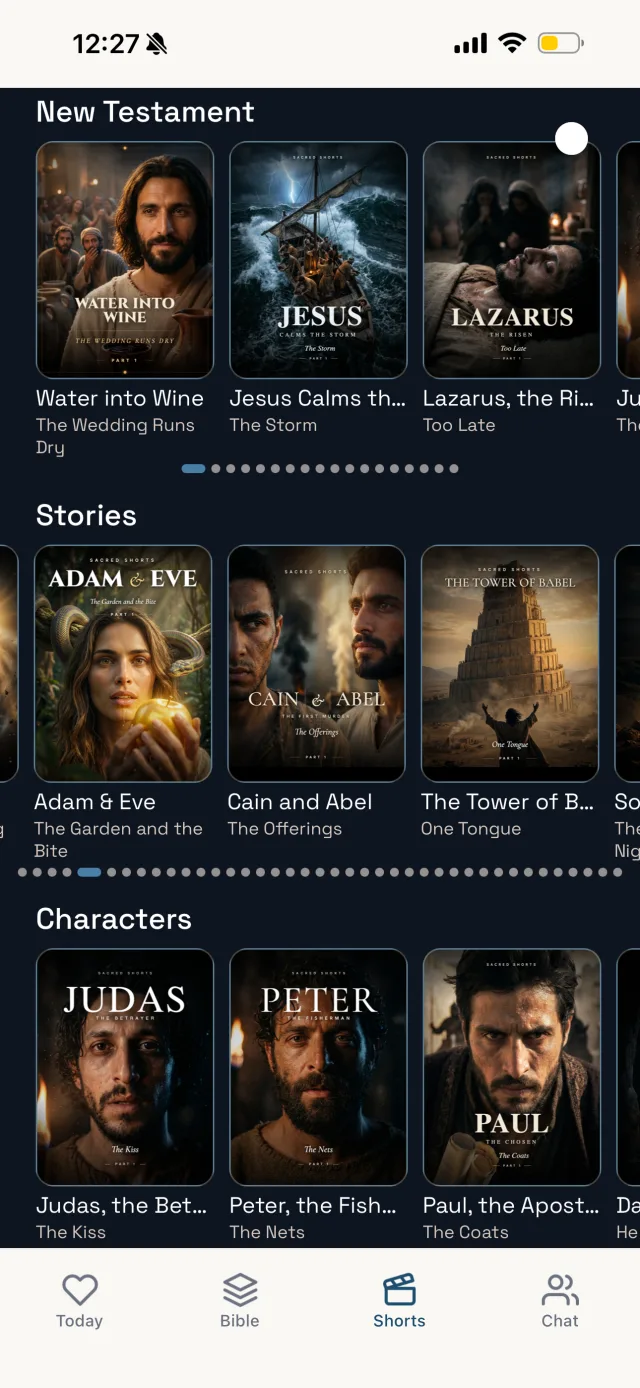
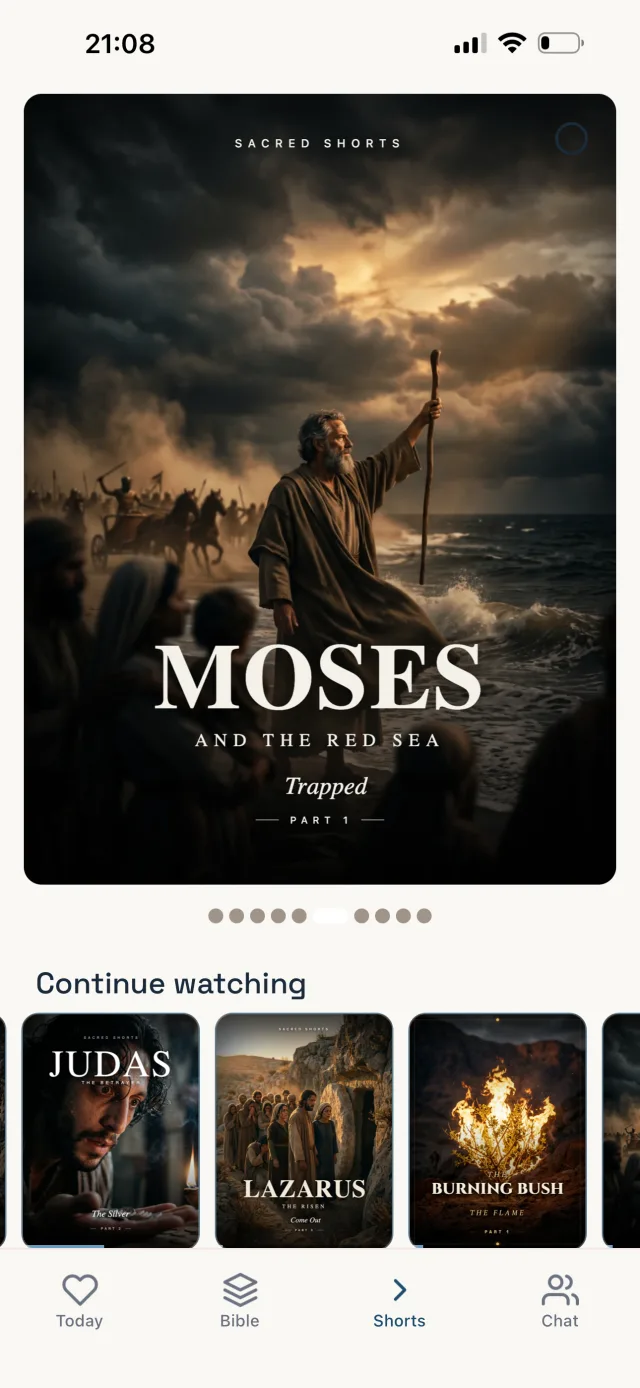
Watch this story come to life as a cinematic series in Sacred.
4.8on the App Store
How video can help, and why it must stay humble
A visual retelling can help readers notice texture that they might miss on the page: the abundance of the garden, the intimacy of human companionship, the subtlety of temptation, the silence after disobedience, the ache of exile. These details can make the Bible feel less abstract. They can invite the viewer to slow down and read with greater attention.
But every video makes choices. It chooses what the serpent looks like, how Adam and Eve speak, how the fruit appears, what emotion fills the scene, and how the garden changes after sin. Genesis does not specify all of those details. Some choices may help; others may distract. That is why the viewer should keep asking: What did this scene help me notice? What did it add? What does Genesis actually say? What should I hold loosely?
This is especially important with a passage as foundational as Adam and Eve. The goal is not to sensationalize the fall or reduce it to a dramatic origin story. The goal is to let the biblical text lead us into truth: God is generous, His word is good, temptation distorts reality, sin brings shame and death, and mercy begins even where judgment is deserved.
A simple routine: watch → read → reflect → pray
Start by watching one short Adam and Eve scene. Do not rush to analyze every production choice. Notice the movement of the story: gift, command, temptation, disobedience, shame, hiding, God’s question, judgment, covering, and exile. Then read Genesis 2–3 slowly. If possible, read it aloud. Let the repeated questions and responses land.
Next, reflect with honest questions. Where do I doubt God’s goodness? Where do I treat a boundary as deprivation instead of protection? Where do I hide instead of confess? Where do I blame others rather than take responsibility? How does the passage reveal both the seriousness of sin and the mercy of God?
Then pray. You might pray, “Lord, teach me to trust Your word,” or “Show me where I am hiding from You,” or “Thank You for seeking sinners with mercy.” Prayer does not need to be polished. It should be truthful before God.
Sacred can support this rhythm gently. Sacred Shorts helps you watch cinematic Bible scenes, while the Study Bible keeps Genesis open in front of you. Daily devotionals, Guided Prayer, and AI Bible Chat can help you continue with Scripture-shaped reflection after the scene ends. The point is not to replace the Bible, but to return to it with deeper attention.
FAQ
Is an Adam and Eve story video a good way to understand Genesis 3?
It can be, if it sends you back to Genesis itself. A video can help you imagine the garden, temptation, shame, and exile, but Scripture gives the meaning.
Does an Adam and Eve video replace reading the Bible?
No. Video helps you imagine and enter the biblical story, but it does not replace Scripture. Use the rhythm watch → read → reflect → pray.
How should Christians handle different teachings about original sin?
With humility and Scripture open. Christian traditions explain some details differently, but Genesis clearly presents sin as distrust of God’s word, broken communion, judgment, and the need for mercy.
 Sacred Shorts
Watch the Bible like never before
Cinematic Bible stories, a complete Study Bible, daily devotionals, and guided prayer. New episodes every week.