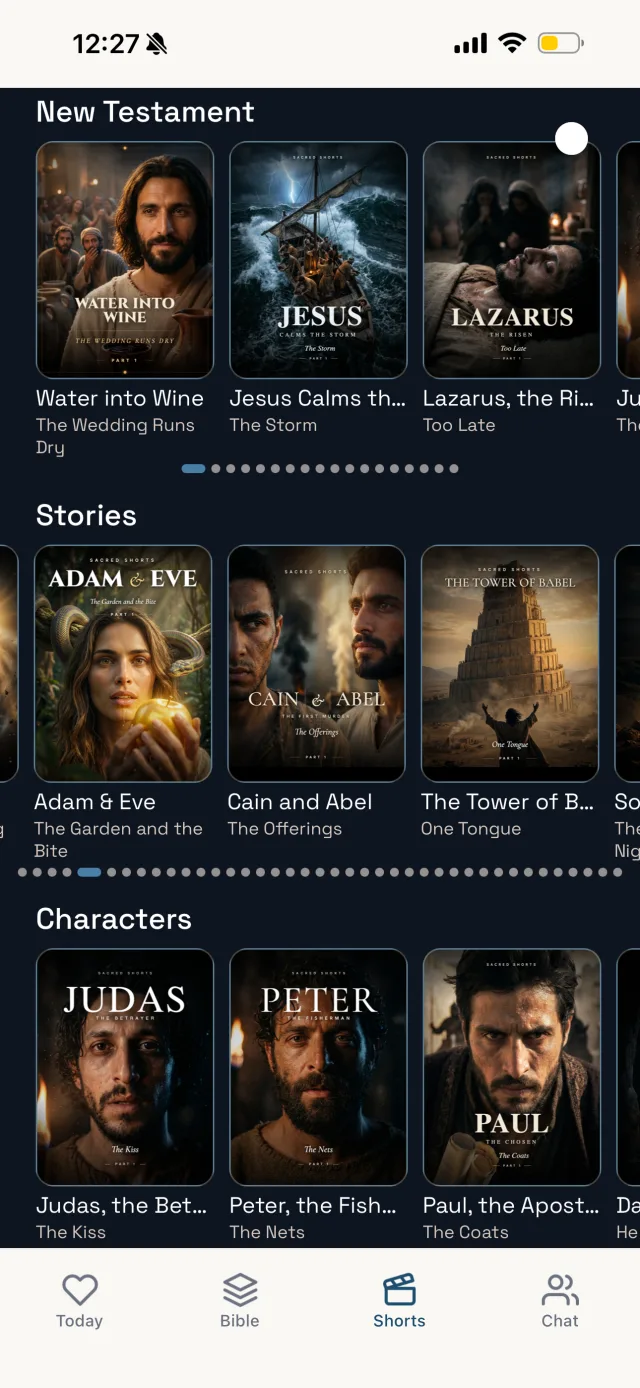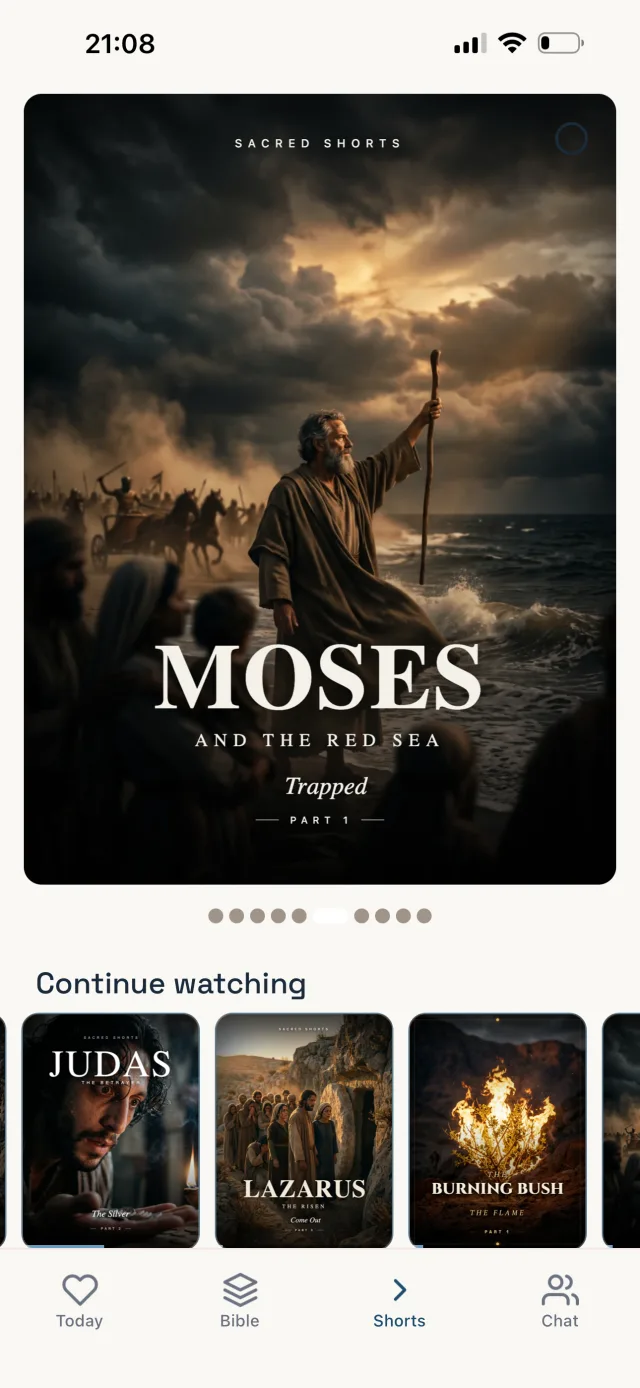
The Gospels are not a random collection of inspiring scenes from Jesus’ life. Matthew, Mark, Luke, and John are four faithful witnesses that proclaim the good news of Jesus Christ through remembered events, fulfilled promises, teaching, miracles, conflict, compassion, death, and resurrection. They invite us to meet Jesus in the text: His words, His mercy, His authority, His suffering, and His victory.
That is why the Gospels are so powerful in video. A biblical short can place you beside the Sea of Galilee, in a crowded house, on a dusty road, at a table with sinners, or in the silence before the cross. Video can help the imagination wake up. It can slow the reader down enough to notice faces, distance, fatigue, wonder, fear, and hope.
But the essential guardrail remains: video helps us imagine and enter the biblical story, but it does not replace Scripture. Every visual scene is an interpretation. The color of the sky, the age of a disciple, the tone of a line, the pace of a miracle, and the music beneath a moment are creative choices. They may serve attention, but they are not the authority. The Gospels themselves are the place to return. A wise rhythm is simple and repeatable: watch → read → reflect → pray.
Why the four Gospels matter together
Each Gospel presents the one Jesus with a distinct emphasis. Matthew often highlights fulfillment, kingdom, discipleship, and Jesus as the promised Messiah. Mark moves quickly, showing the urgency of Jesus’ ministry and the cost of following Him. Luke gives careful attention to the poor, the outsider, prayer, the Holy Spirit, and the joy of salvation. John draws the reader into signs, long conversations, and the mystery of the Word made flesh.
A video series can help viewers feel those differences without flattening them. The calling of disciples, the feeding of the crowds, the healing of the sick, the cleansing of the temple, the Last Supper, the cross, and the empty tomb are not merely episodes in a playlist. They belong to a larger testimony about who Jesus is. When you watch, ask which Gospel is being represented. Then open that Gospel and read the passage in its own flow.
This matters because combining Gospel scenes too quickly can blur the witness of each evangelist. Christians across traditions agree that the Gospels proclaim Jesus, but they may emphasize details differently in preaching, liturgy, discipleship, or devotional practice. A reverent video should make the viewer more curious about Scripture, not less attentive to the shape of the biblical text.
How video can help you enter the life of Jesus
The Gospels contain scenes that are deeply visual. Imagine Jesus touching the leper in Mark 1, speaking with the Samaritan woman in John 4, calming the storm while disciples tremble, calling Zacchaeus down from the tree in Luke 19, or weeping near Lazarus’ tomb in John 11. These are not abstract doctrines first; they are encounters. They reveal doctrine through action, speech, and presence.
Video can make those encounters feel less distant. It can remind us that Jesus walked real roads, ate real meals, heard real cries, and faced real opposition. It can help modern readers who feel intimidated by long passages begin with attention. It can support families, small groups, new believers, and tired readers who need a doorway back into the text.
Yet the goal is never to stop at the doorway. After a Gospel scene moves you, read the passage slowly. Notice what the video included, what it left out, and what Scripture emphasizes most. Did Jesus ask a question? Did someone misunderstand Him? Did the crowd respond with faith, fear, anger, or confusion? Did the disciples see clearly, or did they need correction? The text often carries surprises that a short scene cannot fully hold.

The Bible has never felt like this
Watch this story come to life as a cinematic series in Sacred.
4.8on the App Store
The watch → read → reflect → pray method
Start with one scene, not a flood of clips. If you watch Jesus call Peter, read Luke 5 or the related Gospel passage. If you watch the woman at the well, read John 4. If you watch the crucifixion, read the whole chapter around it, not only the most dramatic moment. Let the Gospel give you context.
Then reflect with simple questions: What does this passage reveal about Jesus? What does it reveal about the human heart? What promise, command, warning, or invitation stands out? What did the video help me notice, and what does the biblical text clarify? Reflection should be honest, not rushed. Some scenes comfort; others confront. The Gospels do both because Jesus is not merely a figure to admire. He is Lord.
Finally, pray the passage back to God. After a healing, pray for faith and compassion. After a parable, pray for ears to hear. After the cross, pray with repentance and gratitude. After the resurrection, pray with hope and obedience. Prayer turns viewing and reading into response. It keeps the heart open before God instead of treating the life of Jesus as spiritual entertainment.
Where to begin in the Gospels
If you are new to the Gospels, begin with Mark for a fast, direct overview of Jesus’ ministry, suffering, and resurrection. Read Matthew when you want to see the connection between Jesus and Israel’s Scriptures. Read Luke when you want a careful narrative that highlights mercy, prayer, and outsiders being welcomed. Read John when you want to linger over Jesus’ identity, signs, and words of eternal life.
A Gospel video plan can follow that same order, but it does not have to. You might choose one theme for a week: Jesus calls, Jesus heals, Jesus teaches, Jesus forgives, Jesus confronts, Jesus suffers, Jesus rises. For each theme, keep the same rhythm: watch one scene, read the Gospel passage, reflect on what is revealed, and pray.
A gentle way to continue with Sacred
Sacred is built to keep the visual and the biblical together. Sacred Shorts can help you enter a Gospel scene with attention and reverence. The Study Bible keeps Matthew, Mark, Luke, and John close. Guided prayer helps you respond after reading. AI Bible Chat can support thoughtful questions about context and meaning while remembering that Scripture remains the foundation.
The life of Jesus is not just something to watch. It is good news to receive, words to hear, a cross to behold, and a risen Lord to follow. Watch with wonder. Read with care. Reflect with humility. Pray with faith.
FAQ
Which Gospel should I watch or read first?
Mark is often a good starting point because it is concise and direct. Matthew, Luke, and John each add important emphasis, so the best long-term approach is to read all four Gospels rather than relying on one visual summary.
Can Gospel videos replace reading Matthew, Mark, Luke, and John?
No. Gospel videos can help you imagine the setting and emotional movement of a scene, but they are interpretations. The biblical text remains the foundation for knowing Jesus’ words, actions, death, and resurrection.
How should I pray after watching a video about Jesus?
Read the Gospel passage first, then turn the main invitation into prayer. Ask for faith, repentance, mercy, courage, gratitude, or obedience according to what the passage reveals about Jesus.
 Sacred Shorts
Watch the Bible like never before
Cinematic Bible stories, a complete Study Bible, daily devotionals, and guided prayer. New episodes every week.