The creation story begins the Bible with wonder. Before Abraham, Moses, David, the prophets, the Gospels, or the church, Scripture opens with God speaking light into darkness, separating waters, forming land, filling the world with life, and making humanity in His image. Genesis 1–2 is not merely a beautiful prologue. It gives readers a way to see God, the world, human dignity, work, rest, and worship.
That is why a creation story video can be powerful. Light, water, sky, earth, stars, creatures, garden, breath, and rest are deeply visual. A cinematic scene can help modern readers slow down and feel the scale of what the opening chapters describe. But the order matters. Video helps us imagine and enter the biblical story, but it does not replace Scripture. The video is an invitation; Genesis is the source. A faithful rhythm is watch → read → reflect → pray.
When that rhythm stays clear, a visual retelling can serve reverence instead of replacing it. Watch with attention. Then read Genesis 1–2 slowly, with your Bible open. Reflect on what the text actually says, where the video uses imagination, and what God reveals about Himself. Then pray in response, not to the video as an experience, but to the Creator revealed in Scripture.
What Genesis shows before it explains
Genesis begins with God. The first sentence is not about humanity searching for meaning, but about God creating the heavens and the earth. The chapter moves with order and purpose: God speaks, creation responds, God sees that it is good. The repeated pattern matters because it teaches readers to view the world as gift, not accident or possession.
A creation video can make that order feel concrete. Darkness giving way to light, waters gathered, plants rising, stars filling the sky, birds and sea creatures moving through their places, animals filling the land: these images can awaken gratitude. They can remind a distracted reader that the biblical world is not flat or abstract. It is full of texture, movement, sound, color, and life.
Still, Genesis is not a blank canvas for any image we want. The Bible gives the meaning. God is the Creator. Creation is good. Humanity is made in the image of God. The seventh day is blessed and set apart. Any visual version should lead back to those truths, not bury them under spectacle.
Christians from different traditions sometimes discuss details of the creation days, genre, chronology, and the relationship between Genesis and science in different ways. A short video should not pretend to settle every interpretive question. It can, however, help viewers return to the passage with humility and wonder. The center is not winning an argument; it is listening to the opening word of Scripture.
Seeing human dignity in the creation story
One of the most important moments in Genesis is the creation of humanity. Men and women are made in the image of God. This is not a small detail. It gives weight to every human life, every neighbor, every family, every stranger, every person whose story feels hidden. A visual retelling can help viewers feel the tenderness and seriousness of that truth.
When video shows the first human life as more than a symbol, it can slow the reader down. Dust, breath, garden, vocation, companionship, and blessing become easier to notice. But again, the meaning comes from the text. Genesis does not tell us that human beings are valuable because they are productive, attractive, strong, successful, or useful. They bear God’s image.
That truth should shape the way we watch. The creation story is not only about the beginning of the world; it is about the kind of world God made and the kind of creatures we are. We are not owners standing above creation as tyrants. We are image-bearers called to receive, cultivate, name, guard, and live before God.
A faithful video should therefore avoid turning Genesis into mere scenery. The garden is not just beautiful background. Work is not just activity. Rest is not laziness. Human dignity is not decoration. In Scripture, creation leads toward worship, responsibility, relationship, and dependence.

The Bible has never felt like this
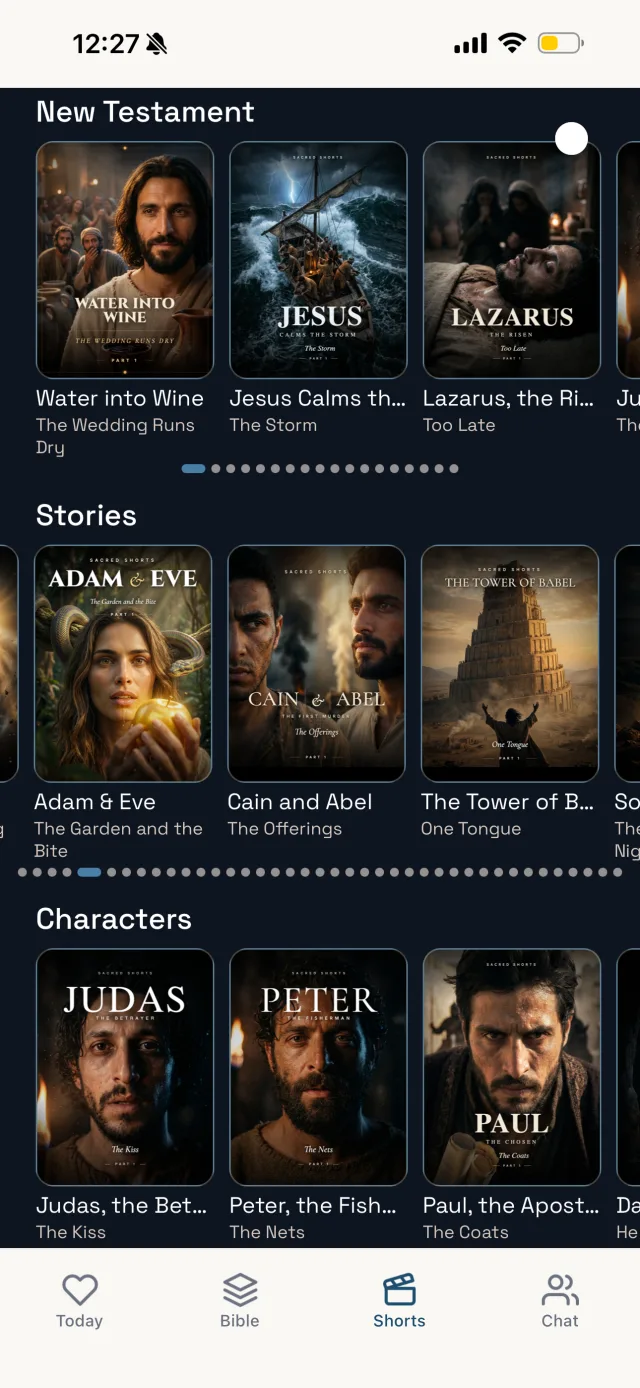
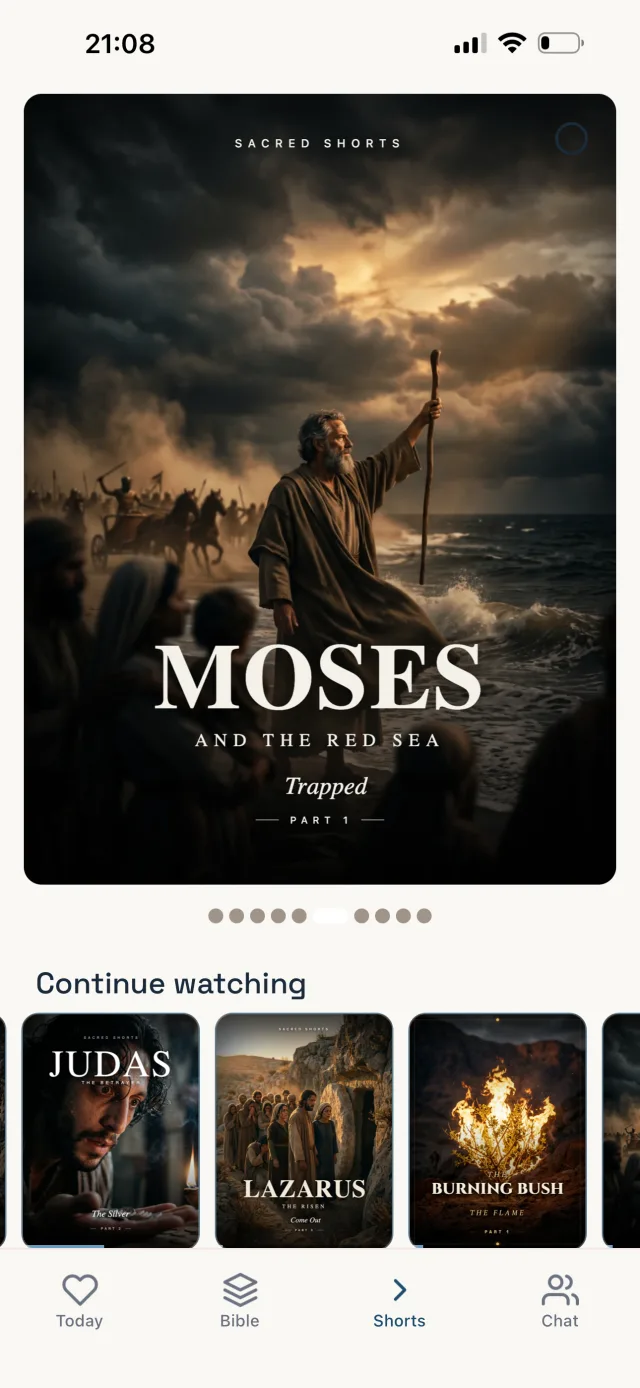
Watch this story come to life as a cinematic series in Sacred.
4.8on the App Store
Why video can help, and where it must stay humble
Many people have heard the creation story so often that they no longer feel its strangeness. A good video can make familiar words feel freshly seen. It can show scale: the vast sky, the smallness of the human body, the abundance of creatures, the quiet of rest. It can help a reader pay attention again.
But every adaptation makes choices. It chooses colors, pacing, camera movement, facial expression, landscape, music, and silence. Genesis does not specify many of these details. That does not make imagination wrong, but it means imagination must remain humble. Ask: What did this visual scene help me notice? What did it add? What does the passage actually say? What should I hold loosely?
This is especially important with the creation story because readers may bring strong assumptions to the text. Some come looking for answers to modern debates. Others come for comfort, beauty, or a sense of awe. Genesis can speak deeply, but it should be allowed to speak on its own terms. The video can open the door, but Scripture must guide the room.
A simple routine: watch → read → reflect → pray
Start with one short creation scene. Watch it without rushing. Notice light, order, goodness, breath, and rest. Then read Genesis 1–2. If you have time, read it aloud. The repeated phrases, rhythm, and structure are part of the experience of the text.
Next, reflect with a few questions. What does this passage reveal about God? What does it say about the goodness of the world? What does being made in God’s image mean for the way I see myself and other people? Where does the video help me imagine the passage, and where do I need to return carefully to the words of Scripture?
Then pray. You might pray, “Creator God, teach me to receive the world as gift,” or “Help me see every person as made in Your image,” or “Give me a rhythm of work and rest that honors You.” Prayer does not need to be long; it should be honest.
Sacred can support this rhythm gently. Sacred Shorts helps you watch cinematic Bible scenes, while the Study Bible keeps the passage close. Daily devotionals, Guided Prayer, and AI Bible Chat can help you keep asking Scripture-shaped questions after the scene ends. The goal is not to replace the Bible, but to return to it with deeper attention.
FAQ
Is a creation story video a good way to begin reading Genesis?
Yes, if it leads you back to Genesis itself. A video can awaken wonder, but the meaning of creation comes from Scripture.
Does the creation story video replace reading Genesis 1–2?
No. Video helps you imagine and enter the biblical story, but it does not replace Scripture. Use watch → read → reflect → pray.
How should Christians handle different views of creation while watching?
With humility. Different traditions discuss details differently, but all readers can attend to God as Creator, creation as good, humanity as God’s image, and rest as holy.
 Sacred Shorts
Watch the Bible like never before
Cinematic Bible stories, a complete Study Bible, daily devotionals, and guided prayer. New episodes every week.