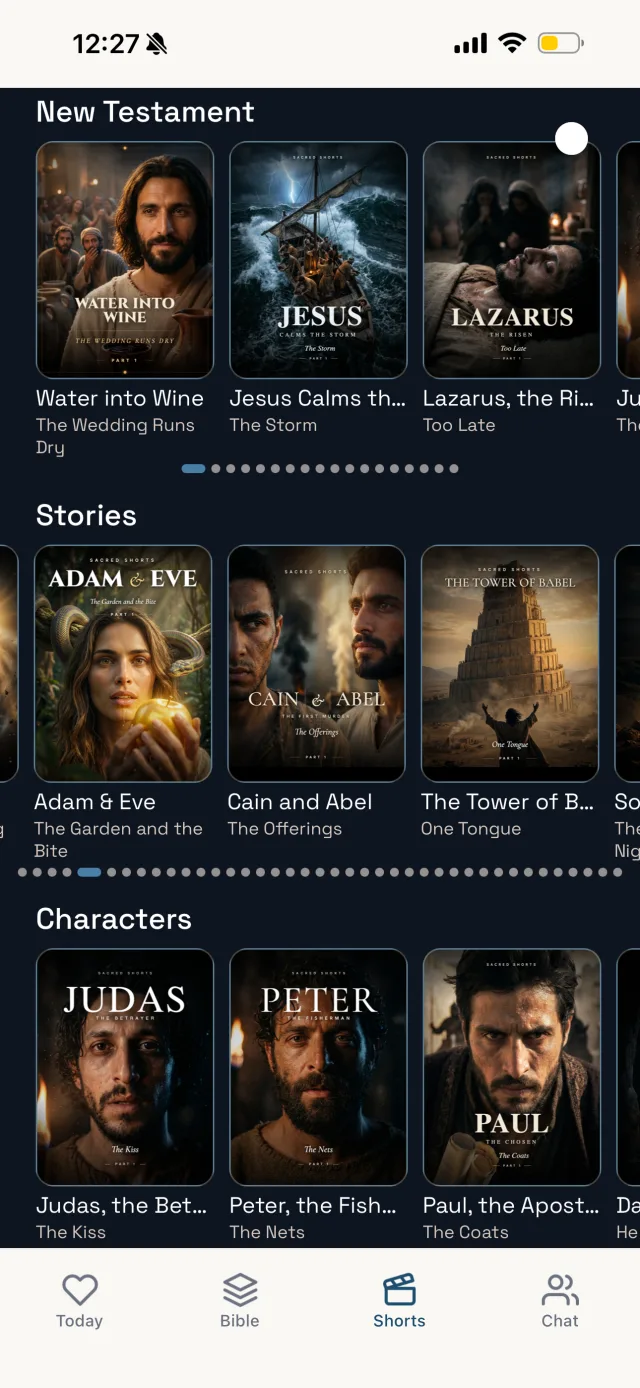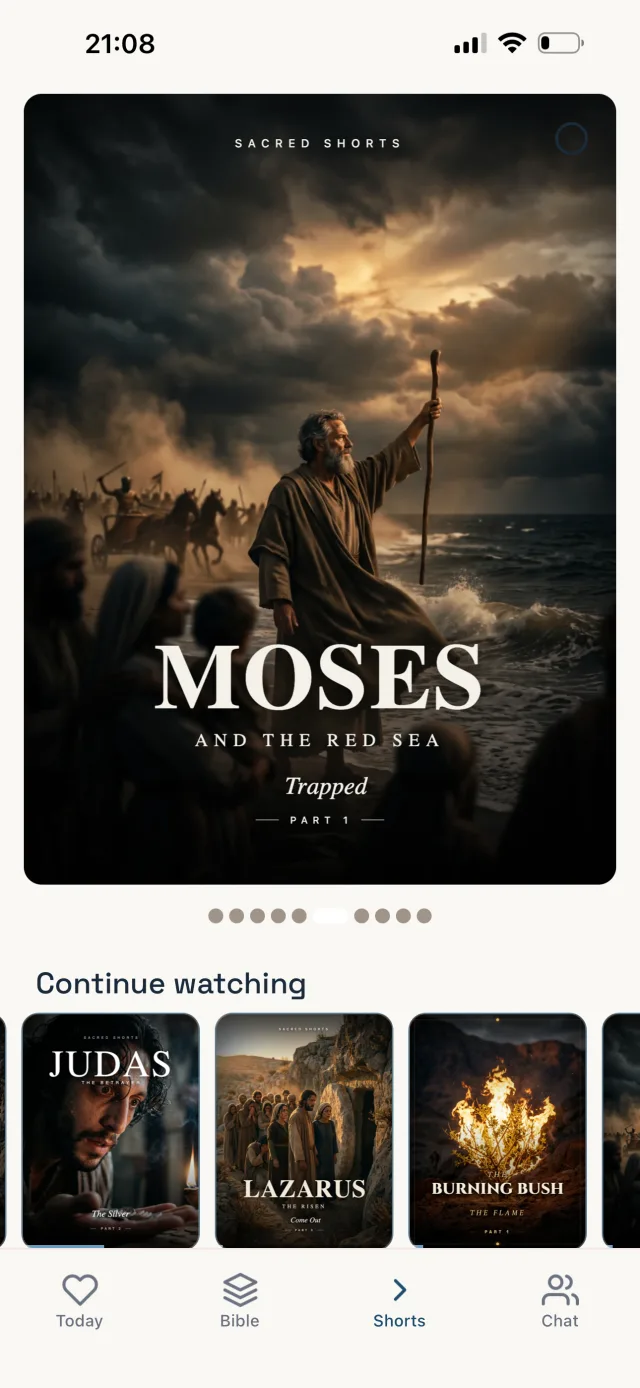
Cinematic Bible videos offer a new way to experience Scripture because they invite the imagination to slow down. A scene can show dust on a road, lamplight in an upper room, the silence before a prophet speaks, or the fear in a disciple's face during a storm. Those details are not the Bible itself, but they can help modern readers feel the weight of a story that may otherwise seem distant. When visual storytelling is handled with reverence, it can become a doorway into attention.
That doorway matters in a distracted age. Many people want to read the Bible but open it with tired eyes, a crowded mind, or little sense of historical setting. A cinematic Bible short can gather focus. It can remind the viewer that Scripture is not an abstract list of religious ideas; it tells of real places, real people, covenant, failure, mercy, judgment, promise, and hope. Yet the best use of video is never to stop at the screen. Video helps us imagine and enter the biblical story, but it does not replace Scripture. The faithful rhythm remains: watch, read, reflect, pray.
What makes a Bible video cinematic?
A cinematic Bible video is not merely a recorded lesson or a slideshow with music. It uses light, movement, faces, sound, silence, and pacing to help a story feel embodied. The camera may linger on Moses before Pharaoh, Mary hearing astonishing news, Peter stepping from a boat, or Paul traveling toward Damascus. It treats biblical narrative as drama in the deepest sense: not spectacle for its own sake, but human action before the living God.
Cinematic storytelling can serve Scripture when it respects the shape of the passage. Some stories move quickly, like the call of Matthew. Others unfold through tension, like Joseph facing his brothers. Some are quiet, like Hannah praying at the tabernacle. Others are vast, like Israel crossing the sea. A good adaptation notices the tone of the text and avoids making every scene feel the same.
At the same time, every video makes interpretive choices. The Bible may not tell us the weather, the exact expression on someone's face, or every word spoken between scenes. Costumes, accents, blocking, and music are artistic decisions. They can be helpful, but they should be held lightly. The question is not, “Did the video show the only possible way this happened?” The better question is, “Did the video lead me back to the passage with more attention and humility?”
Why visual imagination can help Bible reading
Christians have always used imagination in some form when reading narrative. We picture the garden, the wilderness, the temple, the hillside, the table, the road, and the prison. A cinematic Bible video simply makes part of that imaginative process visible. For a reader unfamiliar with ancient geography or first-century daily life, this can be especially helpful. It can give texture to words that might otherwise pass too quickly.
Visual imagination can also reveal emotional movement. When the disciples fear the storm, the text tells us enough. A well-made scene may help us pause over that fear rather than rush to the miracle. When the prodigal son rehearses his speech on the road home, a visual scene may help us feel the mixture of shame and hope. When Peter denies Jesus, the face of a person can make the sorrow less theoretical.
But imagination needs Scripture as its guide. Without the text, a scene can become sentimental, exaggerated, or misleading. With the text, video becomes a companion to study. It can awaken questions: What exactly does the passage say? What did the adaptation add? What did it leave out? What did I notice for the first time? Those questions are not obstacles to devotion; they are part of loving the Bible carefully.

The Bible has never felt like this
Watch this story come to life as a cinematic series in Sacred.
4.8on the App Store
The Scripture-first method: watch, read, reflect, pray
The most helpful way to use cinematic Bible videos is simple. First, watch one scene with attention. Do not try to consume an entire catalog at once. Choose a short episode connected to a passage and watch with the intention of listening for what the story raises in you.
Second, read the biblical text. If the video shows Jesus calling the first disciples, read the Gospel account. If it shows Elijah on Mount Carmel, read the chapters in Kings. If it shows the early church praying, read Acts. Let Scripture correct, deepen, and clarify what the screen suggested.
Third, reflect. Ask concrete questions. What does this passage reveal about God? What does it reveal about human fear, pride, courage, sin, or faith? What did the video help me notice? Where did Scripture say more than the scene could show? If you belong to a particular Christian tradition, you may also ask how that tradition has understood the passage, especially when doctrine, sacraments, prophecy, or church practice are involved.
Fourth, pray. Turn the passage into response. Thank God for what is revealed. Confess where the story exposes you. Ask for courage to obey. Pray for someone who needs the mercy, patience, justice, or hope shown in the text. The goal is not only to understand a scene but to respond faithfully to God.
Why video does not replace Scripture
This point needs to be said plainly: cinematic Bible videos do not replace reading the Bible. They are adaptations. They can be beautiful, moving, and useful, but they are not the source of authority. Scripture remains the text received, read, preached, studied, memorized, prayed, and treasured by the church.
A video cannot carry every sentence, literary connection, covenant theme, genealogy, command, warning, promise, or theological nuance. It may compress events for time. It may emphasize one emotion while the passage emphasizes another. It may show a character's inner life in a way the Bible leaves unstated. That does not make video wrong; it means video has limits.
Knowing those limits protects the viewer. Instead of asking a Bible video to do what only Scripture can do, we can receive it as a visual invitation. Let it make the story vivid. Let it stir curiosity. Let it help a passage feel less far away. Then return to the Bible and let the Word speak with its own authority.
How Sacred approaches the experience
Sacred is built around this Scripture-first rhythm. Sacred Shorts brings cinematic stories of faith to life in short films, while the Study Bible keeps the biblical text close. Daily devotionals can help connect the passage to real life, Guided Prayer can help turn reflection into prayer, and AI Bible Chat can support thoughtful questions about context and meaning. These tools are meant to serve Scripture, not stand above it.
A simple practice could take ten minutes: watch one Sacred Short, read the connected passage, write one observation, and pray one honest prayer. Over time, that rhythm can help Scripture feel less distant and more present in daily life. The Bible has always invited God's people not only to information, but to remembrance, worship, obedience, and hope. Cinematic video can help open the door. Scripture remains the room we enter.
FAQ
Are cinematic Bible videos faithful to Scripture?
They can be faithful when they serve the passage, avoid replacing the text, and make clear that artistic details are interpretive choices. The best response is to watch, then read the Bible carefully.
Can Bible videos help me understand the Bible better?
Yes, they can help you imagine setting, emotion, and narrative flow. They are most helpful when paired with reading the related passage, reflection, prayer, and wise guidance when needed.
Do cinematic Bible videos replace Bible reading?
No. Video can help you picture and enter the biblical story, but it does not replace Scripture. The Bible remains the source and authority; the video is a doorway back to it.
 Sacred Shorts
Watch the Bible like never before
Cinematic Bible stories, a complete Study Bible, daily devotionals, and guided prayer. New episodes every week.