Genesis is a book of beginnings, but it is not only a beginning. It opens with creation, moves quickly into human rebellion, follows families marked by promise and failure, and ends with Joseph speaking hope in Egypt. For many readers, Genesis can feel familiar in fragments: Adam and Eve, Noah, Abraham, Isaac, Jacob, Joseph. Seen as one story, however, those scenes become part of a larger biblical movement from God’s good creation toward covenant, blessing, judgment, mercy, and the long hope of redemption.
A Bible video can help Genesis feel less distant. It can give visual shape to gardens, deserts, altars, tents, floods, stars, family conflict, famine, and reconciliation. But the order matters. Video helps us imagine and enter the biblical story, but it does not replace Scripture. The video is a doorway; the text is the source. A faithful rhythm is simple: watch → read → reflect → pray.
That rhythm keeps wonder and reverence together. Watch a scene to gather attention. Read the passage itself, including the verses before and after. Reflect on what God reveals, what human beings do, and how the promise moves forward. Then pray honestly in response.
Why Genesis works so well as visual storytelling
Genesis is full of places and moments that carry emotional weight. The opening chapters invite the imagination toward light, waters, land, sky, creatures, humanity made in God’s image, and rest. The flood narrative is vast and sobering. Abraham stands beneath the stars and hears a promise larger than his lifetime. Jacob wrestles through the night. Joseph walks through betrayal, prison, power, and forgiveness.
Video can help readers slow down and notice the human scale of these stories. Abraham is not an abstract example of faith; he is a man called to leave what he knows. Sarah is not merely a name in a genealogy; she laughs, waits, struggles, and receives a promise. Jacob is not simply a patriarch; he is a complicated son, brother, husband, father, deceiver, and wounded man who receives a new name. Joseph is not a simple success story; his life includes injustice, patience, wisdom, and tears.
Still, a visual adaptation always makes choices. It must imagine clothing, weather, pauses, faces, architecture, and tone. Genesis often leaves those details unspoken. That is why the text must stay open. Ask: What is clearly written? What did the video help me notice? What did it add imaginatively? What does the passage say about God, humanity, sin, covenant, blessing, and mercy?
Where to begin in Genesis
A helpful path through Genesis does not require watching everything at once. Begin with the creation and fall in Genesis 1–3. These chapters introduce God as Creator, the goodness of creation, humanity made in God’s image, the command, temptation, rebellion, shame, judgment, and the first note of hope. Christians from different traditions sometimes discuss details of creation differently, so approach the passage humbly. The main movement is clear: the world belongs to God, humanity is made for communion with Him, and sin fractures what God made good.
Next, move to Noah and the flood in Genesis 6–9. This story is not only dramatic; it is morally serious. It shows violence and corruption, judgment and preservation, covenant and the sign of the bow. A video can make the scale feel real, but the reading should preserve the text’s grief, warning, and mercy.
Then watch and read the call of Abraham in Genesis 12, the covenant promises in Genesis 15 and 17, and the testing of Abraham in Genesis 22. These passages should be handled with reverence, not sensationalism. Genesis 22 in particular raises deep questions about faith, obedience, promise, and God’s provision. Different Christian traditions may emphasize certain connections differently, but all careful readings should resist treating the scene casually.
After Abraham, follow Jacob and Esau, Jacob’s dream, his wrestling at the river, and the story of Joseph. These episodes are deeply cinematic because family wounds are visible: favoritism, rivalry, fear, deception, exile, and eventually reconciliation. Joseph’s words near the end of Genesis, especially Genesis 50:20, help readers see providence without pretending evil was good.

The Bible has never felt like this
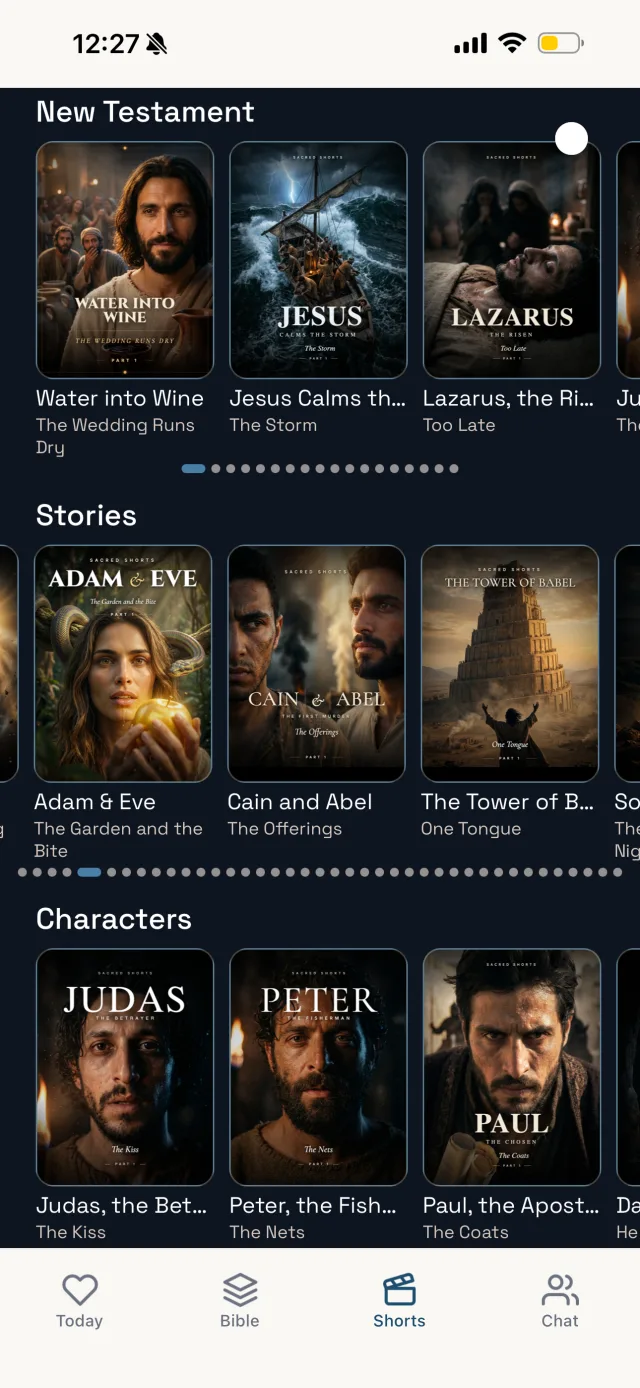
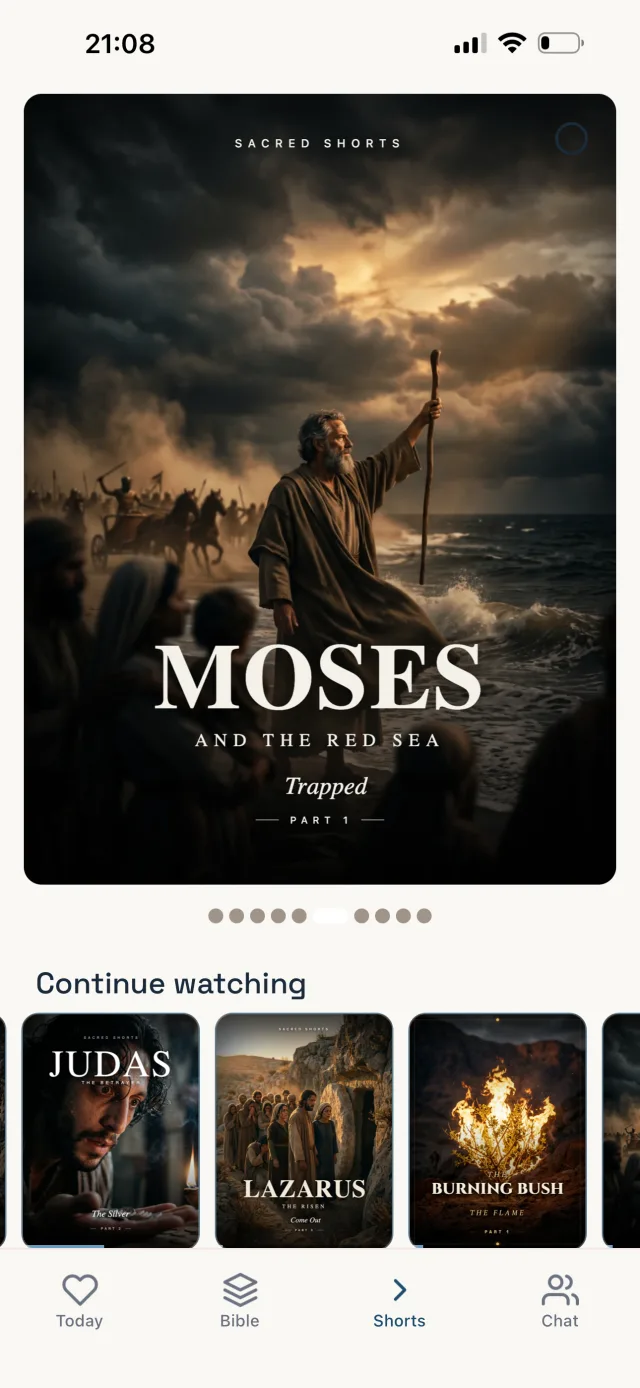
Watch this story come to life as a cinematic series in Sacred.
4.8on the App Store
The themes to watch for
As you move through Genesis in video and Scripture, watch for repeated themes. The first is blessing. God blesses creation, humanity, Noah, Abraham, and Abraham’s family, but blessing is never merely private comfort. Through Abraham’s offspring, blessing is meant to reach the nations.
The second theme is exile and return. Adam and Eve leave the garden. Cain wanders. Noah passes through waters into a changed world. Abraham leaves home. Jacob flees and returns. Joseph is taken to Egypt, and the family ends there waiting for what comes next. Genesis is full of movement away from and toward promise.
The third theme is God’s faithfulness amid human failure. Genesis does not flatter its heroes. Abraham fears, Sarah laughs, Isaac repeats family patterns, Jacob deceives, Joseph’s brothers betray. The Bible tells these stories with surprising honesty. That honesty helps readers avoid turning video into polished inspiration. The people in Genesis need mercy, guidance, and covenant faithfulness.
The fourth theme is promise. Genesis ends before the promise is complete. That unfinished feeling matters. It prepares the reader for Exodus, for Israel’s story, and ultimately for the wider biblical hope Christians see fulfilled in Christ. Video can make the episodes vivid, but Scripture shows how they belong together.
A simple routine: watch → read → reflect → pray
Try one Genesis scene per day. First, watch a short biblical video scene. Let it help you picture the setting and emotional tension. Second, read the actual passage slowly. If you watched Abraham under the stars, read Genesis 15. If you watched Jacob wrestle, read Genesis 32. If you watched Joseph forgiving his brothers, read Genesis 45 and 50.
Third, reflect with concrete questions. What does God do in this passage? What do people misunderstand or fear? Where do you see sin, mercy, promise, or patience? What details did the video clarify, and what details belong only to imagination? Fourth, pray. You might pray, “Lord, teach me to trust Your promise,” or “Show me where I hide in shame,” or “Make me attentive to Your Word.” Prayer does not need to be polished; it should be truthful.
Sacred can support this rhythm gently. Sacred Shorts helps you watch cinematic Bible scenes, while the Study Bible keeps Scripture close. Daily devotionals, Guided Prayer, and AI Bible Chat can help you keep asking better questions after the scene ends. The goal is not to replace Bible reading, but to return to it with more attention.
FAQ
Is Genesis a good book to watch in video form?
Yes, if the video leads you back to Scripture. Genesis is visually rich, but its meaning comes from the biblical text, not from the adaptation.
What Genesis stories should I start with?
Start with creation and the fall, Noah, Abraham’s call and covenant, Jacob’s wrestling, and Joseph’s forgiveness. Read each passage after watching.
Does a Genesis video replace reading Genesis?
No. A video can help you imagine and enter the story, but Genesis itself must remain central. Use the rhythm watch → read → reflect → pray.
 Sacred Shorts
Watch the Bible like never before
Cinematic Bible stories, a complete Study Bible, daily devotionals, and guided prayer. New episodes every week.