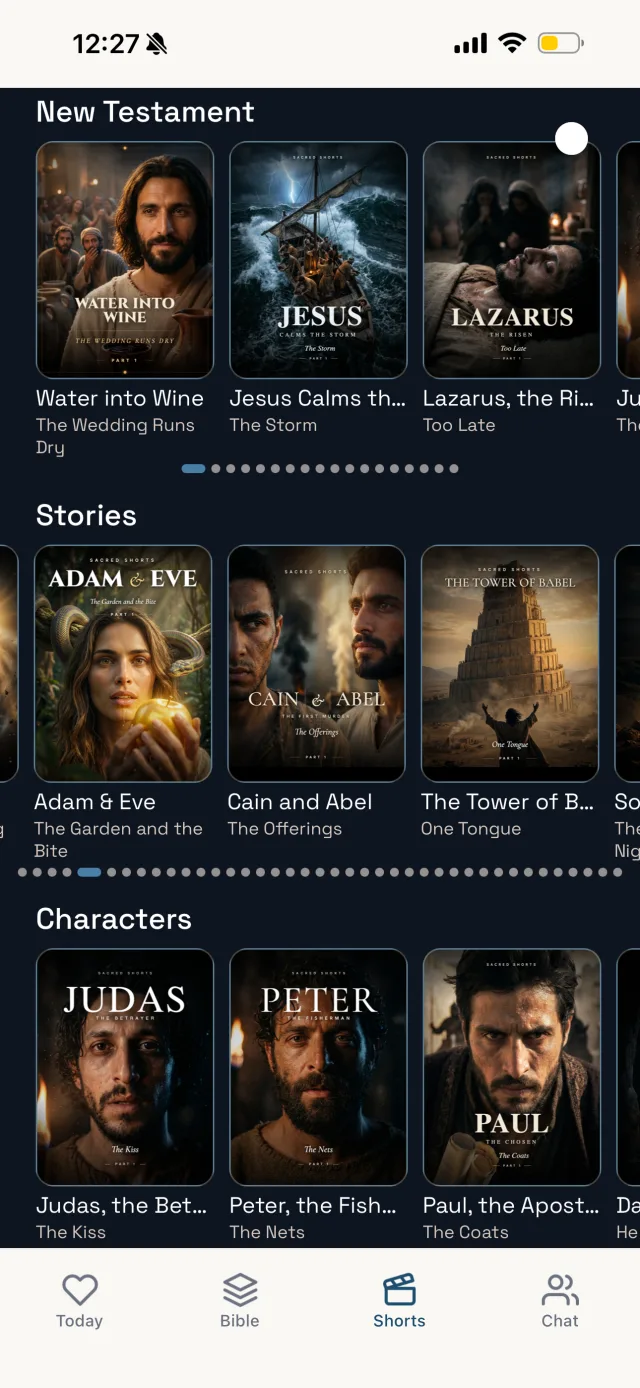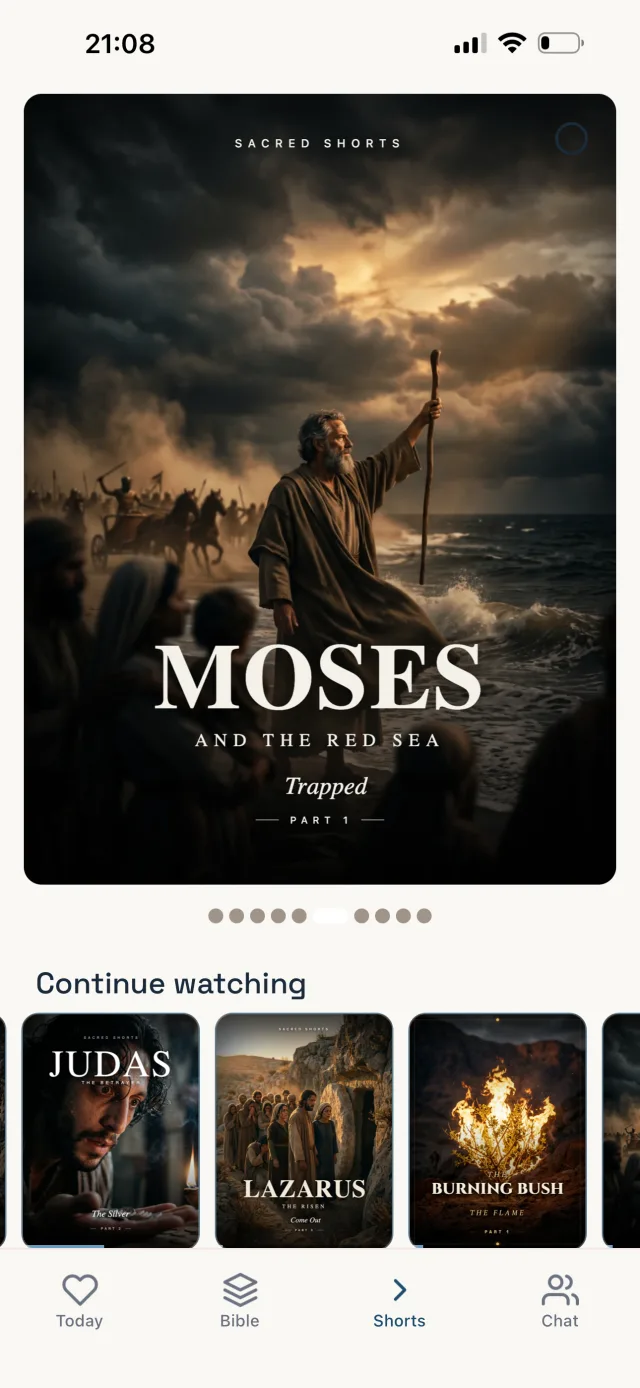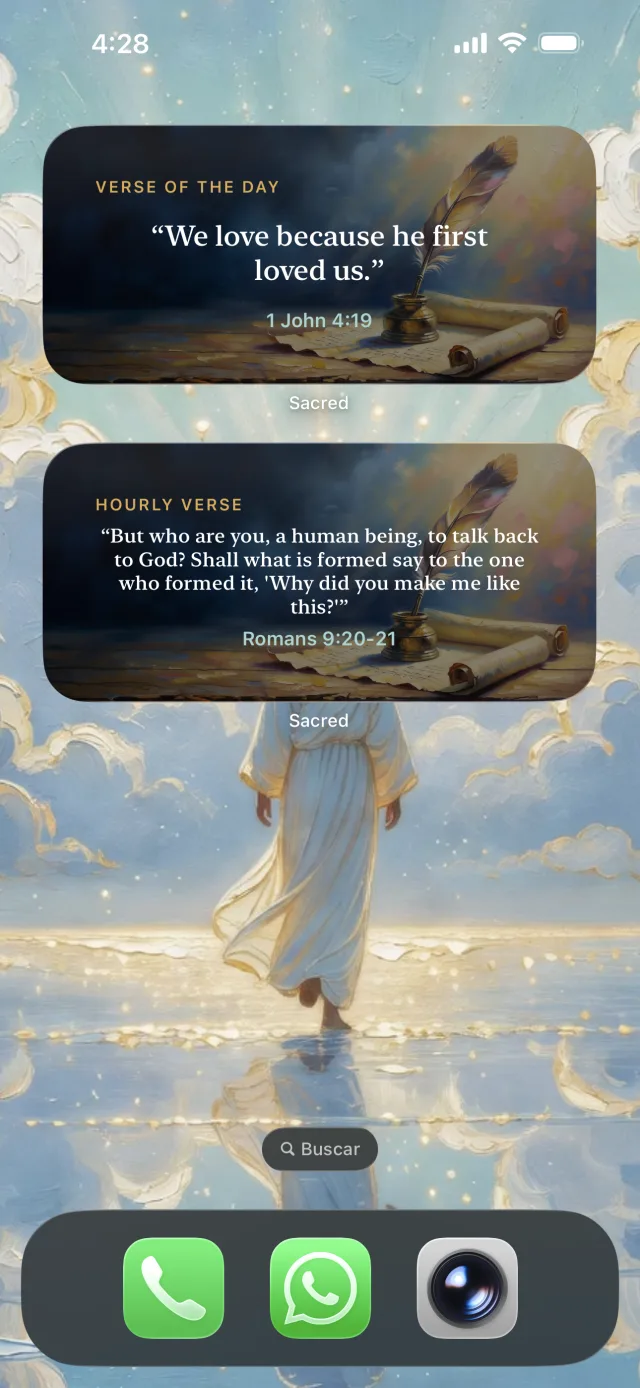
There are seasons when reading Scripture feels harder than we expected. The problem is not always unbelief or lack of love for God. Sometimes the page feels distant because we are tired, distracted, unfamiliar with the setting, or unsure where a story fits in the larger biblical witness. Sometimes we open a chapter and meet names, places, customs, or images that feel far from ordinary life. In those moments, Bible videos can be a gentle doorway back into attention.
A cinematic Bible scene can help you imagine and enter the biblical story. It can put dust on the road, wind on the water, tension in a room, or silence before a prophet’s word. That visual help can awaken curiosity when the words have begun to feel flat. But the distinction must stay clear: video can serve Scripture; it does not replace Scripture. The goal is not to watch something religious and stop there. The healthier rhythm is watch → read → reflect → pray.
Why reading can feel difficult
Many Christians quietly carry shame about their Bible reading. They assume everyone else opens Scripture with ease, understands every passage immediately, and finishes every plan without missing a day. Real life is more ordinary than that. Work, family, grief, unanswered questions, spiritual dryness, and constant digital noise can all make focused reading difficult. Even when someone deeply respects the Bible, attention can feel scattered.
There is also the challenge of distance. Scripture was written in real languages, cultures, genres, and historical moments. Narrative, law, poetry, prophecy, Gospel, letter, and apocalyptic vision do not all ask to be read in the same way. A reader who begins in a dense chapter may wonder, “What am I supposed to see here?” That question is not a failure. It can become the beginning of deeper study.
Bible videos help best when they reduce friction without pretending to solve everything. A scene from Genesis may help you feel the weight of promise. A scene from Exodus may help you sense the fear and hope of liberation. A Gospel scene may help you notice the humanity of a crowd pressing around Jesus. A scene from Acts may help you imagine the courage of the early church. Then the video has done its job if it sends you back to the text with better attention.
Use video as a doorway, not a substitute
Every visual retelling makes interpretive choices. Scripture may tell us what someone said without describing every expression, pause, or movement. A filmmaker has to decide how a room looks, how slowly a person speaks, and what details surround the moment. Those choices can be beautiful, reverent, and helpful, but they are not the same as the inspired text. The Bible remains the anchor.
That is especially important when a passage touches doctrine, worship, sacraments, spiritual gifts, prophecy, or the end of all things. Christians across traditions often share the same Scriptures while interpreting some details differently. A video can introduce the scene, but it should not present one visual choice as the only possible faithful reading. When interpretation matters, read the passage carefully, compare Scripture with Scripture, and seek trusted guidance within your church tradition.
This posture protects both imagination and humility. You are allowed to picture the biblical world. Art, preaching, music, and prayer have long helped believers slow down before God’s Word. But imagination becomes safest when it bows before the text. Ask after every scene: what did the video help me notice, and what does the Scripture actually say?

The Bible has never felt like this
Watch this story come to life as a cinematic series in Sacred.
4.8on the App Store
A practical rhythm: watch → read → reflect → pray
When reading feels hard, begin small. Choose one biblical scene rather than scrolling endlessly. Watch with attention, not as background noise. Notice the central tension: fear, calling, mercy, betrayal, repentance, promise, judgment, healing, or worship. Let the scene gather your scattered thoughts.
Then read the passage itself. If the video focuses on one moment, read the verses before and after it. Context is a gift. It shows why the moment matters. It keeps a dramatic scene from becoming detached from the larger story of God’s covenant, Israel’s hope, Christ’s life, the cross and resurrection, or the church’s mission. If you do not understand everything, stay with what is clear before rushing to what is obscure.
After reading, reflect with a few simple questions. What does this passage reveal about God? What does it reveal about human need? Is there a command, promise, warning, comfort, or example? Did the video make one detail vivid? Did it leave something out? What should I keep studying?
Finally, pray. Prayer does not have to be polished. You might say, “Lord, help me receive your Word,” or, “Teach me what I am missing,” or, “Give me courage like this person, but keep me humble before you.” The point is not to force an emotion. It is to respond honestly to God with the passage open.
Choosing the right kind of Bible video
Not every video is equally helpful. Look for Bible videos that clearly point back to Scripture, name the passage or story, avoid sensational claims, and leave room for study. A faithful video should make you want to open the Bible, not feel as if you no longer need to. It should honor the seriousness of the story rather than using Scripture as raw material for spectacle.
Short cinematic scenes can be especially useful because they do not ask for a large commitment before reading. A few minutes can create enough focus for ten minutes in the passage. For people who feel overwhelmed by a full reading plan, this can be a merciful starting point. Start with one story: the calling of Moses, Ruth’s faithfulness, David refusing revenge, Jesus calming the storm, the prodigal son, or Paul on the road to Damascus. Let the scene become a doorway into the chapter.
If you are reading with children, a small group, or someone new to the Bible, preview the content and keep the conversation grounded. Ask what the text says, not only what the scene made people feel. Feelings can be meaningful, but Scripture gives the shape and direction.
How Sacred can help when the page feels distant
Sacred is built for this Scripture-first movement. Sacred Shorts offers cinematic short films based on biblical stories, while the Study Bible keeps the text close. Daily devotionals can help connect the passage to ordinary life. Guided Prayer can help you respond when you do not know what to say. AI Bible Chat can support questions about verses, context, and meaning, while recognizing that tradition and careful interpretation matter.
Reading Scripture is always free in Sacred, because the Bible is not an add-on to the experience. The visual scene is a doorway. The Word is the place we are trying to enter. If reading feels difficult today, try a simple beginning: watch one short biblical scene, read the related passage, write one sentence of reflection, and pray one honest prayer. Small beginnings can still be faithful beginnings.
FAQ
Can Bible videos replace reading Scripture when I feel stuck?
No. Bible videos can help you imagine and enter the biblical story, but they do not replace Scripture. Use them as a doorway back to the passage itself.
What should I do after watching a Bible video?
Use the rhythm watch → read → reflect → pray. Watch one scene, read the related passage in context, reflect on what the text says, and pray honestly in response.
Are Bible videos helpful for people new to the Bible?
Yes, they can make unfamiliar settings and stories feel more approachable. Beginners should still read the biblical text and ask trusted guides or church leaders when questions of interpretation or doctrine arise.
 Sacred Shorts
Watch the Bible like never before
Cinematic Bible stories, a complete Study Bible, daily devotionals, and guided prayer. New episodes every week.