When someone is learning about Jesus for the first time, the Bible can feel both inviting and unfamiliar. The name of Jesus may be known, but the world of Galilee, parables, disciples, feasts, crowds, miracles, opposition, crucifixion, and resurrection can still feel distant. A short Bible video can help that person slow down and picture the story with more attention.
But the order matters. Video can help a learner imagine and enter the biblical story, but it does not replace Scripture. The Bible is the source. The video is a doorway. A wise rhythm keeps the doorway in its proper place: watch → read → reflect → pray. Watch a scene to gather attention. Read the passage itself. Reflect on what the text reveals about Jesus. Pray honestly in response.
That rhythm is especially helpful when someone is curious, skeptical, returning after years away, or simply unsure where to begin. It gives them a first step without asking them to understand everything at once.
Begin with the Gospels
For someone learning about Jesus, the clearest starting place is one of the four Gospels: Matthew, Mark, Luke, or John. They do not merely describe religious ideas. They show Jesus speaking, touching the sick, forgiving sinners, challenging hypocrisy, welcoming children, eating with outsiders, praying to the Father, teaching the kingdom of God, dying on the cross, and rising from the dead.
Mark is often a good first Gospel because it moves quickly and shows the urgency of Jesus’ ministry. Luke gives careful attention to mercy, prayer, women, the poor, outsiders, and meals. Matthew helps readers see how Jesus fulfills Israel’s story and teaching. John invites slower reflection on who Jesus is: the Word made flesh, the light of the world, the good shepherd, the resurrection and the life.
A Bible video can make one Gospel scene feel concrete. The learner may see a crowded shore, a tax booth, a storm, a table, a garden, or an empty tomb. Still, after watching, the next move is to open the passage. What did Jesus actually say? What did the people around Him misunderstand? What did the narrator emphasize? What does the wider chapter show?
Choose scenes that reveal His character
Not every first conversation about Jesus needs to start with a debate. Many people need to meet Him in the text. The calling of the first disciples shows authority and invitation. The healing of the paralytic shows forgiveness and power. The woman at the well shows Jesus crossing social and moral barriers with truth and grace. The prodigal son reveals the Father’s mercy through one of Jesus’ most memorable parables. The cross shows costly love. The resurrection shows hope that is not merely symbolic.
When sharing Bible videos with someone, choose scenes that lead naturally back to Scripture. Avoid using emotional music or cinematic beauty as pressure. The goal is not to overwhelm someone into agreement. The goal is to help them pay attention to Jesus as Scripture presents Him.
This is also where humility matters. Christians from different traditions may explain some details differently, especially around baptism, communion, church authority, Mary, saints, spiritual gifts, or end-times passages. But the center of Christian faith is not vague inspiration. The Gospels invite the learner to ask: Who is Jesus? What did He announce? Why did He die? What does His resurrection mean? How should I respond?

The Bible has never felt like this
Watch this story come to life as a cinematic series in Sacred.
4.8on the App Store
Use the watch → read → reflect → pray method
The method is simple enough for a beginner and deep enough to repeat for years.
First, watch. Keep the video short. Let the scene help the learner imagine the place, tension, faces, silence, movement, and emotion. Remind them that every visual adaptation makes choices. A video may fill in tone, weather, pauses, and facial expressions that the text does not specify.
Second, read. Open the Bible passage. Read it slowly, and if possible read the verses before and after. Ask, “What is clearly in the text?” and “What did the video help me notice?” If the video added a detail that is not in Scripture, hold it as imagination, not as authority.
Third, reflect. A new learner does not need complicated language. They can ask: What surprises me about Jesus here? What does He care about? What does He confront? What does He promise? What kind of faith, fear, repentance, or resistance appears in the story?
Fourth, pray. Prayer can be very simple: “Jesus, help me understand who You are,” or “God, show me what this passage means,” or “Give me honesty as I read.” Some traditions use written prayers; others use spontaneous prayer. Either way, the learner can begin with truthful words before God.
Share without pressure
If you are sending a Bible video to a friend, family member, coworker, or someone in a small group, send it with gentleness. A simple message is often better than a long argument: “This scene helped me think about Jesus’ compassion. If you watch it, I’d love to know what stood out to you.” That kind of invitation leaves room for a real conversation.
Respect also means listening. Someone learning about Jesus may have church wounds, intellectual objections, family history, or sincere confusion. Do not treat a video as a shortcut around those realities. Let it be a starting point. Ask questions. Read together if they are open. Point them toward the Gospels, a healthy Christian community, and wise pastoral care when needed.
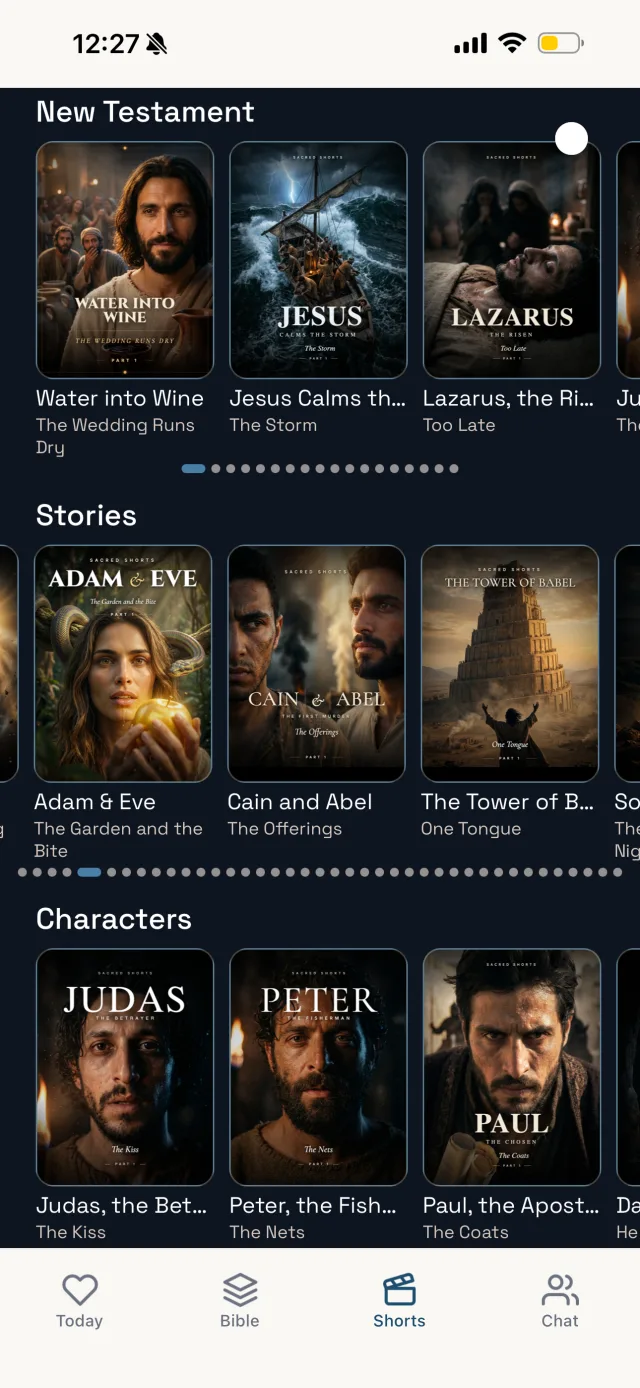
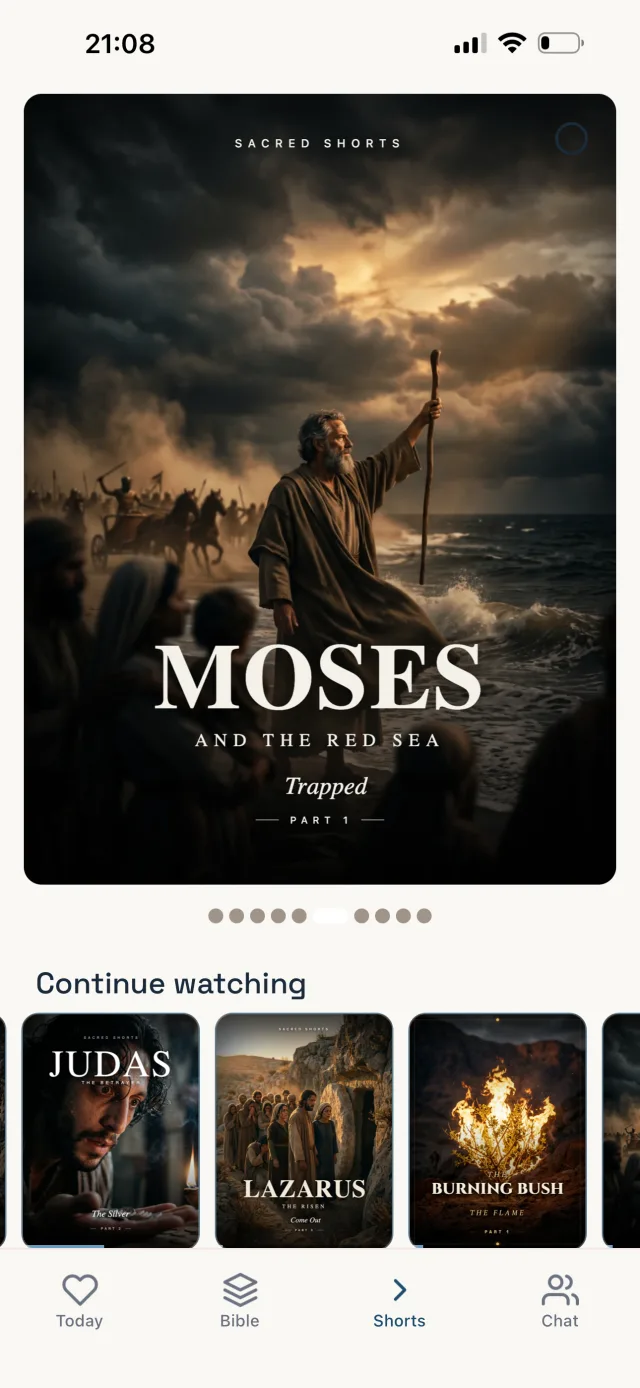
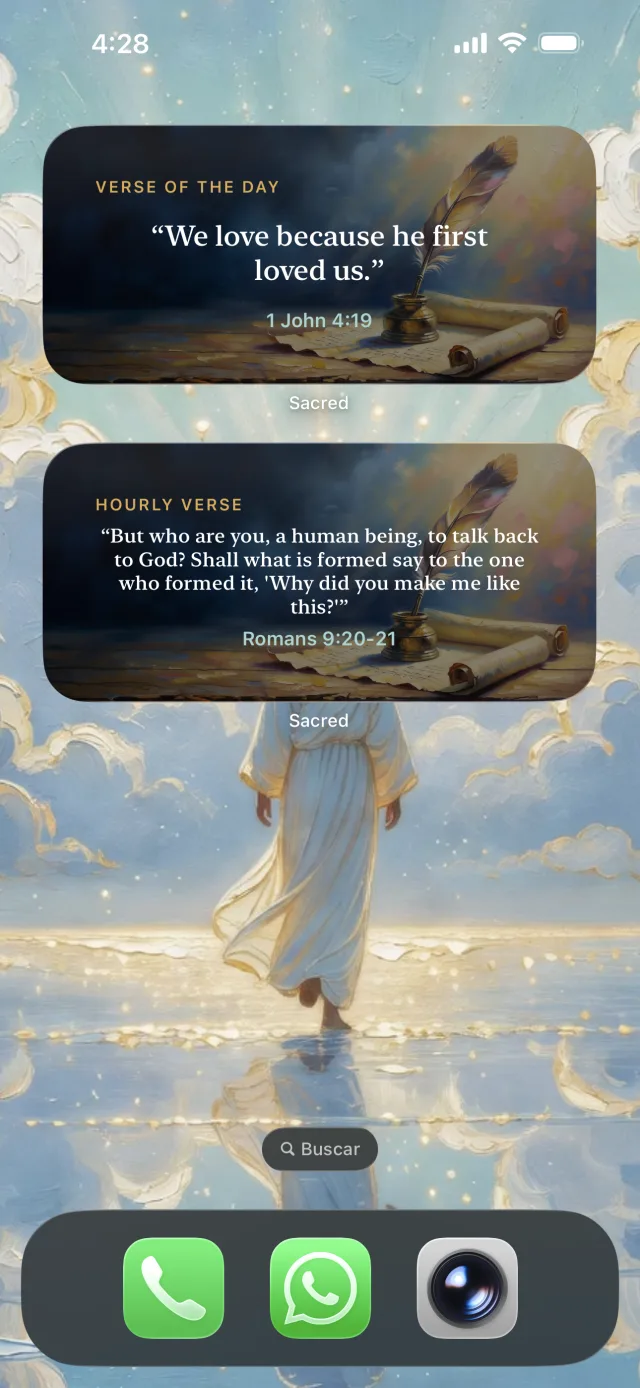
Sacred can support this kind of gentle beginning. Sacred Shorts offers cinematic Bible scenes, while the Study Bible keeps the text close. Daily devotionals, Guided Prayer, and AI Bible Chat can help a learner continue with questions and prayer. The app is a companion for the rhythm, not a replacement for Scripture or Christian community.
A first-week path for learning about Jesus
A simple first week might look like this. Day one: Jesus calls Peter, Andrew, James, and John. Day two: Jesus heals the paralytic. Day three: Jesus speaks with the woman at the well. Day four: Jesus calms the storm. Day five: Jesus tells the parable of the prodigal son. Day six: Jesus goes to the cross. Day seven: the empty tomb and the risen Christ.
For each day, keep the same pattern: watch → read → reflect → pray. Let the video awaken attention. Let Scripture lead. Let reflection make space for honest questions. Let prayer become a response rather than a performance.
Someone learning about Jesus does not need to understand the whole Bible in one sitting. They need a faithful place to begin. A Bible video can make the first step less intimidating, but the living witness is the Word itself. The best invitation is not “watch instead of reading.” It is “come and see, then open the text and listen.”
FAQ
Are Bible videos good for someone who is new to Jesus?
They can be helpful when they lead the person back to the Bible. A short scene may make the story easier to picture, but Scripture should remain the center of learning.
What Bible passages should a beginner read first?
The Gospels are the best starting point. Mark is concise, Luke is especially attentive to mercy and outsiders, Matthew shows fulfillment, and John invites deep reflection on Jesus’ identity.
Should I send Bible videos to a friend who is not a Christian?
You can, but do it gently and without pressure. Share a scene that points clearly to Jesus, invite honest conversation, and respect the person’s questions and pace.
 Sacred Shorts
Watch the Bible like never before
Cinematic Bible stories, a complete Study Bible, daily devotionals, and guided prayer. New episodes every week.