Home Bible study does not need to feel like a classroom, and it does not need to become another complicated project on the family calendar. At its best, it is a faithful place where Scripture is opened, people listen together, questions are welcomed, and prayer becomes natural. Bible videos can serve that kind of gathering well when they are used in the right order: not as a replacement for the Bible, but as a doorway into the biblical story.
A cinematic Bible scene can help a living room feel closer to Galilee, Jerusalem, the wilderness, a prison cell, a stormy sea, or a quiet table where Jesus teaches. It can give shape to places, emotions, and human tension that readers sometimes pass over quickly. When a video is reverent and careful, it may help a child picture the fear of the disciples in the boat, a teenager notice the loneliness of Joseph, or an adult slow down before the mercy of Christ. But every video is still an adaptation. It makes artistic choices. Scripture remains the authority; the video serves the reading.
That is why the best home rhythm is simple: watch → read → reflect → pray. Watch one short scene. Read the passage itself. Reflect together with honest questions. Pray in response to what God has revealed in the text. This rhythm keeps the screen in its proper place and helps the home become a place of Scripture-shaped attention.
Begin with one passage and one purpose
Before choosing a video, choose the passage. A home study works best when the group knows what part of Scripture will guide the evening. You might study Mark 4:35-41 and watch a scene of Jesus calming the storm. You might study Luke 15 and watch a scene of the prodigal son. You might study Exodus 3, Ruth 1, Daniel 6, John 20, Acts 9, or one of Paul’s missionary journeys. The point is not to cover everything. The point is to listen well.
Name the purpose before you begin. You can say, “We are going to watch this so we can imagine the scene, then we will open the Bible and let Scripture lead us.” That one sentence protects the study from becoming passive entertainment. It also teaches children, guests, and new believers a healthy instinct: visual storytelling can awaken attention, but God’s Word forms understanding.
For families or small groups, it is wise to consider age and sensitivity. Some biblical stories include violence, betrayal, grief, oppression, or mature themes. Parents and group leaders should preview when needed. Different Christian traditions also vary in how they use images, imagination, and devotional practices. A home study can honor those differences by returning humbly to the passage and making room for questions without forcing more certainty than the text gives.
Watch with attention, not distraction
If you use Bible videos at home, watch one short scene with intention. Put away extra screens. Keep a Bible nearby. Invite everyone to look for three things: what the video helped them notice, what emotion or conflict stood out, and what they want to check in the biblical text afterward.
This turns viewing into preparation for reading. Instead of asking, “Did you like it?” ask, “What did this help you imagine?” or “What question do you want to bring to the passage?” A child might notice the darkness of a storm. A friend might notice the courage required to obey God. Someone else might notice that a character’s words in the video are not quoted in Scripture. That is not necessarily a problem; adaptations often include implied dialogue. But it is a reason to read carefully.

The Bible has never felt like this
Watch this story come to life as a cinematic series in Sacred.
4.8on the App Store
Read the Scripture aloud
After watching, open the Bible and read the passage aloud. Reading aloud slows the room down. It lets the words correct, deepen, and sometimes challenge what the video made everyone feel. If the passage is long, read a focused section and summarize the surrounding context. If it is short, read it twice.
Ask observation questions first. What actually happens in the text? Who speaks? What commands, promises, warnings, or acts of mercy appear? What details did the video include that are explicit in Scripture, and what details were artistic imagination? These questions do not need to become critical in a cold way. They are a form of reverence. They teach the home to love Scripture enough to notice it.
Then ask meaning questions. What does this passage show about God’s character? What does it reveal about human fear, sin, faith, obedience, repentance, or hope? Where does the passage point us toward Christ, either directly in the Gospels or within the larger story of Scripture? If a doctrinal issue arises, speak with humility. Christians from different denominations may explain some details differently, especially around sacraments, church authority, spiritual gifts, or end-times passages. Keep the main thing clear and acknowledge where tradition matters.
Reflect in a way people can actually answer
Home Bible study becomes fruitful when people are invited to respond honestly. Use questions that fit the room. For children: “What did God do?” “Who needed help?” “What did Jesus say?” For teens: “What would have been hard about trusting God here?” “Where do people misunderstand this story?” For adults: “What does this passage confront in us?” “What promise or command should shape our week?”
A helpful pattern is head, heart, and hands. Head: what does the passage say? Heart: what does it reveal about our loves, fears, and hopes? Hands: what faithful response can we practice? Do not force dramatic answers. Sometimes the most faithful response is small: forgive someone, pray with more honesty, read the next chapter, confess impatience, serve quietly, or remember God’s mercy in a hard week.
Pray from the passage
Prayer keeps home study from ending as a discussion only. Let the passage give language to the prayer. If you read about Jesus calming the storm, pray for trust. If you read about Ruth, pray for loyal love and courage. If you read about Peter’s denial and restoration, pray for repentance and grace. If you read Acts, pray for courage and witness.
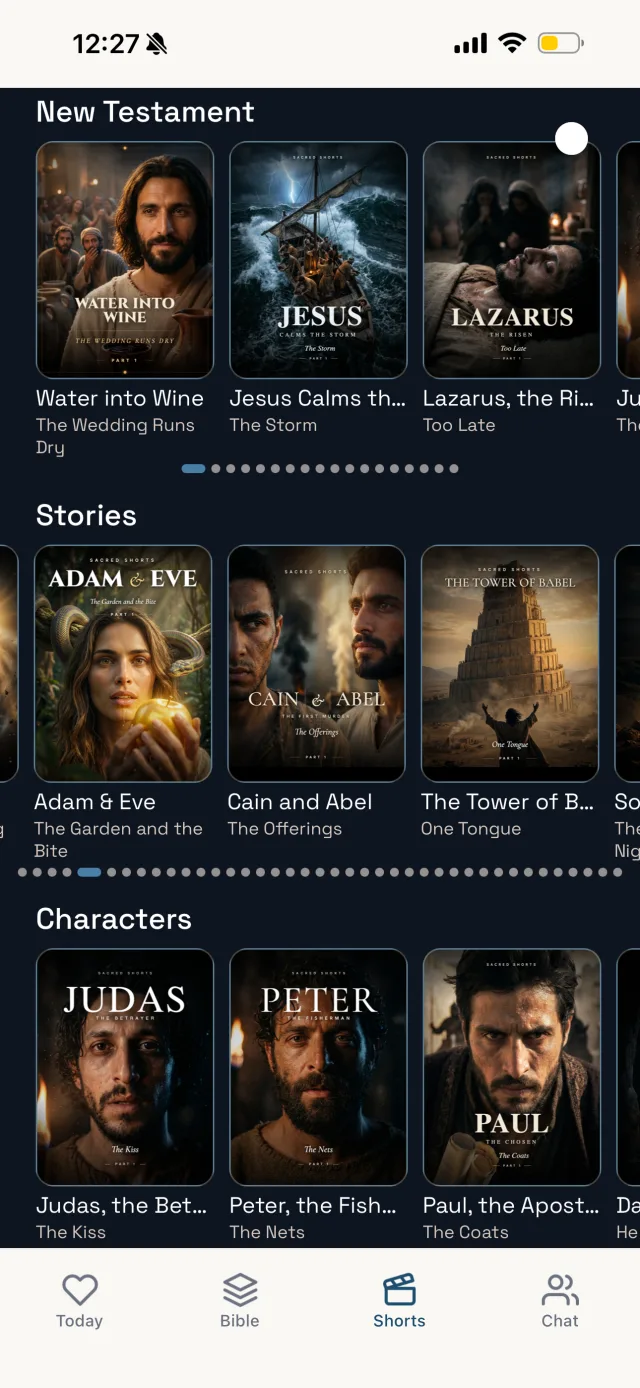
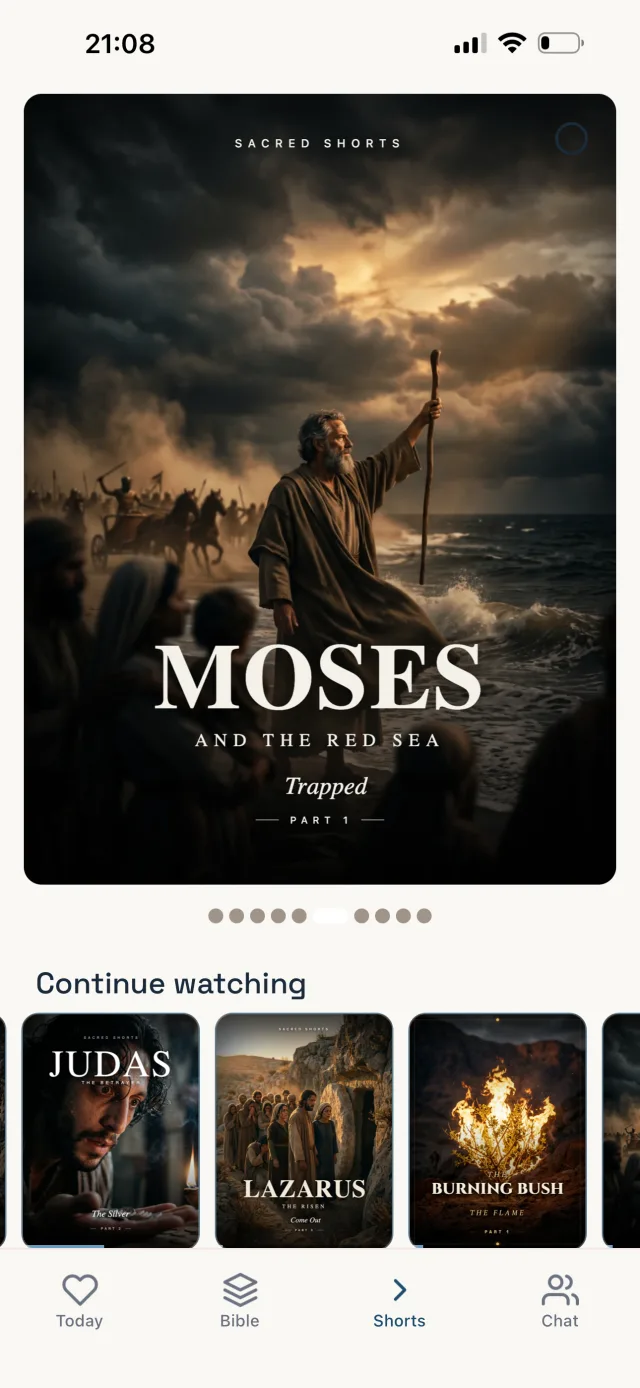
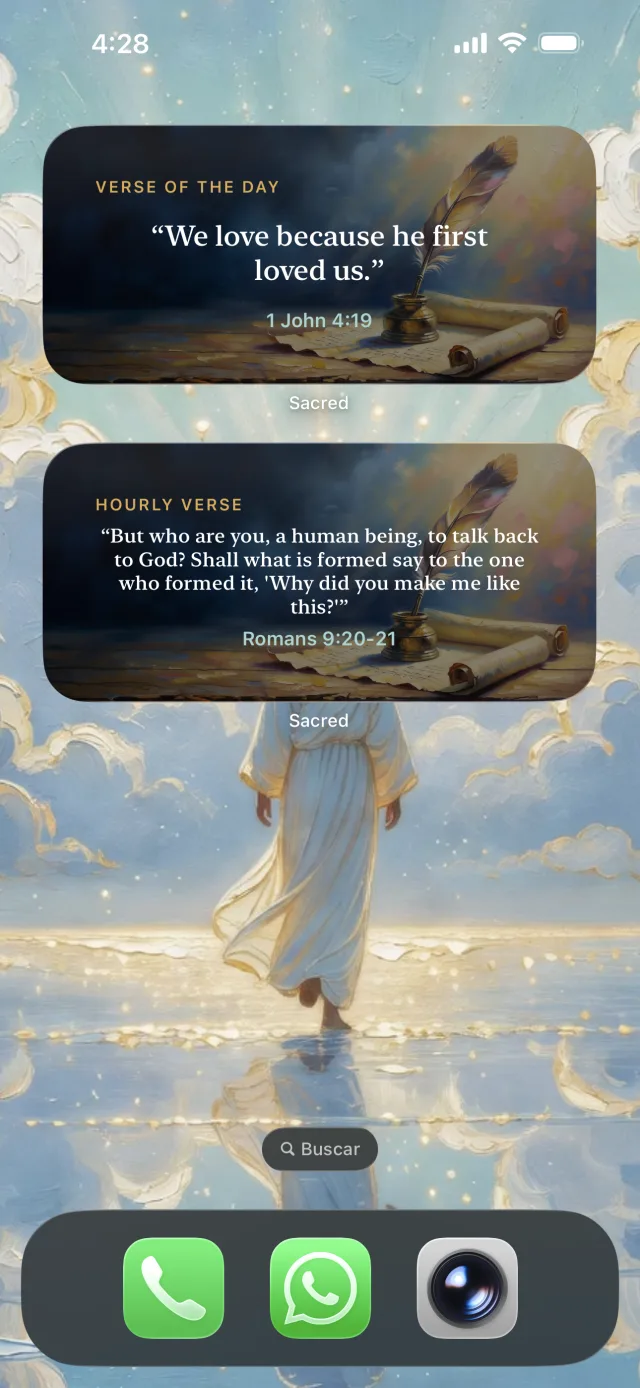
Sacred can support this rhythm gently. Sacred Shorts offers cinematic Bible stories in short form, while the Study Bible helps you return to the passage itself. Guided Prayer can help turn reflection into prayer, and AI Bible Chat can help with thoughtful questions about context and meaning. Reading Scripture is always free in Sacred. The larger purpose is not to replace the Bible, but to help you build a daily practice: watch, read, reflect, and pray.
A home Bible study does not need perfect lighting, a polished lesson, or everyone in the room feeling equally ready. It needs an open Bible, a humble order, and a willingness to let visual imagination serve the Word. When video leads back to Scripture, it can help the home slow down and enter the story. Scripture remains the voice that teaches, corrects, comforts, and calls us to faithful response.
FAQ
Can Bible videos replace reading Scripture at home?
No. Bible videos can help people imagine and enter the biblical story, but they should not replace Scripture. Use them as a doorway, then read the passage itself.
What is the best order for a home Bible video study?
A simple rhythm is watch → read → reflect → pray. Watch one short scene, read the related passage, discuss what the text says, and pray in response.
How do I keep a Bible video study from becoming entertainment?
Choose one passage first, watch with specific questions, read Scripture aloud afterward, and let prayer come from the text. The video should serve attention to God’s Word.
 Sacred Shorts
Watch the Bible like never before
Cinematic Bible stories, a complete Study Bible, daily devotionals, and guided prayer. New episodes every week.