Bible videos can become a meaningful part of daily Bible study when they serve the text instead of replacing it. A short cinematic scene may help you picture a road in Galilee, a quiet room in Jerusalem, a desert camp in Exodus, or the fear of a disciple in a storm. That gift matters. Imagination can make the biblical world feel less distant. But Christian study does not end with a screen. The strongest habit is simple: watch, then read, then reflect, then pray.
This order protects the purpose of the practice. Scripture is not background material for inspirational content. It is the Word received and treasured by the church across generations. A video can invite attention, awaken curiosity, and slow down a distracted mind, but the Bible remains the source to which we return. If a video makes you want to open the passage, ask better questions, and respond to God in prayer, it is serving your study well.
Start with one scene, not a whole binge
Daily Bible study works best when it is small enough to repeat. Instead of trying to watch an entire Bible series every morning, choose one short scene or episode connected to a specific passage. A short moment from the life of Jesus, a scene from Genesis, a prophet standing before a king, or Paul speaking in Acts can become a doorway into the text.
Before you press play, name your intention. You are not watching mainly to be entertained or to collect spiritual content. You are watching to become more attentive to Scripture. That intention changes the way you watch. You notice the setting, the tension, the human emotions, and the questions the scene raises. You also remain aware that every adaptation makes choices. Costumes, faces, weather, pauses, and extra dialogue may help the story feel embodied, but they are not the final authority.
After the video ends, resist the urge to scroll to something else. Pause for a moment. What part of the scene stayed with you? What detail made you curious? What did the video emphasize? What might have been imagined by the creators rather than stated directly in the biblical passage? These observations prepare you to read with both openness and discernment.
Read the passage with the video in the background, not in control
The next step is to open the Bible and read the related passage. If you watched Jesus calm the storm, read the Gospel account. If you watched Joseph forgive his brothers, read the chapters in Genesis. If you watched the early church pray, read Acts. The goal is not to prove the video wrong; the goal is to let Scripture guide your understanding.
As you read, compare gently. What details are clearly in the text? What details did the video add to help the scene move visually? What did the passage say that the video could not fully show? Sometimes a film highlights emotion, but the text emphasizes obedience. Sometimes a scene makes a character sympathetic, but the passage confronts sin more directly. Sometimes the video compresses several events, while the Bible gives a slower rhythm.
This comparison is not cold analysis. It is reverence. Because the Bible matters, we do not let any adaptation become our Bible. We receive the help of visual storytelling while returning to the written Word. In different Christian traditions, readers may approach certain passages with different emphases, especially around sacraments, church authority, prophecy, or worship. Daily study can make room for those differences while keeping the central question clear: what is this passage saying, and how should I respond faithfully?

The Bible has never felt like this
Watch this story come to life as a cinematic series in Sacred.
4.8on the App Store
Reflect with questions that lead to obedience
Reflection turns watching and reading into formation. After you read, choose two or three questions. What does this passage reveal about God? What does it reveal about human fear, pride, faith, need, or hope? What command, promise, warning, or invitation appears in the text? Where did the video help you imagine the moment, and where did Scripture deepen or correct your first impression?
You can write one sentence in a journal or notes app. Keep it concrete. Instead of writing, “This was powerful,” try, “The disciples were afraid even with Jesus in the boat, and the passage invites me to bring fear to Him rather than pretend I am calm.” Instead of writing, “Joseph was forgiving,” try, “Genesis shows forgiveness without denying the evil that was done.” Simple, specific reflections are easier to carry through the day.
If you are studying with family, friends, or a small group, let everyone answer from the passage before moving to application. Bible videos can make conversation easier because people remember the scene, but the group should keep asking, “Where do we see that in the text?” This keeps the study from becoming only opinions about a film.
Pray from the passage
The final step is prayer. A daily Bible video habit becomes Christian formation when it leads you to speak with God. You might thank Him for what the passage reveals, confess where the story exposes your heart, ask for courage to obey, or pray for someone who needs the mercy shown in the text. You do not need a long prayer. One honest paragraph can be enough.
For example: “Lord, help me not to rush past Your Word. Thank You for making this story vivid today. Teach me to trust You in the place where I am afraid. Let what I watched lead me back to what You have spoken.” Prayer gathers the whole routine into response: watch, read, reflect, pray.
Some traditions use written prayers, lectio divina, family devotions, or guided spiritual practices. Others prefer spontaneous prayer and personal journaling. The form may differ, but the goal is shared: receive Scripture with humility and respond to God with faith.
How Sacred can support the rhythm
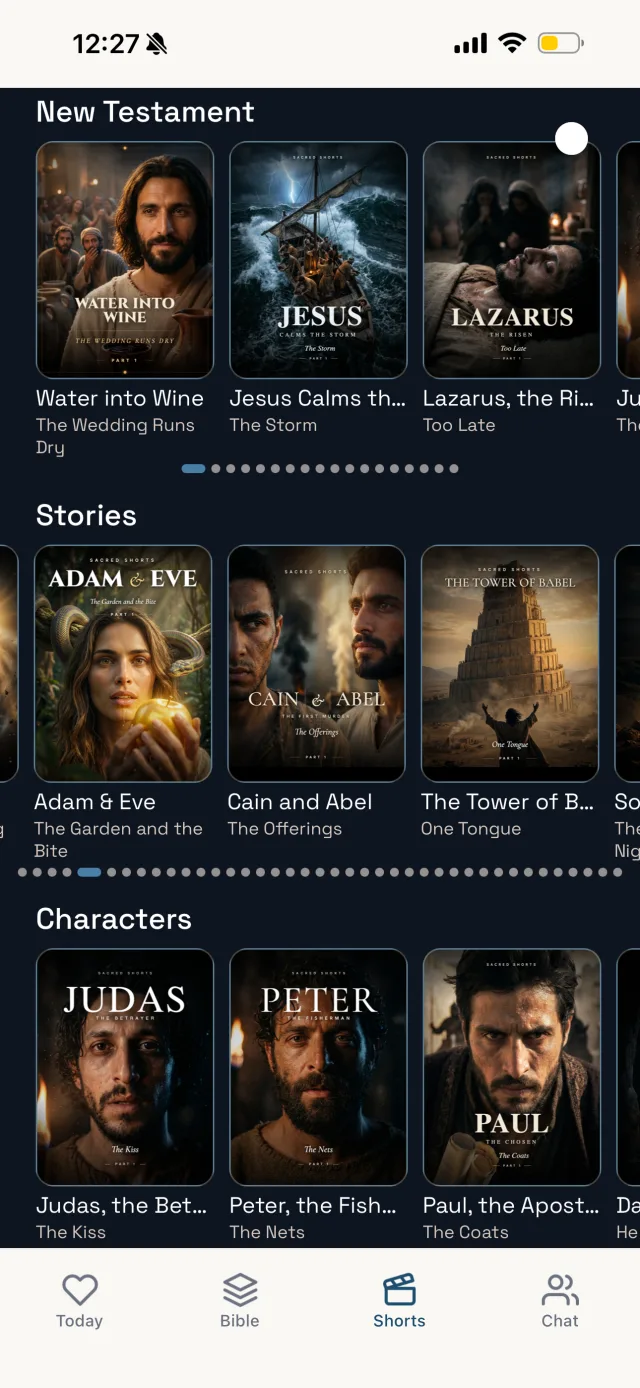
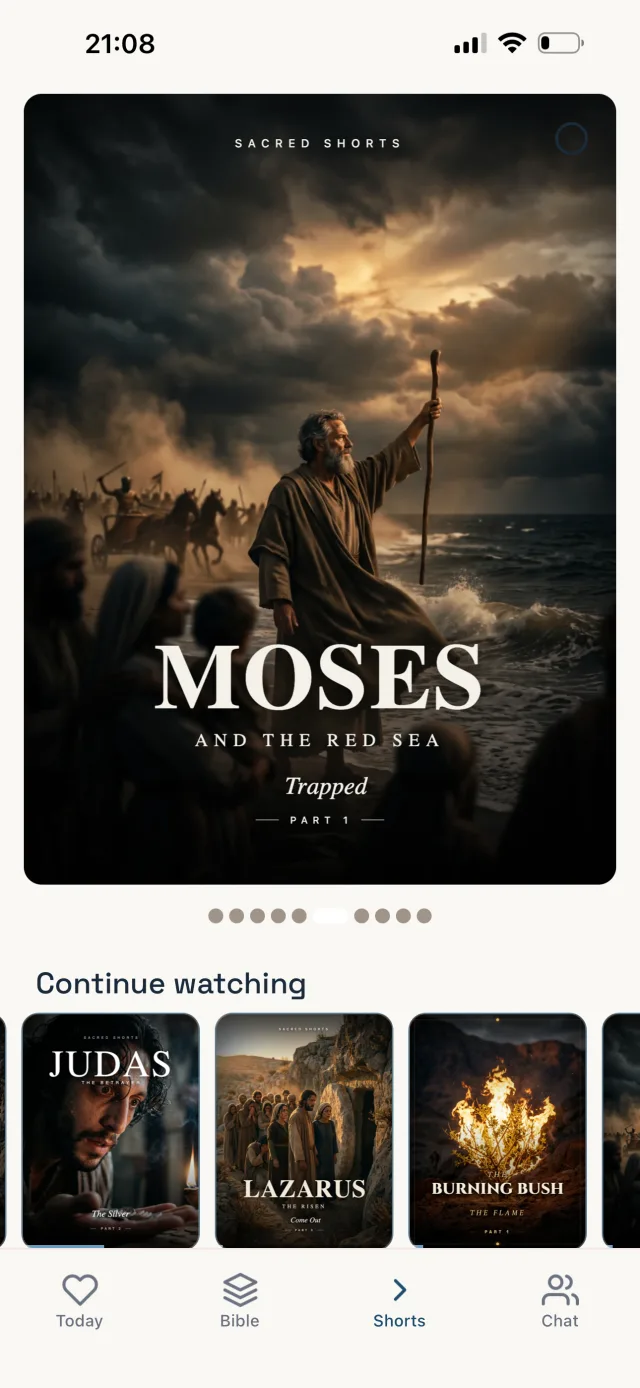
Sacred is designed for this Scripture-first habit. Sacred Shorts can help you enter a biblical scene with cinematic attention, while the Study Bible keeps the passage close. Daily devotionals can guide reflection, Guided Prayer can help turn the text into a personal response, and AI Bible Chat can support thoughtful questions about context and meaning. None of these replaces Scripture. They are tools for coming back to it with focus.
A simple Sacred routine could take ten minutes. Watch one short biblical scene. Open the connected passage in the Study Bible. Write down one observation. Pray one honest prayer. If a question remains, ask it carefully and compare the answer with Scripture and, when needed, the wisdom of your tradition or local church.
Over time, this rhythm can make daily Bible study feel less abstract. The Bible is not a distant collection of religious ideas. It is a story of creation, covenant, failure, mercy, redemption, and hope. Video can help you imagine and enter that story, but the life-giving center remains the Word itself. Let the screen become a doorway. Then open the Bible.
FAQ
Can Bible videos be part of daily Bible study?
Yes. Bible videos can help you imagine a passage and pay closer attention, as long as they lead you back to Scripture. Use them as a doorway, not as the final word.
What is the best routine for using Bible videos?
A simple rhythm is watch, read, reflect, pray. Watch one short scene, read the related passage, reflect on what the text says, and respond to God in prayer.
Do Bible videos replace reading Scripture?
No. Video can help you picture and enter the biblical story, but it does not replace the Bible. The authority remains in Scripture, not in the adaptation.
 Sacred Shorts
Watch the Bible like never before
Cinematic Bible stories, a complete Study Bible, daily devotionals, and guided prayer. New episodes every week.