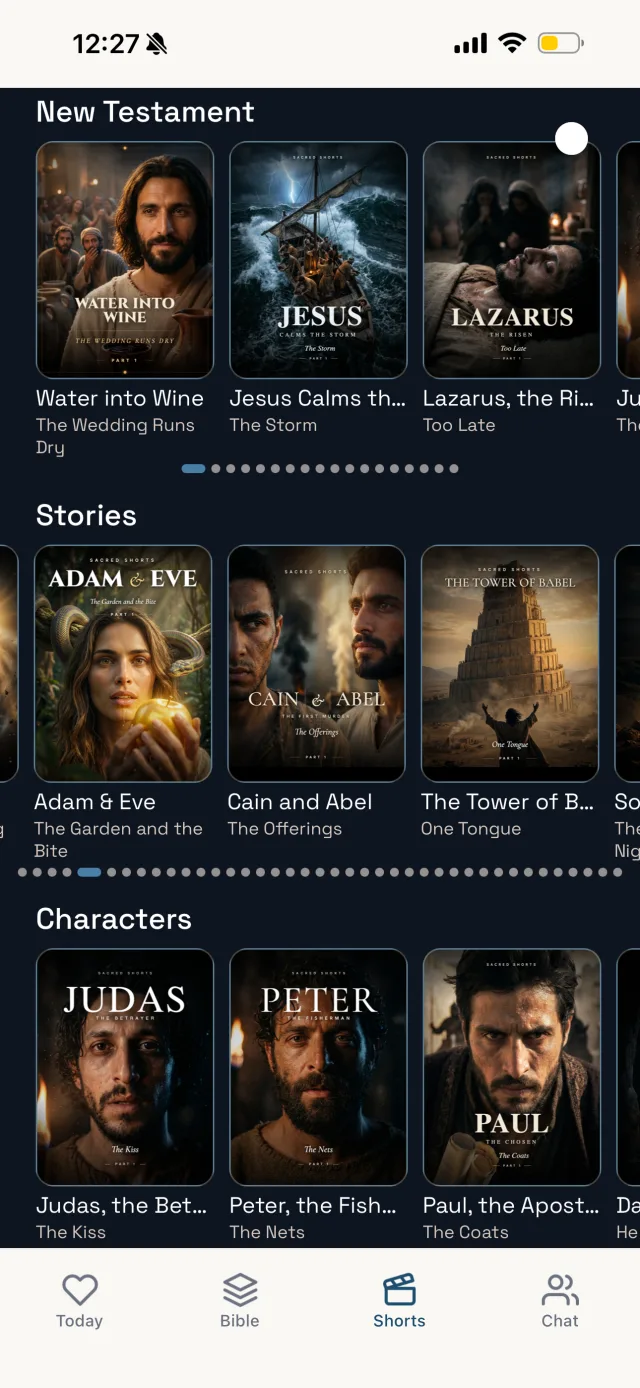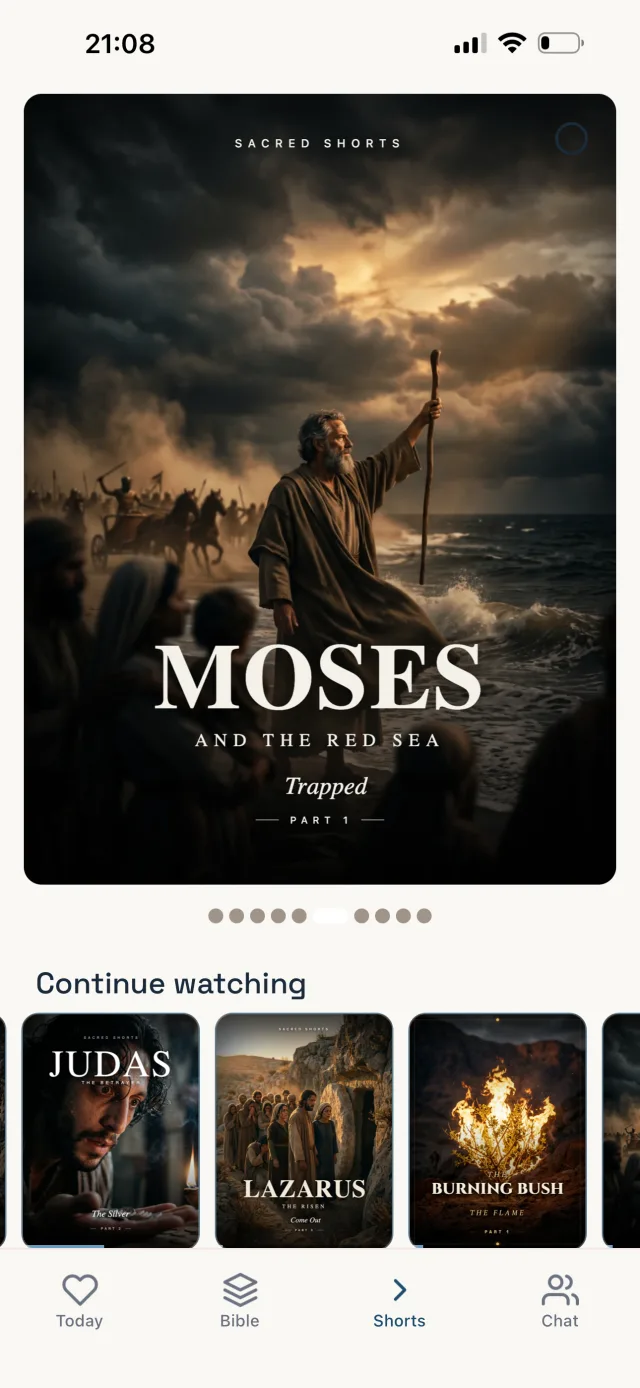
A family Bible video night can be more than a screen in the living room. At its best, it is a gentle doorway into Scripture: a shared moment where children, parents, grandparents, or friends imagine a biblical scene together and then open the Bible to listen more carefully. The goal is not to replace family devotions, church, catechesis, Sunday school, or personal reading. The goal is to make space for the biblical story to be seen, read, discussed, and prayed over with reverence.
Video can help a family enter the world of the text. A desert can feel dry. A storm can feel frightening. A table can feel crowded. A road to Jerusalem can feel long. When a scene is made with care, it can slow everyone down long enough to notice human fear, courage, confusion, mercy, repentance, and hope. But every Bible video is still an adaptation. It chooses faces, voices, settings, pacing, and sometimes imagined dialogue. Scripture remains the authority; the video serves the reading.
That is why the simplest rhythm for a family night is watch → read → reflect → pray. Watch one short scene. Read the passage connected to it. Reflect together with honest questions. Pray in response. This rhythm keeps the evening from becoming religious entertainment and turns it into a family practice shaped by the Word of God.
Choose one story, not a whole season
The first decision is restraint. A family Bible video night works best when you choose one story or one short episode, not a long binge. Children and adults both need room to process what they saw. If you watch too much, the conversation becomes blurry. If you watch one scene, the passage can stay clear.
Good starting stories include creation, Noah, Abraham, Joseph, Moses, Ruth, David, Daniel, Mary, Jesus calling the disciples, the feeding of the five thousand, the prodigal son, the good Samaritan, the Last Supper, the resurrection, or Paul on the road to Damascus. Some stories include violence, grief, betrayal, or mature themes. Parents should preview content when needed and choose scenes with the age and sensitivity of the family in mind.
It also helps to name the purpose before pressing play. You might say, “We are going to watch this scene so we can imagine the story, but afterward we will read the Bible itself.” That one sentence teaches a healthy order. The screen is not the final teacher. It is an invitation to pay attention.
Read the passage out loud
After the video, open the Bible. Read the passage slowly, preferably out loud. If the scene was about Jesus calming the storm, read Mark 4:35-41 or the parallel passages. If it was about Joseph forgiving his brothers, read Genesis 45 or Genesis 50:15-21. If it was about the prodigal son, read Luke 15:11-32. The reading does not need to be long, but it should be real.
Ask everyone to listen for what the text says, not only what the video showed. Did the adaptation include something the passage does not mention? Did it leave out a detail? Did the music make a moment feel one way while the words of Scripture emphasize something else? These questions do not need to become suspicious or harsh. They simply train discernment.
This is especially important because Christian families come from different traditions. Some may be comfortable with imaginative scenes around biblical narratives; others may prefer a more minimal visual treatment. Some traditions emphasize certain interpretive connections, sacraments, or devotional practices differently. A family Bible video night can honor those differences by returning again and again to the biblical passage and by speaking humbly where interpretation varies.

The Bible has never felt like this
Watch this story come to life as a cinematic series in Sacred.
4.8on the App Store
Reflect with questions everyone can answer
The best family conversations are simple enough for a child and deep enough for an adult. Start with observation before application. Ask, “What happened in the passage?” Then ask, “What did we notice about God?” “What did we notice about people?” “Where did we see fear, faith, sin, mercy, obedience, or hope?” “What part of the video helped us imagine the story?” “What part do we need to check against Scripture?”
For younger children, use concrete questions: “Who was afraid?” “Who helped?” “What did Jesus say?” “What surprised you?” For teens, leave room for honest response: “What would have been difficult about trusting God in this moment?” “Where do people today misunderstand this story?” “What question would you ask after reading this passage?”
The point is not to force a perfect lesson from every person. Family discipleship often grows through repetition, patience, and ordinary faithfulness. Some nights will be lively. Some will be quiet. Some children may remember only one image. That is still meaningful if the image sends them back to the words of Scripture.
Pray from the passage, not just about the night
Prayer helps the family respond to God rather than simply analyze a story. Keep it short and rooted in the text. If you read about Jesus calming the storm, pray for trust in Christ in fearful moments. If you read about Ruth, pray for loyal love and courage. If you read about Zacchaeus, pray for repentance, generosity, and joy. If you read about the early church, pray for courage and unity.
You can invite each person to finish one sentence: “Lord, help me to…” or “Thank You for showing us…” or “Teach our family to…” Nobody needs to perform. Prayer should feel natural, reverent, and honest.
This is also where Sacred can fit gently into the rhythm. Sacred Shorts offers cinematic Bible stories in short form, while the Study Bible helps families return to the passage. Guided Prayer can help turn a scene into a personal or family prayer, and AI Bible Chat can help with thoughtful questions about context and meaning. Reading Scripture remains free in Sacred, and the larger experience is meant to support the habit: watch a scene, read the Bible, reflect together, and pray.
A simple family Bible video night plan
Here is a practical structure you can use this week. First, choose one story and preview it if children are young or sensitive. Second, gather with minimal distractions: phones away, Bible ready, maybe a notebook nearby. Third, watch one short video. Fourth, read the related passage out loud. Fifth, ask three questions: What did the text say? What did the video help us imagine? How should we respond? Sixth, pray one short prayer together.
If you want to make it weekly, keep the pattern predictable. Families often thrive on rhythms that are simple enough to repeat. You might choose Friday nights, Sunday evenings, or one weekday after dinner. The consistency matters more than the production. You do not need candles, perfect silence, or a long lesson plan. You need an open Bible, a humble heart, and a willingness to let the story lead you toward God.
A Bible video night is not about making Scripture flashy. It is about helping the family slow down and enter the story with imagination while letting Scripture govern understanding. When video serves the Word, the screen becomes a doorway. The Bible remains the room where the family learns to listen.
FAQ
Can a Bible video night replace family Bible reading?
No. A Bible video can help your family imagine and enter the story, but it should not replace Scripture. The healthiest pattern is to watch, read, reflect, and pray.
How do I choose Bible videos for children?
Preview when possible, especially with stories involving violence, fear, betrayal, or mature themes. Choose videos that point clearly back to the biblical passage and fit your family’s age and sensitivity.
What should we do after watching a Bible video?
Read the related passage out loud, ask simple observation and reflection questions, and pray from the text. Let the video awaken attention, but let Scripture guide the conversation.
 Sacred Shorts
Watch the Bible like never before
Cinematic Bible stories, a complete Study Bible, daily devotionals, and guided prayer. New episodes every week.