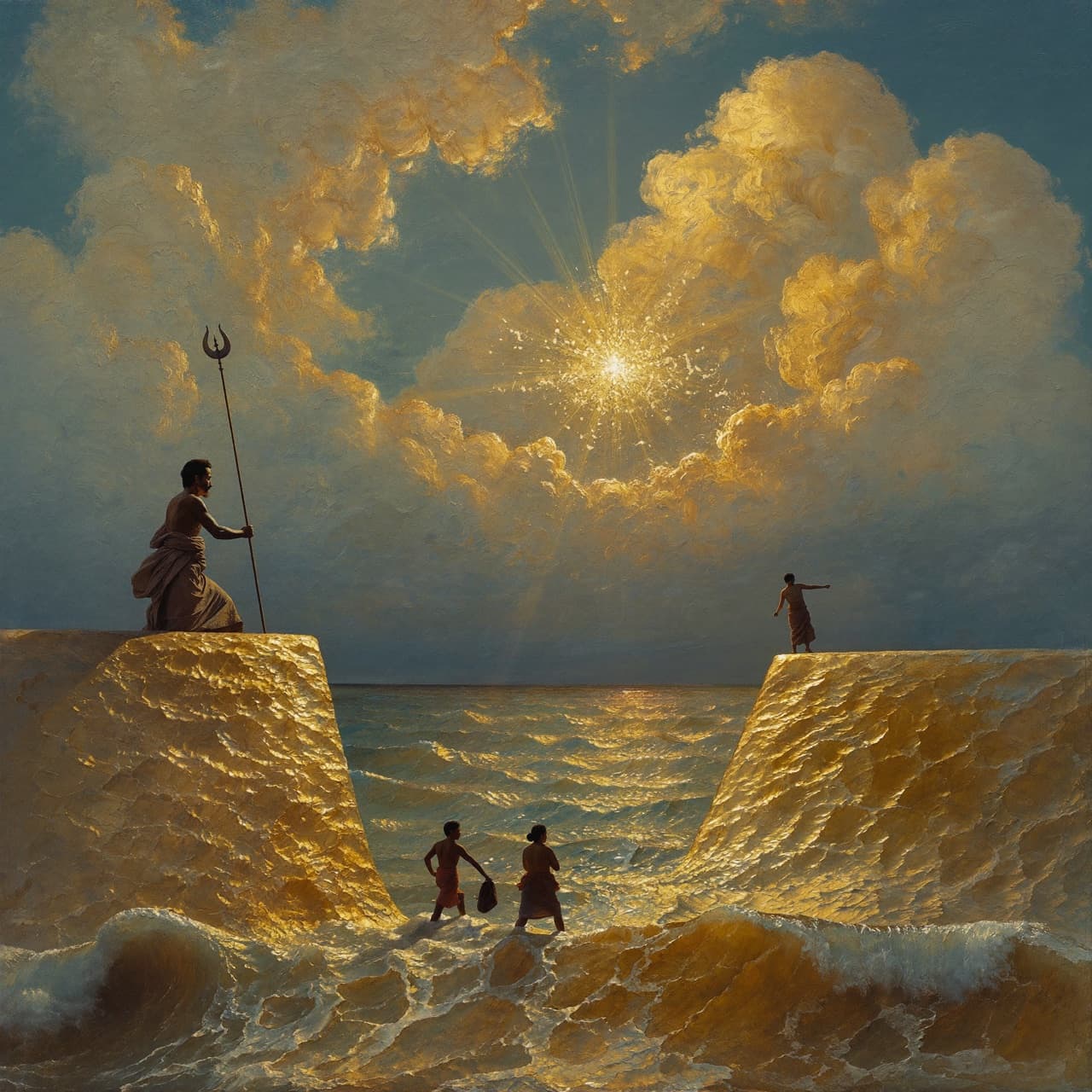
If you want to watch the story of Moses and the Red Sea in video, you have three strong options: the animated classic The Prince of Egypt, BibleProject's free Exodus overview videos, and the Sacred Shorts app, which tells the story as a cinematic series in short vertical episodes. The story itself comes from Exodus 13-15, where God rescues Israel from Pharaoh's army by opening a path through the sea.
Quick answer: key takeaways
- The Red Sea crossing is told in Exodus 14, the climax of Israel's escape from Egypt.
- The Prince of Egypt (1998) remains the most beloved film version of the Exodus.
- BibleProject offers free animated overviews of Exodus that explain the story's meaning.
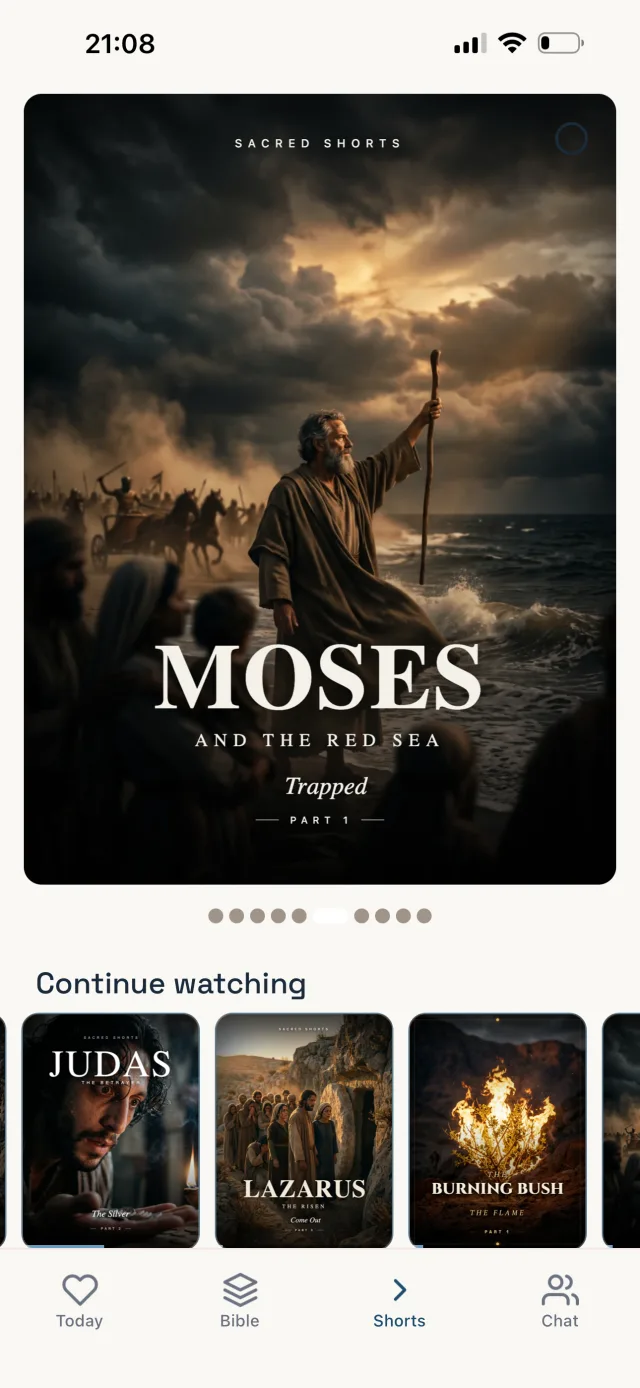
- Sacred Shorts has a dedicated Moses and the Red Sea series in short cinematic episodes, plus related series on The Burning Bush and The Plagues.
- Watching the story works best when paired with reading Exodus 13-15 yourself.
The story of Moses and the Red Sea, scene by scene
Part of what makes this story so watchable is that it already moves like a screenplay. Here is the arc, episode by episode, as it unfolds in Exodus.
Episode 1: Leaving Egypt
After the tenth plague, Pharaoh finally releases Israel. Hundreds of thousands of people walk out of the only home they have known, carrying unleavened bread because there was no time to let it rise. God leads them personally, in a pillar of cloud by day and a pillar of fire by night (Exodus 13:21-22). The full background to this moment is worth knowing; our guide to the Exodus from Egypt walks through the plagues and the Passover that set it up.
Episode 2: Pharaoh changes his mind
Back in Egypt, Pharaoh regrets losing his workforce. He musters six hundred of his best chariots and rides out in pursuit (Exodus 14:5-9). This is the turn every good story needs: the victory that looked final suddenly is not.
Episode 3: Trapped at the water's edge
Israel camps by the sea and looks up to see dust on the horizon. They are pinned between the water and the most powerful army in the world. The people panic and turn on Moses, asking whether he brought them out to die in the desert. His answer is one of the most quoted lines in the Old Testament:
"Do not be afraid. Stand firm and you will see the deliverance the Lord will bring you today... The Lord will fight for you; you need only to be still." — Exodus 14:13-14 (NIV)
Episode 4: The sea opens
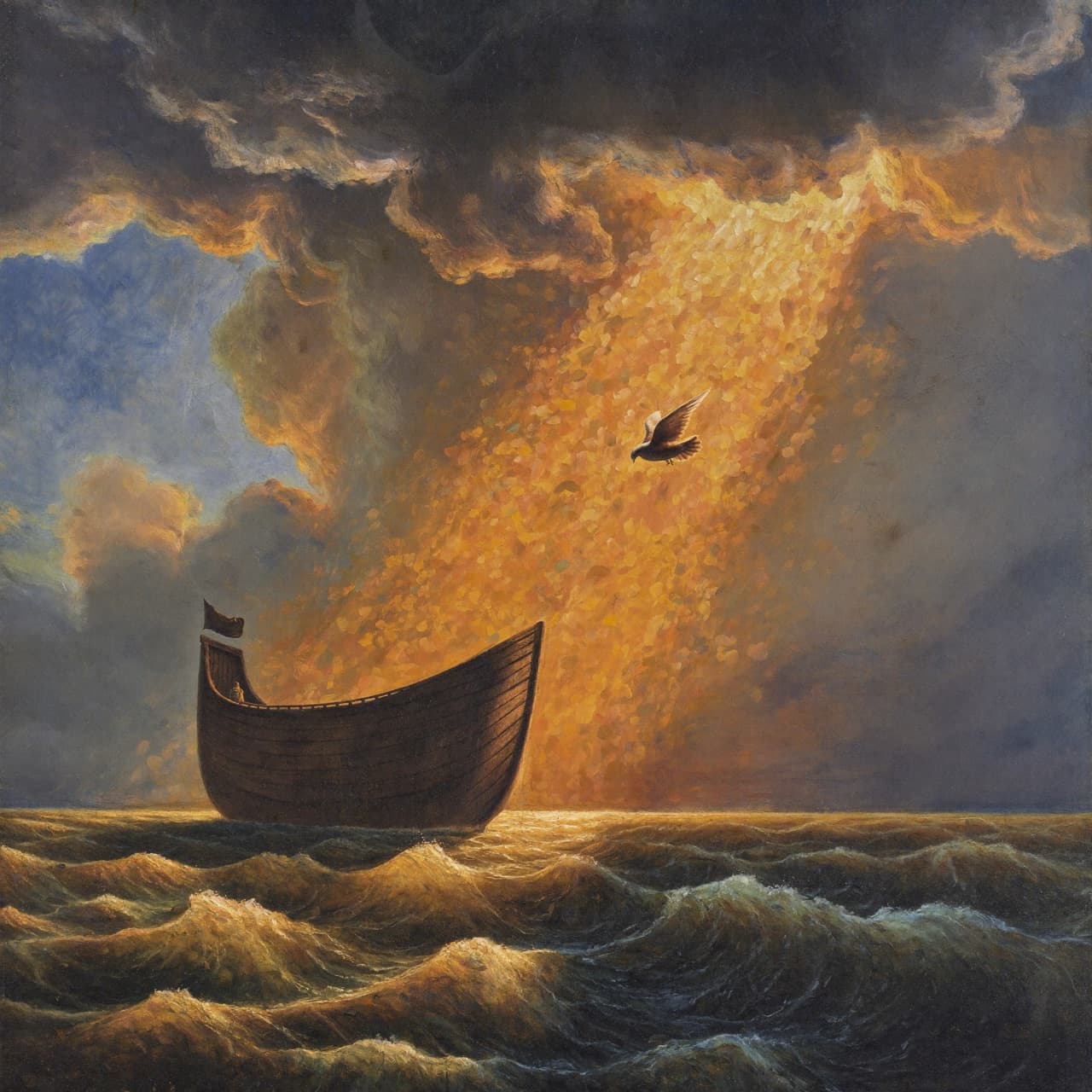
The pillar of cloud moves behind Israel, standing between them and the Egyptians through the night. Then Moses stretches out his hand:
"Then Moses stretched out his hand over the sea, and all that night the Lord drove the sea back with a strong east wind and turned it into dry land. The waters were divided, and the Israelites went through the sea on dry ground, with a wall of water on their right and on their left." — Exodus 14:21-22 (NIV)
Episode 5: The army pursues, the waters return
The Egyptians chase Israel into the seabed. Their chariot wheels jam, and by morning the water returns over them. Israel watches from the far shore as the threat that has defined their lives for generations disappears.
Episode 6: The song on the shore
Exodus 15 records Israel's response: not a strategy meeting, but a song. Moses and Miriam lead the people in worship: "The Lord is my strength and my defense; he has become my salvation" (Exodus 15:2, NIV). For a deeper look at what each scene means, see our full study of crossing the Red Sea in the Bible.

The Bible has never felt like this
Watch this story come to life as a cinematic series in Sacred.
4.8on the App Store
Why does the Red Sea crossing work so well on screen?
Some Bible stories are mostly dialogue or teaching. This one is pure cinema, and filmmakers have known it for almost a century.
First, the visuals are unmatched. Walls of standing water, a corridor of dry seabed, torchlit chariots at night, a pillar of fire: these are images a narrator can only gesture at, but a screen can show. It is no accident that the parting of the sea is the signature shot in nearly every Moses film ever made.
Second, the structure is flawless. There is a ticking clock (the approaching army), an impossible obstacle (the sea), a reversal (the path opens), and a payoff (the pursuers are swallowed). Screenwriters spend careers trying to build sequences this tight.
Third, the emotion is universal. Everyone has stood at some water's edge with trouble closing in behind them, feeling like there is no way through. Watching the sea open lands differently when you have prayed for a way out of something yourself. That is why this story anchors so many lists of the best Bible story videos: it is spectacle with a soul.
Where can you watch Moses and the Red Sea in video?
Here are the main options, honestly compared.
| Option | Format | Length | Best for | Cost |
|---|---|---|---|---|
| The Prince of Egypt (1998) | Animated feature film | ~99 min | Families, movie night | Rent/buy or streaming |
| BibleProject: Exodus overviews | Animated explainer videos | 6-8 min each | Understanding the meaning | Free (YouTube) |
| Sacred Shorts: Moses and the Red Sea | Cinematic vertical series | A few minutes per episode | Watching on your phone, one scene at a time | iOS and Android (subscription) |
| The Ten Commandments (1956) | Live-action epic | ~220 min | Classic film lovers | Rent/buy or streaming |
The Prince of Egypt is the emotional heavyweight: its Red Sea sequence, scored to "When You Believe," still holds up. BibleProject is the best free option if you want the story explained rather than dramatized. The Ten Commandments is the granddaddy of them all, though its length makes it a commitment.
Watching it as a series on Sacred Shorts
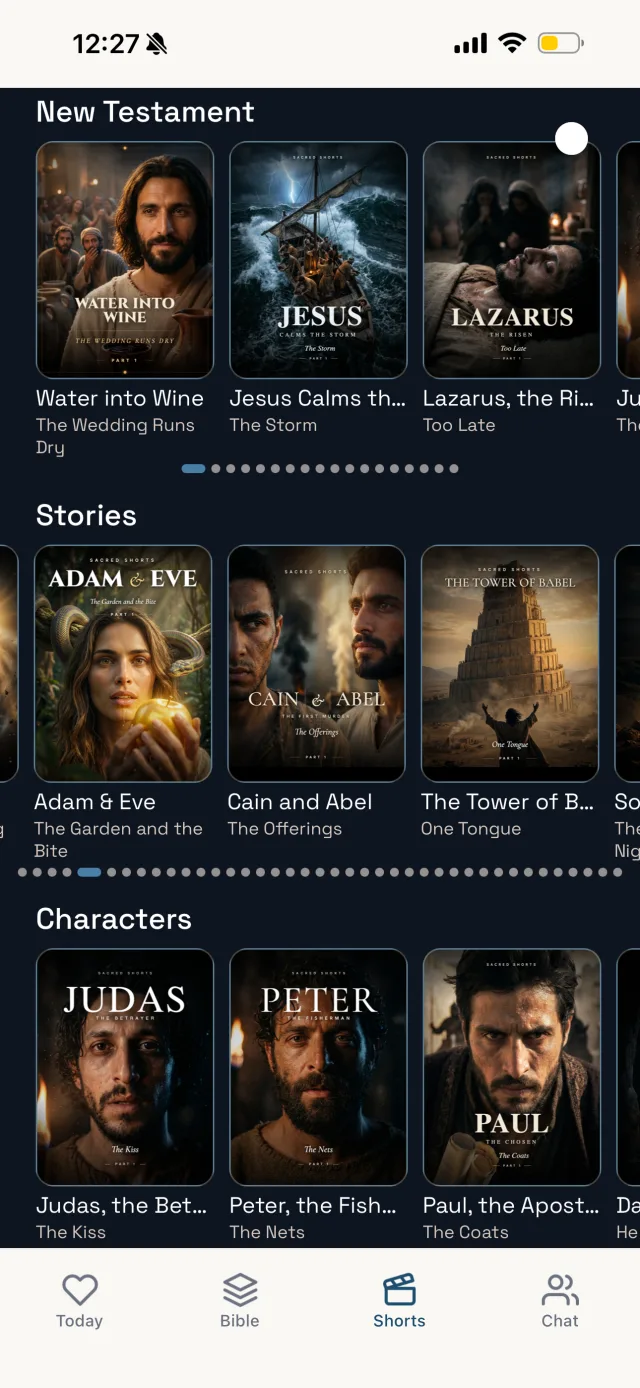
Sacred Shorts takes a different approach from feature films: it tells Bible stories the way people actually watch video now, in short vertical episodes of a few minutes each — cinematic, series-style storytelling built for your phone. The app has a dedicated Moses and the Red Sea series, and because the Exodus is a connected saga, you can also watch The Burning Bush and The Plagues series to see the whole arc from Moses' calling to the far shore of the sea.
A few honest details: the app is a subscription app for iOS and Android, holds a 4.8-star rating on the App Store, and adds new series weekly. It also includes a full Bible reader with multiple translations, so you can watch a scene and then read Exodus 14 in the same app, plus an AI-powered Bible Chat for questions the video raises. Everything is available in English, Spanish, and Portuguese. If your schedule only allows a few minutes at a time, this episodic format is the most realistic way to actually finish the story; we wrote more about that approach in our guide to short Bible videos for busy people.
How to get the most out of watching
Video is a doorway, not a destination. A simple rhythm makes the story stick:
- Watch first. Let the images do what images do; feel the panic at the shore and the awe of the crossing.
- Then read Exodus 13-15. Ten minutes, straight through. Notice what the films dramatize and what they leave out, like the pillar of cloud moving behind Israel.
- Ask one question. Where in your life are you standing between the water and the army? Exodus 14:14 was written for that exact moment.
- Keep going. The Red Sea is the middle of the story, not the end. The wilderness, Sinai, and the promised land follow, and there are plenty more Bible stories that connect to this one.
The story of Moses and the Red Sea has survived three thousand years of retelling because it answers a question every generation asks: when the way is blocked and the pressure is behind you, is there a God who makes a way through? Watch it, read it, and decide what you believe about that answer.
 Sacred Shorts
Watch the Bible like never before
Cinematic Bible stories, a complete Study Bible, daily devotionals, and guided prayer. New episodes every week.
Frequently asked questions
You can watch it as an animated film in The Prince of Egypt, as a short explainer through BibleProject's Exodus videos, or as a cinematic short-form series in the Sacred Shorts app, which has a dedicated Moses and the Red Sea series told in vertical episodes of a few minutes each.
The crossing of the Red Sea is told in Exodus 14, with the song of celebration that follows in Exodus 15. It comes right after the ten plagues and Israel's departure from Egypt.
The Prince of Egypt follows the broad arc of Exodus faithfully, including the burning bush, the plagues, and the Red Sea crossing, though it adds invented dialogue and a dramatized friendship between Moses and Pharaoh. Reading Exodus 1-15 alongside it clears up what is Scripture and what is screenwriting.
Sacred Shorts tells the story in short vertical episodes of a few minutes each, so you can watch the whole arc in one sitting or one episode at a time. The app is available on iOS and Android as a subscription.