
Quick Answer
The Bible acknowledges fear as one of the most fundamental human experiences and addresses it more than almost any other emotion. Scripture consistently distinguishes between the reverential "fear of the Lord" — a foundation for wisdom — and the paralyzing fear that steals peace. More than 100 times, God's message through Scripture is clear: you don't have to be controlled by fear.
What Does the Bible Teach About Fear?
Fear is woven throughout the biblical narrative from Genesis to Revelation. Adam's first words after disobedience were "I was afraid" (Genesis 3:10). Throughout the stories of Moses, Joshua, David, and the prophets, God repeatedly confronts human fear with His presence.
The Hebrew word yare carries a dual meaning in Scripture. It can mean terror and dread, or it can mean reverence and awe. This distinction is central to biblical teaching: the "fear of the Lord" — that deep respect for God's sovereignty — is actually the antidote to every other fear. When you stand in awe of something infinitely greater than your circumstances, those circumstances lose their power to terrorize you.
The New Testament carries this forward. Paul writes to Timothy that "God has not given us a spirit of fear, but of power, love, and self-discipline" (2 Timothy 1:7). Fear, in the biblical view, is not from God — which means it doesn't get the final word.
Key Bible Verses About Fear
Joshua 1:9 (NIV)
"Have I not commanded you? Be strong and courageous. Do not be afraid; do not be discouraged, for the LORD your God will be with you wherever you go."
God spoke these words to Joshua at perhaps the most intimidating moment of his life: taking over leadership of Israel from Moses. Joshua was stepping into the shoes of the greatest leader his people had ever known, about to cross the Jordan River into hostile territory. This wasn't casual encouragement — it was a command backed by a promise. The courage God asks for isn't the absence of fear; it's action in spite of fear, grounded in the assurance of His presence.
2 Timothy 1:7 (NIV)
"For the Spirit God gave us does not make us timid, but gives us power, love and self-discipline."
Paul wrote this to his young protégé Timothy, who was leading the church in Ephesus and apparently struggling with intimidation. Timothy was young, probably introverted, and facing aggressive opposition. Paul's message cuts straight through: the spirit of fear doesn't come from God. What comes from God is power to act, love to connect, and a sound mind to think clearly. Fear distorts all three; the Spirit restores them.
Psalm 27:1 (NIV)
"The LORD is my light and my salvation — whom shall I fear? The LORD is the stronghold of my life — of whom shall I be afraid?"
David wrote this psalm likely during a period when enemies surrounded him. The structure is remarkable: it's a logical argument against fear. If God is light (revealing truth, dispelling darkness), and God is salvation (rescuing from danger), and God is a stronghold (providing security) — then the conclusion is inescapable: there is no rational basis for fear. David isn't denying danger exists. He's arguing that God's character makes fear unnecessary.
Isaiah 41:10 (NIV)
"So do not fear, for I am with you; do not be dismayed, for I am your God. I will strengthen you and help you; I will uphold you with my righteous right hand."
This verse — delivered to exiled Israel — stacks four promises: presence ("I am with you"), identity ("I am your God"), empowerment ("I will strengthen you"), and security ("I will uphold you"). Each promise addresses a different dimension of fear. We fear being alone, being abandoned, being too weak, and being dropped. God answers all four in a single breath.
Psalm 34:4 (NIV)
"I sought the LORD, and he answered me; he delivered me from all my fears."
David wrote Psalm 34 after escaping from King Achish by pretending to be insane. He was literally drooling on himself and scratching at doors to survive. This is not a psalm from a comfortable place — it's from a man who had been terrified and found deliverance. The word "all" is key: not some fears, not the small fears, but all of them. David's testimony is that no fear was too deep for God to reach.
Deuteronomy 31:6 (NIV)
"Be strong and courageous. Do not be afraid or terrified because of them, for the LORD your God goes with you; he will never leave you nor forsake you."
Moses spoke these words to the entire nation of Israel just before his death. They were about to enter the Promised Land — a territory filled with fortified cities and established armies. The people had every natural reason to be terrified. Moses' response: God goes ahead of you, walks beside you, and will never abandon you. Fear says you're alone in this. Moses says the opposite.

The Bible has never felt like this
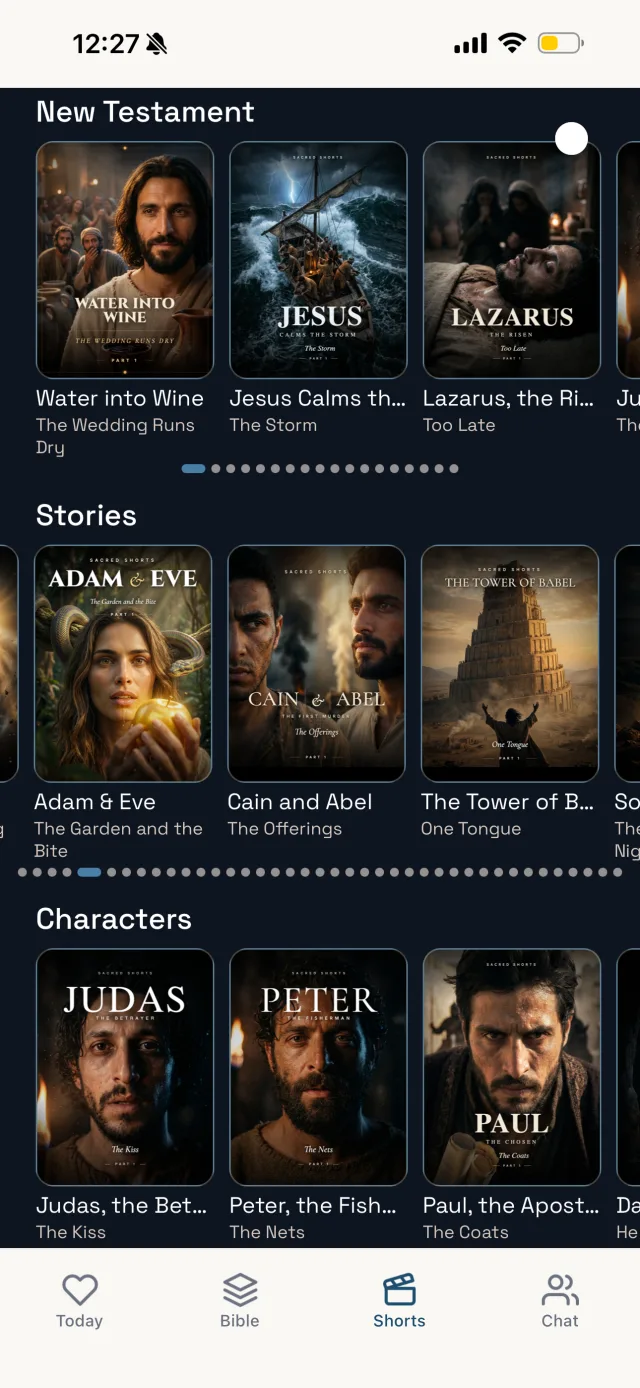
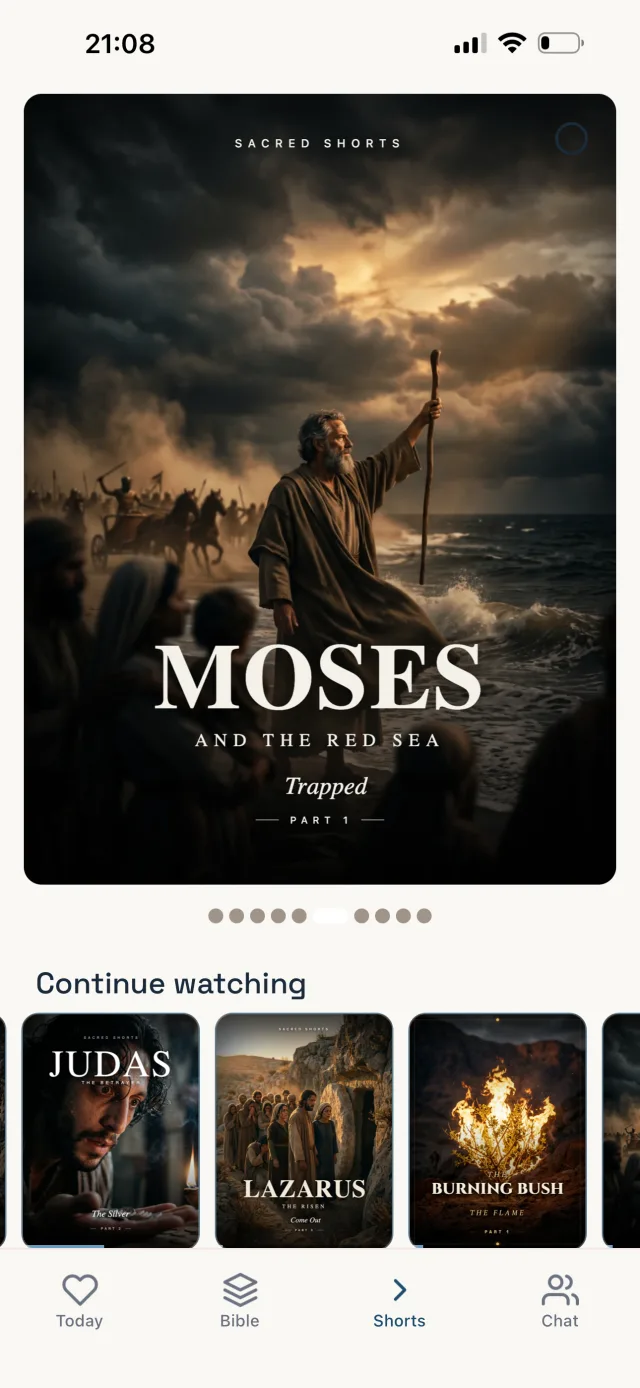
Watch this story come to life as a cinematic series in Sacred.
4.8on the App Store
How to Apply These Teachings Today
Identify what you're actually afraid of. Fear often hides beneath the surface as irritability, avoidance, or procrastination. Explore more about anxiety. Naming the specific fear — rejection, failure, loss, the unknown — is the first step toward bringing it to God.
Replace fear-based narratives with truth. Fear tells stories about worst-case scenarios. Scripture offers a counter-narrative. When fear says "you're alone," Isaiah 41:10 responds. When fear says "you're not enough," 2 Timothy 1:7 responds. This isn't denial — it's choosing which voice gets the final word.
Take one small courageous action. Joshua 1:9 links courage with action. Fear thrives when you freeze. Taking even one small step — making the call, having the conversation, starting the application — breaks fear's momentum.
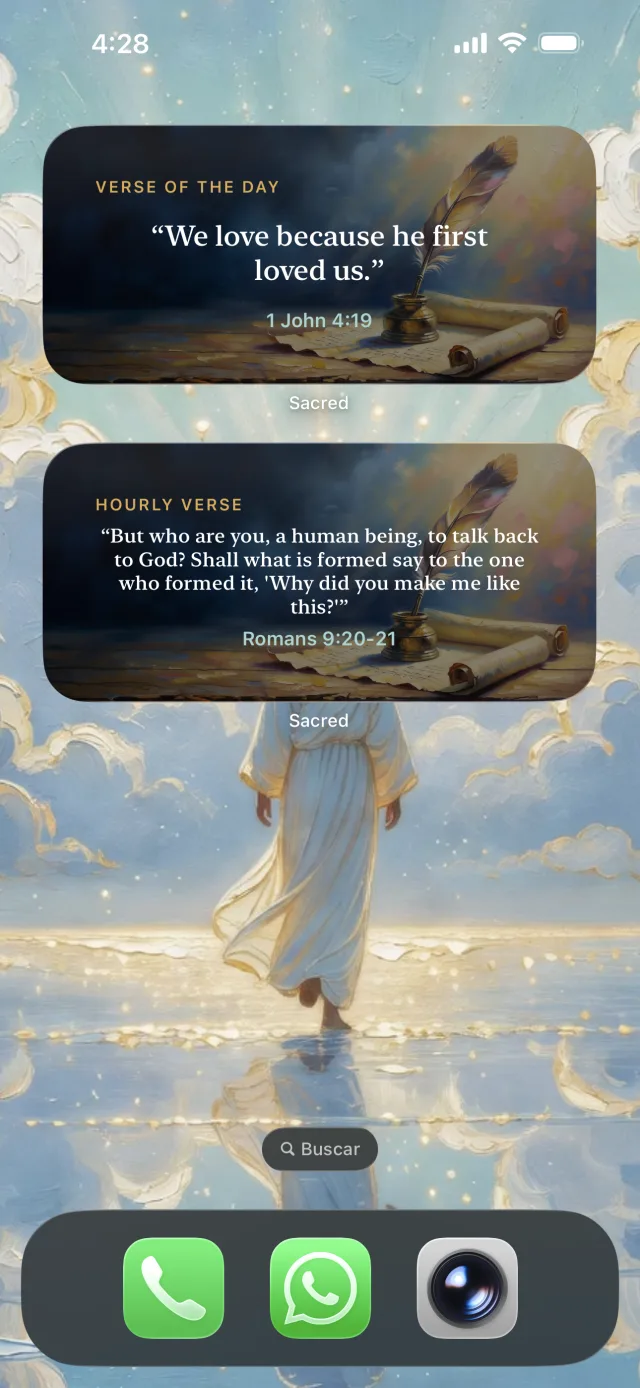
Build a consistent spiritual practice. Fear grows stronger in isolation and silence. A daily rhythm of connecting with God — through prayer, Scripture, or guided reflection — builds the kind of inner foundation that fear can't easily shake. Try Sacred free — your daily spiritual ritual in 6 minutes. ## A Final Word
The Bible doesn't promise a life without frightening circumstances. It promises a presence that makes you braver than your circumstances demand. The invitation isn't to stop feeling fear — it's to stop letting fear make your decisions.
Ready to build a daily spiritual habit? Sacred gives you a personalized verse, guided prayer, and biblical chat — all in 6 minutes. Download Sacred free.
 Sacred Shorts
Watch the Bible like never before
Cinematic Bible stories, a complete Study Bible, daily devotionals, and guided prayer. New episodes every week.
Frequently asked questions
The phrase 'do not fear' or 'do not be afraid' appears over 100 times in the Bible in various forms. This frequency suggests that God understands fear is a constant human struggle and addresses it repeatedly throughout Scripture.
The Bible distinguishes between the 'fear of the Lord' — a reverent awe and respect for God that the Bible calls the beginning of wisdom (Proverbs 9:10) — and paralyzing, anxious fear that prevents trust. Healthy fear protects; unhealthy fear imprisons.
You can pray honestly: 'God, I'm afraid. I bring this fear to you.' [Learn more about prayer](/blog/how-to-pray-when-you-dont-know-what-to-say). Psalm 34:4 says 'I sought the LORD, and he answered me; he delivered me from all my fears.' You don't need a formula — just honesty and willingness to bring the fear into God's presence.