Abraham is one of the most important figures in the Bible. His story begins in Genesis and reaches far beyond his own lifetime, shaping the story of Israel and becoming a central example of faith for Christians. Scripture presents him not as a flawless hero, but as a man who learned to trust God step by step. He left what was familiar, waited for promises that seemed impossible, failed at times, returned to God, and became known as the father of many nations.
Who was Abraham?
Abraham was first called Abram. He was the son of Terah, the husband of Sarah, and the ancestor of Isaac, Jacob, and the tribes of Israel. His story begins in Ur of the Chaldeans and continues through Haran, Canaan, Egypt, and the land God promised to show him. In Genesis 12, God called Abram to leave his country, his relatives, and his father's household. God promised to make him into a great nation, bless him, make his name great, and bring blessing to all families of the earth through him.
That calling is what makes Abraham so central. The Bible's story moves from creation and human rebellion into God's redemptive plan through a covenant family. Abraham becomes the man through whom God promises land, descendants, blessing, and ultimately a blessing for the nations. In the New Testament, Paul points to Abraham as an example of faith because "Abram believed the Lord, and he credited it to him as righteousness" (Genesis 15:6).
The story of Abraham
Abraham's journey is a story of faith under pressure. He obeyed God's call before he had a map, a settled home, or a child to inherit the promise. He entered Canaan as a stranger and lived in tents, trusting God's word more than visible security. Yet the Bible also shows his weakness. During famine, Abraham went down to Egypt and acted out of fear concerning Sarah. Later, he and Sarah tried to secure the promised child through Hagar, creating pain and conflict in the family.
These failures do not erase Abraham's faith; they reveal that biblical faith grows through dependence on God's patience. God repeatedly reaffirmed the promise. In Genesis 15, God brought Abraham outside and told him to look at the stars as a picture of his descendants. In Genesis 17, God changed his name from Abram, meaning exalted father, to Abraham, meaning father of a multitude. The name itself became a daily reminder that God's promise was larger than Abraham's circumstances.
The birth of Isaac was the great sign that God keeps His promises. Abraham and Sarah were old, and Sarah had been barren for many years. Humanly speaking, the promise seemed impossible. Yet Isaac was born at the appointed time, showing that God's covenant did not depend on human strength.
The hardest test came in Genesis 22, when God told Abraham to offer Isaac. This passage must be handled with reverence: it is not a celebration of harm, but a profound test within the unique covenant story. Abraham obeyed, trusting that God could still keep His promise. At the final moment, God provided a ram in Isaac's place. The story reveals Abraham's reverent trust and God's provision. It also becomes, for many Christian readers, a foreshadowing of substitution and sacrifice, though different traditions may emphasize the passage in different ways.

The Bible has never felt like this
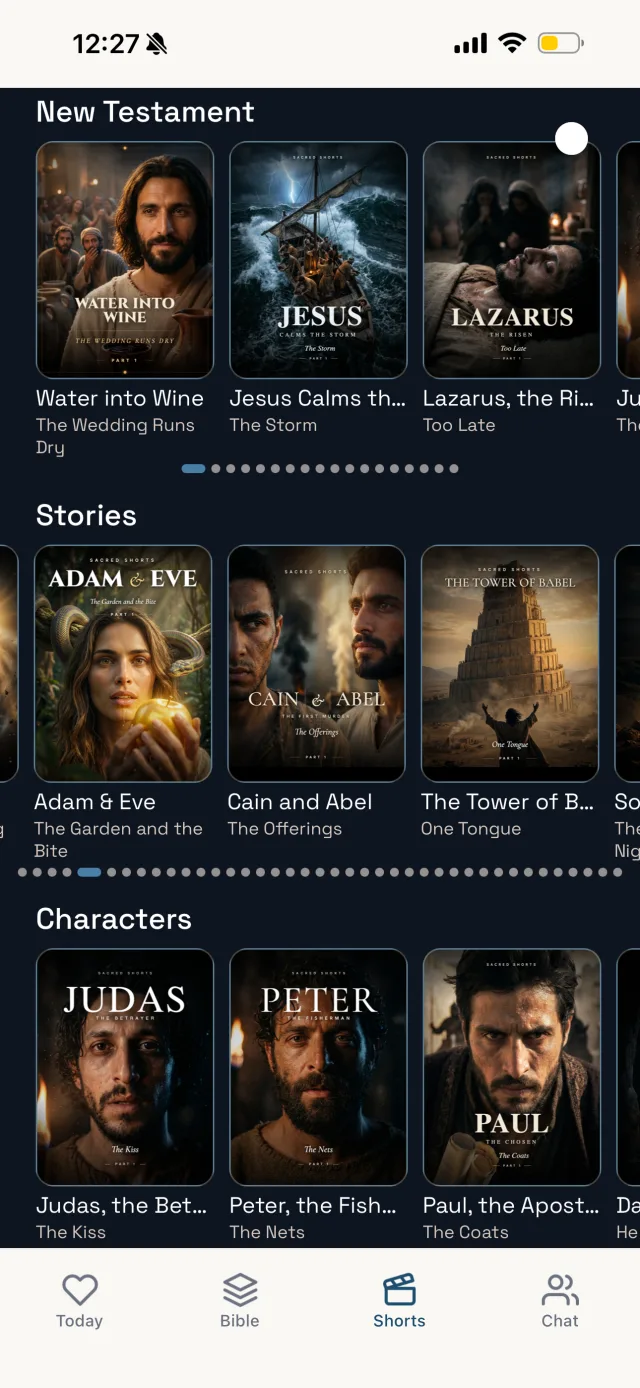
Watch this story come to life as a cinematic series in Sacred.
4.8on the App Store
Key verses about Abraham
- Genesis 12:1-3 — God calls Abram to go and promises that all families of the earth will be blessed through him.
- Genesis 15:6 — Abraham believes the Lord, and his faith is counted as righteousness.
- Genesis 17:5 — God gives Abram the name Abraham because he will be the father of many nations.
- Genesis 22:14 — Abraham names the place "The Lord Will Provide" after God provides the ram.
- Romans 4:20-22 — Paul describes Abraham as strengthened in faith, giving glory to God.
- Hebrews 11:8-10 — Abraham obeys by faith, going out without knowing where he was going.
Lessons from Abraham's life
Abraham teaches us that faith is often obedience before clarity. He did not receive every detail before he took the first step. He had God's word, and that was enough to begin. This matters for everyday discipleship: many seasons of faith require trust before the outcome is visible.
Abraham also teaches patience. The promise of Isaac was not fulfilled quickly. Years passed between the promise and its fulfillment, and the waiting exposed fear, impatience, and weakness. Yet God remained faithful. For believers, Abraham's story encourages endurance when prayers seem delayed and when God's timing is hard to understand.
Another lesson is honest relationship with God. Abraham speaks with God, receives correction, intercedes for Sodom, and walks through covenant promises in conversation. He is not distant from God. His faith is relational, marked by listening, worship, altars, and prayer.
Finally, Abraham's life reminds us that God's blessing is never meant to stop with one person. God blessed Abraham so that all nations would be blessed. Faith is personal, but it is not private in its final purpose. It becomes a witness, a family story, and a channel of blessing to others.
Abraham's legacy
Abraham's legacy is vast. He is honored in Judaism, Christianity, and Islam, and within the Bible he stands as the patriarch of Israel and a model of faith. For Christians, his story points forward to Christ, through whom the promised blessing reaches the nations. His life invites us to trust God's word, walk patiently, repent when fear leads us astray, and remember that God is faithful across generations.
FAQ
Why is Abraham important in the Bible? Abraham is important because God made a covenant with him, promising land, descendants, and blessing for the nations through his family line.
What was Abraham's greatest test? Genesis 22 describes the testing of Abraham through Isaac. God ultimately provided a ram, showing both Abraham's faith and God's provision.
What can Christians learn from Abraham? Christians can learn obedience, patience, trust in God's promises, and the truth that faith often grows through waiting and dependence on God.
 Sacred Shorts
Watch the Bible like never before
Cinematic Bible stories, a complete Study Bible, daily devotionals, and guided prayer. New episodes every week.