
The Bible teaches that tithing involves giving a portion of one's earnings, traditionally 10%, to support religious institutions and charitable works. This practice is a form of worship and expression of gratitude towards God and is seen throughout both the Old and New Testaments.
Quick Answer
Tithing, according to the Bible, is the practice of giving 10% of one's income to support the church and its missions. It is a demonstration of faith and obedience to God, with promises of blessings for those who give faithfully.
What does the Bible teach about tithing?
The Bible presents tithing as an act of faith and obedience, encouraging believers to give back a portion of their income to God. In the Old Testament, the Israelites were instructed to give a tenth of their produce and livestock to support the Levites, who did not have an inheritance of their own. In Malachi 3:10, God promises blessings to those who tithe faithfully: "Bring the whole tithe into the storehouse, that there may be food in my house. Test me in this," says the Lord Almighty, "and see if I will not throw open the floodgates of heaven and pour out so much blessing that there will not be room enough to store it."
In the New Testament, Jesus acknowledges the practice of tithing but emphasizes the importance of justice, mercy, and faithfulness (Matthew 23:23). The Apostle Paul also speaks about giving, encouraging believers to give generously and cheerfully (2 Corinthians 9:6-7).
Teaching Section
Tithing is more than a financial transaction; it is a spiritual discipline that reflects trust in God's provision. By prioritizing giving, believers acknowledge that everything they have is a gift from God, as discussed in How to Build a Daily Devotional Habit. This act of worship helps to detach from materialism and fosters a spirit of generosity.
For a deeper daily connection with Scripture, Sacred offers personalized Bible verses and guided reflections to help you grow in faith.

The Bible has never felt like this
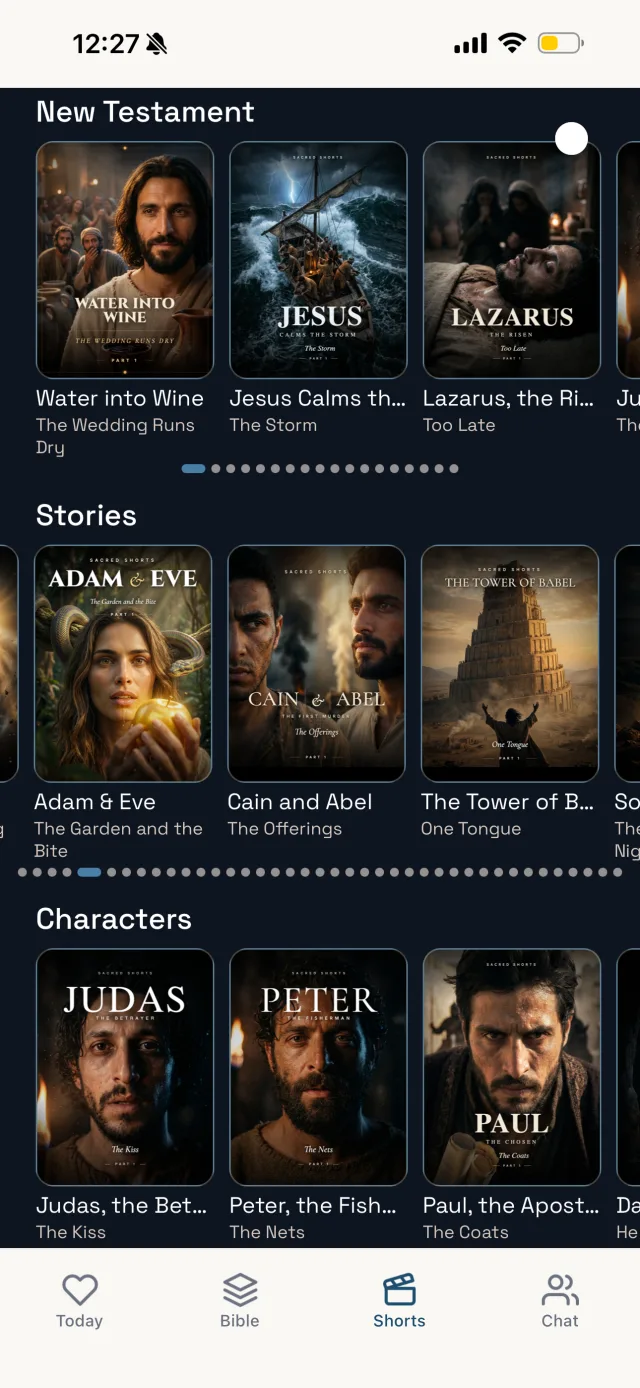
Watch this story come to life as a cinematic series in Sacred.
4.8on the App Store
Verses on Tithing
- Leviticus 27:30: "A tithe of everything from the land, whether grain from the soil or fruit from the trees, belongs to the Lord; it is holy to the Lord."
- Proverbs 3:9-10: "Honor the Lord with your wealth, with the firstfruits of all your crops; then your barns will be filled to overflowing, and your vats will brim over with new wine."
- 2 Corinthians 9:6-7: "Remember this: Whoever sows sparingly will also reap sparingly, and whoever sows generously will also reap generously. Each of you should give what you have decided in your heart to give, not reluctantly or under compulsion, for God loves a cheerful giver."
Application
In today's context, tithing remains a relevant practice for many believers, aligning with What Does the Bible Say About Money. It serves as a reminder of God's faithfulness and a commitment to supporting the church's mission and outreach. By giving regularly, believers participate in the work of the church and contribute to the well-being of their communities.
For those seeking to deepen their understanding of tithing and its impact, the Sacred app offers resources and community support to guide you in your spiritual journey. Download the Sacred app today to explore more about tithing and other biblical principles.
FAQ
What is the biblical basis for tithing?
Explore these teachings further with Sacred, your daily companion for biblical wisdom and spiritual growth.
Tithing is based on biblical teachings found in both the Old and New Testaments, where it is presented as an act of faith and obedience to God.
Is tithing still relevant today?
Many believers see tithing as a timeless principle that reflects gratitude and supports the work of the church and charitable causes.
How can I start practicing tithing?
Begin by setting aside a portion of your income, traditionally 10%, and contribute it to your local church or a charitable organization that aligns with your values.
 Sacred Shorts
Watch the Bible like never before
Cinematic Bible stories, a complete Study Bible, daily devotionals, and guided prayer. New episodes every week.


Frequently asked questions
Tithing is based on biblical teachings found in both the Old and New Testaments, where it is presented as an act of faith and obedience to God.
Many believers see tithing as a timeless principle that reflects gratitude and supports the work of the church and charitable causes.
Begin by setting aside a portion of your income, traditionally 10%, and contribute it to your local church or a charitable organization that aligns with your values.