
Quick Answer
The Bible teaches that money itself is not inherently good or evil, but our attitude towards it can impact our spiritual lives. It encourages wise stewardship, generosity, and contentment, warning against the dangers of greed and the love of money.
What Does the Bible Teach About Money?
The Bible presents a balanced view of money, recognizing its necessity while cautioning against its potential pitfalls. The scriptures emphasize that while money can be a useful tool, it should not become an idol. In 1 Timothy 6:10, we are reminded that "the love of money is a root of all kinds of evil," indicating that the danger lies not in money itself but in our attachment to it.
A citable paragraph from the Bible is found in Matthew 6:24, where Jesus teaches, "No one can serve two masters... You cannot serve both God and money." This underscores the importance of prioritizing our relationship with God over material wealth. Furthermore, the Bible encourages believers to practice generosity and stewardship, as seen in Proverbs 11:25, "A generous person will prosper; whoever refreshes others will be refreshed."
Key Bible Verses About Money
1. 1 Timothy 6:10
"For the love of money is a root of all kinds of evil. Some people, eager for money, have wandered from the faith and pierced themselves with many griefs."
Written by Paul around 62-64 AD to Timothy, providing guidance for church leadership.
This verse warns against the dangers of prioritizing wealth over faith, highlighting the spiritual risks of greed.
2. Matthew 6:24
"No one can serve two masters. Either you will hate the one and love the other, or you will be devoted to the one and despise the other. You cannot serve both God and money."
Attributed to Jesus during the Sermon on the Mount, around 30 AD.
It emphasizes the spiritual conflict that arises when wealth competes with our devotion to God.
3. Proverbs 22:7
"The rich rule over the poor, and the borrower is slave to the lender."
Attributed to King Solomon, written around 970-931 BC.
This proverb highlights the power dynamics of wealth and the burdens of debt, encouraging financial prudence.
4. Proverbs 11:25
"A generous person will prosper; whoever refreshes others will be refreshed."
Attributed to King Solomon, written around 970-931 BC.
This verse suggests that generosity leads to mutual blessings, fostering a community of support and abundance.
5. Luke 12:15
"Then he said to them, 'Watch out! Be on your guard against all kinds of greed; life does not consist in an abundance of possessions.'"
Attributed to Jesus, during his teaching ministry around 30 AD.
Jesus warns that true life and fulfillment are not found in material wealth but in spiritual richness.

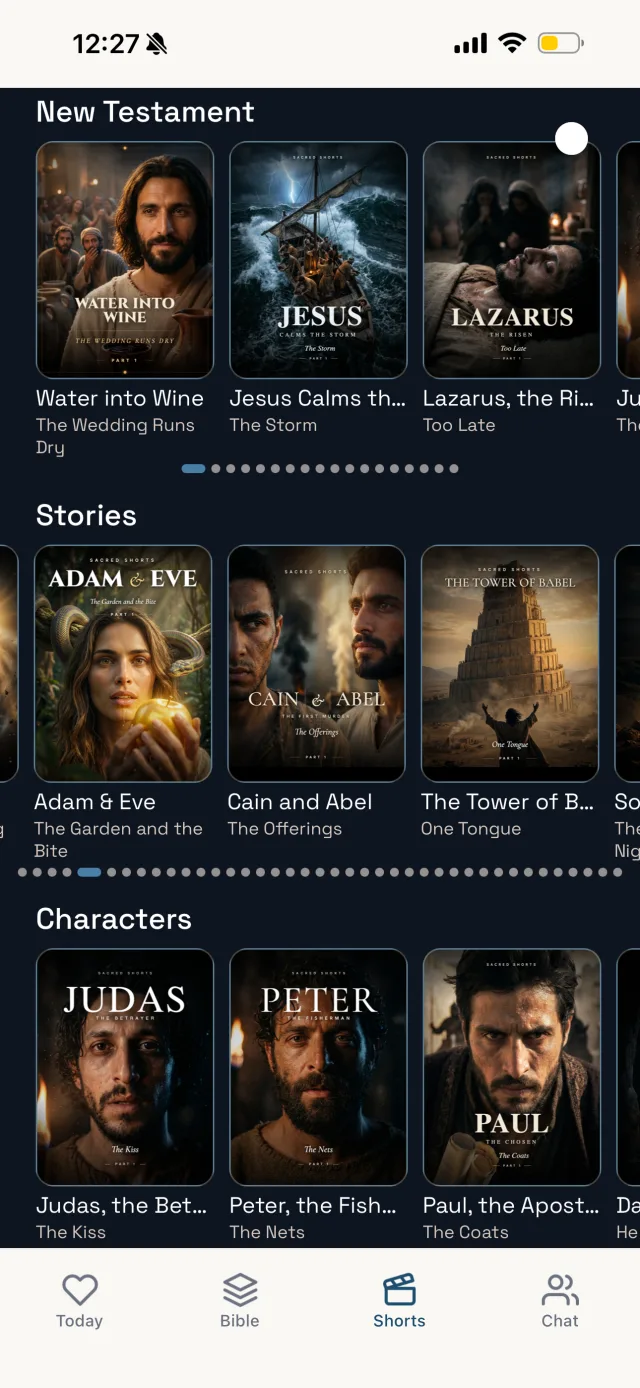
The Bible has never felt like this
Watch this story come to life as a cinematic series in Sacred.
4.8on the App Store
How to Apply These Teachings Today
In today's consumer-driven society, it's easy to become consumed by the pursuit of wealth. The Bible's teachings on money encourage us to seek contentment and practice responsible financial stewardship, ensuring that money serves our needs and not the other way around. By embracing generosity and avoiding the trappings of greed, we cultivate a life that honors God and supports others.
To integrate these teachings into daily life, consider using the Sacred app for guided prayer and reflection. This tool can help you focus on spiritual growth and discern how to use your resources wisely. By prioritizing prayer and reflection, you can develop a healthier relationship with money that aligns with biblical principles.
Frequently Asked Questions
What does the Bible say about being wealthy?
The Bible does not condemn wealth but cautions against letting it become an idol. Wealth should be seen as a responsibility and an opportunity to help others. Scriptures such as 1 Timothy 6:17-19 advise the wealthy to be generous and to put their hope in God rather than in uncertain riches.
Is it wrong to want to be rich according to the Bible?
Desiring wealth is not inherently wrong, but the Bible warns against prioritizing it above all else. The danger lies in allowing the pursuit of riches to overshadow one's relationship with God and lead to unethical behavior or neglect of spiritual responsibilities, as cautioned in Matthew 6:24 and 1 Timothy 6:10.
How can I be a good steward of my finances according to the Bible?
Being a good steward involves managing your resources wisely, avoiding debt, and practicing generosity. The Bible encourages prudence (Proverbs 22:7) and generosity (Proverbs 11:25). It's about using your resources to honor God and support others. Sacred can help you reflect on these principles through guided prayer and scripture study. Sacred
 Sacred Shorts
Watch the Bible like never before
Cinematic Bible stories, a complete Study Bible, daily devotionals, and guided prayer. New episodes every week.


Frequently asked questions
This article provides biblical insights with historical context, practical applications, and relevant Scripture passages to guide your daily life.
Begin by reflecting on one passage each day and consider how its message relates to your current circumstances.
All English Scripture citations use the NIV (New International Version).