
Quick Answer
While the Bible doesn't use the modern word "stress," it describes the experience throughout — being overwhelmed, crushed, burdened beyond capacity. Scripture's response to stress centers on two things: an invitation to rest in God's presence, and a reminder that human capacity has limits by design. You were not built to carry everything. That's not weakness — that's how God made you.
What Does the Bible Teach About Stress?
The biblical narrative is full of stressed people. Moses burned out trying to lead millions alone until his father-in-law staged an intervention (Exodus 18). Elijah collapsed after spiritual victory (1 Kings 19). Paul catalogued his physical and emotional strain in 2 Corinthians 11. Martha was "worried and upset about many things" when Jesus visited (Luke 10:41).
The Hebrew concept of savav (to surround, overwhelm) captures what stress feels like: being enclosed on all sides with no way out. The Greek thlipsis (pressure, tribulation) conveys the image of being squeezed — like olives in a press, which is literally what Gethsemane means ("oil press"). Jesus' most stressed moment happened in a place named after the process of being crushed under pressure.
The Bible's consistent message about stress is not "try harder" but "you weren't designed to carry this alone."
Key Bible Verses About Stress
Matthew 11:28-30 (NIV)
"Come to me, all you who are weary and burdened, and I will give you rest. Take my yoke upon you and learn from me, for I am gentle and humble in heart, and you will find rest for your souls. For my yoke is easy and my burden is light."
Jesus spoke this to crowds crushed under the weight of religious obligations — the Pharisees had turned faith into an exhausting performance. His invitation is radical: come. Not "clean up first" or "figure out your schedule." Just come. A yoke in ancient agriculture was shared between two animals; the stronger one bore most of the weight. Jesus is saying: let me carry the heavy side.
Psalm 55:22 (NIV)
"Cast your cares on the LORD and he will sustain you; he will never let the righteous be shaken."
David wrote this during personal betrayal — a close friend turned enemy. His stress was relational, not just circumstantial. The word "cast" (shalak) means to hurl, to throw with intention. It's not a gentle transfer. It's the conscious, forceful act of taking what's crushing you and throwing it at God. The promise isn't that problems disappear — it's that you won't collapse under them.
Exodus 18:17-18 (NIV)
"Moses' father-in-law replied, 'What you are doing is not good. You and these people who come to you will only wear yourselves out. The work is too heavy for you; you cannot handle it alone.'"
Jethro's observation to Moses is one of the Bible's most practical passages on stress. Moses was trying to handle every dispute among millions of people — alone. Jethro's diagnosis: this will destroy you. His prescription: delegate, create systems, share the load. God's solution to Moses' stress wasn't more spiritual strength — it was better organizational design. Sometimes stress isn't a faith problem; it's a structural one.
Psalm 46:10 (NIV)
"Be still, and know that I am God; I will be exalted among the nations, I will be exalted in the earth."
This psalm was written in the context of extreme crisis — nations raging, kingdoms falling, the earth giving way. The instruction "be still" (raphah) literally means "let go, release your grip, cease striving." In the middle of chaos, God doesn't say "work harder." He says stop. Let go. Remember who's actually in charge. Stress often comes from trying to control what was never yours to control.
2 Corinthians 4:8-9 (NIV)
"We are hard pressed on every side, but not crushed; perplexed, but not in despair; persecuted, but not abandoned; struck down, but not destroyed."
Paul describes stress in four escalating images — pressed, perplexed, persecuted, struck down. But each one has a "but not." The pressure is real. The confusion is real. The opposition is real. The blow is real. But there's a limit to how far any of them can go. Paul's testimony is that God sets a boundary around suffering — it can bend you, but it cannot break you.
Psalm 61:2 (NIV)
"From the ends of the earth I call to you, I call as my heart grows faint; lead me to the rock that is higher than I."
David's prayer here captures the essence of stress: a faint heart at the edge of capacity. His request is specific: lead me to something bigger than me, something higher than my reach, something stable when everything shakes. The "rock that is higher than I" is the honest admission that stress has exceeded his resources — and the faith that God has resources beyond David's own.

The Bible has never felt like this
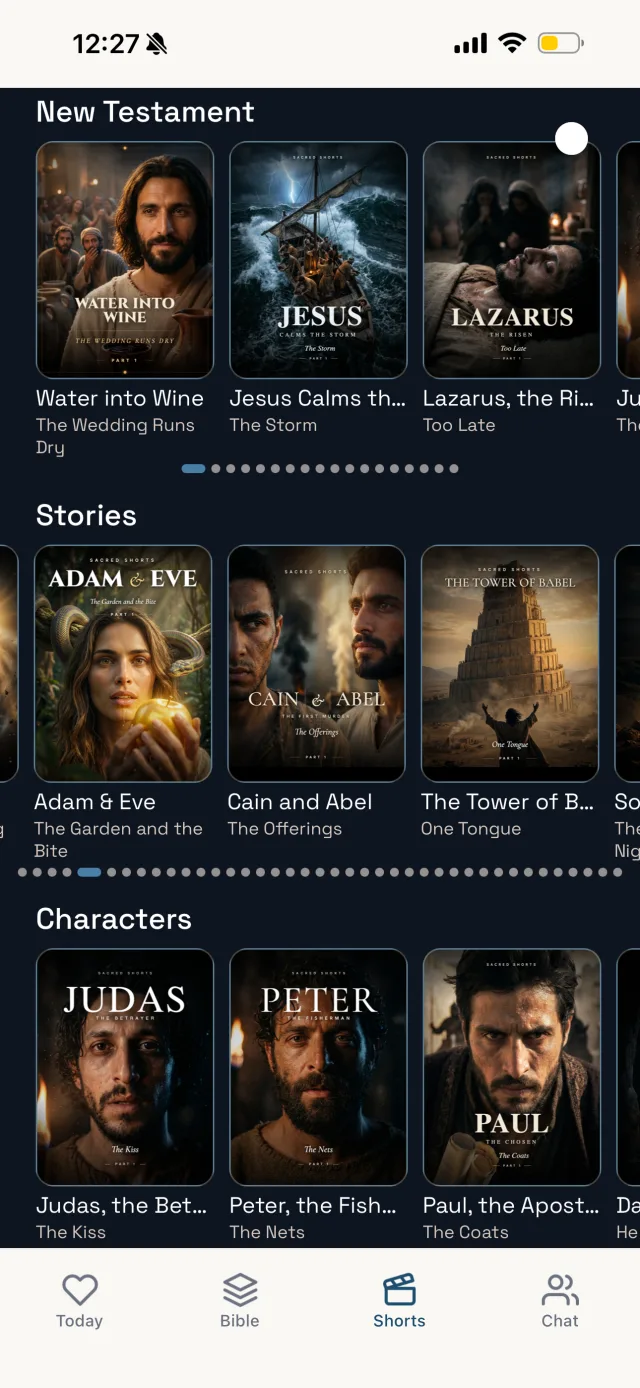
Watch this story come to life as a cinematic series in Sacred.
4.8on the App Store
How to Apply These Teachings Today
Accept your limits as design, not deficiency. You were created to need rest (God modeled it on day seven of creation). Burnout isn't a badge of honor — it's a violation of how God designed human beings to function. Saying "I can't do everything" isn't weakness. It's truth.
Delegate like Moses. If your stress comes from carrying too much alone, Jethro's counsel applies: share the load. Ask for help. Create systems. The most spiritual thing you might do this week is let someone else handle something.
Practice stillness daily. Psalm 46:10 isn't just poetry — it's a prescription. Even a few minutes of stillness each morning — no phone, no agenda, just presence — can reset your nervous system and remind you who's actually in charge. How to Build a Daily Devotional Habit. Try Sacred free — your daily spiritual ritual in 6 minutes. Bring the stress to God specifically. Don't pray vaguely about "stress." Name it: the deadline, the relationship, the financial pressure, the health concern. Psalm 55:22 invites you to cast specifics, not abstractions.
A Final Word
The Bible doesn't promise a stress-free life. It promises a God who invites you to stop carrying the weight alone. The most counter-cultural act in a world that celebrates burnout is choosing to rest — not because there's nothing to do, but because you trust the One who holds it all.
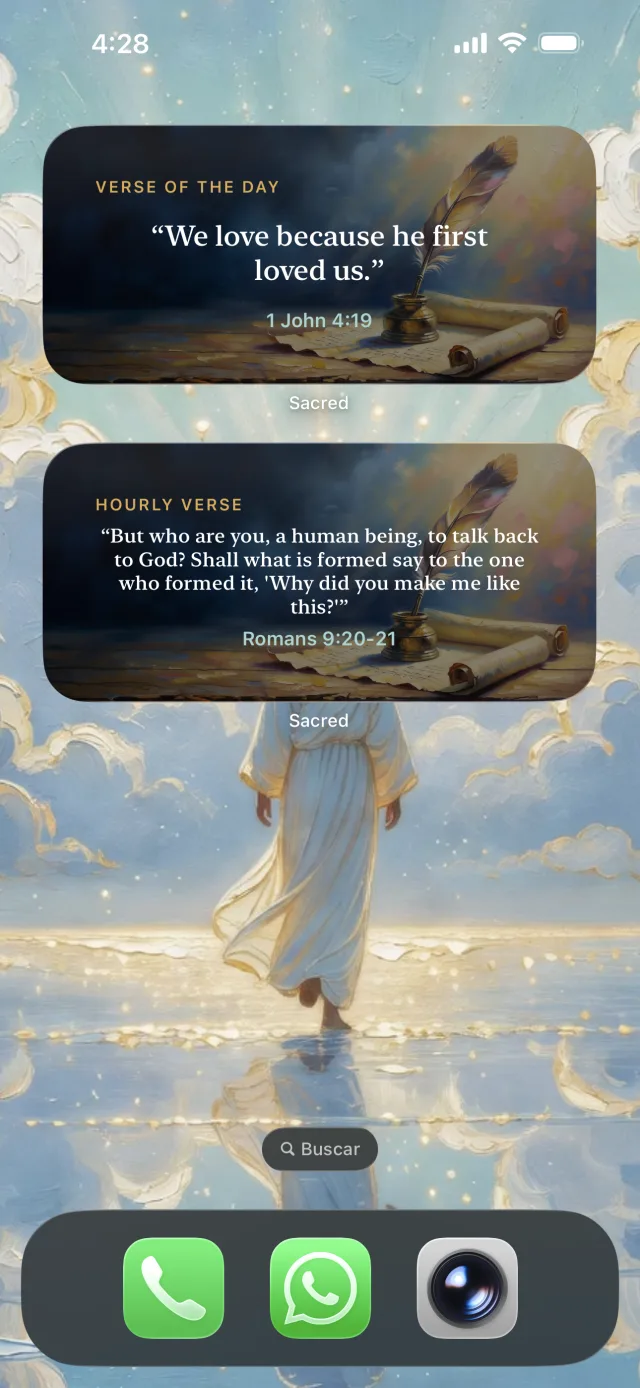
Ready to build a daily spiritual habit? Sacred gives you a personalized verse, guided prayer, and biblical chat — all in 6 minutes. Download Sacred free.
 Sacred Shorts
Watch the Bible like never before
Cinematic Bible stories, a complete Study Bible, daily devotionals, and guided prayer. New episodes every week.

Frequently asked questions
The word 'stress' doesn't appear in most Bible translations, but the experience is described vividly. David felt overwhelmed (Psalm 61:2), Paul faced 'the daily pressure of concern for all the churches' (2 Corinthians 11:28), and Jesus sweat drops like blood from emotional distress (Luke 22:44). The Bible fully acknowledges the reality of stress.
Jesus offers a direct invitation in [Matthew 11:28-30](https://www.biblegateway.com/passage/?search=Matthew+11%3A28-30&version=NIV): 'Come to me, all you who are weary and burdened, and I will give you rest.' He doesn't say 'figure it out' or 'try harder.' He says come, and I will give you rest. The emphasis is on receiving, not performing.
Research consistently shows that meditative prayer reduces cortisol (the stress hormone) and activates the parasympathetic nervous system, as discussed in [What Does the Bible Say About Anxiety](/blog/what-does-the-bible-say-about-anxiety). Philippians 4:6-7 describes exactly this effect: bringing worries to God in prayer produces 'the peace of God, which transcends all understanding.' Prayer doesn't magically erase problems, but it changes your physiological and emotional response to them.