
The Bible speaks directly to the experience of insecurity — that deep sense of not being enough, not measuring up, or not belonging. Scripture is filled with people who felt profoundly inadequate yet were used by God in remarkable ways. The biblical message isn't "try harder to feel confident" but rather "your security was never meant to come from yourself."
What Does the Bible Teach About Insecurity?
Insecurity runs through the biblical narrative from beginning to end. After the fall in Genesis 3, the first human instinct was to hide — the original act of insecurity. Adam and Eve covered themselves because they suddenly felt exposed, vulnerable, and not enough.
The Hebrew concept of security (betach) means to feel safe, confident, and without worry. Its opposite appears throughout the Psalms, where David frequently describes feeling exposed, hunted, and vulnerable. The Greek word asphalia (security/certainty) appears in Luke's Gospel as the purpose of his writing — to give "certainty" to Theophilus.
What's remarkable about the biblical approach is that security is never presented as self-generated. In ancient Israelite thought, security came from God's covenant faithfulness, not from personal strength, wealth, or status. This challenges modern culture's emphasis on self-confidence and positions God as the ultimate source of identity and worth.
Key Bible Verses About Insecurity
Psalm 139:13-14 (NIV)
"For you created my inmost being; you knit me together in my mother's womb. I praise you because I am fearfully and wonderfully made; your works are wonderful, I know that full well."
David wrote this psalm as a deeply personal meditation on God's intimate knowledge of him. The Hebrew yare (fearfully) means "with great reverence and awe" — not fear in the modern sense. The image of knitting (sakak) suggests careful, intentional craftsmanship. David is teaching that your existence is not accidental or careless — every detail was deliberate. When insecurity whispers "you're not enough," this passage responds that you were made with awe-inspiring intentionality by the Creator of the universe.
Jeremiah 1:6-8 (NIV)
"'Alas, Sovereign LORD,' I said, 'I do not know how to speak; I am too young.' But the LORD said to me, 'Do not say, "I am too young." You must go to everyone I send you to and say whatever I command you. Do not be afraid of them, for I am with you and will rescue you,' declares the LORD."
Jeremiah received his prophetic call around 626 BC, likely as a teenager. His insecurity was specific: he felt too young and too inarticulate. God's response didn't address Jeremiah's skills — it addressed His own presence: "I am with you." This teaches that God doesn't call the qualified; He qualifies the called. The solution to insecurity isn't becoming more capable but trusting the One who sends you.
2 Corinthians 12:9-10 (NIV)
"But he said to me, 'My grace is sufficient for you, for my power is made perfect in weakness.' Therefore I will boast all the more gladly about my weaknesses, so that Christ's power may rest on me."
Paul wrote this around 55 AD after pleading with God three times to remove a 'thorn in the flesh' (2 Corinthians 12:9-10).
Isaiah 41:10 (NIV)
"So do not fear, for I am with you; do not be dismayed, for I am your God. I will strengthen you and help you; I will uphold you with my righteous right hand."
Isaiah delivered this message to Israel during the Babylonian exile (6th century BC), when the nation had lost everything that defined their identity: land, temple, king. Their collective insecurity was total. God's response contains four specific promises: presence ("I am with you"), identity ("I am your God"), empowerment ("I will strengthen you"), and support ("I will uphold you"). Each promise addresses a different dimension of insecurity.
Judges 6:15-16 (NIV)
"'Pardon me, my lord,' Gideon replied, 'but how can I save Israel? My clan is the weakest in Manasseh, and I am the least in my family.' The LORD answered, 'I will be with you, and you will strike down all the Midianites, leaving none alive.'"
Gideon was threshing wheat in a winepress — hiding from the Midianites — when God called him a "mighty warrior" around 1200 BC. His response reveals deep insecurity rooted in social status and family position. Yet God didn't argue with Gideon's self-assessment. Instead, He redirected the entire conversation: the outcome wouldn't depend on Gideon's strength but on God's presence. This teaches that insecurity about our abilities becomes irrelevant when God is the one acting.
Ephesians 2:10 (NIV)
"For we are God's handiwork, created in Christ Jesus to do good works, which God prepared in advance for us to do."
Paul wrote to the Ephesian church around 62 AD. The Greek word poiema (handiwork/masterpiece) is where we get the English word "poem." Paul is saying that each person is God's creative work of art — not mass-produced but individually crafted with purpose. The additional detail that God "prepared in advance" specific works for each person means your life has predetermined significance. Insecurity says "I have nothing to offer"; this verse says God already prepared your contribution before you were born.

The Bible has never felt like this
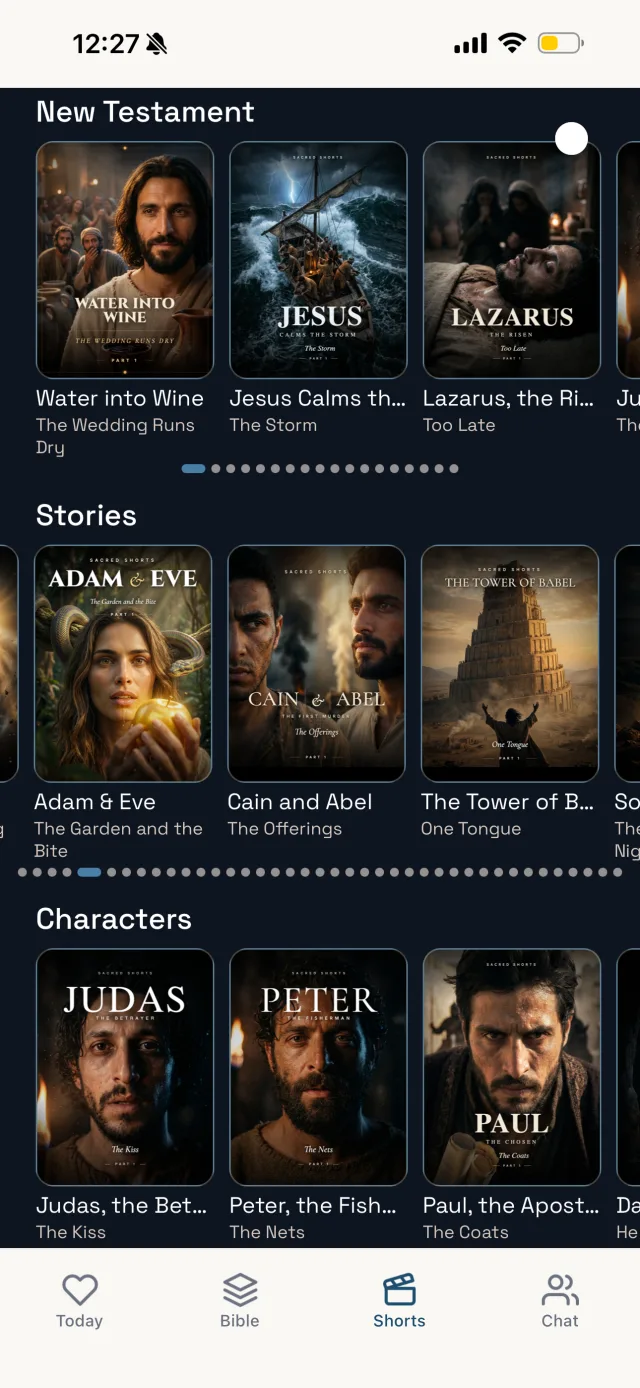
Watch this story come to life as a cinematic series in Sacred.
4.8on the App Store
How to Apply These Teachings Today
Insecurity often thrives on comparison. Social media amplifies this by presenting curated versions of others' lives. The biblical antidote isn't better self-talk — it's a different foundation entirely, which can also be seen in What Does the Bible Say About Anxiety. When your security is rooted in God's view of you rather than others' opinions, the comparison game loses its power.
Practice identity meditation. Spend time with passages like Psalm 139 and Ephesians 2:10 — not as quick devotionals but as slow, deliberate reflections on what God says about who you are. Let these truths form your internal narrative.
Embrace weakness honestly. Paul's experience in 2 Corinthians 12 shows that admitting weakness isn't defeat — it's the doorway to experiencing God's power. You don't need to pretend you have it all together.
Remember you're in good company. Moses, Gideon, Jeremiah, David — the Bible's heroes were deeply insecure people who learned to trust God despite their inadequacy. Insecurity didn't disqualify them, and it doesn't disqualify you. Try Sacred free — your daily spiritual ritual in 6 minutes.
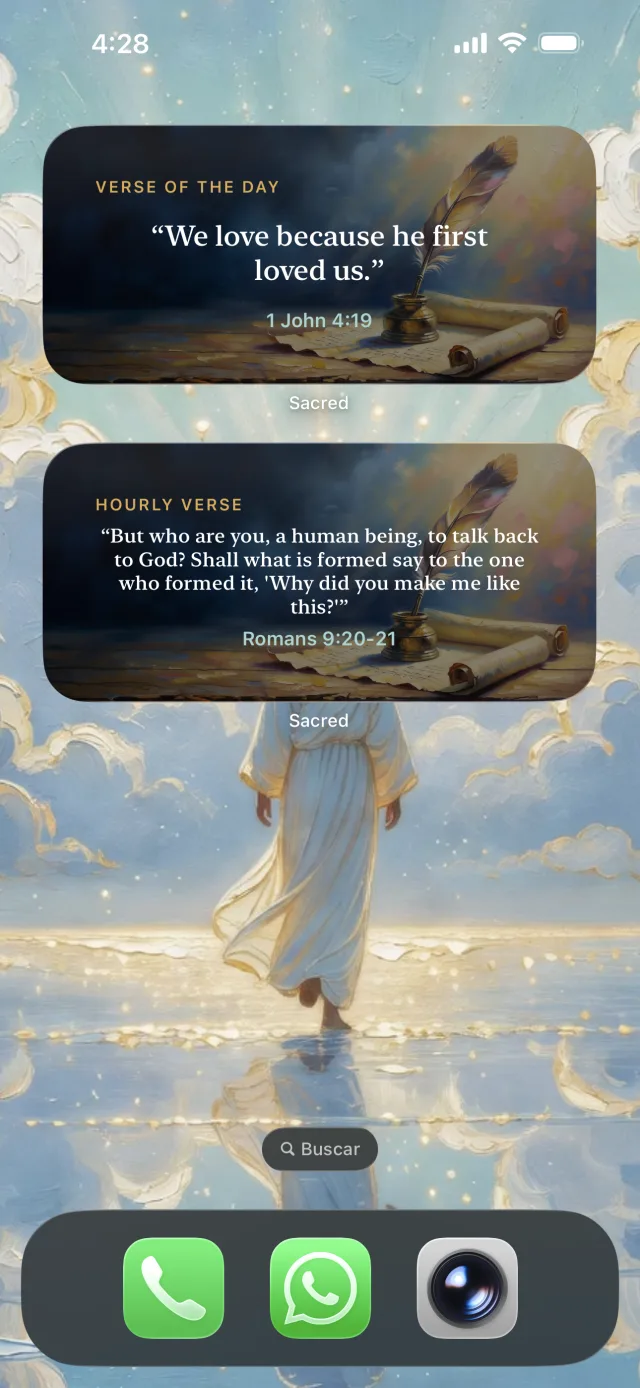
Ready to build a daily spiritual habit? Sacred gives you a personalized verse, guided prayer, and biblical chat — all in 6 minutes. Download Sacred free.
Frequently Asked Questions
Does the Bible address feelings of insecurity?
Yes, extensively. Many biblical figures struggled with insecurity — Moses felt inadequate to lead (Exodus 3-4), Gideon called himself the least in his family (Judges 6:15), and Jeremiah felt too young (Jeremiah 1:6). The Bible doesn't dismiss these feelings but consistently points to God's sufficiency as the answer to human inadequacy.
What does the Bible say about self-worth?
The Bible teaches that human worth comes from being created in God's image (Genesis 1:27) and being deeply loved by God (Romans 5:8). Psalm 139:14 says we are "fearfully and wonderfully made." Biblical self-worth isn't based on accomplishments or appearance but on identity as God's creation.
How can I overcome insecurity through faith?
Scripture suggests grounding your identity in God rather than in others' opinions. Philippians 4:13 teaches reliance on God's strength. Psalm 139 invites meditation on how God knows and values you. Prayer, community, and regularly reading Scripture about your identity in God can gradually replace insecurity with confidence.
 Sacred Shorts
Watch the Bible like never before
Cinematic Bible stories, a complete Study Bible, daily devotionals, and guided prayer. New episodes every week.

Frequently asked questions
Yes, extensively. Many biblical figures struggled with insecurity — Moses felt inadequate to lead (Exodus 3-4), Gideon called himself the least in his family (Judges 6:15), and Jeremiah felt too young (Jeremiah 1:6). The Bible doesn't dismiss these feelings but consistently points to God's sufficiency as the answer to human inadequacy.
The Bible teaches that human worth comes from being created in God's image (Genesis 1:27) and being deeply loved by God (Romans 5:8), as explored in [What Does the Bible Say About Self-Worth](/blog/what-does-the-bible-say-about-self-worth). [Psalm 139:13-14](https://www.biblegateway.com/passage/?search=Psalm+139%3A13-14&version=NIV) says we are 'fearfully and wonderfully made.' Biblical self-worth isn't based on accomplishments or appearance but on identity as God's creation.
Scripture suggests grounding your identity in God rather than in others' opinions. Philippians 4:13 teaches reliance on God's strength. Psalm 139 invites meditation on how God knows and values you. Prayer, community, and regularly reading Scripture about your identity in God can gradually replace insecurity with confidence, as discussed in [How to Build a Daily Devotional Habit](/blog/how-to-build-a-daily-devotional-habit).