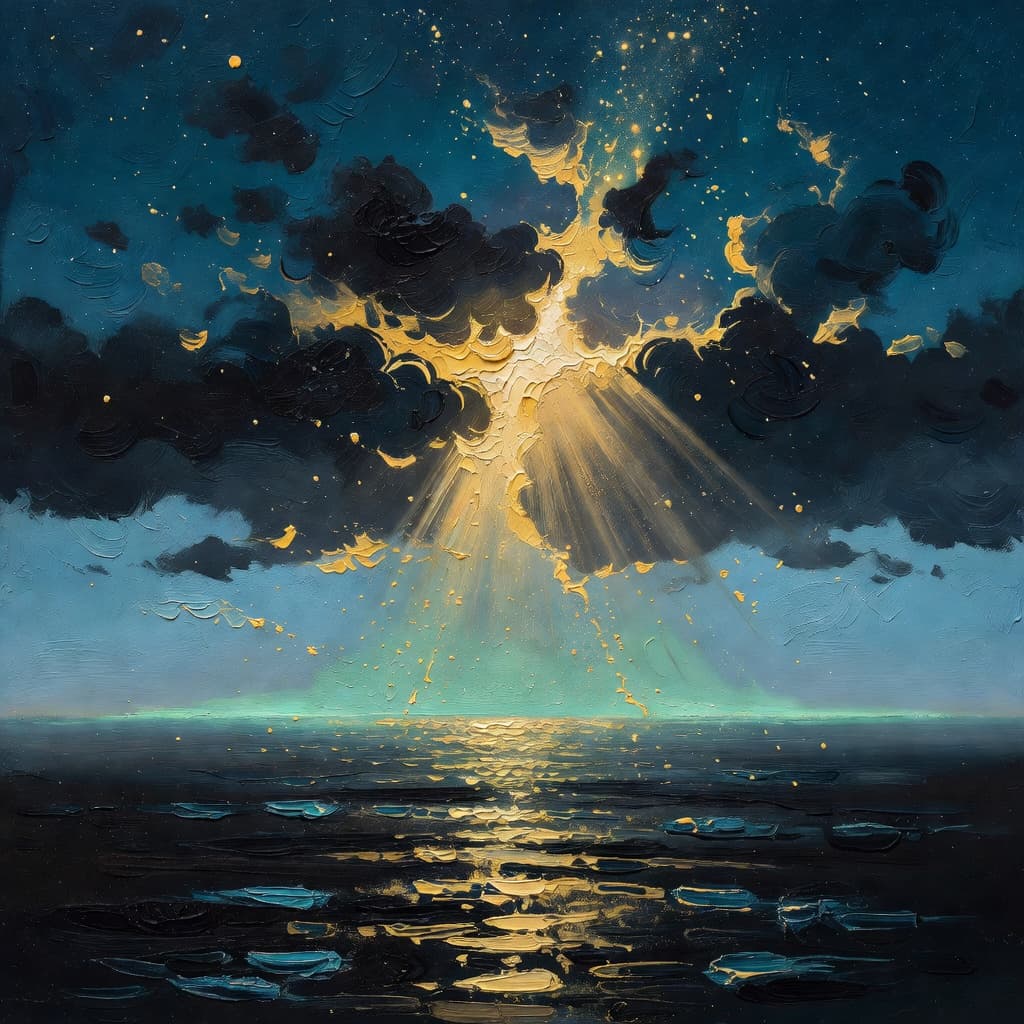
Genesis 1:1 introduces the Bible by declaring God's role as the Creator of the universe. It is a profound statement that sets the foundation for understanding God's sovereignty and creative power. This verse invites us to explore the vastness of God's work and His purposeful design for creation.
The Full Verse
In the New International Version (NIV), Genesis 1:1 reads: "In the beginning God created the heavens and the earth." For comparison, the New King James Version (NKJV) states: "In the beginning God created the heavens and the earth."
Historical Context
Genesis, the first book of the Bible, is traditionally attributed to Moses, a seminal figure in Hebrew history. It was likely written during the period when the Israelites were wandering in the wilderness, around the 15th century BCE. This was a time when the Israelites were establishing their identity as God's chosen people, having recently been delivered from slavery in Egypt. The book was meant to convey God's revelation and His eternal plan, offering a sense of identity and purpose. Genesis sets the theological and historical backdrop for the Israelites, affirming God's sovereignty and their unique relationship with Him.
What Does This Verse Mean?
Genesis 1:1 is more than just an introduction; it is a theological statement. The original Hebrew text begins with "Bereshit bara Elohim", meaning "In the beginning, God created." The term "Elohim" is a plural noun, which suggests a majestic plurality but is used with a singular verb, emphasizing the unity and supremacy of God. The word "bara" means "created" and is uniquely used in the Bible to refer to divine creation, indicating an act only God can perform. The phrase "the heavens and the earth" is a merism, a figure of speech that implies the totality of creation. This verse introduces the biblical worldview that the universe is not a random occurrence but the intentional work of a Creator. It sets the stage for understanding that everything has a divine origin and purpose.

The Bible has never felt like this
Watch this story come to life as a cinematic series in Sacred.
4.8on the App Store
How to Apply Genesis 1:1 in Your Life
Genesis 1:1 encourages us to recognize God's presence and handiwork in every aspect of our lives. It invites us to see the world around us as a testament to God's creativity and power. By acknowledging God as the Creator, we can find purpose and meaning in our daily activities, knowing that we are part of a larger divine plan, much like The Power of Prayer During Lent. This verse also challenges us to steward the earth responsibly, respecting the creation God has entrusted to us. In moments of uncertainty or chaos, remembering that God is the author of life can provide peace and direction. For those seeking a deeper connection with God and His word, exploring resources like How to Study the Bible on Your Own can offer guidance and community support.
Related Verses
-
Psalm 19:1: "The heavens declare the glory of God; the skies proclaim the work of his hands." This verse complements Genesis 1:1 by highlighting how creation itself testifies to God's glory and craftsmanship.
-
John 1:3: "Through him all things were made; without him nothing was made that has been made." This New Testament verse affirms the creative power of God, linking it to the work of Christ in creation.
-
Hebrews 11:3: "By faith we understand that the universe was formed at God's command, so that what is seen was not made out of what was visible." This verse emphasizes the faith aspect in understanding creation, aligning with the foundational truth in Genesis 1:1.
Frequently Asked Questions
Q: Why is Genesis 1:1 important?
A: Genesis 1:1 is foundational because it establishes God as the Creator, framing the entire biblical narrative and our understanding of the universe and our place within it.
Q: How does Genesis 1:1 relate to science?
A: Genesis 1:1 speaks to the theological truth of divine creation, while science explores the mechanisms of how creation unfolds. They can be seen as complementary, each addressing different aspects of understanding.
Q: What does "the heavens and the earth" mean in Genesis 1:1?
A: This phrase signifies the totality of creation, encompassing everything from the vast universe to the earth itself, illustrating the scope of God's creative work.
In conclusion, Genesis 1:1 is a profound declaration of God's creative authority that invites us to explore the world and our lives through a lens of divine purpose. Understanding this verse enables us to appreciate the intricacy of creation and our role within it. For those seeking to delve deeper into the Bible and its teachings, Sacred offers a valuable resource for exploration and reflection.
 Sacred Shorts
Watch the Bible like never before
Cinematic Bible stories, a complete Study Bible, daily devotionals, and guided prayer. New episodes every week.